Venezuela’s Machado Wins the Nobel Peace Prize
By experts and staff
- Published
By
- CFR Editors
Welcome to the Daily News Brief, CFR’s flagship morning newsletter summarizing the top global news and analysis of the day.
Subscribe to the Daily News Brief to receive it every weekday morning.
Top of the Agenda
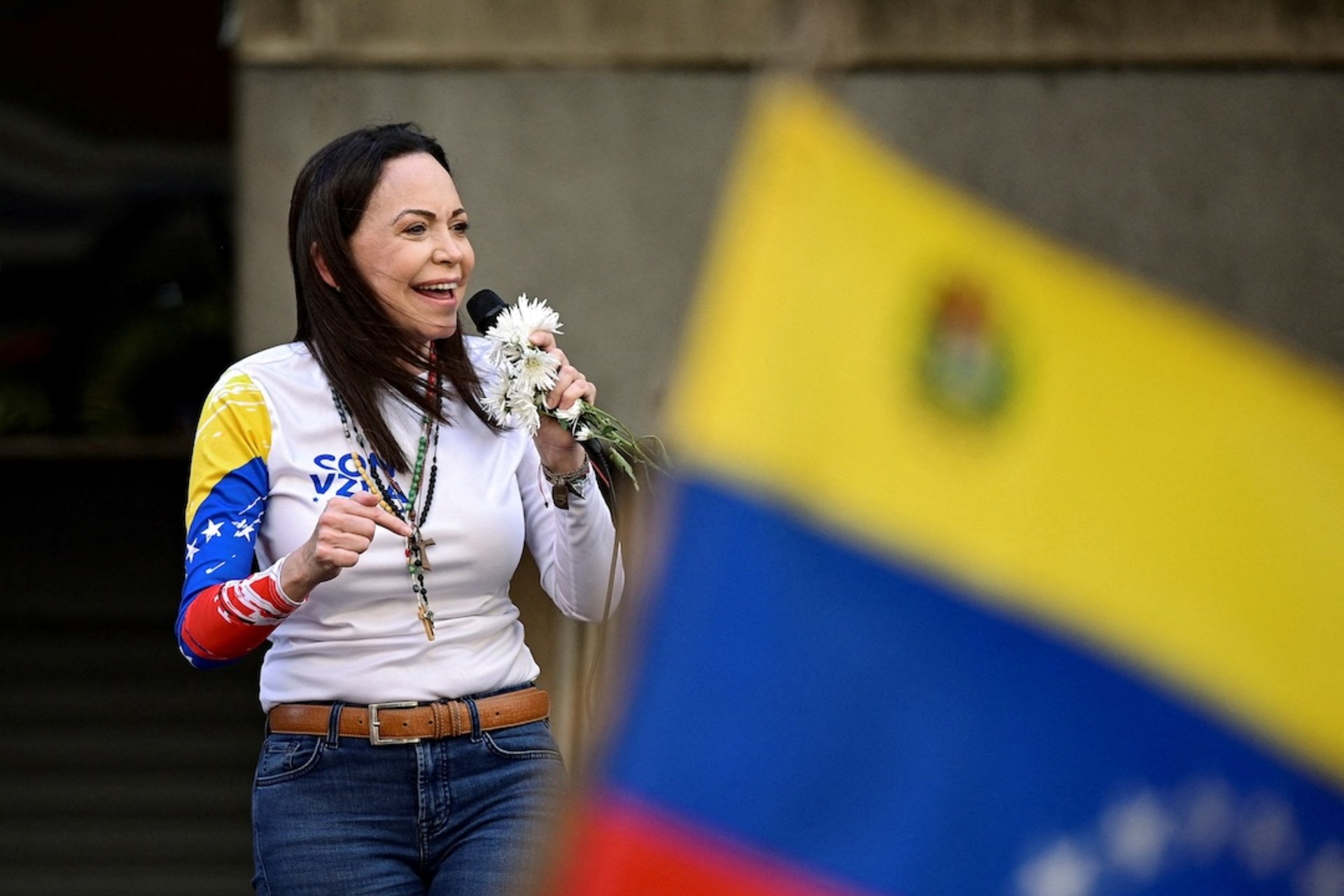
Venezuelan opposition leader Maria Corina Machado won the Nobel Peace Prize for “her tireless work promoting democratic rights for the people of Venezuela,” the committee announced today. The committee highlighted Machado’s efforts to mobilize mass participation in last year’s Venezuelan presidential election and gather and present evidence of an opposition victory, despite government repression of dissent. After Nicolás Maduro’s government declared victory, Machado went into hiding. Recognizing Machado’s courage is all the more important in a world in which democracy is under threat, the prize committee said: “Democracy depends on people who refuse to stay silent, who dare to step forward despite grave risk, and who remind us that freedom must never be taken for granted.”
Further context. Machado won the country’s opposition primaries ahead of the presidential election, but the government blocked her from running. The Nobel committee praised the fact that she unified with other opposition forces to support an alternate candidate. It is unclear whether Machado will attend the prize ceremony in December, as she remains in hiding. Speaking to the director of the Norwegian Nobel Institute on the phone today, Machado said the award was for “a whole society.”
Ongoing tensions in Venezuela. The Nobel committee praised Machado’s work for a “peaceful transition to democracy.” The Maduro administration continues to crack down on domestic opposition following its election loss last year, while in recent months, tensions have flared with the United States over a U.S. military buildup in the Caribbean. Machado has strong backers within the Trump administration: earlier this year, Secretary of State Marco Rubio praised her as the “personification of resilience, tenacity, and patriotism.” Washington says it is targeting drug smuggling with its military strikes on boats near Venezuela, while Maduro administration officials have accused the United States of trying to topple it.
“Authoritarians sometimes lose control of elections, even those they try to script in advance. The Philippines, Chile, Nicaragua and, more recently, Guatemala and Honduras have all seen autocrats head confidently into elections they thought they could control only to find they couldn’t…For years, infighting within [Venezuela’s] opposition led to voter apathy. But today the opposition is united and organized as never before, energizing voters.” —CFR expert Will Freeman, the Los Angeles Times
Across the Globe
Gaza truce enters first phase. Israeli troops partially withdrew from their positions in Gaza today as a ceasefire took effect in the territory. The troop pullback triggered a seventy-two-hour deadline for Hamas to release its remaining hostages as part of a ceasefire deal, while Israel also published the names of the Palestinian prisoners it plans to release as part of the swap. Meanwhile, thousands of Gazans displaced to the territory’s south during the war began walking back north.
U.S.-Finland icebreaker deal. The countries struck an agreement to provide the United States with up to eleven new icebreaker ships, U.S. President Donald Trump and Finnish President Alexander Stubb announced yesterday as Stubb visited the White House. The United States will purchase four icebreakers built in Finland, and leverage “Finnish expertise” to build up to seven others domestically. The ships are expected to be used in the Arctic as great power competition heats up.
Peru’s president impeached. Peru’s congress ousted President Dina Boluarte in a late-night session in which lawmakers accused her of failing to contain a crime wave. Though Boluarte had an approval rating under 5 percent, she had been supported by the legislature, which shut down a previous corruption probe against her. That support collapsed yesterday after a shooting in the capital, Lima. José Jerí, the president of congress, was sworn in as the interim president and is due to serve until elections in April 2026.
U.S. buys Argentine pesos. The United States intervened directly in Argentina’s currency market yesterday by buying pesos, Treasury Secretary Scott Bessent wrote on social media. Washington and Buenos Aires also finalized the framework for a $20 billion swap line to further stabilize the wobbling peso. The success of Argentina’s current economic reform program is of “systemic importance,” Bessent added. The move marks only the fourth time the United States has intervened in currency markets since 1996, per the New York Fed.
Belgium reports plot. Belgian authorities thwarted a terrorist plot against Prime Minister Bart De Wever, Deputy Prime Minister Maxime Prévot said Thursday. A federal prosecutor said the would-be attackers had planned to use drone-mounted explosives to target multiple political figures. Two young adults suspected of plotting the attack were detained and are scheduled to appear before an investigating judge today.
Split in Japan’s ruling alliance. The Komeito party withdrew from the country’s governing coalition today, complicating newly elected Liberal Democratic Party (LDP) leader Takaichi Sanae’s bid to become Japan’s first female prime minister. The head of the Soka Gakkai-backed Komeito cited concerns about the LDP’s use of political slush funds. To clinch the premiership, Takaichi will need to recruit an additional party to its governing coalition.
Russia targets Ukrainian gas. Russia stepped up attacks on Ukraine’s energy infrastructure over the past week, the Washington Post reported. Ukraine has stockpiled gas as winter approaches, but the attacks could force the country to import more. The intensifying attacks come after Russia carried out its largest attack of the war on Ukraine’s state gas production facilities last Friday, the head of the gas firm said.
China’s port fees. Beijing announced it will levy fees on U.S.-owned ships docked at its ports, mirroring a similar plan from Washington. Both countries say they will begin imposing the fees next week. The United States first announced its plan in April, saying it was part of efforts to bolster the U.S. shipbuilding industry based on studies begun during the Biden administration. China argues the fees violate a bilateral maritime deal.
What’s Next
Today, G20 trade ministers meet in South Africa.
Tomorrow, Seychelles concludes its presidential runoff election.
Sunday, Cameroon holds a presidential election.