As Death Toll Spikes, Venezuela’s Earthquakes Test U.S. Disaster Relief
Two powerful earthquakes struck the northern coast of Venezuela on Wednesday evening, collapsing homes and buildings. Without USAID, can the Trump administration deliver life-saving aid to the survivors?
Sam Vigersky led USAID Disaster Assistance Response Teams from 2015 to 2016 and previously served as senior humanitarian advisor to the U.S. ambassador to the United Nations.
Massive back-to-back earthquakes rocked northern Venezuela in the early evening on June 24. The first struck at 6:04 p.m. local time with a magnitude of 7.2, according to the U.S. Geological Survey (USGS). It was followed 39 seconds later by a magnitude 7.5 quake, with an epicenter that was 10 miles southwest of the city of Morón—a major industrial hub along the Caribbean coast—and 104 miles west of the capital, Caracas. The second quake was the strongest to hit the country in a century. At least thirty aftershocks have been reported.
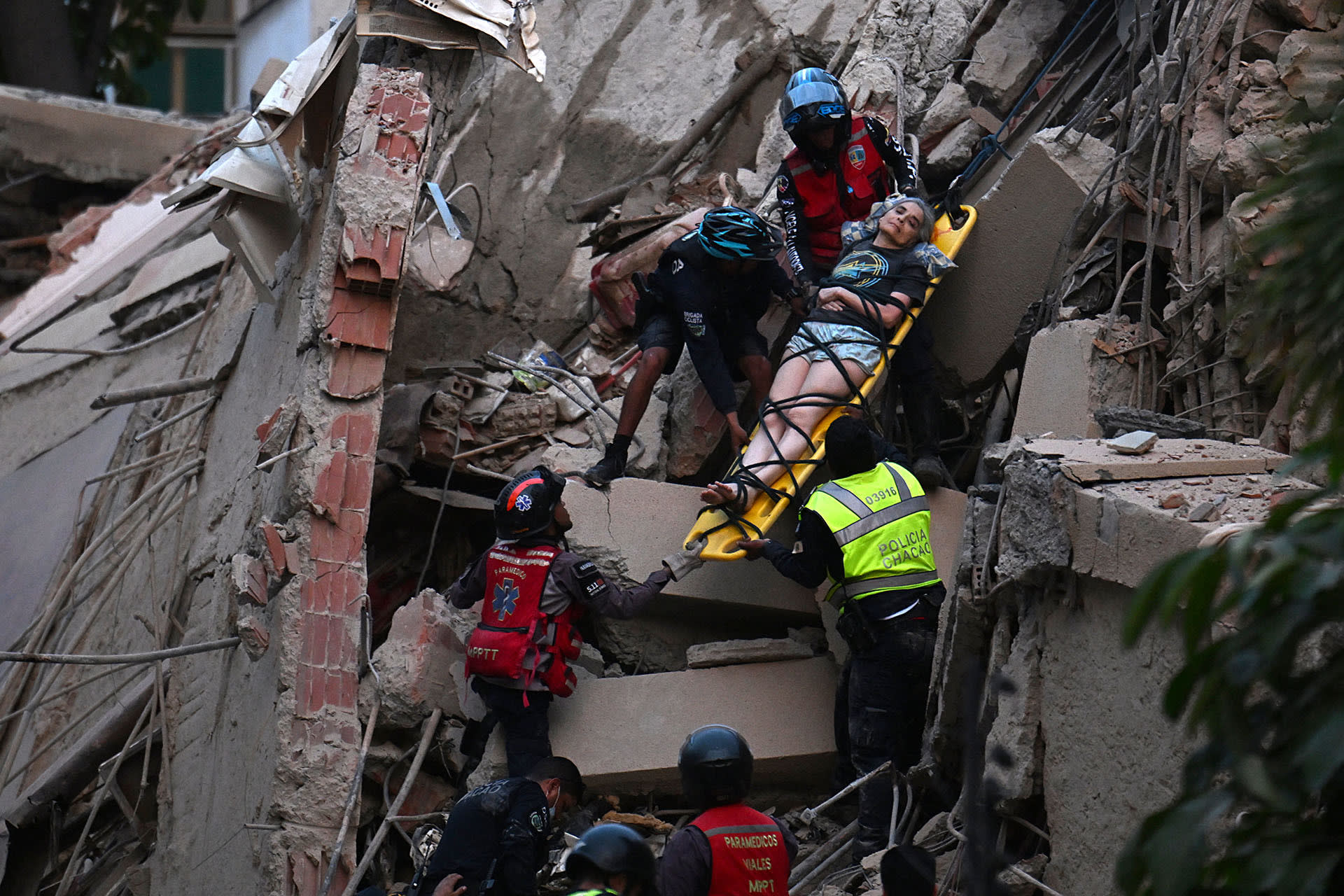
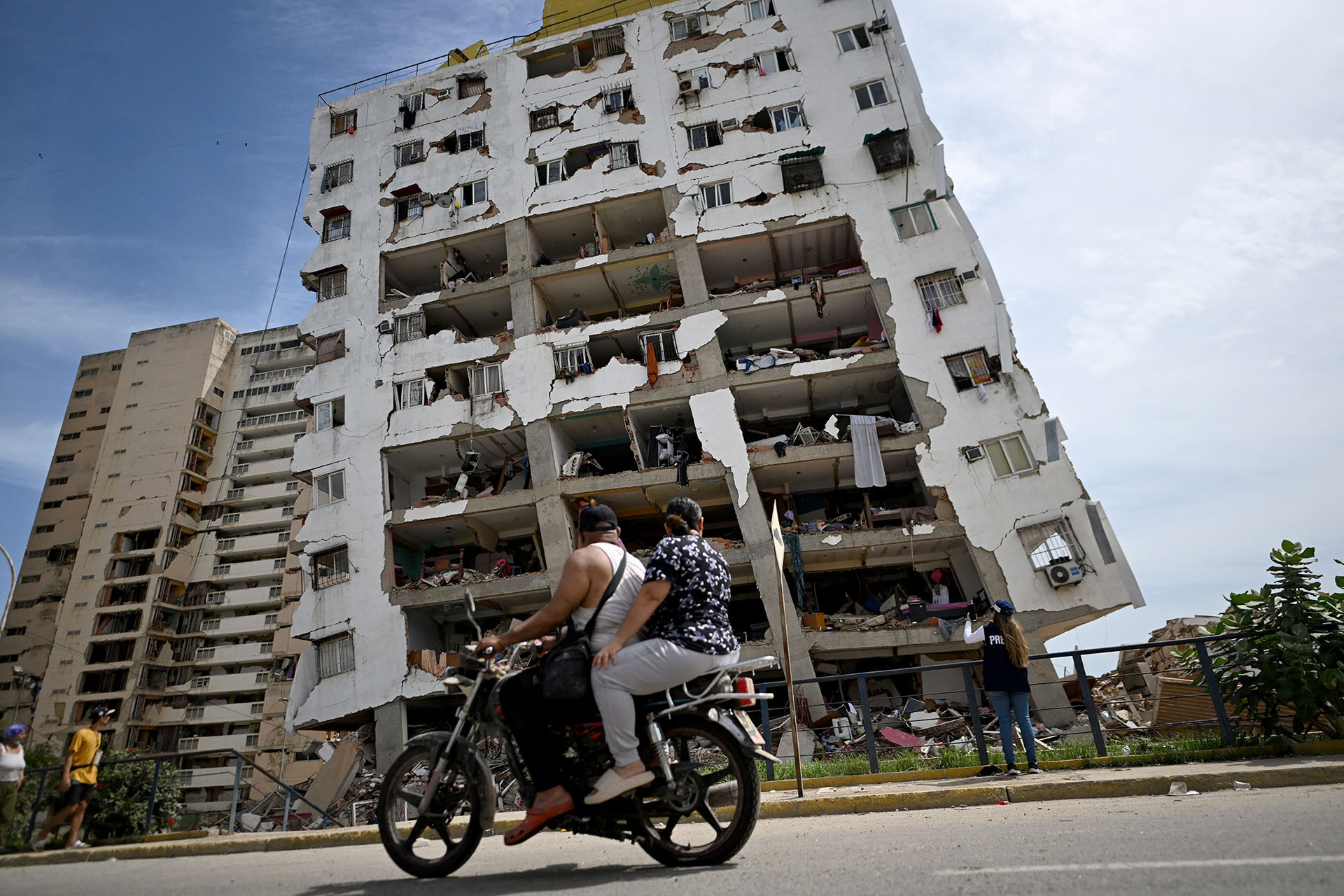
By the next morning, the Venezuelan government said the twin quakes had left 164 people dead and more than 1,000 injured. Those figures are expected to rise. The USGS estimates that the death toll could be between ten thousand and one hundred thousand people. The infrastructural toll is massive, too; footage of collapsed buildings, leaning residential towers, and injured victims indicate widespread destruction near the quakes’ epicenters, as well as in high density areas such as Caracas.
Venezuelan interim President Delcy Rodríguez immediately declared a state of emergency in a televised address, and shared that the Simón Bolívar International Airport in Caracas was closed due to damage. She also noted that several countries in the region had offered aid.
That will be needed. The scale of this disaster is on par with the 2021 southern Haiti earthquake and the 2023 Turkey-Syria earthquake, both of which resulted in massive loss of life, structural destruction, and economic damage. The United States should play a critical role in the immediate hours after a sudden onset disaster like this one, deploying life-saving teams to work with local and other international search and rescue operations. The first seventy-two hours are the period when survival rates are highest. Frontline UN and NGO aid workers will look to the United States for support to help fund shelter, food, water, and medical treatment, making early U.S. commitments an important response action.
For his part, President Donald Trump announced that the “U.S.A. stands ready, willing, and able to help!” He said that he had instructed all federal agencies to prepare to respond quickly. Secretary of State Marco Rubio said the United States is deploying search and rescue teams to Venezuela, adding that Trump has “made a full commitment to being supportive of Venezuela.”
Venezuela had humanitarian needs before the quakes
Even before the earthquakes struck, Venezuela was in the throes of a decade-long humanitarian crisis. The country’s economic implosion ranks as the largest peacetime economic collapse recorded between 1970 and 2015—a staggering contraction fueled by government mismanagement, corruption, and hyperinflation. According to the UN refugee agency, almost eight million people have left Venezuela since 2014 in search of a better life.
Following the U.S. military’s capture of Venezuelan leader Nicolás Maduro in January, the Trump administration restored some $122 million in humanitarian funding for Venezuela, making it the top humanitarian donor. This aid is bolstered by a UN country team, led by a resident coordinator, who is responsible for integrating national and international disaster funding and operations in partnership with the Venezuelan government.
This latest push by the Trump administration is the latest chapter in a two-century-long history of humanitarian assistance in Venezuela; in fact, it is the birthplace of U.S. aid abroad. In response to a March 1812 earthquake that left Caracas in ruins, the U.S. Congress appropriated $50,000 in disaster relief for survivors. Congress also authorized President James Madison to purchase and ship food to Venezuela—the first record of U.S. international disaster assistance.
Given the United States’ close involvement with Rodríguez and the Trump administration’s focus on the Western Hemisphere via its so-called Donroe Doctrine (a reinterpretation of the nineteenth-century Monroe Doctrine), the stakes are high for U.S. response actors. The world is watching closely whether the State Department retains operational capability formerly housed at the U.S. Agency for International Development (USAID).
Has the U.S. capacity to respond changed?
The initial hours following a sudden onset emergency represent a critical window for life-saving activities. After dismantling USAID, the Trump administration transferred U.S. foreign disaster assistance to the State Department, which includes its sudden onset response capacity.
Led by Jeremy Lewin, undersecretary of state for foreign assistance, humanitarian affairs, and religious freedoms, the State Department’s Bureau of Disaster and Humanitarian Response (DHR) is responsible for mobilizing and deploying resources to Venezuela’s disaster zone. Civil servants in the Office of International Disaster Response Programs and the Office of Operations and Logistics will spearhead U.S. efforts, including any coordination with the Department of Defense.
The DHR maintains a warehouse in Miami filled with emergency supplies, including tarps, hygiene kits, food, blankets, and other relief supplies that can be sent to emergency settings. DHR also has a network of United Nations and NGO partners that it can grant money to in the coming days as relief operations scale up. It is likely to rely on the UN Office for the Coordination of Humanitarian Affairs—its preferred funding instrument—to disburse one lump sum of money across dozens of other UN agencies and NGOs through a pooled fund.
The State Department also maintains standby agreements with Urban Search and Rescue (USR) teams from Los Angeles and Fairfax, Virginia, to respond to natural disasters such as earthquakes, hurricanes, and volcanic eruptions.
The following are key indicators to measure the performance of the State Department’s initial earthquake response. These represent the same policy and operational decisions that USAID would have made when it oversaw DARTs.
The State Department response in action
Hours after the twin quakes struck, Lewin announced a U.S. Disaster Assistance Response Team (DART) will be deployed to Venezuela to “deliver and coordinate critical assistance to the Venezuelan people.” DARTs are elite, modular teams of career civil servants that specialize in coordinating U.S. assistance during overseas emergencies and assessing real-time needs of affected communities. They have played critical roles in previous crisis situations; it was a DART that led the Trump administration’s successful response to Hurricane Melissa, a category 5 storm that struck Jamaica in October 2025.
An on-call list of DART members is maintained by the State Department’s DHR and pulls from staff in Washington, as well as regional hubs like San Jose, Costa Rica. Within hours, they can mobilize and deploy, equipped with pre-stocked duffle bags of supplies that allow them to be self-sufficient in a disaster zone for days. It is not uncommon for earthquake DARTs to sleep in tents—or on the ground—for weeks as the response unfolds.
According to Lewin, the Venezuela earthquake DART will deploy with an USR team, which typically includes between thirty and sixty personnel, four canines trained to find bodies trapped under building rubble, and 50,000 pounds of specialized tools—such as hydraulic concrete breaking equipment, saws, torches, and drills—as well as advanced medical equipment for search-and-rescue operations.
Secretary Rubio confirmed that the United States has deployed the Fairfax and Los Angeles USR teams, drawing on their expertise in rescue operations, emergency medicine, engineering, and hazardous material management. Earlier this week, the Fairfax USR team, in partnership with the State Department and the Air Force’s Air Mobility Command, participated in a strategic airlift exercise at Dover Air Force Base to validate cache-loading procedures and improve deployment efficiency for sudden onset disasters like the Venezuela earthquake.
The DART and USR teams will likely rely on military aircraft from the United States for transportation. Although the Caracas airport may be closed to the public, it will likely become a hub for the deployment of U.S. military assets. Before any planes take off, however, the State Department will need to issue an Executive Secretary Memorandum, allowing them to mobilize any military for airlift—both to Venezuela as well as within the country, where CH-47 Chinooks and Blackhawks can help conduct assessments and distribute food and water to stranded populations.
Once on the ground, the DART coordinates activities with the U.S. military through a Mission Tracking Matrix process. This centralized decision-making allows authorities to track assets deployed across the response, including life-saving aid supplies.
Much work lies ahead as authorities assess the extent of damage and loss of life. The surge of U.S. aid funding following Maduro’s January capture reflects the political dimension of humanitarian funding in Venezuela. Unlike other countries, such as Yemen, where the United States has withdrawn more than $700 million in life-saving aid, the expectation following this earthquake would be a massive U.S. response—boots on the ground and perhaps hundreds of millions of dollars in financing. The U.S. State Department has retained capability to deploy following a sudden onset disaster. It now needs to respond at a level proportional to this devastating tragedy by ensuring search and rescue, financing, and life-saving supplies reach the communities in desperate need.
This work represents the views and opinions solely of the author. The Council on Foreign Relations is an independent, nonpartisan membership organization, think tank, and publisher, and takes no institutional positions on matters of policy.
Colophon
Data Visualization
- Maya Fuentes-Stanard
- Will Merrow