Flash Droughts: Why Speed, Not Scarcity, Is the New Systemic Risk
Flash droughts are severe droughts that rapidly intensify over weeks rather than seasons, desiccating land and ravaging livelihoods without warning. As a result, governments need to treat them as a distinct policy category, with their own indicators, thresholds, and intervention levers.
By experts and staff
- Published
- Swathi VeeravalliPrincipal, General Resilience Solutions
- Kiersten JohnsonDirector, Famine Early Warning Systems Network, U.S. Department of State
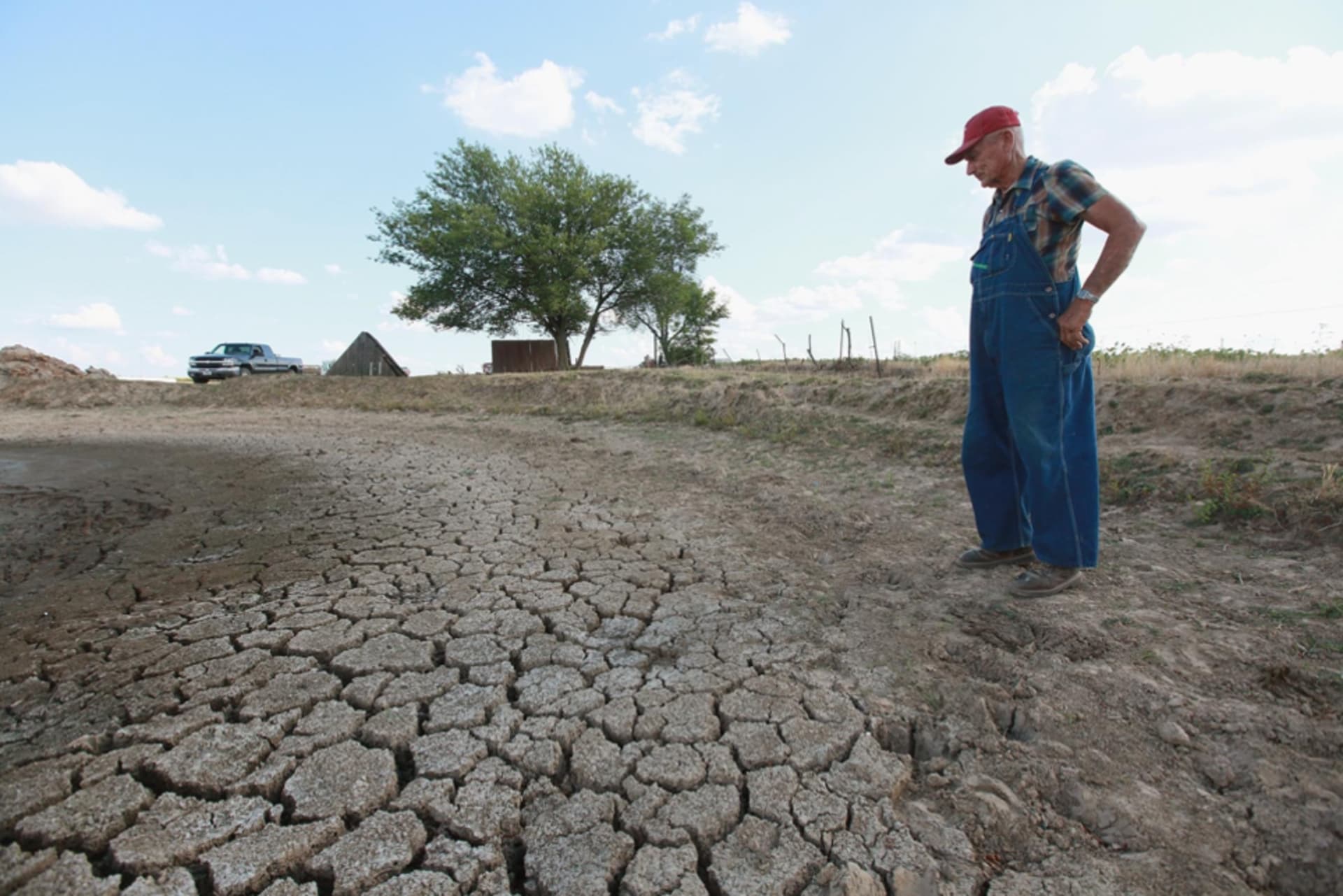
Flash droughts are severe droughts that rapidly intensify over weeks rather than seasons, desiccating land and ravaging livelihoods without warning. Such droughts are becoming a defining systemic risk because they compress warning time, scramble response interventions, and expose assumptions embedded in existing drought policy. Further, they disproportionately harm crops, livelihoods, and geographies.
The frequency and intensity of flash droughts have increased since the 1950s and are projected to continue rising.1 As a result, governments need to treat them as a distinct policy category, with their own indicators, thresholds, and intervention levers. That includes improving operational responses: leveraging satellites and science-and-technology pipelines to deliver decision-grade early signals; using platforms such as the Famine Early Warning Systems Network (FEWS NET) to enable anticipatory action, including insurance triggers and pre-positioning of humanitarian assets; and elevating flash droughts within high-level multilateral and security agendas—such as the Munich Security Conference—where extreme weather risks increasingly translate into national and regional stability challenges.
Flash Droughts: Defining Characteristics and Impacts
Flash droughts emerge from a specific compound dynamic: precipitation shortfalls coupled with anomalous heat, low humidity, strong winds, and sunny skies accelerate evapotranspiration, soil moisture loss, and agricultural and ecological stress. The result is a rapid-onset shock that outpaces traditional monitoring triggers, insurance mechanisms, and response timelines. Its societal consequences are especially acute in pastoralist and agriculture-dependent regions, where livelihoods hinge on narrow planting windows, tenuous water availability, and soil conditions.
The defining risks of flash droughts are speed and intensity. Conditions can deteriorate fast enough to generate political and security impacts before institutions designed for slower-moving crises can respond. Unlike conventional droughts that unfold over months or years, flash droughts compress warning timelines and produce severe damages before coordination mechanisms, relief programs, or market adjustments can take hold. They represent a fundamentally different planning and security problem shaped by surprise, limited margins for error, and cascading effects across food, water, and economic systems.
The characteristics and impacts of flash droughts are distinctive.2 Flash droughts are most likely to occur during the agricultural growing season, effectively building adverse effects on crops and livestock into the phenomenon itself.3 Even when seasonal rainfall totals appear near normal, these extreme events can nevertheless drive significant crop loss because plant resilience to agroclimatic shocks is highly sensitive to the timing of the shock and the crop’s growth stage. Flash droughts cause significantly greater vegetation loss than conventional droughts, impose aggravated delays on ecosystem recovery, and disrupt supply chains via effects on critical transport corridors, rendering them capable of triggering national crises with global reverberations.4
In the United States in 2012, an unexpected flash drought began in May and intensified rapidly, peaking by mid-July. Nearly two-thirds of the continental United States experienced drought conditions, making it the most extensive drought since the 1930s. Estimated losses—largely concentrated in the agricultural sector—exceeded $41 billion in Consumer Price Index–adjusted dollars.5 Crop failures in corn, sorghum, and soybeans rippled through global food markets, while domestic consequences included job losses, water shortages, energy disruptions, navigation constraints, and environmental damage. The episode underscored how quickly localized climatic shocks can propagate through tightly coupled food and economic systems.
Flash droughts are responsible for recent increases in historically catastrophic wildfires around the world, including Australia’s unprecedented 2019–2020 Black Summer fires that affected 80 percent of the population and caused $1.5 billion of insured loss, the United States’ deadliest wildfires in a century in Hawaii in 2023, and among the most devastating European wildfire seasons on record that destroyed nearly 3,860 square miles (10,000 square kilometers) of forest and farmland in Portugal and Spain in 2025.6
Flash drought conditions also threaten energy security, as they throttle hydroelectric energy production due to low water levels, and shutter nuclear power plants because too-warm river waters can no longer sufficiently cool the systems.7
Flash droughts have increased in both frequency and intensity over recent decades, and their compounding and cascading impacts have worsened correspondingly.
Why Flash Droughts Are Hard to Govern: Forecasting, Exposure, and Vulnerability
Existing drought governance frameworks remain largely oriented toward gradual onset droughts. They assume incremental impacts, sequential escalation across drought typologies, and sufficient time for assessment, mobilization, and coordination. Flash droughts’ speed and limited predictability disrupt those assumptions. When warning time collapses, so does institutional flexibility. Crop losses, livestock mortality, livelihood disruption, and water stress can materialize within a single growing season, leaving little room to adapt once damages are visible. The stakes are therefore higher not only because flash droughts move faster, but because they narrow the range of viable response options before decision-makers have to act. That is especially so in places with a higher risk of flash droughts and a more limited capacity to forecast, prepare for, and respond to them.8
Forecasting and Detection Challenges
Flash droughts challenge existing forecasting systems because they evolve faster than the temporal resolution of most drought indicators. Current monitoring approaches rely heavily on monthly measures of precipitation anomalies, temperature signals, soil moisture observations, and vegetation stress. Although that approach is effective for tracking slow-onset droughts, it is poorly aligned with the pace at which flash drought conditions develop.
Capturing flash drought dynamics requires a different approach: a suite of indicators generated at weekly (or finer) intervals, including measures of soil moisture, total liquid precipitation, actual and potential evapotranspiration, temperature, surface pressure, vapor pressure deficit, and wind speed.9 Although such indicators exist, their operational use for forecasting flash droughts remains uneven, and their translation into decision-ready triggers is limited.
A quieter but consequential trend compounds those technical challenges: the steady decline of ground-based weather monitoring stations across large parts of the world since the 1970s.10 Those stations are essential for calibrating and validating satellite-derived observations. As they go offline, the fidelity of global satellite-derived weather monitoring degrades precisely as demand for high-resolution, near-real-time data increases. Recent geopolitical shifts have further strained the international cooperation required to maintain and share those observational networks. At a moment when flash drought risk is accelerating, collective visibility into ground-truthed conditions is eroding.
Flash droughts can therefore emerge without warning as national crises with global reverberations. During the summer of 2010, a flash drought unfolded across western Russia, rapidly desiccating land surfaces and reinforcing an extreme heatwave. Described by some observers as a “heat tsunami,” the event contributed to an estimated eleven thousand excess deaths and fueled widespread wildfires, severe air pollution, and population displacement.11 Agricultural losses were severe, with wheat yields falling by roughly 70 percent in key producing regions.12 In August 2010, the Russian government imposed a wheat export ban to stabilize domestic markets. Global wheat prices surged, amplifying food insecurity in import-dependent countries and illustrating how rapid-onset climate shocks can cascade through international systems.13
Differential Exposure and Uneven Impacts
Flash drought risk is not evenly distributed. It tends to concentrate in “geographies of volatility,” shaped by climate patterns, soil characteristics, land use, and dependence on rain-fed agriculture.
At a global scale, watersheds in the Southern Hemisphere—the Amazon and Brazil in South America and most of central and southern Africa—are experiencing increasingly expansive and longer-lasting flash droughts, with more rapidly intensifying onsets over time.14 More localized hot spots of risk are also appearing over the central United States, northeastern China, and southwestern Russia.15 The governments and populations of the geographies at greatest risk have limited adaptive capacity to absorb the shock and devastation of a flash drought. Those with greater adaptive capacity, such as the United States, are nevertheless likely to transmit the shock into the wider global food system via higher agricultural commodity prices, which will aggravate already-high levels of global food insecurity.
At a national scale, communities and regions experience the same flash drought event differently. Exposure, coping capacity, and timing interact to shape outcomes across livelihood systems. Populations most dependent on rain-fed agriculture, which are often among the world’s poorest, face the greatest risk. Although irrigation can buffer crops against short-term moisture stress, reliance on groundwater introduces its own vulnerabilities. Over-extraction can displace risk into the future, reducing resilience as flash droughts become more frequent and intense.
Institutional Vulnerability and Strategic Surprise
The central governance challenge posed by flash droughts is not a lack of data, but a mismatch between the speed of the hazard and the tempo of institutional response. Most drought policy frameworks assume gradual progression across meteorological, agricultural, hydrological, and economic drought stages. Flash droughts disrupt that sequence. Triggers for insurance payouts, relief delivery, and political mobilization often fail to activate before losses lock in.
Decision-makers struggle to keep pace with conditions that evolve faster than funding cycles, bureaucratic procedures, and political attention. When warning time collapses, so does the margin for error. In regions where food production, water availability, and energy demand are tightly coupled, flash droughts can introduce a form of strategic surprise—degrading stability through non-kinetic means before traditional intelligence, diplomatic, or humanitarian signals register.
Strategic Implications
Flash droughts make anticipatory action a strategic necessity rather than a discretionary policy choice. In slow-onset crises, delays can sometimes be absorbed through adaptive measures, market adjustments, or international assistance. Flash droughts collapse that buffer. When impacts materialize within weeks, waiting for confirmation before acting all but guarantees loss.
The increasing fragility of the international trade environment compounds that challenge. Historically, imports could mitigate shortfalls in domestic food production, providing a critical shock absorber for food-insecure states. Today, rising protectionism, geopolitical tension, and active conflict along major trade routes have reduced the reliability of global markets as a fallback option. For countries with limited fiscal space or import and storage capacity, rapidly emerging shortages can no longer be assumed to be temporary or externally solvable. In that context, delayed response does not merely increase humanitarian cost—it raises the risk of political instability and regional spillover.
Operational Interventions: Moving Earlier in the Risk Cycle
Effectively mitigating the effects of flash droughts requires shifting from reactive crisis management to pre-positioning and early action. Early-warning systems need to function not only as reporting mechanisms, but as decision-support platforms tied to predefined response pathways.
Platforms such as FEWS NET already provide sophisticated early warning for food insecurity. Their strategic value lies in their potential to link climate signals directly to action: triggering insurance payouts, mobilizing contingency financing, and pre-positioning food, water, and logistical assets before impacts cascade. Realizing that potential requires clearer thresholds, stronger mandates to act under uncertainty, and closer alignment between analysts and decision-makers.
Satellite-based monitoring and science-and-technology pipelines are essential to that effort, but only if technical signals are translated into decision-grade information. Policymakers need clear indicators, agreed triggers, and an understanding of what actions those triggers authorize. Without that translation, advances in monitoring risk outpace the institutions meant to use them.
Leveraging Diplomatic and Security Platforms
Flash droughts remain underrepresented in high-level security and diplomatic forums, despite their growing relevance to national and regional stability: they generate food crises that drive unmanaged and large-scale migration of vulnerable people, they create tinder for wildfires that draw military resources towards emergency management and away from defense priorities, and they facilitate conditions that allow violent extremist organizations to leverage resource scarcity and human desperation to advance malign agendas. Venues such as the Munich Security Conference offer an opportunity to elevate flash droughts as cross-border risks at the intersection of climate, food, energy, and security domains.
Elevating that issue in those settings would enable commitments on data sharing, early-warning coordination, and anticipatory financing—areas where unilateral action is insufficient. A shared flash drought playbook, developed among governments, humanitarian actors, and financial institutions, could establish common monitoring standards, joint triggers, and coordinated pre-positioning strategies. The objective is not to create new institutions, but to align existing ones around a risk that moves faster than current governance structures allow and affects every country.
Conclusion
Flash droughts expose a fundamental mismatch between the speed of extreme climate events and the tempo of institutional response. Their rapid onset does not primarily test a country’s ability to observe environmental change; it tests whether governance systems are willing and able to act before loss becomes inevitable. When warning time collapses, the costs of delay compound quickly, and the range of viable responses narrows just as political and economic pressures intensify.
As flash droughts become more frequent, that mismatch grows more consequential. In a global system already constrained by fragile trade relations, stretched humanitarian capacity, and heightened geopolitical tension, rapid-onset climate shocks carry outsized human and national security risks. The question facing policymakers is no longer whether early warning exists, but whether decision-making systems are designed to move at the speed required—while uncertainty is still manageable and stability can still be preserved.
The views expressed are those of the authors and do not reflect the official policy or position of the U.S. Department of State or the U.S. government.
Swathi Veeravalli is the principal of General Resilience Solutions. Previously, she served as the director for climate security and adaptation at the National Security Council and was U.S. Africa Command’s first climate security advisor.
Kiersten Johnson directs the U.S. Department of State’s Famine Early Warning Systems Network. In previous research roles, she led developments in the integration of NASA’s satellite remote-sensing data into population health surveys.