France and UK Send Warships to Mediterranean
By experts and staff
- Published
Welcome to the Daily News Brief, CFR’s flagship morning newsletter summarizing the top global news and analysis of the day.
Top of the Agenda
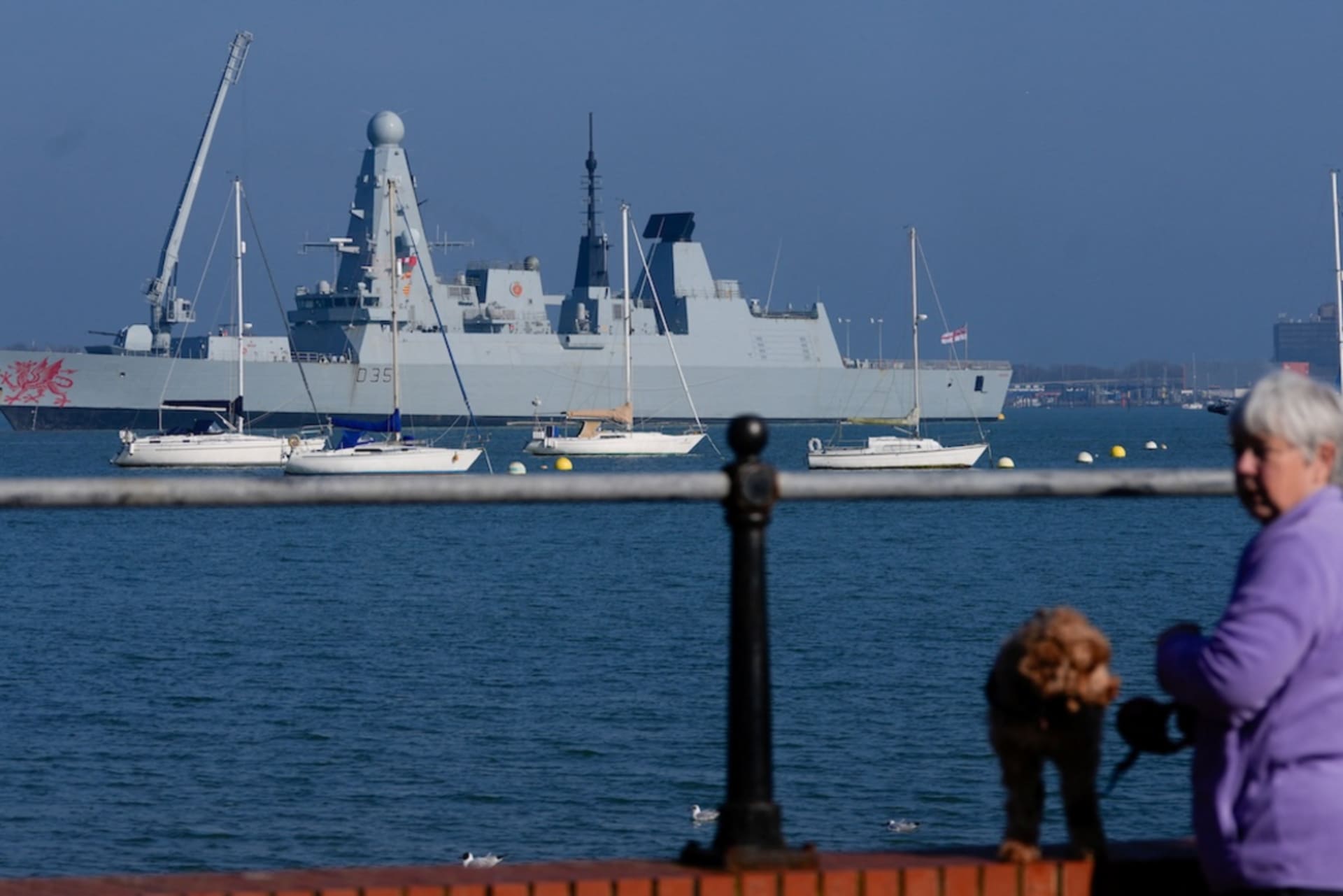
The United States and Israel’s war with Iran continues to spread geographically and weigh on energy markets. Turkey said NATO air defenses shot down an Iranian ballistic missile fired toward Turkish airspace today, while U.S. Defense Secretary Pete Hegseth said the United States sank an Iranian warship in international waters—appearing to reference a ship that sank near Sri Lanka earlier today. France and the United Kingdom (UK) announced they would each deploy a warship to the Mediterranean. U.S. President Donald Trump announced the United States Development Finance Corporation will offer insurance “at a very reasonable price” to ensure maritime trade flows in the Gulf.
In Washington, Hegseth told reporters this morning the United States was “accelerating, not decelerating” military action and said that, alongside Israel, it aimed to gain “uncontested control” of Iranian air. Trump notified Congress in a letter this week that the operations were meant to protect the U.S. homeland and forces in the region, advance U.S. national interests, and ensure “collective self-defense of our regional allies, including Israel.” Despite U.S. officials’ arguments that an Iranian threat was imminent, the UN nuclear chief said yesterday that Iran was not days or weeks away from having a nuclear weapon.
The leaders of both France and Spain criticized the U.S.-Israeli attacks on Iran this week, which they said broke international law. After Spain barred the United States from using its bases, Trump threatened yesterday to suspend all trade with the country. A European Union (EU) trade spokesperson said the bloc stands “in full solidarity” with members and will defend their interests.
Inside Iran, officials reportedly were working to select the country’s next supreme leader. Israel said the individual would be “a target for elimination.” Trump said yesterday that Iran’s next supreme leader could be “as bad as” his predecessor, which he characterized as a “worst case” scenario for the conflict. U.S.-Israeli strikes in Iran, and Iran’s retaliatory strikes across the Gulf, are ongoing. There have been no reports of a broad popular uprising, despite Trump urging Iranians to “take back” their country over the weekend. CNN reported yesterday that the CIA is discussing arming Kurdish forces in Iran in an effort to foment revolt. The CIA declined to comment.
“The disastrous aftermath of U.S.-led regime change in Iraq more than two decades ago could be repeated in Iran with an even wider threat of regional upheaval unless a rational plan for ending the conflict diplomatically is put in place.”
—CFR Senior Fellow Linda Robinson in an Expert Take
Across the Globe
Merz-Trump meeting. The EU wants to finalize its U.S. trade deal soon and will not accept worse tariff terms than those currently under consideration, Merz told Trump in their Oval Office meeting yesterday. Brussels paused ratification of the deal after the Supreme Court struck down Trump’s emergency tariffs. Merz also said Ukraine must “preserve its territory” and voiced hope for a swift end to the Iran war.
U.S.-Ecuador operation. Military forces from the two countries launched joint operations yesterday against U.S.-designated terrorist groups in Ecuador, U.S. Southern Command said. The announcement did not provide further details about the groups targeted or the operation. Ecuadorian President Daniel Noboa has made cracking down on crime a key facet of his agenda.
Canada’s stance on mineral cooperation. Canada believes its support of a critical minerals buyers’ alliance is the best way to reduce global overconcentration of supplies, the country’s energy and natural resources minister told Reuters yesterday. Canada launched the alliance during its G7 presidency last year, and current G7 president France supports it, the minister added. The concept differs from the critical minerals price floor pitched by U.S. officials at a Washington meeting last month. Earlier this week, Canada signed deals with twelve countries totalling $9.2 billion in potential mining investments.
South Korea stock selloff. One of the country’s main stock indexes fell 12 percent today, its largest one-day drop on record, amid concerns about the impact of the war in Iran on energy supplies. South Korea is the world’s eighth-largest energy importer. Its stock market had been one of the best performing in the world this year.
Forum on autonomous weapons rules. From this week through September, 128 countries will debate a non-binding document that could pave the way for future negotiations on autonomous weapons regulations. The talks fall under the umbrella of the Convention on Certain Conventional Weapons, which bans arms like certain land mines and blinding laser weapons. A Dutch diplomat helping direct the process told Reuters yesterday that failing to act could lead to countries being “overtaken by technological developments.”
U.S.-China trade meeting. Top trade officials from both countries will meet later this month ahead of Trump’s trip to China, Bloomberg reported citing unnamed sources. The officials will reportedly discuss potential U.S. sales of Boeing planes and soybeans to China, as well as tariffs and Taiwan. The U.S. Treasury and the Chinese Commerce Ministry did not comment.
British student visa restrictions. The UK will no longer issue student visas to nationals of Afghanistan, Cameroon, Myanmar, and Sudan, the government announced today. It will also restrict skilled work visas for Afghans. The government said the move was intended to curtail “visa abuse” and ensure the asylum system aids people “genuinely in need.”
Afghanistan-Pakistan death toll. Clashes between the two countries have killed at least forty-two civilians in Afghanistan between February 26 and March 2, the UN mission in Afghanistan said yesterday. It urged a halt to the ongoing violence, which it said is exacerbating Afghanistan’s “already grave humanitarian situation.” Authorities in Pakistan reported at least one civilian was killed there, too; at least a dozen security forces have been reported killed on each side.
What’s Next
- Today, U.S. Under Secretary of Defense for Policy Elbridge Colby speaks at CFR in Washington, DC.
- Today, China’s top political advisory body begins its annual meeting in Beijing.
- Tomorrow, Nepal holds parliamentary elections.