Iran Names New Supreme Leader
By experts and staff
- Published
Welcome to the Daily News Brief, CFR’s flagship morning newsletter summarizing the top global news and analysis of the day.
Top of the Agenda
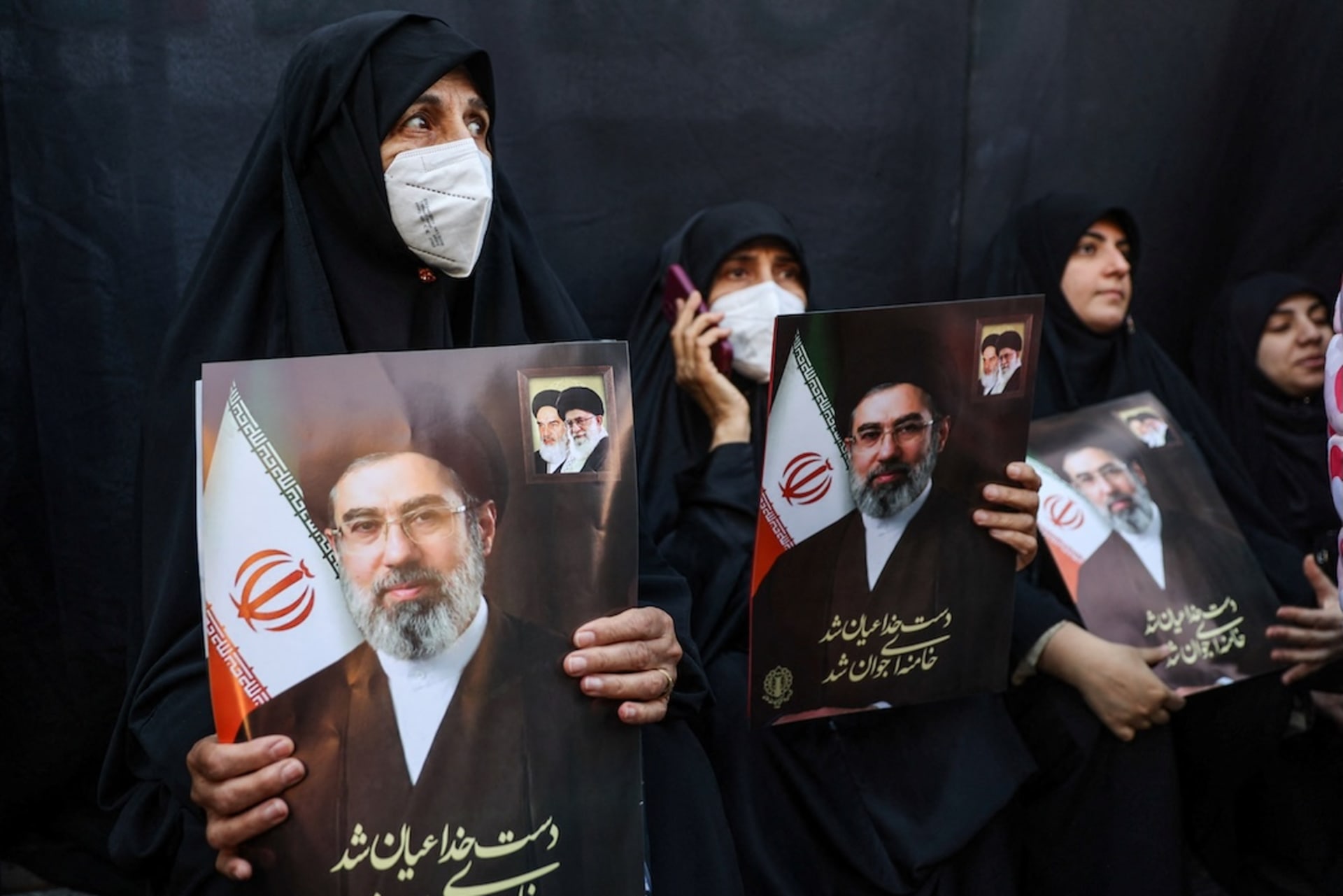
Iran named a new supreme leader yesterday as the war escalated, with strikes hitting additional infrastructure targets over the weekend and spiking global oil prices. Newly chosen Supreme Leader Mojtaba Khamenei is the son of Ayatollah Ali Khamenei, who was killed in the first day of strikes on Tehran. A hardliner, he is known to be close to the Islamic Revolutionary Guard Corps. U.S. President Donald Trump last week said that he should have a personal role in choosing Iran’s next leader and called Mojtaba Khamenei an “unacceptable” choice. U.S., Iranian, and Israeli officials all vowed in public statements to continue fighting.
Weekend attacks. Water desalination plants were attacked in Iran and Bahrain over the weekend, officials from both countries said, though blame for the strikes was disputed. On Saturday, Israel attacked multiple oil facilities in Iran, sparking a fire that blanketed Tehran in black smoke and prompted the Iranian Red Crescent Society to warn of acid rain exposure. Fighting between Israel and Hezbollah continued in Lebanon, where almost four hundred people have been killed over the past week and more than half a million displaced, officials said.
The energy fallout. Oil companies in Iraq, Kuwait, and Qatar have begun reducing oil production because shipping traffic remains largely halted in the Strait of Hormuz. After global oil and jet fuel prices soared in the war’s first week, oil spiked to nearly $120 per barrel early today. The price fell slightly after the Financial Times reported that G7 countries may decide to jointly release petroleum reserves. Trump argued on social media yesterday that short-term oil prices “will drop rapidly when the destruction of the Iran nuclear threat is over,” adding that price increases were “a very small price to pay” for U.S. and global security.
U.S. weighs strategies. Trump appeared to rule out the possibility of mobilizing Kurdish forces against the Iranian government when speaking to reporters Saturday. Asked whether the United States might try to attempt to seize Iranian nuclear materials directly in a raid, Trump said it was “something we could do later on.” He also said that the map of Iran would “probably not” look the same after the war.
“There is a difference between concluding a successful military operation and achieving a positive outcome for Iran’s people. The U.S. military objectives appear achievable. Israel’s political objectives may be more difficult. But what this all means for a future of freedom and prosperity of the Iranian people is the most difficult question of all.”
—CFR President Michael Froman, The World This Week
Across the Globe
Russia’s role in Iran war. Russia is providing Iran with intelligence to help it target U.S. assets in the Middle East, the Washington Post reported Friday, citing unnamed sources. A Kremlin spokesperson declined to comment, while Iranian Foreign Minister Abbas Araghchi said yesterday Russia was “helping” Iran but declined to provide details. Asked about the reported Russian involvement, U.S. Secretary of Defense Pete Hegseth said the United States was “not concerned” and would “mitigate it as we need to.”
U.S.-UK friction over war. Trump and United Kingdom (UK) Prime Minister Keir Starmer held a call yesterday after Trump criticized a UK offer to send aircraft carriers to the Middle East on Saturday as coming too late. While Starmer’s decision not to join the initial U.S. strikes on Iran prompted some criticism in the UK, his foreign secretary said yesterday the UK needed to “learn the lessons” of mistakes made in Iraq. Some U.S. aircraft began arriving at UK bases over the weekend for defensive purposes, the UK defense ministry said.
Trump’s anti-gang plans... Trump met with twelve Latin American leaders in Florida Saturday to discuss plans to cooperate against drug cartels. The United States will train militaries in Latin America to ensure gangs are “demolished,” Trump wrote in a proclamation. Former Secretary of Homeland Security Kristi Noem is serving as special envoy to the new regional anti-gang initiative and said Washington would also work with its member countries on curbing migration.
...and talks with Cuba. In his speech at the event, Trump said a “great change” will “soon be coming to Cuba” and that he and Secretary of State Marco Rubio are in talks with the Cuban government. Trump did not provide further details, though Rubio in recent weeks has called for Cuba’s economic and political liberalization. The administration has been discussing an economic deal with Cuba that could include loosening sanctions and travel restrictions, USA Today reported yesterday.
Nepal’s change election. A political party founded only four years ago is leading the vote count after the country’s parliamentary election Thursday—the first since mass, youth-led protests toppled the government last year. One of the party’s leaders, former rapper Balendra Shah, may become the next prime minister. Final results are expected later in the week.
Probe at U.S. embassy in Oslo. Norwegian authorities are investigating an explosion caused by an incendiary device outside the U.S. embassy early Sunday, an Oslo police official said. No one was hurt in the incident. Investigators are assessing the possibility it was a targeted attack on the embassy.
Guinea’s political crackdown. Guinea’s government dissolved forty political parties in a decree Friday ahead of planned legislative elections in May. The country’s main opposition leader said the move amounted to “war” against President Mamady Doumbouya’s challengers. The government said the parties failed to meet legal obligations like filing financial statements, which several of the parties denied. Doumbouya, who seized power in a 2021 coup, won the presidential election in December after many rivals were banned from participating.
China celebrates U.S. ties. Beijing hopes that 2026 will be a “landmark” year in U.S.-China relations, Foreign Minister Wang Yi told reporters yesterday. Ongoing engagement between Trump and Chinese President Xi Jinping acts as a “strategic guarantee” for bilateral ties, Wang added. Trump is due to visit China later this month. Wang’s comments suggest Beijing hopes the Iran war does not destabilize U.S.-China relations, analysts told Bloomberg.
What’s Next
- Today, Philippine President Ferdinand Marcos Jr. begins a visit to New York.
- Today, the UN Security Council discusses Afghanistan.
- Tomorrow, UN nuclear chief Rafael Grossi speaks at a nuclear energy summit in Paris.