Iran Vows to Keep Fighting
By experts and staff
- Published
Welcome to the Daily News Brief, CFR’s flagship morning newsletter summarizing the top global news and analysis of the day.
Top of the Agenda
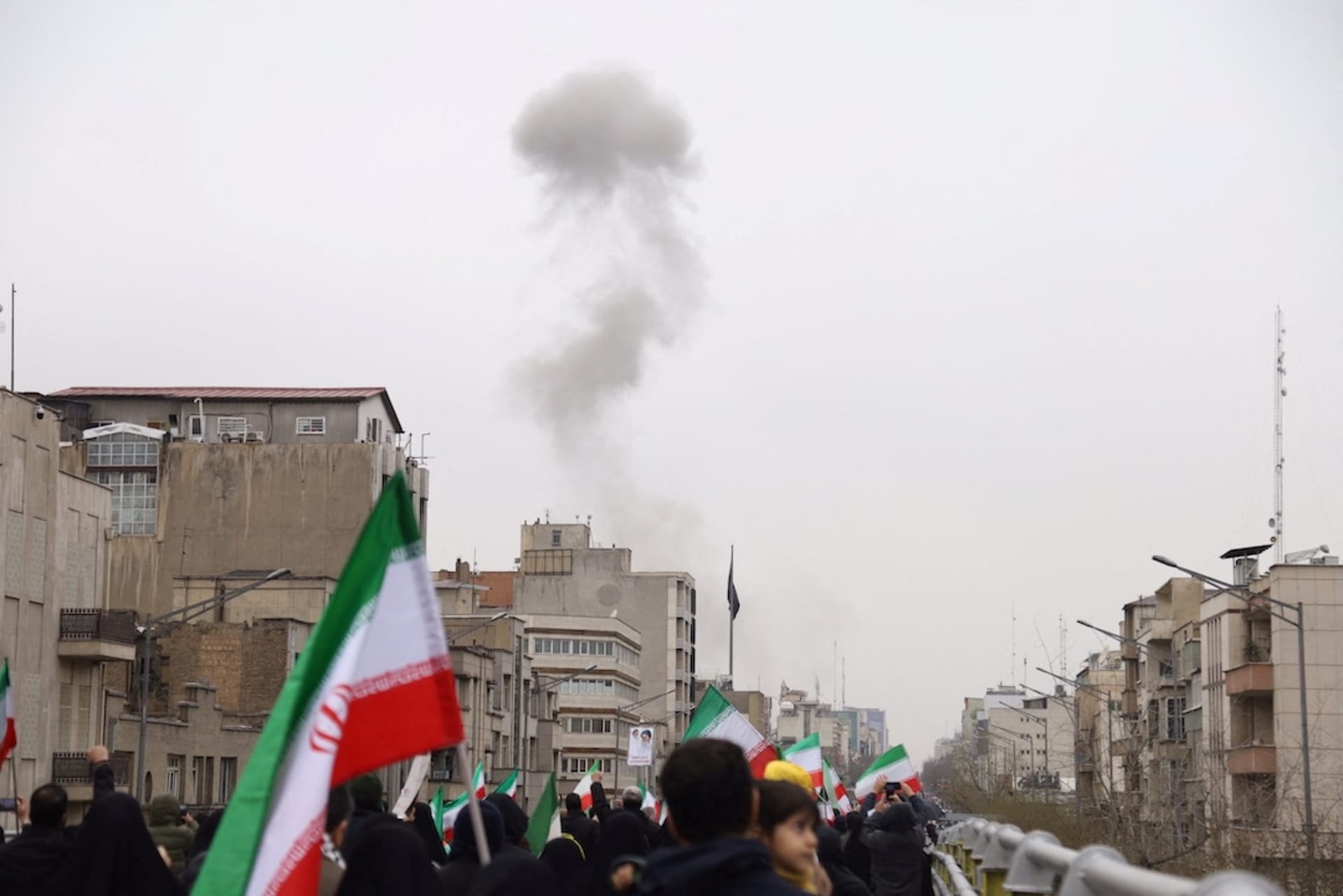
Iran vowed to continue the war in a statement yesterday attributed to new Supreme Leader Mojtaba Khamenei. The statement promised to keep pressure on the Strait of Hormuz and said Iran’s retaliation against U.S.-Israeli strikes was not complete. Khamenei has not been seen since his appointment and is thought to have been injured at the start of the war; his message was read on state television. In Washington, U.S. Defense Secretary Pete Hegseth pledged this morning to “keep advancing” with “no mercy for our enemies.” The statements from both capitals suggested no immediate end to the war or the energy shock roiling the world economy.
The latest on the battlefield. Iran continues to shoot missiles and drones at Israel and targets in the Gulf, while Israel fires at Iran and Lebanon. Israel issued an evacuation order for parts of Tehran and widened its order for Lebanon to now cover around a tenth of the country. Turkey announced today its NATO air defenses shot down an incoming Iranian missile, the third in two weeks. In Iraq, a French service member was killed after a pro-Iranian group said it would target French forces, while at least four U.S. soldiers died in a plane crash yesterday that U.S. Central Command said was not due to hostile or friendly fire. That event is still under investigation.
The latest on economic fallout. While Iran’s ambassador to the United Nations argued yesterday that Tehran would not fully close the Strait of Hormuz, the country’s semi-official Fars News Agency said ships passing through “could be at risk from missiles or rogue drones.” In response to the near-halt in oil shipping in the strait, and in an effort to increase the amount of oil on global markets, the United States temporarily lifted sanctions yesterday on Russian oil that was already at sea. German Chancellor Friedrich Merz criticized the move, saying that the war in Iran should not distract from support for Ukraine.
“This operation will ultimately be judged on its long-term outcome. If we end up with a more stable and peaceful region and a less hostile Iranian regime, it will be heralded as a resounding success. If, on the other hand, we find ourselves in a quagmire with ongoing chaos and conflict, there will be a lot of second-guessing.”
—CFR President Michael Froman, The World This Week
Across the Globe
Attacks in Michigan, Virginia. The FBI is investigating a car ramming attack at a Michigan synagogue yesterday as a “targeted act of violence against the Jewish community,” a special agent said. The attacker was killed and there were no other fatalities. The FBI also opened a terrorism investigation into an attack yesterday in which a man opened fire at a Virginia university, killing one person before he was killed by Reserve Officers’ Training Corps students who were subduing him. The man had previously pleaded guilty and served prison time for federal charges related to providing material support to the self-declared Islamic State, FBI officials said.
Canada’s Arctic military push. Canadian Prime Minister Mark Carney yesterday laid out a plan for spending nearly $26 billion over the next ten years for airports and military bases in northern Canada. The funds had been announced in 2022 but not spent. Carney said the steps would support a deterrence posture in Canada’s Arctic and North with greater scale than before.
Romania-Ukraine defense deal. The countries will jointly produce drones as part of an agreement signed yesterday during Ukrainian President Volodymyr Zelenskyy’s visit to Bucharest, he announced. They also signed another deal on energy cooperation: the governments are working to build two new cross-border power transmission lines, and the leaders discussed the possibility of transporting U.S. liquefied natural gas through Romania to Ukraine, according to Zelenskyy.
China’s new language law. All Chinese schoolchildren will be taught Mandarin from kindergarten through the end of high school under a law approved yesterday that also includes provisions on housing and entertainment. Previously, China allowed education to occur in Tibetan, Uyghur, or Mongolian if those were students’ native languages. Beijing says the step helps foster “ethnic unity,” while critics say it suppresses the country’s more than fifty ethnic minorities.
South Korean investments in the U.S. South Korea passed a law laying out the structure of the $350 billion it pledged to invest in the United States in order to secure a lower tariff rate last year. A shipbuilding partnership will account for $150 billion, while $200 billion will go to additional investments capped annually at $20 billion. That deal was reached before Trump’s emergency tariffs were struck down by the Supreme Court last month, but the Trump administration on Wednesday included South Korea on a new list of countries where it is launching trade probes.
U.S. tariff refund system in progress. The system for refunding some $166 billion in tariffs collected by the Trump administration that were deemed unlawful is between 40 to 80 percent complete, an official from U.S. Customs and Border Protection said in a court filing yesterday. The system, which includes an online portal for claims, could be up and running by the middle of April, he said in a separate filing last week.
Cuba’s prisoner release. Cuba’s government will free fifty-one prisoners as a goodwill gesture amid talks with the Vatican, it announced yesterday. The Vatican has been trying to mediate talks between Havana and Washington as the Trump administration pushes for political and economic change on the island. Recent U.S. efforts to effectively blockade fuel going to Cuba have deepened the island’s energy crisis.
DRC’s first gold refinery. The Democratic Republic of Congo (DRC) opened its first gold refinery this week in the eastern city of Kalemie, its mining ministry announced. The state-backed initiative is part of government efforts to refine strategic minerals at home and to exert control over a gold mining sector with high levels of informality and links to criminal groups, officials have said.
What’s Next
- Today, Canadian Prime Minister Mark Carney begins a visit to Norway.
- Tomorrow, the Indo-Pacific Energy Security Forum, hosted by the United States and Japan, begins in Tokyo.
- Sunday, Kazakhstan holds a constitutional referendum.
- Sunday, the Republic of Congo holds a presidential election.