Iran War’s Maritime Front Heats Up
By experts and staff
- Published
Welcome to the Daily News Brief, CFR’s flagship morning newsletter summarizing the top global news and analysis of the day.
Top of the Agenda
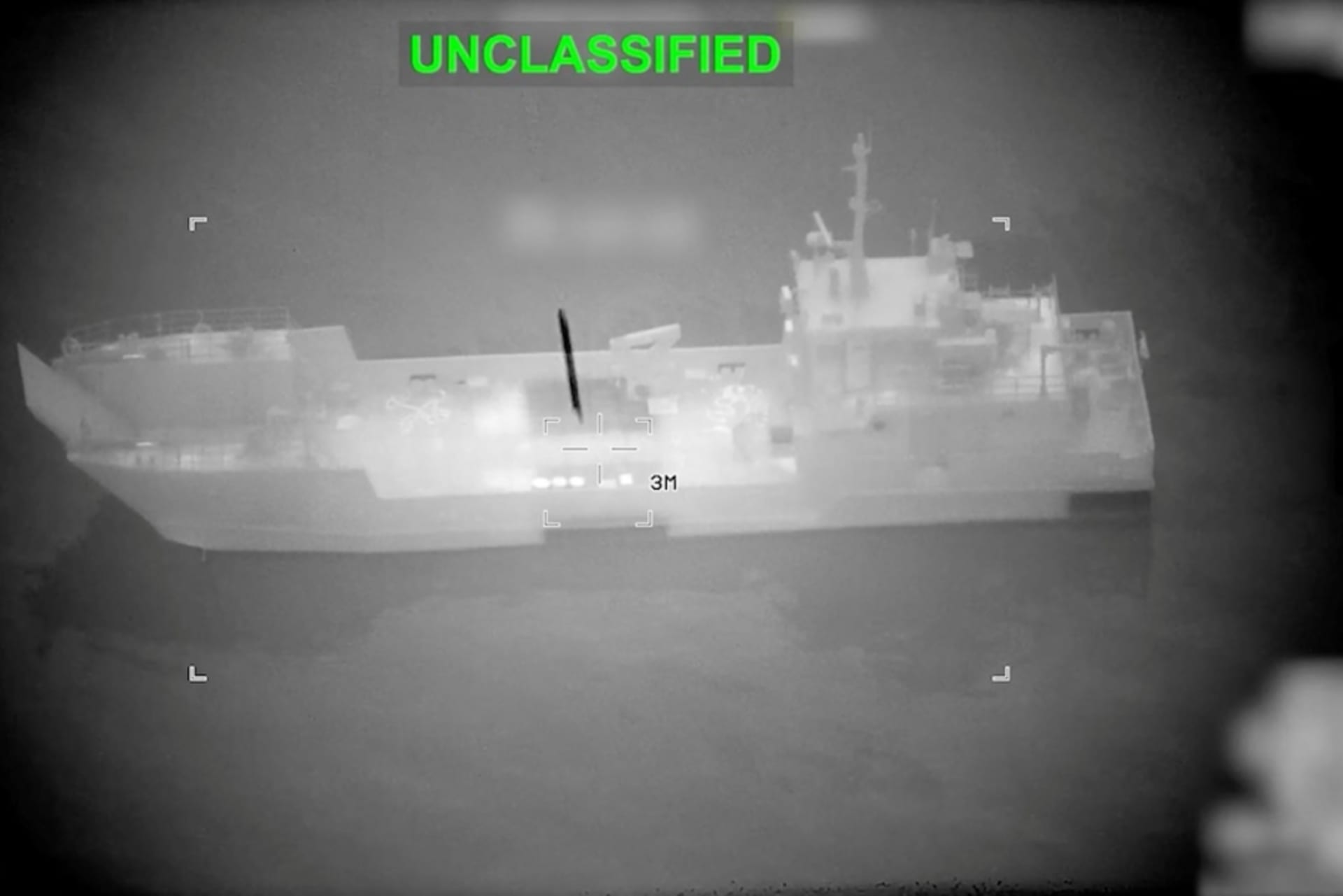
The United States and Israel carried out heavy bombing of Tehran yesterday, while officials on both sides warned of maritime escalation. The United States announced it destroyed Iranian vessels capable of laying mines in the Strait of Hormuz, which could have added to the risks faced by commercial ships. Three ships were attacked in separate incidents in the strait today, the United Kingdom (UK) maritime agency said. As countries across the world begin to feel the gap in global oil supply, the thirty-two member states of the International Energy Agency are due to decide today whether to release strategic oil reserves.
The debate in Washington. Around 140 U.S. service members have been wounded in the war so far and seven have died, the Pentagon said yesterday. It has not released estimates on the war’s financial cost, but the Washington Post reported that the United States spent $5.6 billion in the first two days of the war alone. U.S. Joint Chiefs of Staff Chairman Dan Caine said yesterday the United States was making progress reducing Iran’s missile, drone, and naval capabilities and was looking at options to get maritime trade flowing.
Congressional Republicans have backed the campaign during war powers votes, while many Democrats have criticized it. After a classified briefing yesterday, Senator Chris Murphy (D-CT) wrote on social media that he considered the administration’s war plans “incomplete” and argued it does not know how to safely reopen the Strait of Hormuz.
Shifting U.S. priorities. The Iran war is rippling into other geopolitical theaters. The United States is reportedly moving some missile defense equipment from South Korea to the Middle East as fighting continues. South Korea’s president opposed the move but said yesterday it would not weaken Seoul’s capabilities. Ukraine has dispatched drone experts to multiple Gulf countries targeted by Iran. Since Ukraine worries the Iran war will deplete the amount of interceptors supplied by its allies, Germany and other European countries committed to providing around thirty-five interceptor missiles to Kyiv, Bloomberg reported yesterday.
“Can Washington translate its military campaign against Iran into a desirable political outcome? The way this war ends will ultimately determine whether Trump’s decision to attack Iran goes down in history as a rash act of folly or a courageous strategic success.”
—CFR expert Charles A. Kupchan
Across the Globe
Attempts at Lebanon diplomacy. The United Nations Security Council is holding an emergency meeting on the fighting in Lebanon today at France’s request. Lebanese President Joseph Aoun has publicly called for international help securing a ceasefire between Hezbollah and Israel. Israel’s recent strikes in Lebanon have displaced hundreds of thousands of people in recent days. Human Rights Watch accused Israel earlier this week of unlawfully using white phosphorus over civilian areas in Lebanon; Israel’s military told Reuters it was not aware of the matter.
India’s opening for Chinese investment. India relaxed restrictions on investments from neighboring countries yesterday that it enacted during the COVID-19 pandemic. A major beneficiary of the change is China, whose relations with India have been thawing in recent months. India’s government said the new rules should prompt more foreign investment.
Gunfire at U.S. consulate in Toronto. Canadian police are investigating gunfire outside the consulate yesterday, which they called a “national security incident.” Police said two men drove up to the consulate, got out of the car and fired shots at the building, then fled the scene. As of early Wednesday, police had not reported apprehending any suspects.
Von der Leyen backs nuclear power. Phasing out nuclear power in Europe was a “strategic mistake,” European Commission President Ursula von der Leyen said yesterday at a Paris summit on nuclear power. One-third of Europe’s electricity in 1990 derived from nuclear, while today that figure is around 15 percent, she said. The European Commission will provide $232 million in investment guarantees for new nuclear technologies, she said.
UK models cost of net-zero. Achieving net-zero carbon emissions by 2050 is more cost-effective than continued fossil fuel reliance, according to a report published today from a British government climate advisory body. Decarbonization would “provide greater energy security and be cheaper to operate and maintain” than today’s system, it said. The government is due to approve an updated emissions target by June.
U.S. aircraft in Taiwan Strait. The United States flew through international airspace in the Taiwan Strait in a bid to demonstrate “the United States’ commitment to a free and open Indo-Pacific,” the Navy said today. Such U.S. transits are routine but often criticized by China, which claims jurisdiction over the strait. Today’s transit comes ahead of Trump’s planned visit to China later this month.
Ghana-South Korea ties. The countries signed agreements on climate, maritime security cooperation, and digital innovation today during Ghanaian President John Dramani Mahama’s visit to Seoul. Mahama said the countries could also partner in the future to use South Korean technology to mine critical minerals. He is the first African leader to visit Seoul since South Korean President Lee Jae-myung took office.
Japan’s rare earth price floor. The Australian mining firm Lynas Rare Earths agreed to supply Japan with a commonly used rare earth mineral—neodymium-praseodymium—for twelve years at a floor price equal to the U.S.-negotiated rate in a recent deal with another company. U.S. officials have advocated for price floors in recent months to prevent Chinese mineral producers from flooding the market with cheap supply.
What’s Next
- Today, José Antonio Kast will be inaugurated as president of Chile.
- Today, the Inter-American Development Bank begins its annual meetings in Paraguay.
- Today, European Council President António Costa visits Baku, Azerbaijan.
- Tomorrow, the South by Southwest innovation conference begins in Texas.