A Nationalist Victory in Poland’s Presidential Election
By experts and staff
- Published
- CFR Editors
Welcome to the Daily News Brief, CFR’s flagship morning newsletter summarizing the top global news and analysis of the day.
Subscribe to the Daily News Brief to receive it every weekday morning.
Top of the Agenda
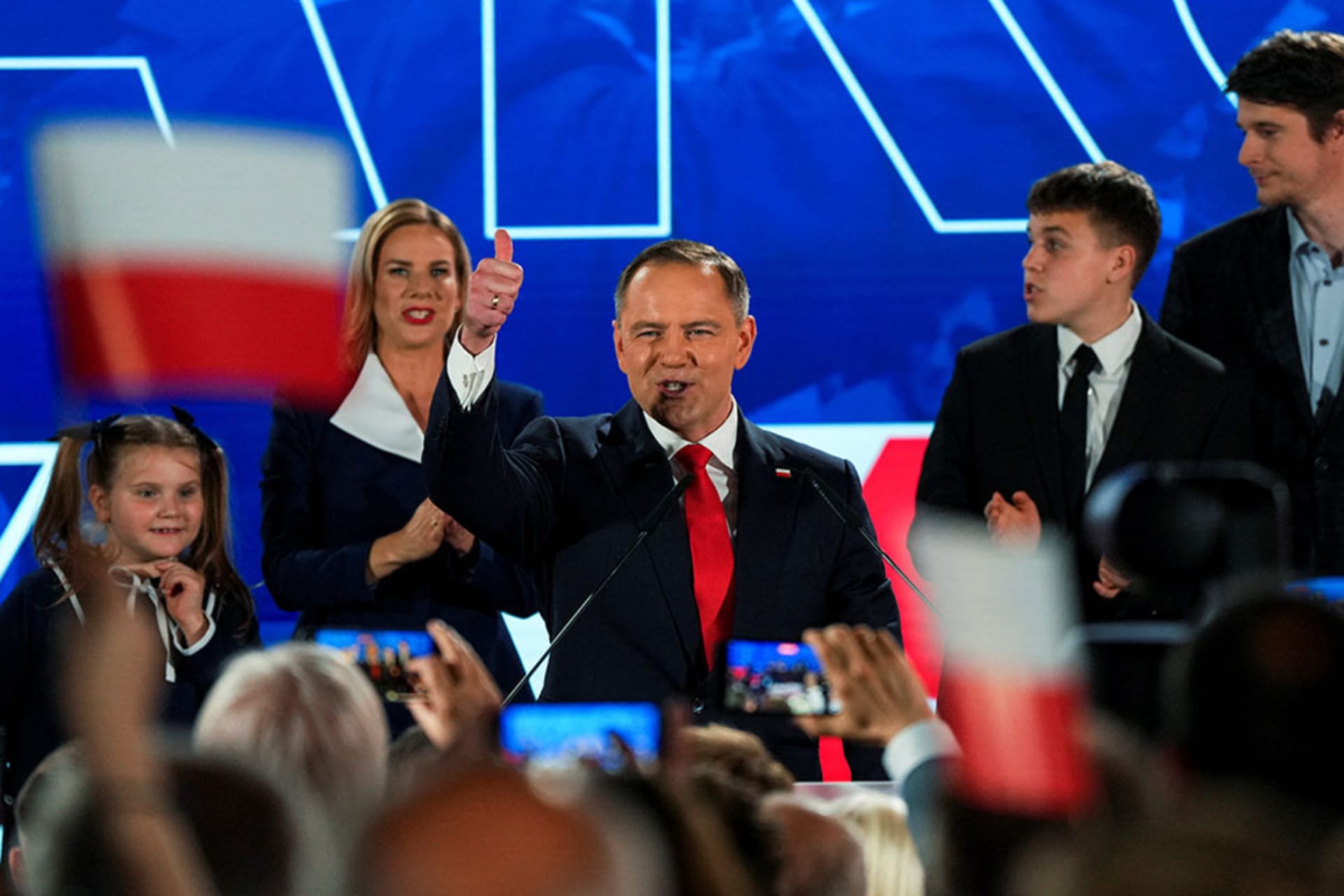
Polish nationalist Karol Nawrocki narrowly won the country’s presidential runoff election yesterday. He earned 50.89 percent of votes to liberal and pro-European Union (EU) candidate Rafał Trzaskowski’s 49.11 percent. It was a reversal from the first round of voting, during which Trzaskowski led slightly. Trzaskowski conceded defeat and congratulated Nawrocki. The vote was closely watched internationally in part because U.S. President Donald Trump threw support behind Nawrocki—and in part because Poland is NATO’s biggest military spender as a proportion of GDP.
The details.
- Nawrocki, a historian, is a political newcomer backed by the conservative Law and Justice Party. Andrzej Duda, the Law and Justice-aligned outgoing president, has blocked some of pro-European Prime Minister Donald Tusk’s agenda since Tusk’s term began in 2023.
- Nawrocki campaigned calling for more restrictive migration policies and criticizing European Union climate policies. He will take office on August 6.
- Nawrocki’s boost between the first and second rounds of voting came after less prominent right-wing candidates also performed relatively well in the first round, ranking in third and fourth place. Their support may have gone to Nawrocki in the runoff.
The context.
- Poland’s runoff result stands apart from recent elections in Canada and Australia that saw centrists defeat right-wing candidates. Nawrocki met with Trump at the White House last month, and received an endorsement from U.S. Homeland Security Secretary Kristi Noem last week.
- Nawrocki supports giving military aid to Ukraine, but has said he opposes Ukraine’s membership in NATO.
- Poland’s prime minister is more powerful than the president, but the president can block laws and affect foreign policy. Prime Minister Tusk has sought to bring Poland into greater alignment with the EU and reverse illiberal moves like politicizing courts. Tusk’s term is set to run until late 2027 unless there is an early election.
- Hungarian Prime Minister Viktor Orbán was one of the first heads of state to congratulate Nawrocki for the victory, while European Commission President Ursula von der Leyen said she looked forward to working with him.
“It’s a crucial time for Europe, for Europe’s path towards liberalism or towards right-wing populism, and Poland is a place where this will play out.”
—CFR expert Liana Fix in a YouTube Short
Across the Globe
Ukraine’s attack inside Russia. A coordinated Ukrainian drone attack hit four airfields deep inside Russia over the weekend. Ukraine’s security service said the attacks hit 34 percent of Russia’s strategic cruise missile carriers and caused $7 billion in damage, while open-source intelligence analysts said at least fourteen Russian aircraft were damaged. The attack came ahead of the latest round of Russia-Ukraine peace talks in Istanbul today.
Higher U.S. steel, aluminum duties. The United States will increase its tariffs on steel and aluminum imports from 25 to 50 percent, Trump said Friday. The change is set to take effect Wednesday. Trump also said a partnership between Japan’s Nippon Steel and U.S. Steel would move forward and include $14 billion of new investments, though he later said the deal still needed to be finalized and approved.
Proposal for Iran deal. Iran received a document from the United States proposing elements of a nuclear deal on Saturday. The proposal called for Iran to stop all uranium enrichment and join a consortium to produce nuclear power that includes the United States, Saudi Arabia, and other Arab countries, unnamed officials told the New York Times. A UN nuclear watchdog report circulated hours before the proposal’s delivery reportedly said Iran had grown its stockpile of highly-enriched uranium by around half in roughly three months, bringing it a step away from having fuel for multiple nuclear weapons.
Taliban ambassador in Russia. Moscow accepted a Taliban-nominated ambassador from Afghanistan, the Russian foreign minister said Sunday. While no country formally recognizes the Taliban government, Russia now joins several countries that have accepted diplomats from the Taliban administration at the ambassador level, starting with China in 2023. Russia removed the Taliban from its terrorist list in April, formally ending a two-decade designation.
Mexico’s judicial election. Only 13 percent of eligible voters participated in Mexico’s first-ever judicial election yesterday, authorities said. That’s down from 60 percent who participated in the most recent presidential election last year. Legal experts and opposition figures have sharply criticized the government’s plans for a judicial overhaul, saying it will favor candidates from the ruling Morena party. Candidates for the judiciary were largely blocked from traditional campaigning and ballots featured dozens, and in some cases more than one hundred, choices.
Shootings near Gaza aid site. More than twenty Palestinians were killed with gunshot and shrapnel wounds after a reported incident at an aid distribution site in southern Gaza, the Red Cross said yesterday. Three witnesses told the Washington Post that gunfire came from Israeli military positions. The Israeli military said an initial inquiry found its forces did not fire at civilians near the site, while aid distributor Gaza Humanitarian Foundation denied claims of injuries at the site.
Attack on Boulder march for hostages. The FBI is investigating a Boulder, Colorado attack yesterday on a march to raise attention for Israeli hostages in Gaza. A man yelled “Free Palestine” and threw an incendiary device, the FBI said. Eight people were injured and the suspect is in custody; the FBI is investigating the incident as a terrorist act. The attack comes less than two weeks after a shooter killed two Israeli embassy staffers outside Washington, D.C.’s Capital Jewish Museum.
Europe’s military emissions. Austria and Slovenia are the only two among a group of thirty European countries analyzed by the Guardian with plans to reduce greenhouse gas emissions from their militaries to net-zero. The analysis covered the European Union as well as Norway, Switzerland, and the United Kingdom (UK). Only a third of the countries have calculated the total carbon footprint of their militaries. The United States set a 2050 target for net-zero emissions from military procurement in 2022.
OPEC+ output hike. OPEC and allied producers agreed on Saturday to increase their July production by around four hundred thousand barrels per day, the latest in a series of monthly increases since April. Previously, they had been suppressing supply in an effort to prop up prices. Trump has called for OPEC to work to lower oil prices, and some countries said they aimed to gain back their share of oil on the market. Russia was among the members who sought a pause in the increases, unnamed sources told Bloomberg.
What’s Next
- Today, Indian parliamentary delegations are continuing visits to Brazil and the UK
- Today, Belarussian President Aleksander Lukashenko begins a visit to China.
- Tomorrow, South Korea holds a presidential election.
- Tomorrow, French President Emmanuel Macron visits Italy.