Supreme Court Weighs Tariffs
By experts and staff
- Published
- CFR Editors
Welcome to the Daily News Brief, CFR’s flagship morning newsletter summarizing the top global news and analysis of the day.
Subscribe to the Daily News Brief to receive it every weekday morning
Top of the Agenda
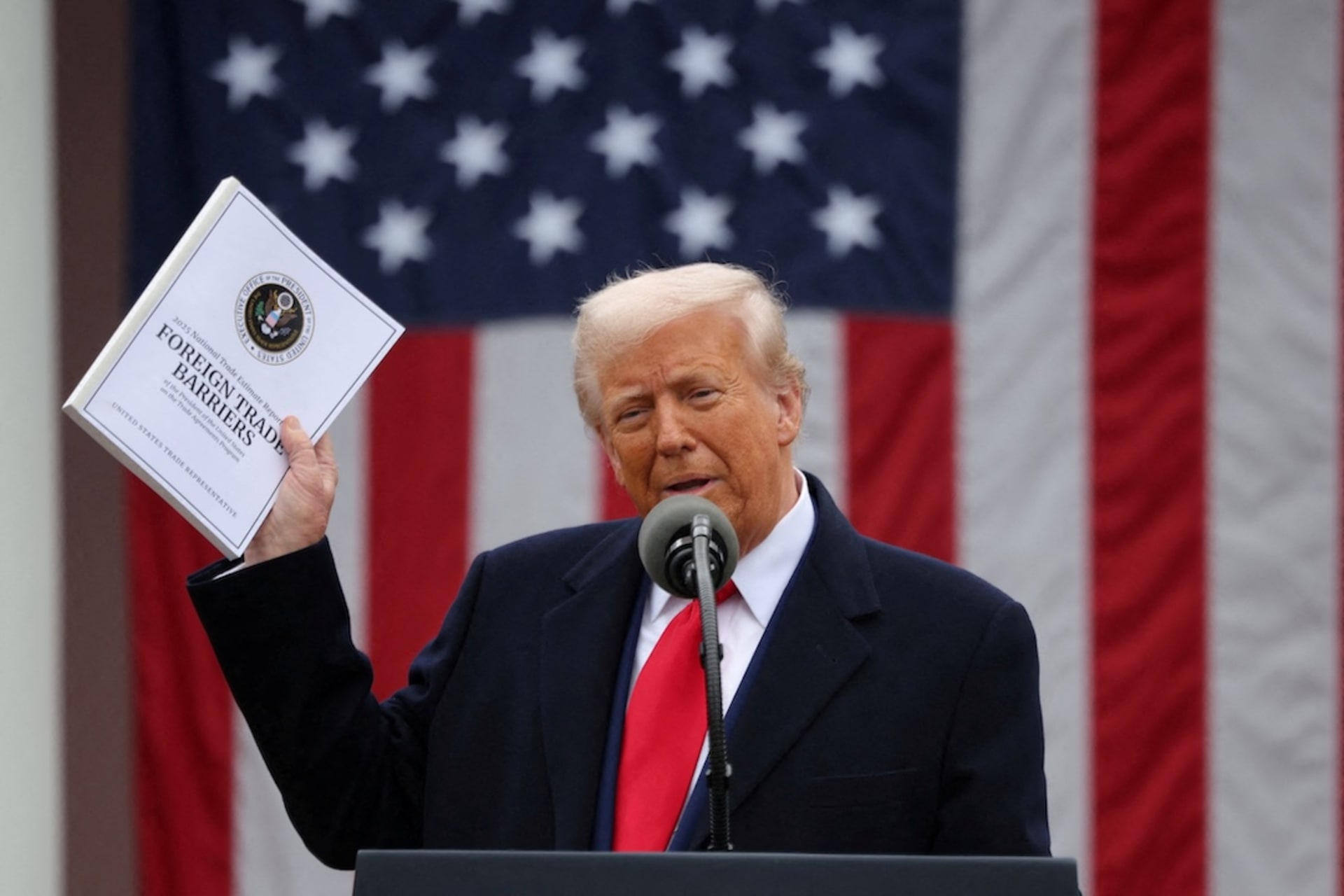
The Supreme Court will hear arguments today in a case that challenges Trump’s authority to impose sweeping global tariffs. It is a test of Trump’s presidential power that could have vast economic and foreign policy implications. A victory for the plaintiffs could overturn many of Trump’s tariffs, forcing the government to refund companies that paid them and undo newly minted trade deals. The case—which Trump described as “LIFE OR DEATH” yesterday—hinges on his ability to use a 1977 emergency powers law to apply tariffs at the president’s sole discretion. The Constitution gives Congress the authority to set tariffs, with limited exceptions.
The details. The International Emergency Economic Powers Act (IEEPA) gives presidents the ability to “regulate” imports during a national emergency, but does not mention tariffs. Trump argued that issues including immigration, fentanyl, and trade deficits constituted national emergencies that justified imposing tariffs using IEEPA. Democratic states and a coalition of small businesses sued Trump over the tariffs, arguing that IEEPA does not give tariff powers and that the emergencies declared by Trump are not unusual or extraordinary. The case reached the Supreme Court after lower courts ruled Trump’s tariffs were illegal.
What comes next. It could take the court weeks to reach a conclusion in the case. U.S. Treasury Secretary Scott Bessent said yesterday that if the administration loses, it plans to use other legal authorities to maintain its tariffs. Some of those other authorities are already being used for duties on products such as copper and automobiles. However, Bessent noted those are more “cumbersome” than IEEPA. The ruling will reveal the extent to which the Supreme Court’s 6-3 conservative majority remains receptive to Trump’s interpretation of executive power.
“Historically, IEEPA has been used to impose an array of sanctions, such as curtailing exports and blocking foreign assets, but it has never been used to raise tariffs on imports into the United States…Experts generally agree that [Trump’s] use of IEEPA now is at the very least a major stretch of the statute, and at its worst, simply unconstitutional. —CFR expert Inu Manak in a University of Calgary Briefing Paper
Across the Globe
Canada’s domestic stimulus. Prime Minister Mark Carney pledged yesterday to invest $100 billion in projects to offset the effect of U.S. tariffs and build up Canada’s defense base. His first federal budget includes spending on infrastructure and energy projects that would nearly double Canada’s deficit, despite plans also including some $36 billion in cuts to public spending.
Typhoon Kalmaegi. The storm killed at least eighty-five people and displaced almost half a million in the Philippines, authorities said. The province of Cebu, which was hit hard by the typhoon, was already recovering from a 6.9 magnitude earthquake in September. Kalmaegi was one of the deadliest storms to hit the country in years and is next expected to move toward Vietnam and Thailand.
Global warming forecast. If countries follow through on their climate pledges, the world will be on track for up to 2.5℃ (4.5℉) of warming, according to a new report from the the UN Environment Program. However, if countries stick to their current policies, the world will be on track for 2.8℃ (5℉) of warming. The Trump administration’s withdrawal from the Paris Agreement alone will cost the world an additional 0.1℃ (0.18℉) of warming, the report found.
EU climate target. European Union (EU) countries struck a deal today on an overdue 2035 emissions target required by the UN climate diplomacy process. The new target—reducing EU emissions between 66.25 percent and 72.5 percent below 1990 levels— is similar to one that was informally stated at a September UN climate summit. But the bloc’s new climate plan also expanded permission for countries to buy foreign carbon credits to reach their goals, a step that waters down the target.
French and Iranian prisoner releases. Iran freed two French nationals previously jailed there, French President Emmanuel Macron said yesterday. The move follows France’s conditional release last month of an Iranian student who was jailed earlier this year. French President Emmanuel Macron and Iranian Foreign Minister Abbas Araghchi separately voiced hope that the detainees could return home. The Iranian detainee, Mahdieh Esfandiari, was arrested on accusations of promoting terrorism on social media while the two French citizens, Cécile Kohler and Jacques Paris, were arrested in 2022 on espionage charges.
Battle in Ukraine’s Pokrovsk. Russia and Ukraine both reported fierce fighting in the eastern Ukrainian logistics hub of Pokrovsk today. Russia has been trying to capture the city for over a year and claimed today that Ukrainian troops were “trapped” there, which Ukraine denied. Ukraine’s efforts to defend the city included a recent operation with U.S.-made Black Hawk helicopters.
Brussels stance on enlargement. An EU report on growing the bloc praised Ukraine and Montenegro while criticizing Serbia and Georgia, warning of democratic backsliding in the latter two countries. Ten countries are currently seeking to join the bloc. EU foreign policy chief Kaja Kallas called the accession of new countries by 2030 a “realistic goal.”
U.S. election results. Democratic candidates were broadly victorious in state and local elections yesterday, including gubernatorial contests in Virginia and New Jersey, the New York City mayor’s race, and a California redistricting vote that could create as many as five additional Democratic seats in the U.S. House of Representatives. These were the first major elections of Trump’s second term.
What’s Next
Today, the China International Import Expo begins in Shanghai.
Tomorrow, Trump hosts Central Asian presidents in Washington, DC.
Tomorrow, a leaders summit ahead of the UN climate conference begins in Belém.