The Americas in Play

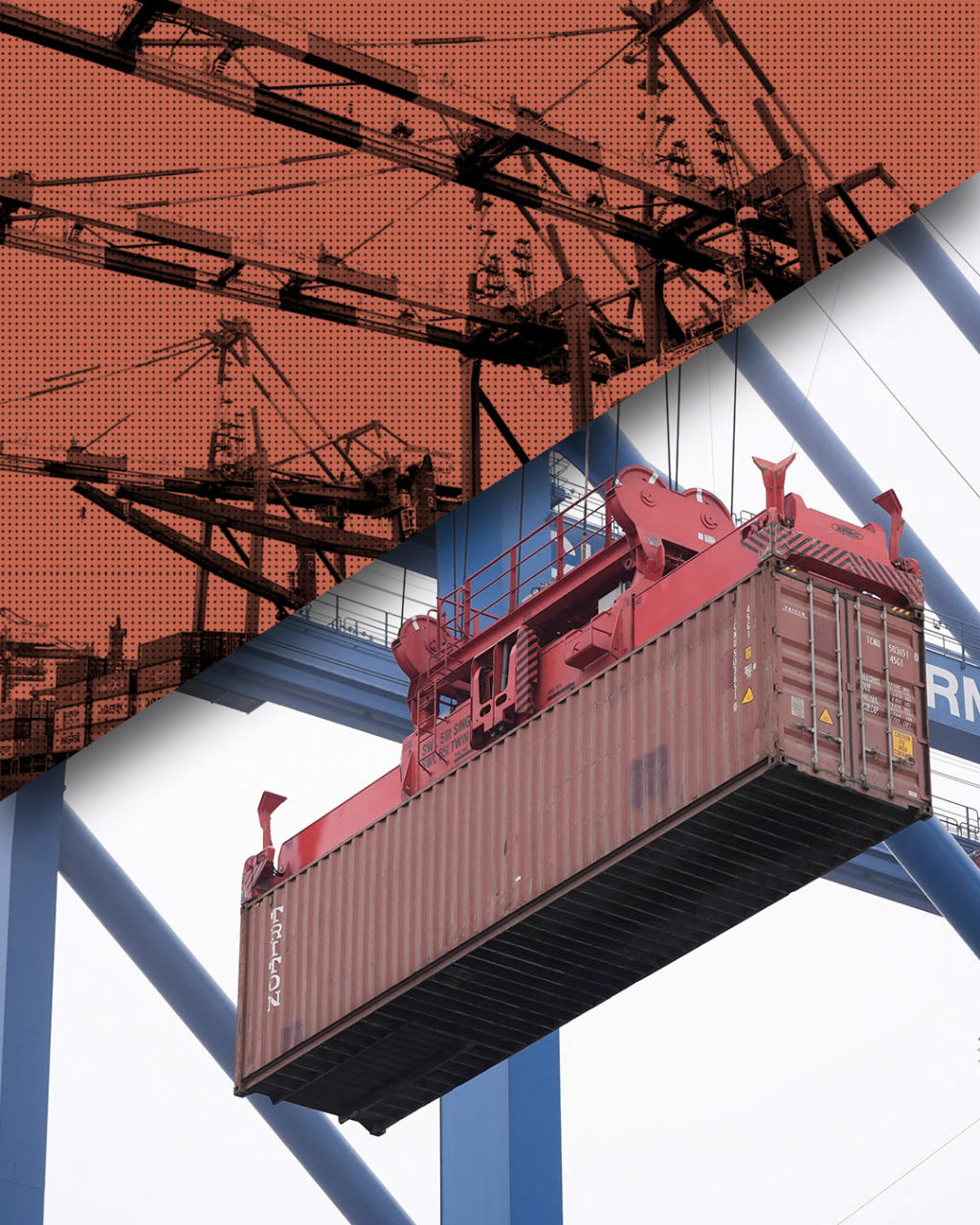
In 2000, Washington’s commercial and diplomatic hegemony in the Western Hemisphere was virtually uncontested. In Latin America, in particular, the United States had no major economic rivals, with China doing only about $12 billion of trade per year with the region.
Today, Latin America’s trade with China totals approximately $520 billion per year. Over the past quarter century, China has built ports, power grids, and commodity supply chains across South America, and it is now harvesting the benefits. China is the continent’s top trade partner, dominant in copper and lithium financing, processing, and refining.
The United States reacted late to those developments and is now playing a mostly coercive hand—one that is securing some short-term gains but is unlikely to restore lost influence across much of the continent. It is warning South American countries against Chinese trade and investment while doing little to incentivize or equip U.S. firms to compete. North of Panama, the story flips. In the last decade, the United States has widened its trade lead over China in Mexico, as well as most of the Caribbean and Central America. Although Chinese exports to Mexico have recently grown, the United States is not at risk of losing its dominant trade position there.
The Western Hemisphere, then, is bifurcated: a “greater North America” is aligned commercially with the United States while South America tilts toward China. In response both to U.S. tariffs and Chinese trade practices such as dumping, and to preserve some autonomy from either great power, many Western Hemisphere countries are trying to diversify toward Europe and other parts of Asia. But they are constrained. No one else will buy South American agricultural goods or refine its minerals at Chinese volumes and prices. The same applies to Canadian and Mexican exports to the United States. Brazil and Canada are potential middle powers, but neither has displayed much capacity to mobilize other Western Hemisphere countries behind a shared agenda.
That bifurcated state of affairs is not a major threat to U.S. national security at present. But it will have serious consequences if the U.S.-China rivalry escalates. Neither Washington nor Beijing could fully deny the other access to energy, agricultural goods, or minerals, but both could use coercive diplomacy to make it harder for the other to access the resources and infrastructure it needs—and would very likely do so in the event of a conflict in the South China Sea. Latin America, especially Brazil and Mexico, played an underappreciated role supplying natural resources and bases to the Allies during World War II, and, in a future global conflict, the United States would not necessarily benefit from the same advantage.
Today, leaders friendly with the United States are partly bridging that bifurcation, including Argentinean President Javier Milei, who has realigned his country with the United States on security and diplomatic issues. Washington is highly unlikely to overtake Beijing’s commercial position in most of South America. It can, however, slow its loss of influence by maintaining strong defense relationships—an area where China is not yet seriously trying to compete—encouraging qualified firms from friendly countries in Asia and Europe to bid on infrastructure and playing a bigger role in mineral financing and processing. Colombia, Ecuador, Panama, and Venezuela will be particularly important to the future of U.S.-China competition in the region. They are swing states, not as tightly anchored to one side or the other as countries to their north or south.
A second major shift in the distribution of power—and arguably a more immediate threat to U.S. security and American lives—has also occurred within Latin American states. From Brazil to Mexico, governments have accommodated increasingly powerful networks fusing organized crime, private business, and parts of the state. Those networks profit from cocaine trafficking, illegal gold mining, fuel theft, and other illicit activities. “Gangs” and “cartels” are insufficient terms for these networks’ complexity and embeddedness in the state and economy. A better term is “parallel powers.” They do not seek to replace central governments. Instead, they obtain tacit permission to make money, use violence, and lobby and illicitly finance politicians as they please.
These parallel powers have spread over the past decade by benefiting from global demand for Latin America’s most lucrative illicit exports: illicit drugs and illegally mined gold. The scramble to build routes to markets in Africa, Asia, Europe, the Gulf, and within the Western Hemisphere has seeded parallel powers in Costa Rica, Ecuador, southeastern Brazil, and other parts of the region that once were more sheltered. In Mexico, they have proven adept at sourcing the inputs for fentanyl, responsible for at least 450,000 U.S. overdose deaths during the past fifteen years. Increasingly, they launder money through cryptocurrency and opaque Chinese financial networks. They have become embedded in local politics in Brazil, Colombia, Mexico, and beyond, sometimes influencing national elections.
Most Latin American governments take limited action against parallel powers because they supply votes, employ large numbers of people, and pump laundered money into the economy. The United States had not usually treated these networks as top national security priorities, out of complacency and a perception of greater threats elsewhere—spending relatively little time, attention, and money on Latin American law enforcement assistance. Washington has also used diplomatic pressure sparingly, wary of losing cooperation on migration, countering Beijing, and other priorities.
The Trump administration recognized that this was unsustainable and diverged from the status quo, designating several criminal groups as foreign terrorist organizations, securing extraditions and law enforcement cooperation from Mexico, and prosecuting several U.S. citizens for cross-border fuel and gun smuggling. But some policies have been counterproductive—notably, the pardon of Honduran ex-president and convicted drug trafficker Juan Orlando Hernández, as well as crypto deregulation, which has made money laundering easier.
Attempting to eliminate Latin America’s parallel powers would be as impossible as pushing China out of South America. But Washington, together with Latin American governments, can take steps to prevent those powers from growing richer, more politically influential, and more threatening to the United States. It will have to target both the supply and demand sides of the main illicit markets and new money laundering channels. It will also need to engage diplomatically with—and, at times, pressure—Latin American governments, as well as the European and Gulf states to which the illicit goods flow.
The Western Hemisphere also presents opportunities for the United States. Latin America’s relatively young population could help fill U.S. labor shortages in health care and other sectors. If U.S. refining capacity is expanded, critical mineral deals could build more secure supply chains. Greater access to U.S. higher education could bolster U.S. regional soft power and benefit neighbors’ economies. Further integration with Canada and Mexico could boost U.S. competitiveness with China. But, to take advantage of those opportunities, Washington must elevate the Western Hemisphere to par with regions that typically receive more attention. Otherwise, such chances will likely fade—and the threats will intensify.
More from the Future of American Strategy >>