The Asian Anchor

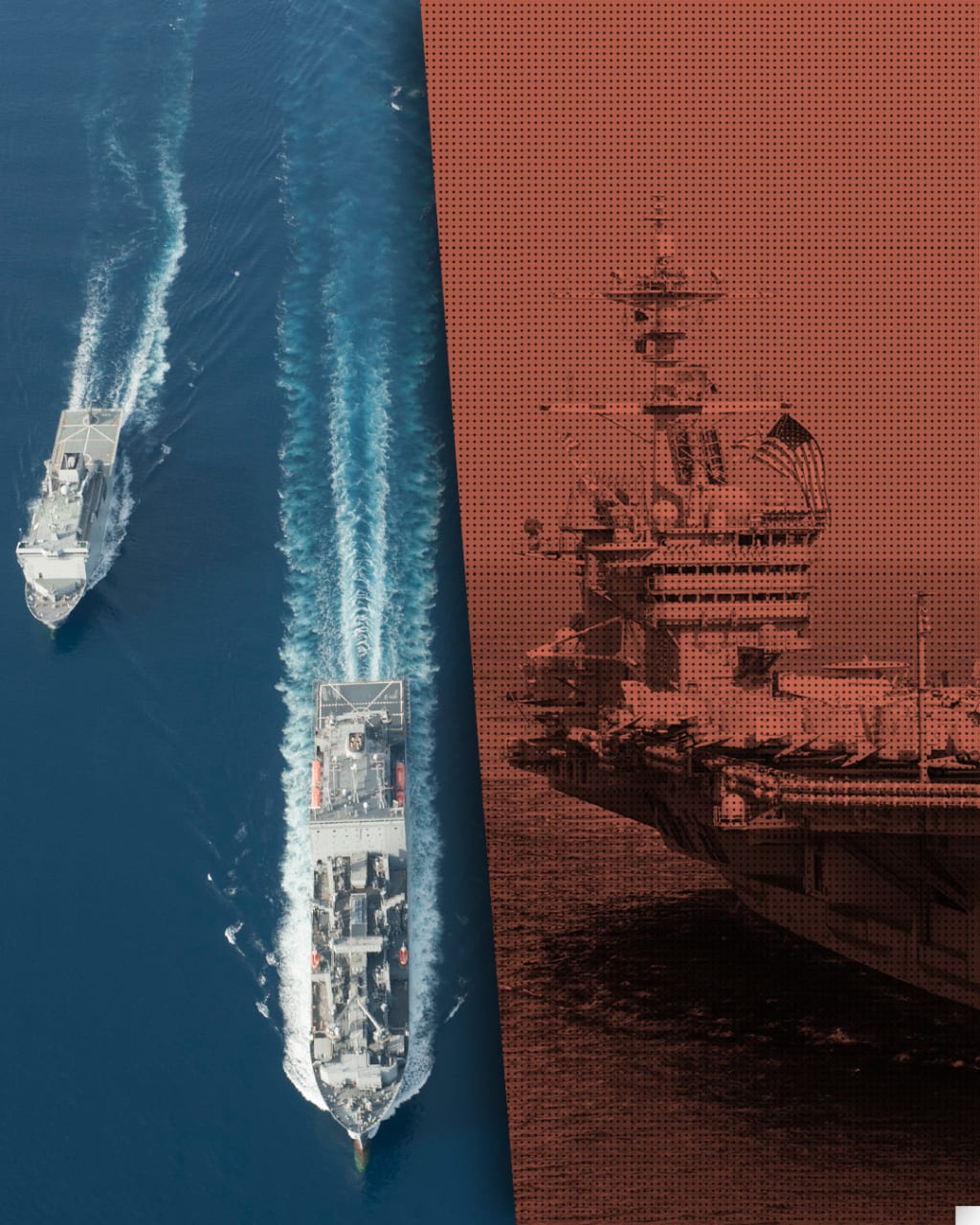
Since the end of World War II, U.S. strategy in Asia has relied on increasingly integrated partnerships with regional allies. Of those, Australia, Japan, and South Korea have been among the United States’ most reliable associates in solving regional and global problems.
But political change in the United States has ushered in an era of retrenchment. The Trump administration is questioning the value of U.S. alliances and scrutinizing the cost of long-standing security ties. The narrative of “burden sharing”—reducing U.S. contributions while increasing those of allies—has reentered the policy vernacular for the first time in decades. Some experts suggest the Trump administration is advocating a retreat from a global strategy, but that notion may be premature. Retrenchment, while nerve-racking for allies, seems a more realistic prospect.
[Video: https://vimeo.com/1192641678/7c09df3f63]
U.S. policymakers should be cautious when describing their allies as tools in their strategic arsenal. Washington’s Indo-Pacific alliances are not malleable. They represent various institutional and strategic compromises and, most important, reflect the national goals and domestic political reality of allied countries. Not only is the United States embedded in the Indo-Pacific, but its alliances with Australia, Japan, and South Korea are embedded in U.S. grand strategy. Although it may be tempting to regard these allies as dependent countries that can be used as instruments when needed, in reality, the dependence runs both ways.
U.S. alliances in the Indo-Pacific have undergone tremendous transformation. In the 1950s, Washington negotiated bilateral strategic bargains, which lasted throughout the Cold War. Afterward, the United States constructed new security networks to knit together an array of Indo-Pacific nations. U.S. partnerships formed the center of a regional grid of strategic cooperation. Australian and Japanese forces exercise in each other’s territory, and the Philippines invites both to develop maritime capacity. The United States works to build relations of trust among its Indo-Pacific allies.
Much of that growing cooperation between the United States and its allies has been driven by China’s efforts to change the regional status quo. Where China once sought to encourage economic integration, largely through trade, it now uses economic leverage to coerce its neighbors into accepting its demands. The United States, Australia, India, and Japan have responded to that shift by coming together to offer different sources of trade, supply chain resilience, and technology innovation, as well as to demonstrate their common interest in maritime security. Shared risk mitigation is now a top priority for the United States and its Indo-Pacific partners.
U.S. allies in the Indo-Pacific remain steadfastly opposed to nuclear proliferation. China and Russia no longer support the goals of the Nuclear Nonproliferation Treaty, nor are they interested in arms control. Meanwhile, North Korea’s nuclear capability, and the missiles to deliver it, continues to undermine regional security. The United States is working to ensure that Japan and South Korea do not respond by developing their own nuclear capability, and to demonstrate more effectively to nonnuclear partners that U.S.-extended deterrence remains effective.
U.S. policy in Asia, then, has not remained static. At three key moments, Washington has retrenched, and the effects have rippled across the Pacific. The first came after the Korean War, when, under the Eisenhower Doctrine, the United States decided it would rely on its nuclear arsenal to deter future wars. The second came as the Vietnam War drew to a close, with the announcement of the Nixon Doctrine, which held that the United States would fight no more ground wars in Asia.
Finally, in the 1980s, calls for burden sharing, mostly from Congress, grew louder. Japan, then the burgeoning economic superpower, was the particular target of legislators’ wrath. Tokyo responded by offering greater financial support to U.S. forces stationed in Japan. The effects of that decision continue today. Every five years, the United States and Japan negotiate a Host Nation Support agreement that provides for roughly $1.7 billion per year. Similarly, in its Special Measures Act, South Korea offers around $1 billion per year to support U.S. forward deployed forces.
After the Cold War, U.S. Indo-Pacific allies began to play a more active global security role in concert with the United States. During the first Gulf War, the United States constructed a coalition to ensure the safe passage of tankers through the Strait of Hormuz. Japan, though legally restricted from sending its Self-Defense Forces into combat overseas, sent minesweepers to help clear the strait once the war had ended. After 9/11, all U.S. Asian allies participated in the UN-sanctioned war against Iraq. Similarly, a U.S.-led coalition organized to combat piracy in the Gulf of Aden included the United States’ Indo-Pacific partners.
Today, the United States is deciding how to demand greater contributions from its allies while accounting for the growing threats they face closer to home. And yet, uncertainty about U.S. decision-making has created deep concerns about American reliability at precisely the moment when allies seek greater integration into a U.S.-led vision for Indo-Pacific stability. The challenge from Beijing, in particular, weighs heavily on Canberra, Seoul, and Tokyo. Handled badly, U.S. retrenchment could exacerbate vulnerabilities in the Indo-Pacific rather than enhance U.S. partnerships.
The strategic starting point should be a recognition of the extent to which U.S. military and economic strength relies on those alliances. In military terms, Washington’s partners in the Indo-Pacific are invaluable to its ability to operate across the region or, if necessary, to cope with a crisis across the Taiwan Strait. Economically, trade with Australia, Japan, and South Korea—as well as their investment in the U.S. economy—is vital to national prosperity. Trade with those countries is also essential to ensuring access to critical materials and goods required by most advanced technologies.
U.S. Indo-Pacific partnerships are characterized not by allied dependence on the United States but by strategic interdependence. If Washington could no longer rely on those three countries’ militaries, let alone access to their ports and facilities, it would be left dangerously exposed. The U.S. Pacific Fleet would be unable to operate, U.S. Air Force fighter jets would be deprived of Japanese and South Korean bases, and the U.S. economy would be weaker without the critical minerals, manufacturing power, and foreign direct investment of Australia, Japan, and South Korea.
Without allies in the Indo-Pacific, the United States would find it increasingly difficult to ensure its security. Rebalancing the strategic bargain with those partners—pairing fairer burden sharing with deeper military, economic, and technological integration—should anchor the country’s future strategy. American power in Asia ultimately rests on American alliances.
More from the Future of American Strategy >>