The China-Russia Axis

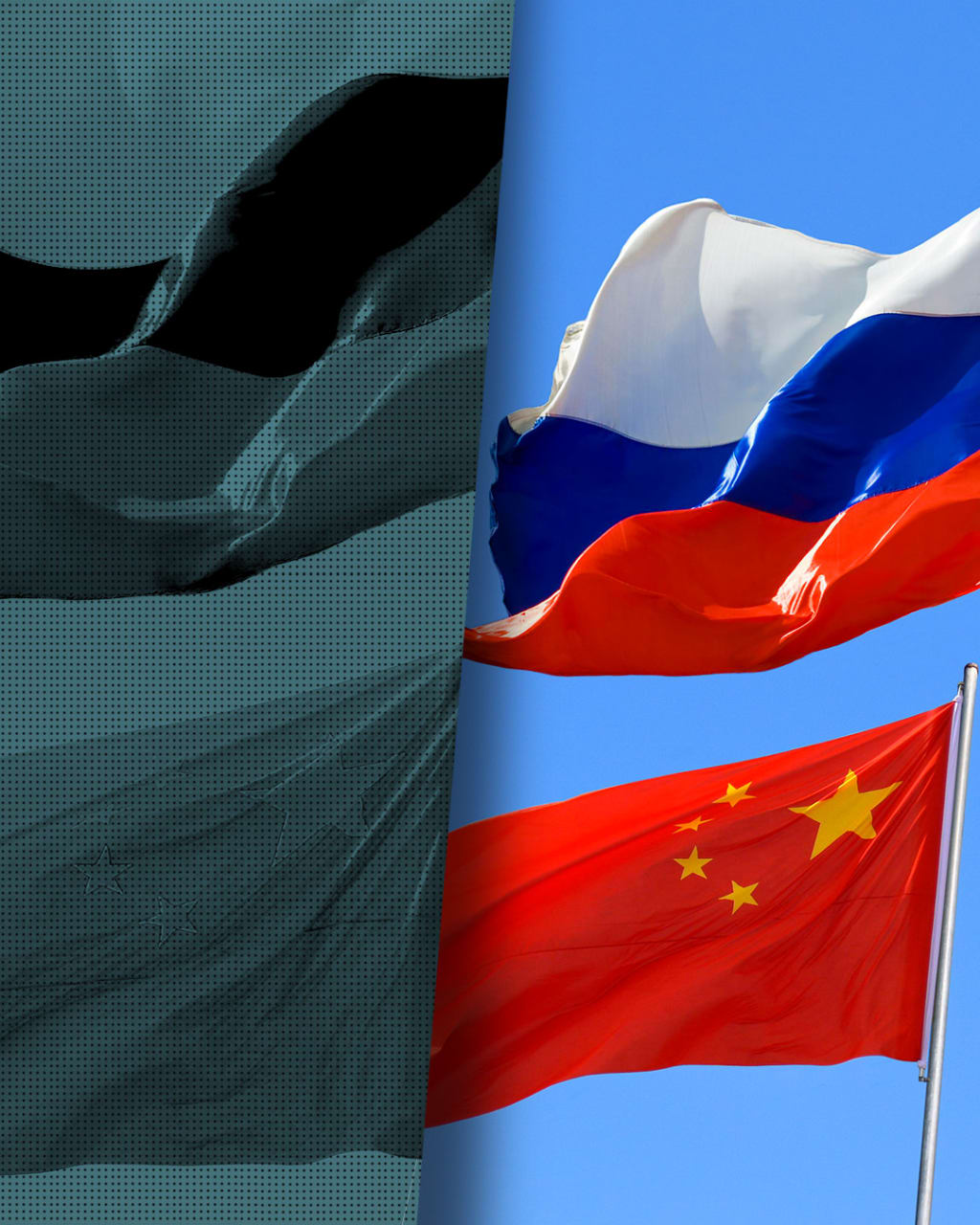
In May 2026, when Xi Jinping hosted Vladimir Putin in Beijing, it was the forty-fifth time the two had met in person—give or take. Xi and Putin have seen each other so often that even analysts cannot agree on the exact number.
[Video: https://vimeo.com/1192642053/c9598914ef]
The increasing affinity between China and Russia is among the most consequential geopolitical developments of the last decade. Although the two powers have their differences, on every metric—economic, military, political, rhetorical—the general direction has been toward alignment rather than estrangement. That presents a problem for the United States, which since World War II has never had to contend with a pair of adversaries this powerful.
While it is tempting to believe that Washington can solve this dilemma by splitting Beijing and Moscow, the bond between them is unlikely to break. Accepting that reality is easy; dealing with it is not. The United States needs to push back against coercion and aggression by both powers, without driving them closer together. It needs to address today’s challenge in Ukraine, without neglecting tomorrow’s in Taiwan. And it needs to deter new wars in eastern Europe and East Asia, without unintentionally provoking one.
Even though it is sometimes dismissed as a temporary axis of convenience, the Chinese-Russian partnership has proved deep and durable. China has been Russia’s largest trade partner for more than a decade, sending it manufactured goods in exchange for oil and gas. The two countries’ militaries regularly conduct joint exercises in the Arctic and South China Sea. Beijing has helped Moscow circumvent Western export controls by providing advanced technologies, from chips to drone parts, essential for Russia’s war in Ukraine.
One has to go back to the early 1950s, the golden era of Sino-Soviet relations, to find such amity. China and the Soviet Union were formal treaty allies and partners in the Korean War. More than ten thousand Soviet experts flooded into China to help the country modernize. But by the end of the decade, the Sino-Soviet alliance was dead in all but name, done in by a combination of ideological disputes, divergent visions of how to deal with the West, and a personality clash between Mao Zedong and Nikita Khrushchev. In 1969, the two countries even fought a deadly border skirmish that nearly ignited an outright war.
Although the Chinese-Russian partnership is not as close as it was in the 1950s, it also lacks the irritants that bedeviled the relationship back then. One was ideological. Stalin viewed Mao as a “caveman Marxist,” while Mao viewed Stalin’s eventual successor, Khrushchev, as intellectually inferior. But now that Russia is no longer communist (and China isn’t either, in the classical sense), who has the authority to interpret Marxism is no longer a bone of contention. A less doctrinal glue adheres Putin and Xi: an obsession with preserving their authoritarian regimes, a determination to resist the forces of liberal democracy, and a confidence in American decline.
Another Cold War wedge issue was the question of how to deal with the American hegemon. Khrushchev advocated “peaceful coexistence”; Mao preferred aggressive confrontation. Today, Moscow and Beijing openly agree on the goal of contesting U.S. influence, even if they adopt different tactics. In 2022, on the eve of Russia’s invasion of Ukraine, Putin and Xi released a joint communiqué in which they denounced American “hegemony” and pledged to “advance multipolarity.”
There is also an undeniable human element to today’s partnership. Mao and Khrushchev despised each other. Putin and Xi, by contrast, make a show of exchanging hugs and birthday greetings, leading some analysts to declare a “strategic bromance.” “I have a similar personality to yours,” Xi once told Putin. As the scholars Michael McFaul and Evan Medeiros have written, “They like each other—or if they do not, they are very good at faking it.”
Yes, there are tensions. It is an unequal partnership, given that China’s economy is nearly nine times the size of Russia’s and far more diversified. Xi seeks to bend the international order to China’s advantage; Putin wants to break it. The two countries’ voting records at the United Nations are not perfectly aligned. China is edging Russia out of Central Asia. Chinese spies are actively trying to steal Russian military secrets, and Russia’s security services privately call the Chinese “the enemy.” China resents Russia’s nuclear saber-rattling. The partnership that Putin and Xi hailed as “no limits” has its limits.
But such friction is common to many alliances, and it is manageable. Some officials still fantasize that the United States can pull off a “reverse Kissinger”—peeling Russia from China the way the Nixon administration laid the groundwork for normalizing relations with China in order to balance against the Soviet Union. “I’m going to have to un-unite them,” President Donald Trump said before taking office for the second time. That is unrealistic. Unlike in the 1970s, there is not a split to exploit.
U.S. grand strategy must therefore accommodate the reality that the two great Eurasian powers have joined forces. The goal should be to avoid driving them further into each other’s arms. The problem, however, is that many of Washington’s preferred tools for constraining one country end up empowering the other or otherwise backfiring. Sanctions on Russia have caused it to reorient its economy toward China, becoming more dependent on it as a supplier of goods, a buyer of oil, and a channel for finance. The freezing of Russian assets held in Western banks accelerated China’s efforts to reduce its exposure to the U.S. dollar. U.S. export controls on China have pushed it to rely more on Russia for energy and raw materials. Moreover, deterring war in one theater necessarily detracts from doing so in the other; every dollar spent defending Taiwan is a dollar not spent in Ukraine. Such are the dilemmas of a dual threat.
In a two-adversary world, a traditional source of American strength becomes even more valuable: the U.S. alliance system. By souring the Europeans on China, Putin’s invasion of Ukraine, conducted with tacit Chinese support, did what years of American diplomacy could not do. Trump, with his tariffs and threats to invade Greenland, has jeopardized this strategic gift. The United States will need all the help it can get in containing China and Russia. A regional division of labor would allow the United States to prioritize Asia without abandoning Europe—and, as an added benefit, reduce the need for the sort of maximal, simultaneous pressure that draws Beijing and Moscow together.
As it has often done, the United States should push back against Chinese and Russian revisionism, taking care not to provoke its nuclear-armed adversaries. But the unsatisfying truth is that given all the dilemmas inherent in countering this twin challenge, a major element of any successful strategy is simple patience. Russia is a declining power with a one-trick economy. China, though much stronger, is deeply indebted and growing slowly. Both are in long-term demographic decline. Both have a fundamentally unpopular type of political system. Both lack allies. Both are led by “presidents for life” in their seventies.
Time favors the United States, which, for all its current turmoil, boasts deep wells of geographic, technological, demographic, and economic advantages. As the economist Adam Smith once put it, “There is a great deal of ruin in a nation.”
More from the Future of American Strategy >>