The Iran War’s Hard Lessons

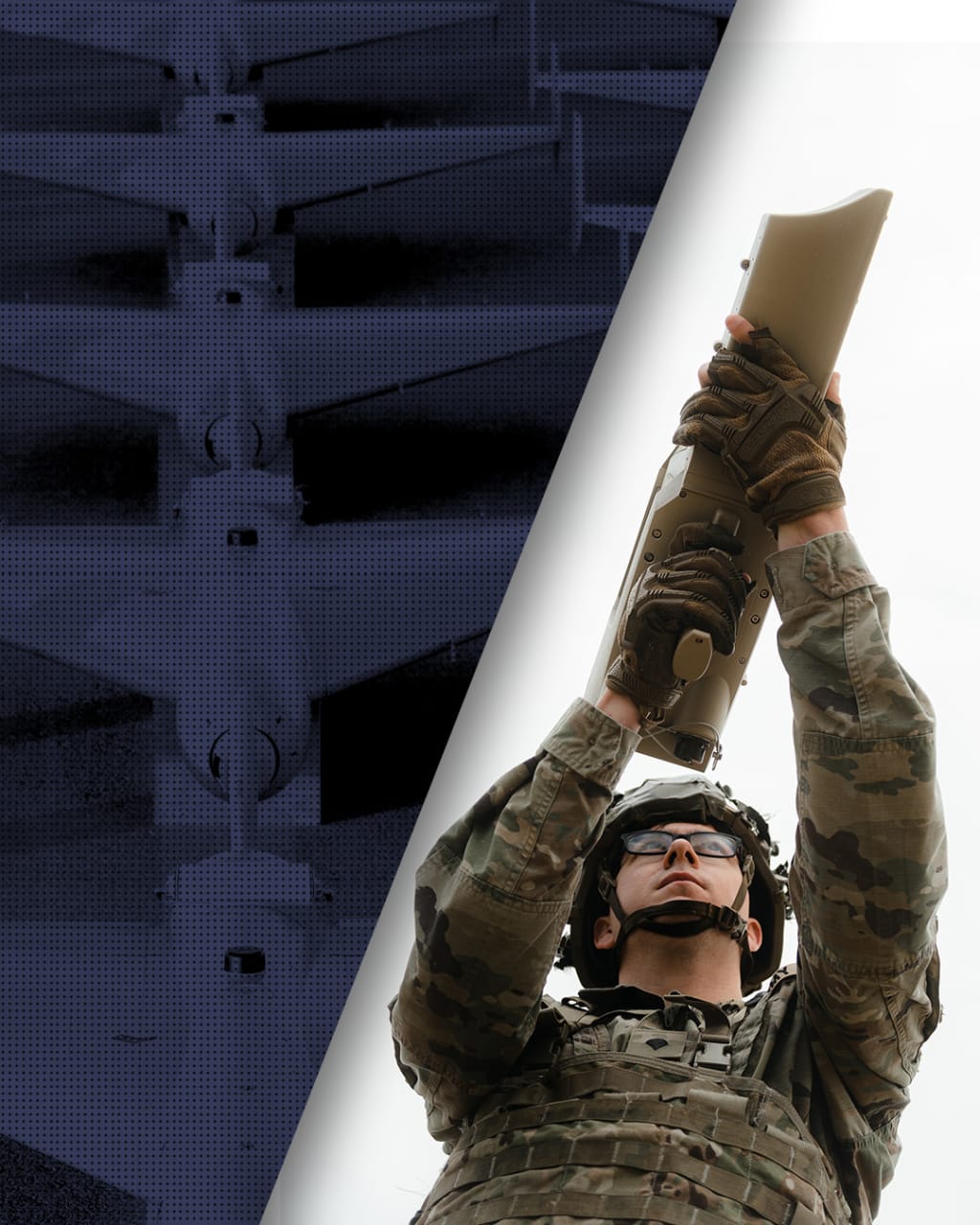
The war with Iran has revealed the strengths and weaknesses of the U.S. defense establishment and suggests how the U.S. armed forces can be reshaped to fight the wars of the future. Specifically, the war has laid bare a number of vulnerabilities that urgently need to be addressed in order to prepare for conflicts against adversaries even more dangerous than Iran.
[Video: https://vimeo.com/1192639994/668aec65e5]
The Pentagon’s most obvious strength is its use of precision weaponry to rain down what Defense Secretary Pete Hegseth often describes as “death and destruction from the sky,” with little risk to U.S. service members. The United States fired more than 850 Tomahawk cruise missiles, a mainstay of U.S. air campaigns since the 1991 Gulf War, along with newer weapons such as the PrSM (Precision Strike Missile), a replacement for the ATACMS (Army Tactical Missile System) that has a range of 190 miles.
In the first month of the war, U.S. and Israeli forces struck thirteen thousand targets inside Iran, ranging from leadership compounds to missile launch sites. Many Iranian leaders, from Supreme Leader Ayatollah Ali Khamenei on down, were killed in the strikes, driven by pinpoint intelligence. The problem is that the United States produces relatively few of its top-of-the-line missiles, and, after a few weeks of fighting, it will take years to replenish stockpiles. For example, the U.S. Army’s entire stockpile of PrSM missiles was expended against Iran.
The larger issue is the difficulty of translating tactical military success into strategic results—a problem that the United States has repeatedly encountered, most recently in Afghanistan and Iraq. The U.S.-Israeli military campaign has degraded Iran’s military but did not topple the regime or secure its stockpile of nearly one thousand pounds of enriched uranium. It also led to Iran closing the Strait of Hormuz, thereby creating a global energy crisis. “Targetry never makes up for a lack of strategy,” noted James Mattis, a retired Marine four-star general and President Donald Trump’s first secretary of defense.
While the wars in Iraq and Afghanistan exposed U.S. military vulnerability to low-cost roadside bombs, the conflict with Iran has exposed the U.S. and allied vulnerability to low-cost drones. Iran fired thousands of Shahed drones at U.S. forces and allies in the Persian Gulf region. The most common Shahed variant has a range of up to 1,500 miles and costs about $35,000.
The Shaheds, along with missiles fired by Iran, caused considerable damage, particularly to civilian infrastructure in the Gulf, thereby exposing the inadequacy of U.S. and allied defenses. Because Shaheds are small, are easy to hide, and can be launched rapidly, Iran could keep firing them, notwithstanding the U.S. bombing campaign. Iranian attacks have damaged or destroyed U.S. aircraft on the ground, along with a number of radar arrays that the United States and its allies employ for air defense.
To defend themselves against the Iranian threat, the United States and its partners fired more than 1,700 Patriot missiles in the conflict’s first 16 days. It quickly became apparent that it was not cost-effective to fire $3.4 million Patriot missiles or $12.7 million THAAD missiles to defend against $35,000 drones. But before the war began, the United States did not field low-cost drone defenses. This meant that, as the war made the need for them clear, the Gulf states signed agreements with Kyiv to provide Ukrainian counter-drone expertise, including cheap interceptor drones costing as little as $1,000. Those technologies have allowed Ukraine to shoot down more than 90 percent of the Shaheds fired by Russia.
Thus, the Iran war has made clear the need for more U.S. munitions and more low-cost drone defenses. It has also strongly suggested that Washington’s reliance on expensive manned platforms such as tanks, bombers, and surface ships is becoming an anachronism in the age of drone warfare.
The first of those requirements has been apparent for some time. Even before the war began, the Defense Department was planning to increase production of some of the key missiles used against Iran. But that will take years, and in the meantime the dangerous drawdown of U.S. arsenals could create shortages in the event of a conflict with China or Russia. Moreover, even the higher production figures are likely to prove inadequate in the event of a major conflict. Experts have warned that the United States could run out of key munitions within a week of war against China.
There is simply no practical, cost-effective way to mass produce enough high-tech munitions for a lengthy war against a great power. The air force, for one, has realized that it has a problem, and has begun to invest in what General Robert P. Lyons III calls a “new class of affordable, low cost munitions.” The initial examples are cruise missiles with a shorter range and smaller payload than existing models but also a much lower cost, at under $250,000 a missile.
Overall, the United States continues to badly lag in drone production. In 2026, the entire U.S. military fielded only sixteen thousand unmanned aerial vehicles. Hegseth announced an initiative in early 2026 to expand that figure to three hundred thousand drones by 2027, but even that is likely to be short of war-fighting requirements by orders of magnitude. In 2026, Ukraine, which is much poorer and smaller than the United States, plans to build seven million drones.
The United States should invest substantially more resources into drones and less into costly, manned systems such as M1 Abrams tanks, F-35 fighters, and navy surface ships. It is just as imperative for the United States to build drone defenses capable of stopping, at low cost, the attack drones that are proliferating around the world. Various Western defense companies are developing anti-drone missiles and interceptor drones that cost tens of thousands of dollars. That is much cheaper than Patriots and THAADs—but it is still a lot more expensive than the interceptor drones that Ukraine is manufacturing. Since the Russian invasion in 2022, Kyiv has built up from scratch what could be the world’s most effective drone army. The United States should invest in Ukraine’s drone industry and partner with its companies to produce both offensive and defensive drones at a much lower cost than U.S. defense contractors could possibly do.
The worst U.S. military response to the Iran war would be complacency. True, the war has served as a showcase for high-tech, stand-off, precision U.S. weapons, but it has also revealed glaring vulnerabilities in U.S. forces. China and Russia are likely to field even more advanced missile and drone forces than Iran. The United States needs to be ready—not only tactically and technologically but also strategically.
Before going to war in the future, U.S. political leaders need to give more careful consideration to how they can leverage the U.S. military to produce a desired political outcome. The lack of such a strategy has been a glaring American shortcoming from the Vietnam War to the wars in Iraq and Afghanistan—and now the war in Iran.
More from the Future of American Strategy >>