Trump Calls for Hormuz Coalition
By experts and staff
- Published
Welcome to the Daily News Brief, CFR’s flagship morning newsletter summarizing the top global news and analysis of the day.
Top of the Agenda
As the Iran war enters its third week, Trump has intensified calls for allies to help unblock the Strait of Hormuz to mitigate the war’s economic impacts. The United States’ attack on Iran’s Kharg Island Friday night failed to break the country’s blockade of the waterway. Iranian Foreign Minister Abbas Araghchi said Tehran would retaliate by targeting U.S.-linked energy facilities nearby. The U.S. military buildup in the region continues, with the United States deploying additional warships and thousands of marines to the Middle East, multiple news outlets reported Friday. Trump told NBC News Saturday that Iran was ready to end the war, which Araghchi has denied.
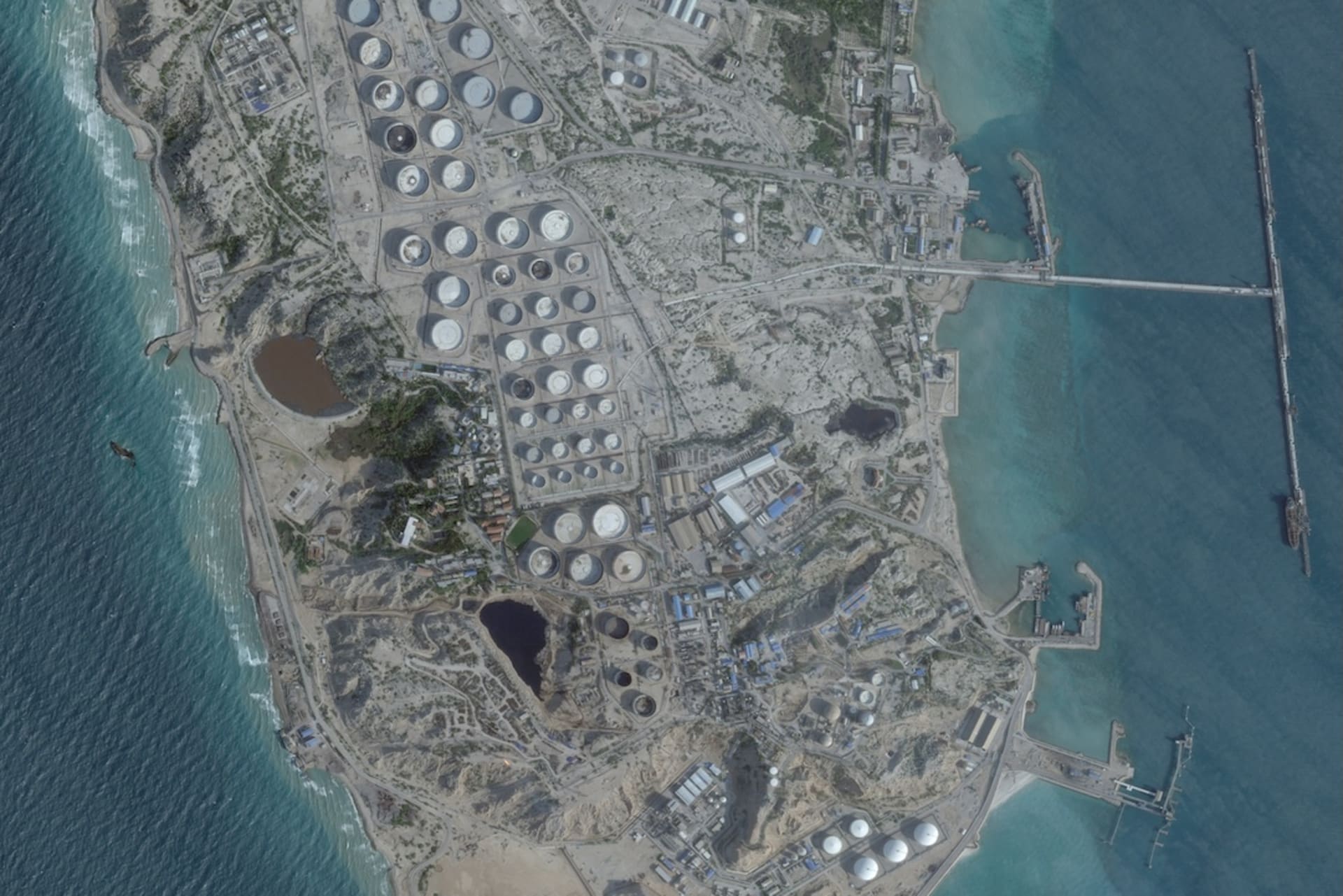
Strikes across the region. The U.S. strikes on Kharg Island—home to a major Iranian oil export terminal—hit military targets, but Trump threatened to target the island’s oil infrastructure if Iran does not fully reopen the Strait of Hormuz. Following Iran’s retaliation pledge, Saudi Arabia and the United Arab Emirates (UAE) were targeted by air attacks, causing fires at a UAE port and airport. After a drone struck the U.S. Embassy compound in Baghdad Saturday, the embassy urged Americans to leave Iraq. Air attacks also continued across Israel, Iran, and Lebanon over the weekend. An Israeli military spokesperson told CNN yesterday that Israel planned for at least three more weeks of war, and its military announced ground operations in southern Lebanon today.
The status of Hormuz. Trump said in a social media post Saturday that he hoped countries including China, France, Japan, South Korea, and the United Kingdom (UK) would send forces to secure shipping through the strait. The responses to Trump’s demands have been cautious. Japan’s defense minister said today that Tokyo had no plans to send ships and called for de-escalation, while European Union officials are discussing the matter in a meeting today. Trump appeared to up the pressure yesterday, telling the Financial Times that it would be “very bad for the future of NATO” if U.S. allies did not help reopen the strait.
“We are in the midst of what could be an unprecedented and escalating global energy crisis. Many are asking when it might end. On one hand, it could conceivably end any time President Donald Trump declares victory with respect to the core military objectives. On the other hand, Iran has a vote on when the conflict ends.” —CFR President Michael Froman, The World This Week
Across the Globe
North Korean missile test. North Korea test-fired around ten ballistic missiles into the East Sea on Saturday, South Korea’s military said. The incident coincided with U.S.-South Korean joint military drills. It also followed South Korean Prime Minister Kim Min-seok’s discussion with Trump Friday about potentially resuming nuclear negotiations with Pyongyang, which Kim said Trump supports.
Uganda opposition leader flees. The opposition leader known as Bobi Wine announced Saturday he had left the country after spending two months in hiding following January’s disputed election. Wine has alleged the vote, which elected President Yoweri Museveni to a seventh term, was rigged. Wine aims to mobilize international allies to advance democracy in Uganda, he said.
Energy summit in Tokyo. The United States struck $57 billion worth of deals with Asia-Pacific allies at an energy forum in Tokyo over the weekend, Interior Secretary Doug Burgum told Fox News. The United States and Japan co-hosted the summit. The agreements signed at the forum included a commitment by the U.S. Export-Import Bank to finance up to $4.2 billion of Japanese and South Korean nuclear fuel purchases from a California-based company.
Kazakhstan’s constitutional referendum. Exit polls suggest a majority of Kazakhs voted to approve a new constitution in a referendum yesterday. The changes would consolidate executive power by creating a new body of presidential appointees that can introduce legislation and referendums. Some journalists were temporarily detained while covering the vote, RFE/RL reported.
Canada-Nordic cooperation. Canada and the five Nordic countries—Denmark, Finland, Iceland, Norway, and Sweden—pledged at an Oslo meeting yesterday to cooperate more closely on areas such as defense production. Their announcement follows Trump’s threats against Canada and Denmark, including the autonomous Danish territory of Greenland, in recent months. Canada is weighing buying submarines from Norway and Germany and warplanes from Sweden as it aims to boost its defenses.
U.S.-China talks. U.S. Treasury Secretary Scott Bessent and Chinese Premier He Lifeng are concluding a two-day meeting in Paris today intended to lay the groundwork for Trump’s planned trip to China later this month. Unnamed sources told Reuters the talks have been “remarkably stable.” But some bilateral tensions were visible in recent days: Trump said Sunday he might delay his trip as he urges China to help unblock the Strait of Hormuz, and China’s commerce ministry on Monday criticized the latest U.S. trade probe into China.
Deadly fire in Gaza and the West Bank. Two Israeli airstrikes in Gaza yesterday killed at least twelve Palestinians, according to local hospitals, which said a pregnant woman, two boys, and eight police officers were among them. The Israeli military said it carried out a strike in the enclave yesterday after Hamas militants fired on Israeli troops Saturday, without specifying which strike it was referring to. In the West Bank, Israeli border police killed four Palestinians—a mother, father, and their five- and six-year-old sons—who were driving home Saturday night; Israeli authorities said the car “accelerated towards” the police and that the incident was under investigation.
Kenya’s Ukraine war stance. Russia has agreed to stop recruiting Kenyans to fight in the war in Ukraine, Kenyan Foreign Minister Musalia Mudavadi told reporters today after meeting in Moscow with his Russian counterpart. Kenya’s intelligence service announced last month that more than one thousand Kenyans were believed to be fighting in the war, and lawmakers suggested the Kenyan recruits were sent to the frontlines with limited training.
What’s Next
- Today, Canadian Prime Minister Mark Carney visits the UK.
- Today, the UN Security Council discusses Afghanistan.
- Today, the European Union Foreign Affairs Council meets in Brussels.
- Tomorrow, the NCAA Men’s Division I basketball tournament, better known as March Madness, begins in Dayton, Ohio.