Trump Says War in Middle East Could Last Weeks
By experts and staff
- Published
Welcome to the Daily News Brief, CFR’s flagship morning newsletter summarizing the top global news and analysis of the day.
Top of the Agenda
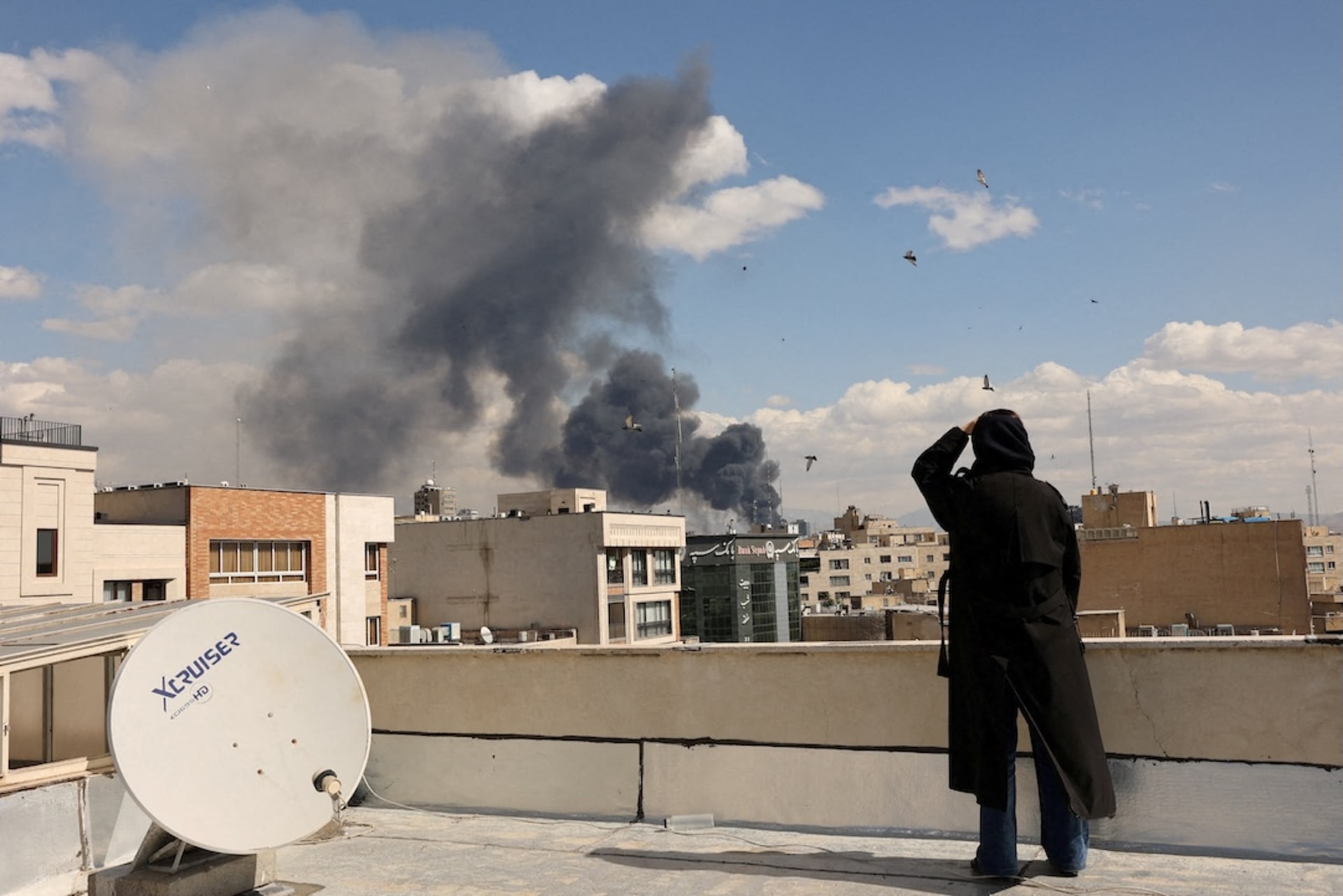
U.S. President Donald Trump said yesterday that war with Iran could last weeks or longer, a reversal for a president who campaigned on limiting foreign military entanglements. Iran’s retaliation to the U.S.- and Israeli-launched war continues to widen, with attacks on the U.S. embassies in Saudi Arabia and Kuwait. The State Department urged Americans to leave the Middle East due to “serious safety risks.” Energy markets remain volatile, with European natural gas prices surging at least 40 percent today after Qatar paused exports from a gas facility following an Iranian attack.
The latest from U.S. officials. Secretary of State Marco Rubio caused a stir yesterday when he told reporters that the U.S. attack on Iran was in part driven by Israel’s plans to strike Iran. Because Iran would have retaliated by attacking U.S. forces, a preemptive U.S. attack was necessary, Rubio said. Despite Trump calling on Iranians this weekend to rise up against the regime, top administration officials argued yesterday that U.S. aims were focused on degrading Iran’s military capabilities—including its ballistic missiles, navy, and security infrastructure. The White House said in a statement that Trump’s “unequivocal” demand remains that Iran cannot obtain a nuclear weapon. Trump wrote in a social media post last night that U.S. munitions stockpiles remain high and “Wars can be fought ‘forever.’” While many congressional Republicans praised the U.S. military campaign, leading Democrats condemned it as illegal and reckless and vowed to vote on a resolution restricting Trump’s war powers.
The latest on the ground. The war’s geographic spread is continuing. After Hezbollah launched strikes at Israel early yesterday, Israel retaliated with strikes on southern Lebanon. The Lebanese government, which has been working to disarm Hezbollah in recent months, announced a ban yesterday on the group’s activities. Still, the strikes have forced thousands of people to flee southern Lebanon. The United States temporarily closed its embassies in Saudi Arabia and Kuwait. Despite the U.S. government warning urging Americans to leave the region, many airports have been forced to delay or cancel flights because of the conflict.
“While the U.S. and Israel have overwhelming military superiority for the attack on Iran, they do not have an endless supply of munitions...The supplies could run dangerously low if the U.S. gets drawn into a protracted, inconclusive war with Iran. That, in turn, could create vulnerabilities for U.S. allies such as Taiwan.”
—CFR expert Max Boot, Washington Post
Across the Globe
France’s new nuclear doctrine. French President Emmanuel Macron announced a new nuclear doctrine of “advanced deterrence” in a speech yesterday, saying France would expand its nuclear arsenal for the first time in decades. It could also temporarily deploy some of its nuclear weapons to European allies. “To be free, one must be feared,” Macron said. He cited the shifting international security environment and U.S. encouragement for Europe to take greater responsibility for its own defense.
Canada-India nuclear energy deal. A Canadian firm will supply uranium to India from 2027 to 2035 in a $1.9 billion deal, the office of Canadian Prime Minister Mark Carney said yesterday. In addition to nuclear energy, the countries also broadly agreed to boost cooperation on critical minerals, defense, and artificial intelligence. The announcement came during Carney’s visit to New Delhi, during which he and Prime Minister Narendra Modi affirmed their countries’ “strong, resilient, and forward-looking partnership.”
U.S. sanctions on Rwanda. The United States sanctioned Rwanda’s military and four of its top officials yesterday, blaming them for backing M23 rebels in the Democratic Republic of Congo (DRC) and undermining U.S. efforts to strike a peace deal there. Rwanda’s government said the sanctions “misrepresented the reality” of the conflict.
Cuba signals economic shift. The country should make “urgent” changes to its “economic and social model,” President Miguel Díaz-Canel said, state media reported yesterday. These include increasing autonomy for local governments and the private sector and “resizing of the state apparatus.” Rubio has urged Cuba to increase permissions for private enterprise as the United States restricts oil flows to the country’s public sector.
Ukraine’s EU ambitions. Ukraine will complete the technical requirements to start negotiations on its European Union (EU) accession process within days, President Volodymyr Zelenskyy told reporters yesterday. Though Ukraine became an EU candidate soon after Russia’s 2022 invasion, Hungary’s opposition has prevented the unanimous approval needed to open accession talks.
New UN Secretary-General candidate. Burundi has nominated former Senegalese President Macky Sall as a candidate for the next Secretary-General of the United Nations, a UN spokesperson confirmed yesterday. The selection process is slated to begin by the end of July. Three other candidates have been announced: former Chilean President Michelle Bachelet, the Argentine head of the International Atomic Energy Agency, Rafael Grossi, and former Costa Rican Vice President Rebeca Grynspan.
China’s nuclear-armed subs. China is building submarines with capabilities to target the United States from waters close to the Chinese mainland, the head of U.S. naval intelligence said in testimony submitted to a congressional hearing yesterday. At present, Chinese ballistic-missile submarines need to be in the vicinity of an island chain that includes Japan, the Philippines, and Taiwan, to target parts of the United States, he said. China’s push for naval modernization comes in contrast to the United States, which has been slow to build new submarines.
Zimbabwe prisoner release. Authorities yesterday began releasing some four thousand detainees as part of an effort to relieve prison overcrowding. Justice Minister Ziyambi Ziyambi said last month the government would grant amnesty to prisoners who had shown “significant progress in their rehabilitation.” The initiative came amid anti-government sentiment over a plan to extend the president’s term until 2030.
What’s Next
- Today, German Chancellor Friedrich Merz visits Washington, DC.
- Today, South Korean President Lee Jae-myung begins a visit to the Philippines.
- Tomorrow, China’s top political advisory body begins its annual meeting in Beijing.