Wake Up Call for American Energy Research: How China is Pulling Ahead
By experts and staff
- Published
- Akkshath SubrahmanianClimate Realism Intern
Research publications may seem far removed from a country’s industrial competitiveness, but they are in fact an important signal of it. CFR’s Global Energy Innovation Index (GEII) ranks countries on their contributions to global energy innovation and finds that China plays an outsized role in producing research publications, surpassing the United States. Unless the United States re-commits itself to leadership in cutting-edge research, which was recognized as a priority by both Congress and the White House, it could lose out on key industries of the future..
Most scholars conceive of research publications as a public good. In this view, researchers offer information that can be freely used, critiqued, and built upon by others at home and abroad. For instance, a company in the Netherlands could optimize its energy systems after a university in Saudi Arabia pioneers an efficient algorithm to improve system efficiency.
This view of research is accurate up to a point, but it obscures its competitive applications. Publications are the product of knowledge ecosystems that support both local and national economic growth. First, universities are incredibly effective at developing the workforce of the future. Students who gain skills as members of research teams can take their theoretical understanding and practical know-how to nearby companies. Additionally, researchers develop insights through publications that have the potential to inform the future business decisions of domestic companies. Streptomycin, the first antibiotic that could treat tuberculosis, typhoid, cholera, and other penicillin-resistant diseases, was discovered in a lab at Rutgers University. This technology was transferred to private pharmaceutical makers and ultimately adopted on a large scale, generating returns for its manufacturers and, more importantly, saving countless lives.
The GEII includes three indicators that measure the quality of a countries’ energy research publications: total number of publications, highly-cited publications, and internationally co-authored publications. To do so, the GEII analyzed publications from the Web of Science database that contained keywords for fourteen different energy technologies, including clean electricity generation sources, transmission infrastructure, and energy end uses. Country ownership was assigned based on the first address listed for each author in each publication. Addresses were, thus, recorded by university affiliation rather than nationality. The Index finds that before normalizing for population, China leads all three publication indicators. Moreover, Chinese dominance in publication topics correlates with its strengths in related clean energy industries.
The indicator for the total number of publications measures the broadest contributions of a country’s research community to energy innovation and identifies global hotspots for energy research. China’s share of the GEII total is 31 percent. That compares with China’s 23 percent share of the economic output of the countries included in the GEII.
The number of publications that are highly cited by other researchers, calculated in the GEII as the top ten percent in each technological field, measures the quality of each national community’s output. These publications tend to have a larger impact on the research community than others, and nearly half of these influential papers – 45 percent – are from China. In comparison, the combined share of the next five most-represented countries (in order: the United States, India, the United Kingdom, South Korea, and Australia) is only 29 percent.
The final indicator that the GEII uses to track publications data is international co-publications. This indicator measures the reach of a nation’s research networks through the number of publications that are internationally coauthored, or are written by authors whose primary university affiliations are in separate countries. After aggregating the publications by country (each author per publication was credited equally), China’s share of international copublications is 24 percent, which is significantly less than China’s lead in the other two indicators. If the United States wants to reassert its energy research capabilities, it should make strong efforts to broaden its international research collaboration networks.
China’s publications, moreover, reflect Beijing’s focus on particular industries that the government has singled out as strategic priorities. For instance, China publishes more highly cited publications on solar energy, energy storage, and clean energy transportation than any other field. In all three, China’s share of the GEII total exceeds 40 percent. (This figure is likely an underestimate because the database from which these figures are drawn, Web of Science, only measures English-language publications.)
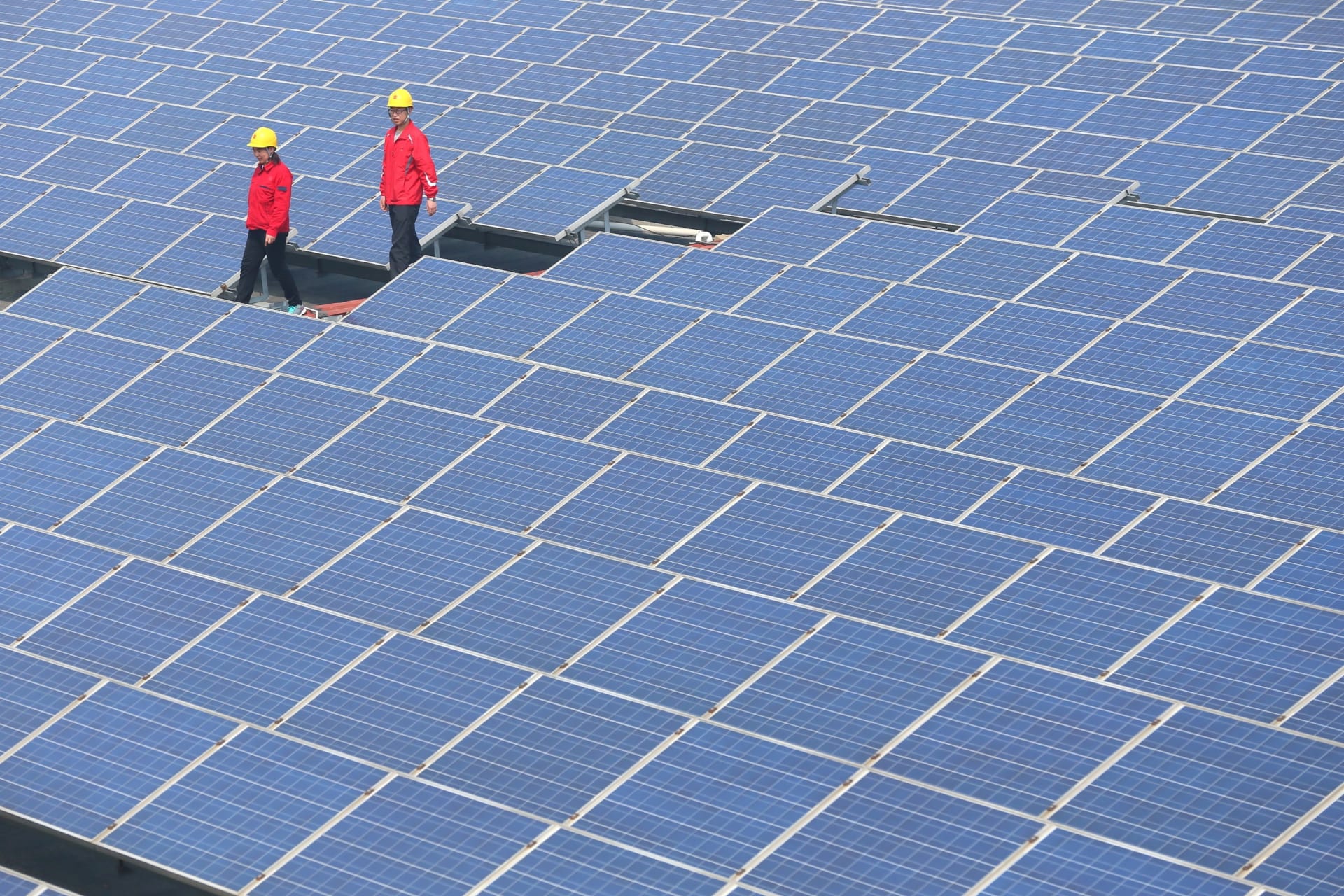
The corresponding industries include China’s “New Three,” fields that Beijing has targeted for global leadership: photovoltaics, lithium-ion batteries, and electric vehicles (EVs). China is the predominant global producer in all three. In many emerging and developed markets, Chinese EV companies either hold a majority market share or are nearing this threshold. BYD, a Chinese EV producer, is not only the largest EV manufacturer in the world, but also leads EV sales in international markets like Mexico, ahead of Tesla, Volvo, and Renault.
China’s publications, in other words, may be a public good that contributes to research efforts everywhere, but they are also a reflection of China’s commitment to building internationally competitive scholars and industries. The findings of the GEII are not unique, as Chinese research has seen a surge across all research disciplines recently, while American research output has declined. Complacency in Washington could reinforce these trends, leaving the United States even further behind, and the GEII is a wake-up call for the United States. The recent recognition of the importance of energy innovation by Congress and the President must be followed by greater investment in domestic research capabilities.