War Spreads Across Middle East
By experts and staff
- Published
Welcome to the Daily News Brief, CFR’s flagship morning newsletter summarizing the top global news and analysis of the day.
Top of the Agenda
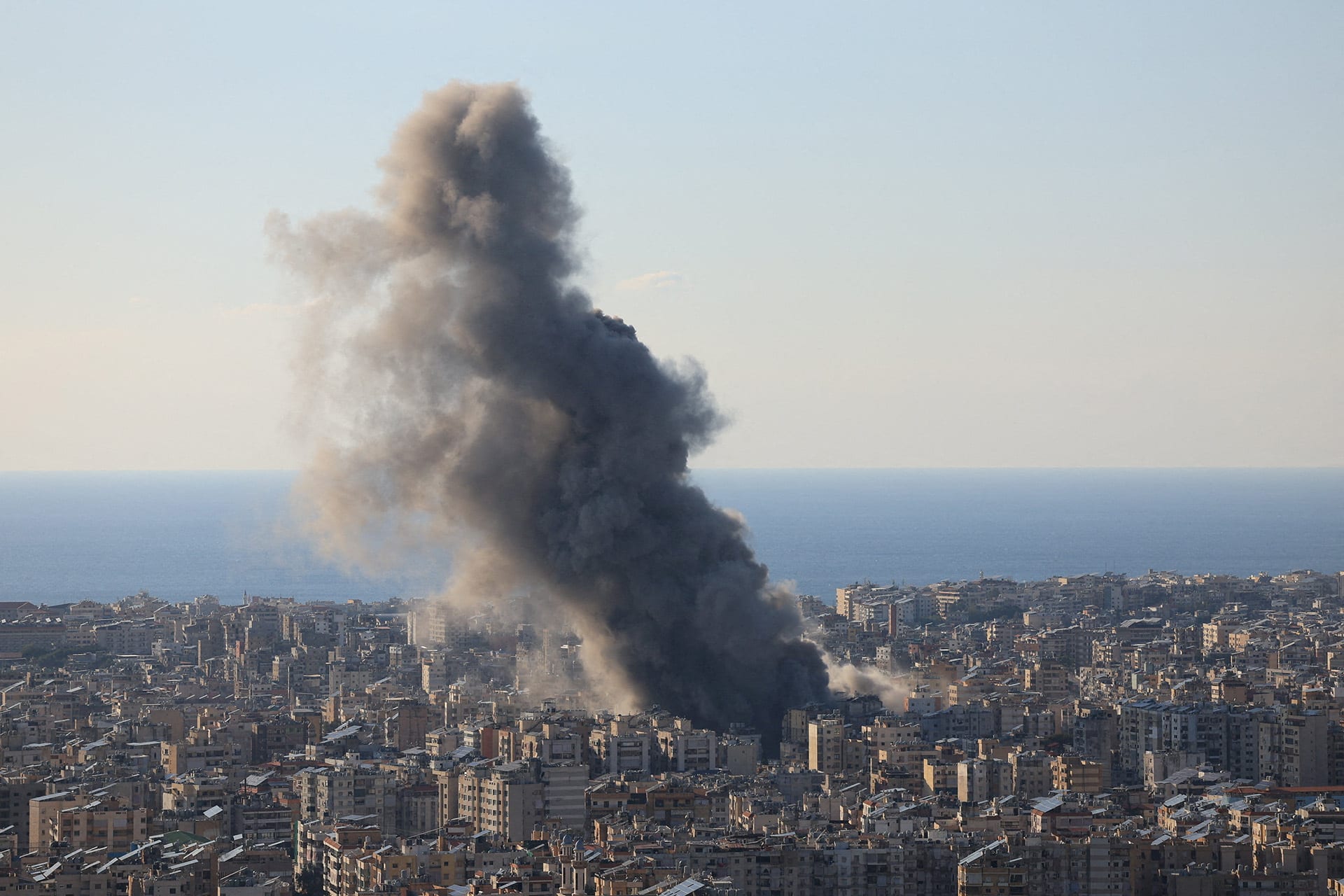
The war launched by the United States and Israel against Iran continues to spread across the Middle East today, with Hezbollah attacking Israel and Iran striking energy facilities in Qatar and Saudi Arabia. Supreme Leader Ayatollah Ali Khamenei and dozens of Iranian officials were reportedly killed over the weekend in strikes that began Saturday. Iran has retaliated against targets throughout the region, including U.S. bases and sites within Israel. President Donald Trump appeared to float an off-ramp by suggesting yesterday that he would be willing to speak to Iran’s new leadership. Iran’s top national security official, Ali Larijani, wrote on social media today that Iran would not negotiate with the United States.
The scope of the conflict. Four U.S. service members were killed in an Iranian attack on a U.S. base in Kuwait, and Trump said yesterday there would “likely be more” U.S. casualties. Estimates indicate 11 people were killed in Israel and another 555 in Iran—including dozens of schoolchildren and several figures Washington had identified as possible successors to Khamenei. Nine Iranian navy ships have been “knocked out,” Trump said yesterday. Six nearby countries condemned Iran’s retaliatory strikes across the region. Oil shipping traffic slowed to a near stop in the Strait of Hormuz, while a key international oil price jumped at least 8 percent.
What leaders are saying. Defense Secretary Pete Hegseth this morning framed the U.S.-Israeli strikes that killed Khamenei as “not a so-called regime change war,” but quickly added “the regime sure did change.” Trump and Israeli Prime Minister Benjamin Netanyahu have both encouraged Iranians to rise up against the remnants of the regime.
Also this morning, Joint Chiefs of Staff Chairman Gen. Dan Caine said the attacks had taken “months, and in some cases, years” of planning with the goal of stopping Tehran’s “ability to project power outside of its borders.” Iran’s Foreign Minister Abbas Araghchi wrote on social media yesterday that Trump had launched the war despite a new nuclear deal being “within reach.”
UN Secretary-General António Guterres called for immediate de-escalation at an emergency Security Council meeting Saturday, condemning the United States and Israel’s strikes as unlawful. Both countries argued their actions were justified given the major nature of the threat posed by Iran, while Iran said it posed no imminent threat. Trump has given varying estimates for how long U.S. military engagement could last, telling different media outlets over the weekend it could be days or up to four to five weeks.
For a full selection of CFR’s coverage of the strikes on Iran, including expert analysis from over the weekend, visit here.
“Given Mr. Trump’s deal-making reflex and his ideology-lite understanding of men, he may again proffer another meeting to the Islamic Republic’s new leaders. With Ali Khamenei’s death, the regime may temporarily form a triumvirate to replace him, it may rapidly select a new supreme leader, or it may muddle through with multiple power centers united, first and foremost, in the cause of crushing Iranians who oppose them.”
—CFR expert Ray Takeyh and the Foundation for Defense of Democracies’ Reuel Marc Gerecht, the Wall Street Journal
Across the Globe
The Pentagon’s deal with OpenAI. Hours after Trump announced Friday that all federal agencies should cease using artificial intelligence (AI) company Anthropic’s technology following a dispute over its use for surveillance and fully autonomous weapons, competitor OpenAI said it reached a deal with the Department of Defense to deploy its systems. OpenAI said the Pentagon would be allowed to use its technology for “all lawful purposes” and had committed to not using it unlawfully for autonomous weapons or domestic surveillance.
Reported delay on Taiwan arms announcement. The Trump administration has delayed announcing a weapons sale to Taiwan over concerns about Chinese President Xi Jinping’s reaction, unnamed U.S. officials told the New York Times. Trump is due to travel to Beijing next month. The State Department said it does not discuss pending arms sales but that “the enduring U.S. commitment to Taiwan continues.”
Afghanistan-Pakistan war. Though countries including Saudi Arabia and Qatar have attempted to mediate tensions between Afghanistan and Pakistan in recent days, fighting continued over the weekend. Afghanistan’s Taliban government said it repelled a Pakistani attack on Bagram airbase near Kabul. It is the heaviest fighting between the countries in years.
Trump’s Cuba threat. Trump said Friday that the United States might carry out a “friendly takeover” of Cuba, adding that Secretary of State Marco Rubio is dealing with the matter “at a very high level.” Rubio said last week that the island nation “needs to change;” last month he called for greater economic as well as political freedom in the country.
Vietnam’s AI law. The country became the first in Southeast Asia to enact a comprehensive law regulating AI yesterday. Vietnam’s legislation was modeled after the European Union’s AI policy and seeks to manage the risks of generative AI by mandating human oversight and labeling of AI-generated content that cannot easily be identified.
North Sea tanker seizure. Belgian and French forces seized a tanker in the North Sea suspected of carrying sanctioned Russian oil, Belgium’s defense minister said Saturday. In a social media post, French President Emmanuel Macron called the seizure a “major blow” to the Russian shadow fleet transporting sanctioned oil.
Venezuela’s Machado plans return. Venezuelan opposition leader and Nobel Peace Prize laureate María Corina Machado announced yesterday she plans to return to the country in a few weeks. She spent almost a year in hiding in Venezuela before traveling to Oslo in December to accept the Nobel Peace Prize. She has since met with Trump at the White House and is currently in the United States.
Ghanaians killed in Ukraine. An estimated 272 Ghanaians have been recruited to fight for Russia in Ukraine and at least 55 have been killed, Ghana’s foreign minister said during a visit to Ukraine Friday. He said the Ghanaian government would work to dismantle illegal recruitment schemes. Ghana is one of a number of African countries whose citizens have been recruited by Russia.
What’s Next
- Today, Canadian Prime Minister Mark Carney visits New Delhi.
- Today, impeachment hearings against Philippines Vice President Sara Duterte begin.
- Tomorrow, the U.S. Senate holds a hearing on the National Defense Strategy in Washington, DC.