Who Will Govern Gaza?
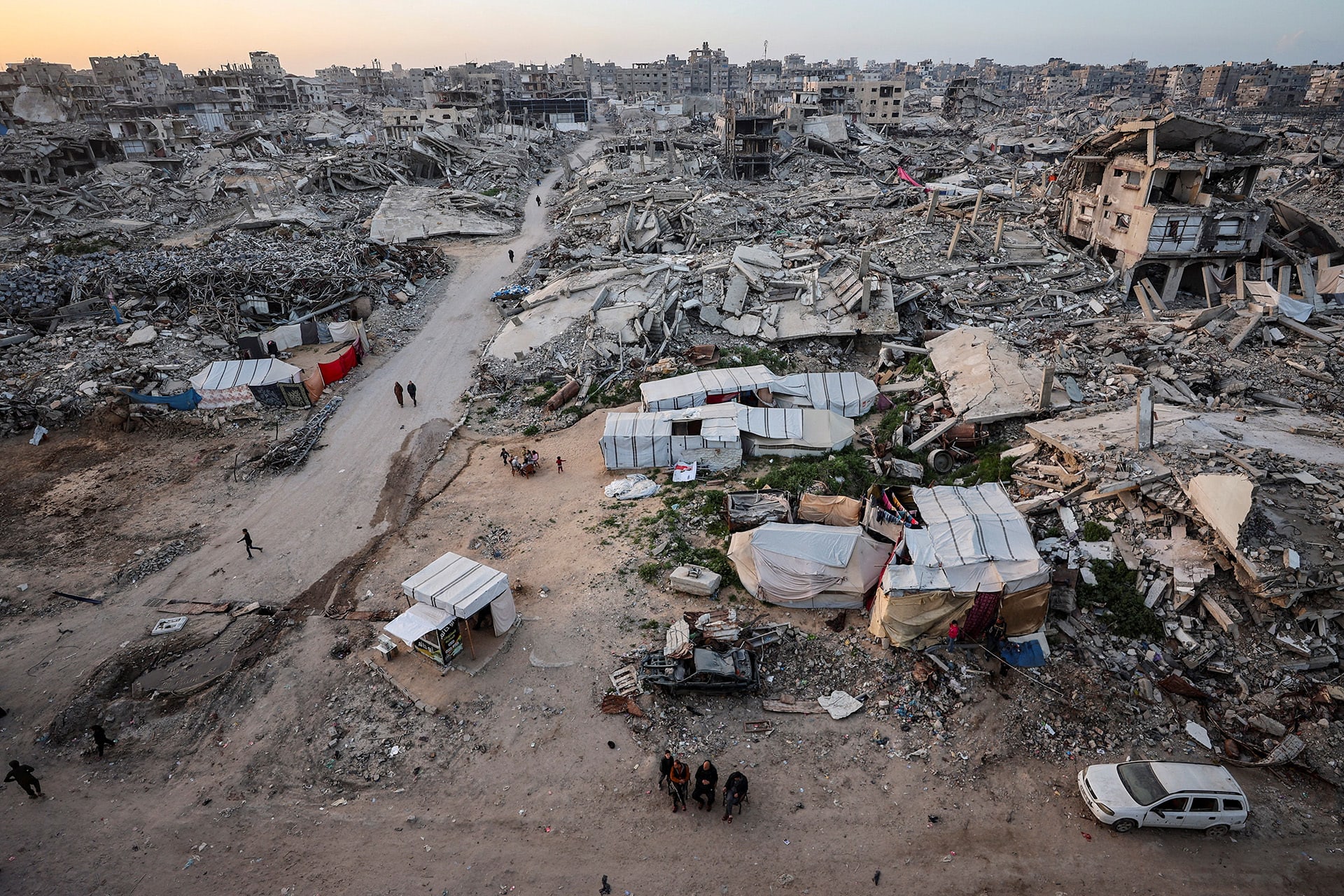
The Board of Peace has appointed a committee of Palestinian technocrats to oversee day-to-day administration of the enclave. Here’s what is known so far.
By experts and staff
- Published
- Christina BouriMiddle East Fellow, Office of Government Relations at The Episcopal Church; Former Research Associate, Middle East Studies
In late 2025, the UN Security Council passed a resolution [PDF] paving the way for implementation of a twenty-point Gaza peace plan first proposed by U.S. President Donald Trump. The first phase of the plan began last October and focused on halting hostilities, restarting aid, and returning hostages. The second phase, now underway, focuses on the future governance of Gaza.
A core tenet of the plan involves Hamas giving up control of the enclave. According to the White House, three bodies will help govern Gaza directly or indirectly during its postwar transition. The first is the Board of Peace, a U.S.-led international transitional body tasked with overseeing governance and security in Gaza, which has recently begun to take shape. Trump chairs its founding Executive Board, which includes seven other members. This board oversees a larger operational body known as the Gaza Executive Board, which includes leaders and foreign ministers from Asia, Europe, Latin America, and the Middle East. At the end of 2025, the proposed names of the individuals appointed to lead the territory through its upcoming transition were made public for the first time.
Day-to-day governance of Gaza will fall to the National Committee for the Administration of Gaza (NCAG), more commonly called the Technocratic Committee. It will eventually be composed of fifteen Palestinian technocrats supervised by the Board of Peace. So far, twelve have been confirmed.
Here’s what to know about the planned interim government structure in Gaza.
What is the Technocratic Committee?
Trump’s peace plan calls for reforms to the Palestinian Authority—a separate government institution that primarily administers parts of the West Bank—and an eventual transition of power to that group. In the meantime, the Technocratic Committee will effectively replace Hamas in the daily administration of Gaza.
Once officially appointed, the Technocratic Committee will manage on-the-ground implementation of governance. That includes enforcement of the rule of law and the delivery of basic services such as aid and health care. As part of its immediate tasks, it will facilitate the supply of much-needed resources like food and clean water, maintain security, and rebuild infrastructure.
Who is on the Technocratic Committee?
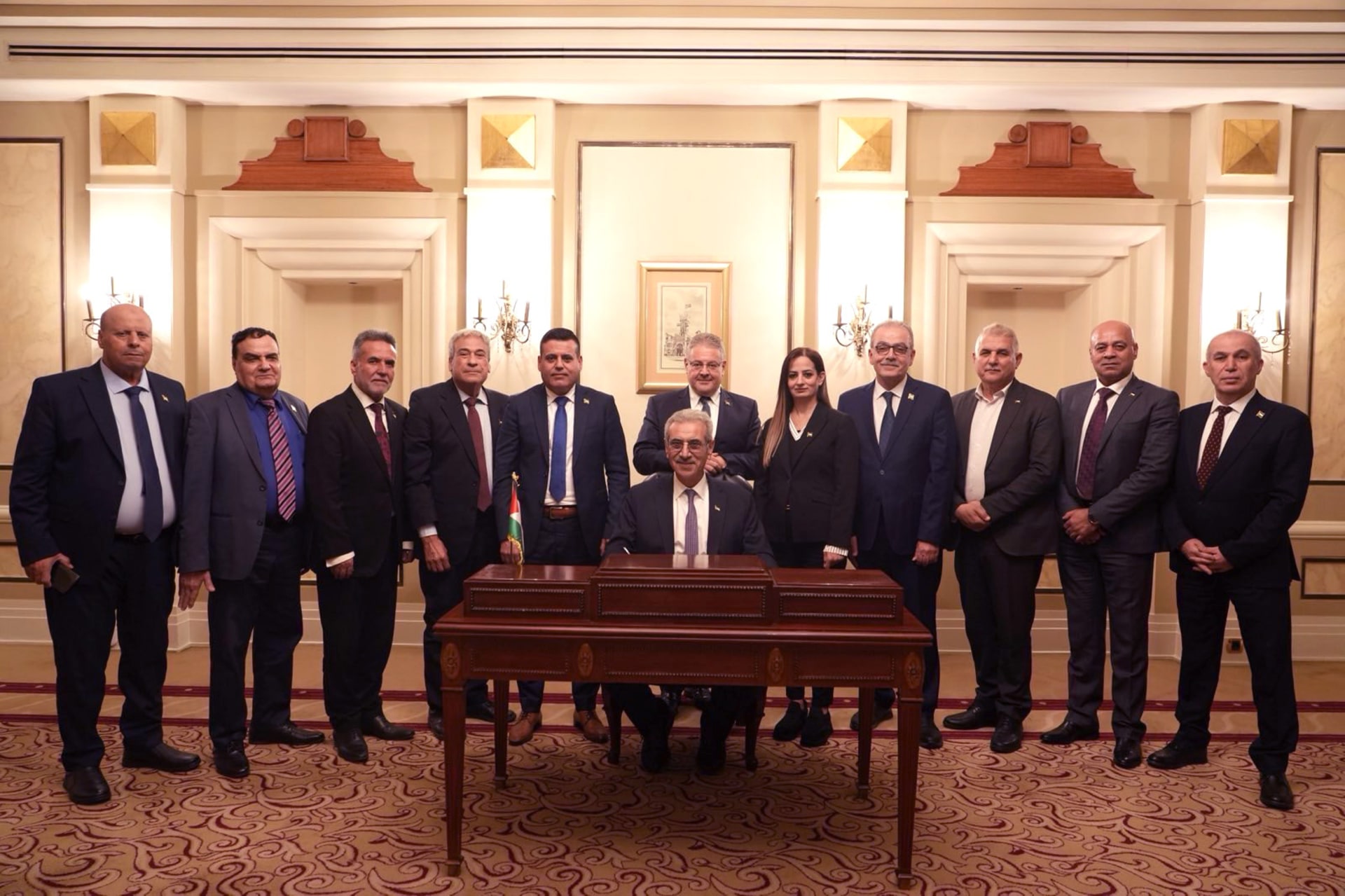
Some of the committee’s proposed leaders served as officials in the Palestinian Authority under President Mahmoud Abbas, and many are either from Gaza or have family ties there. The first committee meeting was held on January 15 in Cairo, Egypt.
So far, twelve committee members have been confirmed:
Ali Shaath. The committee’s chief commissioner, as well as its acting energy and transport commissioner, Shaath served as the Palestinian Authority’s assistant deputy minister at the Ministry of Planning and International Cooperation and held a senior role at the Ministry of Transport.
Ayed Awni Abu-Ramadan. Former administrative director of the Palestine Islamic Bank in Gaza and chair of the Gaza Chamber of Commerce, Ramadan will serve as the committee’s commissioner of economy, trade, and industry.
Adnan Salem Abuwarda. A judge appointed to the Palestinian Authority’s supreme court in 2019, he will lead the judiciary in Gaza.
Sami Nasman. The commissioner of the interior and internal security, tasked with overseeing Gaza’s future security apparatus, Nasman was born in a refugee camp in Gaza City in 1967. He previously served as a major general for the Palestinian Authority’s intelligence service.
Abdel Karim Ahmed Ashour. Set to serve as the commissioner of agriculture, Ashour directed the microfinance lending institution Reef Finance and the Agricultural Development Association in the West Bank. He also serves on the board of directors of the NGO Development Center, which he founded. Ashour’s work at these organizations is rooted in experience in community work and development financing.
Jabr Ibrahim El-Daour. Education commissioner, El-Daour served as president of the University of Palestine in Gaza City, and previously as the vice chancellor and a professor of accounting. He also held senior roles at Al-Azhar University.
Ali Shehda Barhoum. Commissioner of water and municipal affairs, Barhoum is a Palestinian from Gaza who has coordinated municipal service projects in the enclave. He also served as the director general of the municipality of Rafah, where he led waste management efforts there and in Khan Younis.
Hanaa Hanna Nicola Tarazi. The only woman so far to be nominated to the Technocratic Committee, Tarazi is a lawyer from Gaza and will serve as the commissioner for social protection. She is vice chair of the Al-Mezan Center for Human Rights in the Gaza Strip.
Dr. Aed Mahmoud Yaghi. Born in Gaza City, Yaghi will be the commissioner of health. He is a urologist and the current director of the Palestinian Medical Relief Society in Gaza. He is also president of the National Society for Rehabilitation in Gaza and president of the Gaza Ministry of Health’s advisory council.
Dr. Bashir Rayyes. Rayyes will serve as the commissioner of finance. He is a board member of the Palestine Monetary Authority and he led the National Office for Gaza Reconstruction after the war in 2014, which included work on the reconstruction of infrastructure and essential services in the Gaza Strip.
Osama Al-Sa’dawi. Commissioner of land and housing, Al-Sa’dawi was born in a refugee camp in Rafah. He formerly served in the Palestinian Authority as the minister of state for entrepreneurship and empowerment, as well as the general manager of the Palestinian Housing Council in the Gaza Strip.
Omar Shamali. An executive with nearly three decades of experience in the telecommunications sector, Shamali will be commissioner of communications and digital services. After Hamas’s initial attack in October 2023, he was responsible for keeping the Gaza Strip connected in his leadership role at the Palestine Telecommunications Group.
Additional rumored nominees have been reported in the press, but are unconfirmed.
What questions remain unanswered about the peace process?
The biggest open questions about the Board of Peace pertain to its scope. Trump has signaled its potential as an international mediator and indicated that he hopes the board would work not only in Gaza, but also in other global conflict zones. His rhetoric has, at times, stoked fears in allies that he envisioned the board rivaling the United Nations, though he has appeared to walk back the idea of direct competition, saying the two bodies would work together. The charter for the Board of Peace does not mention Gaza, and the ambiguity of that language suggests little barrier to expanding its scope beyond the enclave.
Major parties to the conflict and the peace process—Israel, Hamas, and the Palestinian Authority—did not attend the January signing of the board’s charter in a ceremony in Davos, Switzerland, during the World Economic Forum, raising questions about their willingness to cooperate with the board. Israeli Prime Minister Benjamin Netanyahu’s office issued a statement at the time expressing concern, in particular, about Turkish participation on the Gaza Executive Board. Since the October 2025 ceasefire, the Israeli government has sought to prevent Turkish political influence in Gaza. Despite opposition from Netanyahu, Turkish Foreign Minister Hakan Fidan and Qatari senior diplomat Ali al-Thawadi joined the Gaza Executive Board. Hamas was not present at the signing, nor was the Palestinian Authority.
More than sixty countries were invited to join the Board of Peace, including China and Russia. However, only about twenty-seven countries have accepted the invitation as of February 19.
Many European Union (EU) countries have declined to join the board or have ruled out participating. Italian Prime Minister Giorgia Meloni said the board appeared incompatible with Italy’s constitution, while other EU countries and the Vatican expressed concern that it would dilute the United Nations’ influence in crisis situations. Meanwhile, Trump has raised the idea of requiring board members to make a $1 billion payment for permanent membership, which some current signatories may be unable to contribute.
In February 2026, the Board of Peace met in Washington for its first meeting, during which Trump announced that, collectively, nine nations had contributed about $7 billion to reconstruction efforts in Gaza, and the United States would provide another $10 billion, without saying where the U.S. funds would come from. Additionally, Albania, Indonesia, Kazakhstan, Kosovo, and Morocco have committed troops for the International Stabilization Force—the multinational force authorized by the United Nations to oversee the demilitarization of Gaza—led by U.S. Major General Jasper Jeffers III, while Egypt and Jordan have agreed to train Gaza’s police force.