The UN Versus Regional Organizations: Who Keeps the Peace?
By experts and staff
- Published
- Stewart M. PatrickJames H. Binger Senior Fellow in Global Governance and Director of the International Institutions and Global Governance Program
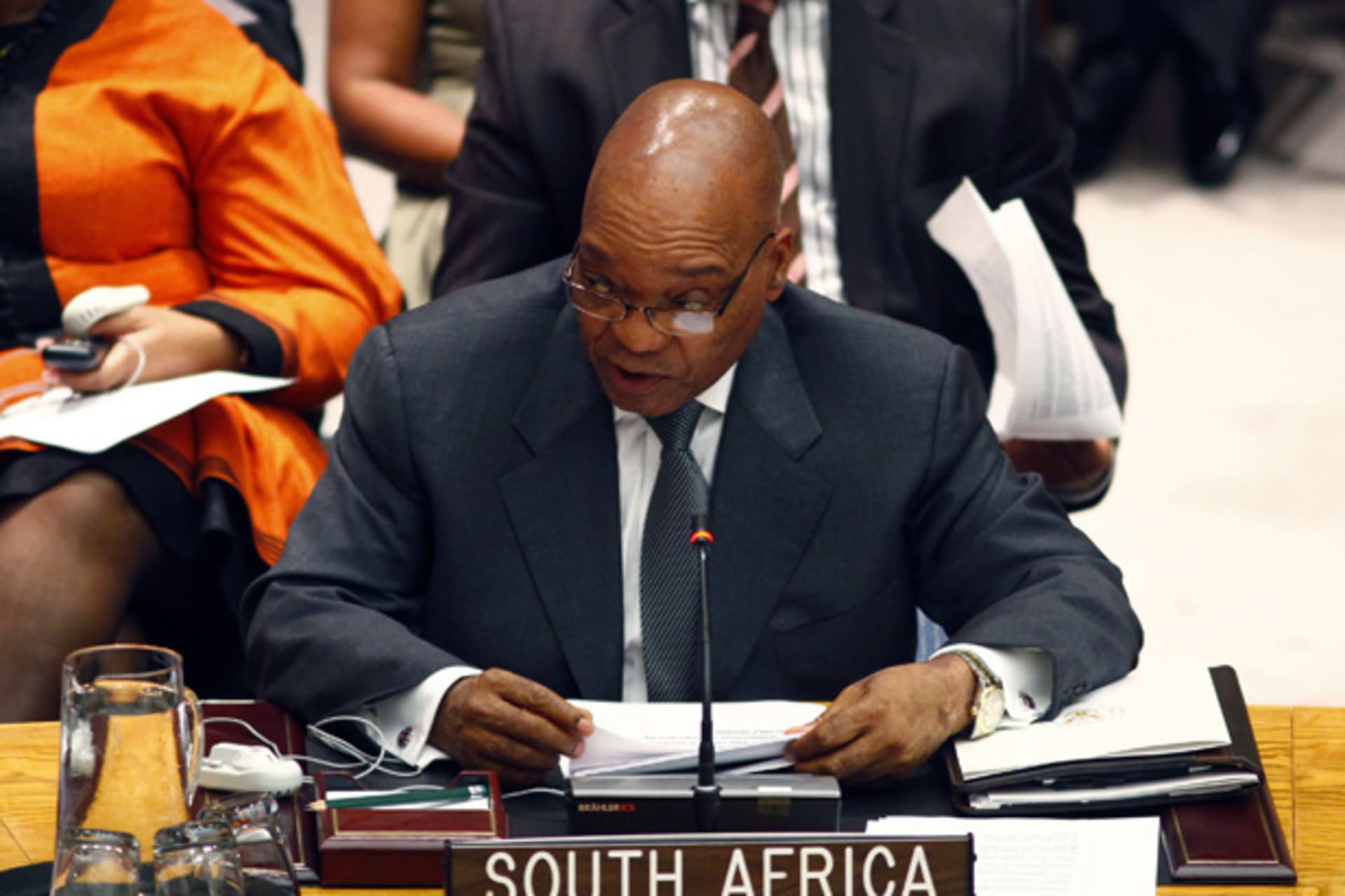
In January, the South African government of Jacob Zuma threw down a gauntlet. Taking advantage of the rotating presidency of the UN Security Council (UNSC), South Africa introduced a resolution to tighten the relationship between the UNSC and regional organizations—and the African Union in particular—charging that “Africa must not be a playground for furthering the interests of other regions ever again.” The Security Council subsequently adopted Resolution 2033 (2012), which pledges to enhance cooperation with regional organizations, though its clauses remain extremely vague.
It’s now well accepted, as Francis Fukuyama observes, that we live in a world of “multi-multilateralism,” but U.S. and foreign policymakers, are struggling to keep up. Increasingly, nations exploit collective frameworks beyond the United Nations to manage conflict —from ad hoc arrangements like the Six-Party Talks for North Korea to regional organizations like the African Union. The UN retains unmatched authority and legitimacy—thanks to its universal charter and legally binding Security Council decisions—but it’s hardly the only game in town.
Elsewhere I’ve explored the trade-offs between relying on the prix fixe menu of universal institutions (like the UN) and exploiting a la carte “coalitions of the willing.” The challenge is to ensure that reliance on ad hoc and regional arrangements complement and reinforce, rather than undermine, the UN’s legitimacy and capacity.
This conundrum has become more pointed in the wake of African opposition to the Libyan intervention, as many African governments perceived the United States, France, and the United Kingdom contorting UNSC Resolution 1973 into a license for regime change. This spectacle stiffened the determination of the AU—long wedded to the principle of “African solutions to African problems”—to become the gatekeeper of military intervention on the continent.
Chapter VIII of the UN Charter, of course, recognizes an important role for regional organizations, including in advancing peace and security. But it explicitly subordinates this function to the authority of the UN Security Council. The South African initiative would represent a radical shift, toward codetermination between, in effect, equal partners. Predictably, the permanent members of the Security Council reacted coolly to Zuma’s gambit.
Debates over whether the world should adopt universal or regional approaches to manage conflict are nothing new, of course. Indeed, American and British planners fiercely debated the point during World War II, as the two nations sought to define a postwar structure of peace. But by 1945, as I point out in my book The Best Laid Plans: The Origins of American Multilateralism and the Dawn of the Cold War, UN universalism had definitively won.
Still, the perceived need for buy-in from regional organizations to legitimize UN enforcement action and peacekeeping is likely to persist. Indeed, it may well grow, if—as seems likely—there is no movement on enlarging the Security Council to include permanent members from the developing world. This is a particularly sensitive issue in Africa, which is after all the setting for most UN peace operations. By what right, many Africans ask, should the Security Council be permitted to authorize Chapter VII actions on the continent, without so much as an AU by-your-leave?
As a practical matter, of course, the UN and regional organizations are already deeply intertwined in peace enforcement and peace operations. Alongside classic UN operations, one finds a variety of “hybrid” models, in which the Security Council authorizes a mission that is implemented by either an ad hoc coalition (such as the NATO-led Libyan intervention) or a regional organization (as in the AU’s AMISOM mission in Somalia), or some combination of the two.
The growing role of regional organizations poses a conundrum for the United States. Many of these implications are spelled out in a terrific new book, Rewiring Regional Security in a Fragmented World, edited by Chet Crocker, Fen Hampson, and Pamela Aall. One, already discussed, is the question of how to operationalize Chapter VIII of the Charter—and whether regional organizations should be allowed to serve as gatekeepers to UN-mandated enforcement action. In addition, at least four other insights of the book warrant mentioning.