2026 UN Secretary-General Candidates Series: A Conversation With Rafael M. Grossi
Event date
Speaker
- Director General, International Atomic Energy Agency; Nominee, Position of UN Secretary-General
[Video: https://youtube.com/shorts/ftujbxsfsik]
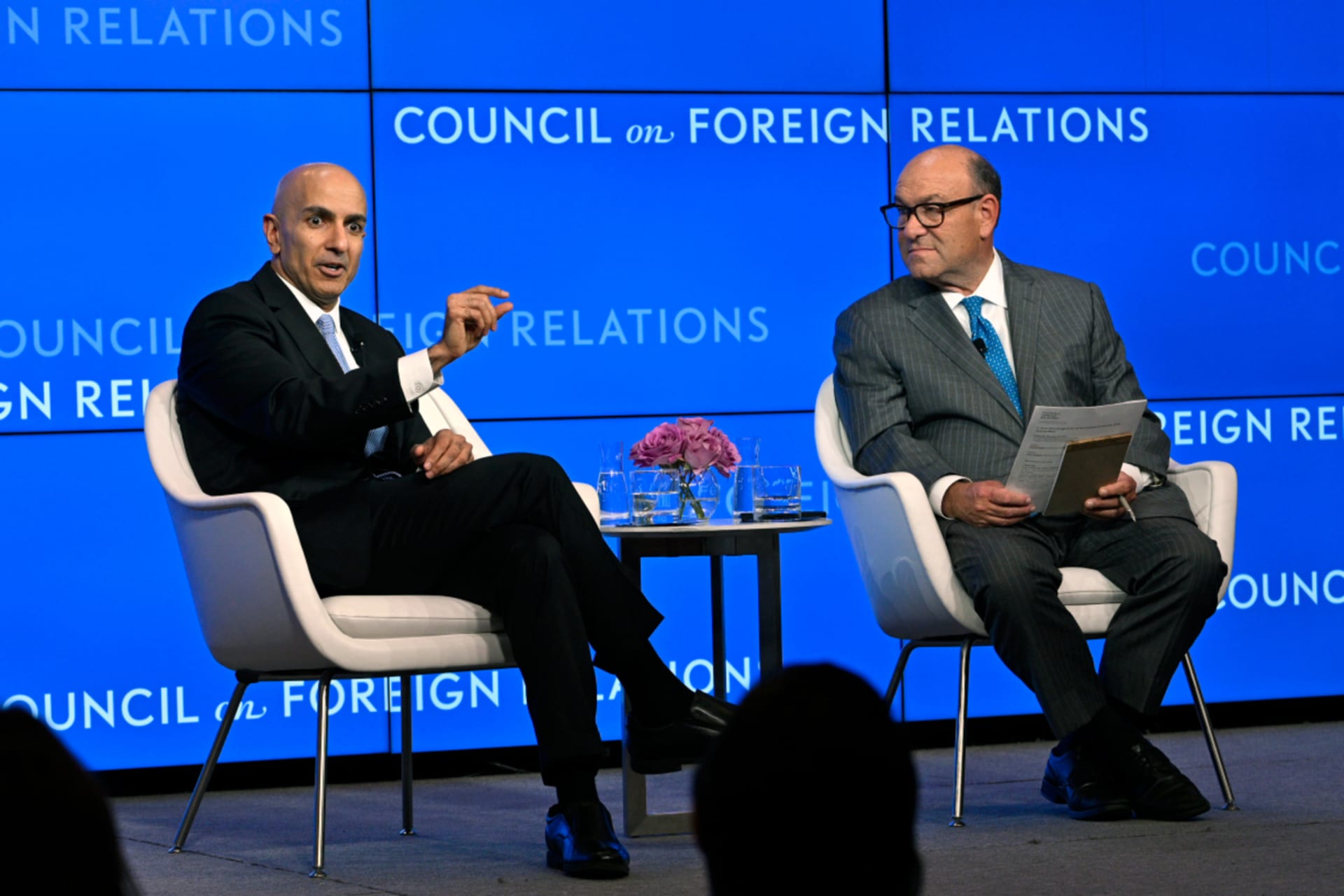
BRIMMER: Good afternoon. Welcome to the Council on Foreign Relations. My name is Esther Brimmer. I’m the James H. Binger senior fellow in global governance here at the Council, and I will be presiding over today’s discussion.
Today’s discussion is part of the United Nations Secretary-General Candidate Series and the Daniel B. Poneman Meetings Program on Nuclear Energy, Climate, and National Security. I’m joined today by Rafael Grossi, who is the director general of the International Atomic Energy Agency and a nominee for the position of United Nations secretary-general. And, as you know, this event is on the record.
It is an exciting time, an interesting time, and a challenging time to be seeking the post of secretary-general. And, indeed, it is a time when some focus on other types of international organizations, but our current global system is grounded in the global body, the United Nations. Just for those of you who aren’t walking around with a copy of the U.N. Charter in your pocket—I used to carry that around, I’m sure you had one as well—just to remind you that under the charter that the secretary-general is appointed by the General Assembly on the recommendation of the Security Council. And, of course, the secretary-general serves as the chief administrative officer of the United Nations.
So we are honored to have the opportunity to welcome Mr. Grossi here. In your vision statement, which you’ve provided—both for all members of the—all members of the United Nations and for the public in general—you outline five pillars. So, if I may, I’d like to start off and discuss those pillars with you. So the first pillar you discuss is effective action for peace and security. But we are in a situation of war. The United States, Israel, and Iran have engaged in conflict over Iran’s nuclear and missile capabilities. So where do we stand now?
GROSSI: Good afternoon, first of all, Esther. It’s very good to see you again, after a few years. And a pleasure—always a pleasure for anybody working in international relations in any way. To be here is to be home, a place that emanates reflection, ideas. So it’s a privilege, I would say, to be able to talk to you. So I’m glad to be here.
So, yes. To attempt any description of the world, I would say, would be an easy thing, because I don’t see any disagreement in any way and anywhere I go about the situation we are having with multiplication of conflict, war coming back furiously to every continent, without exception. And with very unique component, what I would say, when it comes to the United Nations, the multilateral system, if you want, writ large. And this process, this selection process that we are going through, that uniquely we also see, perhaps at an unprecedented level, a very direct challenge and questioning about the usefulness of the United Nations, let’s be very clear.
When we look at what is what is happening, people—including those who like the U.N., maybe, but mostly those who are either indifferent or they don’t like it, they say, well, the U.N. doesn’t count. The U.N.—where is the U.N. when it comes to the resolution of the most serious conflicts that we are seeing in the world? Where is the U.N. in the war between Ukraine and the Russian Federation? Where is the U.N. in the current negotiations in Pakistan, between Iran and the United States? Where was the U.N. in the conflict between Cambodia and Thailand? Where was the U.N. in the war between Azerbaijan and Armenia? Where was the U.N. in the war—in the Great Lakes region between Rwanda and Congo? Where was the U.N.? It was not there. It was not there.
And we talk about the charter. We talk about this idea that we have. Eighty years ago we created the institution, mainly for the preservation of international peace and security. Which is a vision, I’m sure, that we might be discussing this in a more detailed way. It has evolved into other dimensions which are very important. But what I consider as unique in the current circumstance is that we have this complicated convergence of this multiplicity of conflicts, armed conflicts, and a lack of multilateral structure dealing with it. So attempts are being made. Some of them I participated in. For example, when it comes to Iran and the United States. Some not.
But I think the fundamental question that is being put is whether we are well-equipped in this century, eighty years about after the creation of the United Nations, to deal with these conflicts in a way that is efficient and that is conducive to agreement. So this is why I believe this selection process, this election, is so consequential. In my opinion, perhaps one of the—and I would even say perhaps the most consequential. Symbolically, of course, the first—was the first. And when you look at the history, we were never confronted with a situation where we had these elements coming together in this way, and an open questioning of the institution. Of course, brought about by the United States, but, in a certain sense, not in disagreement with others who may not be saying it out loud, but who share the skepticism about the role of the U.N.
As a diplomat for forty years working in this area, particularly in weapons of mass destruction and nuclear weapons and nuclear nonproliferation, the difference for me is that I’ve seen, in my current role—in my current role, that this is not necessarily the case. Or, that it needn’t be like this. It needn’t be like this. Because I’ve seen—perhaps we can get into that later, if you’re interested—we’ve seen that there are moments, there are spaces, there are opportunities, where the mediation office, the possibility of working with belligerents is there, and sometimes to reasonable success. And this is why, basically, I decided to attempt this project.
BRIMMER: Peace and security, of course, is one of the fundamental pillars of the United Nations. Could you share with us a bit more what role you see the secretary-general playing, as you describe? Are there specific examples or incidents where you’d say, this is where this type of leadership matters?
GROSSI: Well, again, my experience and my current experience is what is guiding me. I think the charter was wisely drafted. And in the charter, and within the U.N. Charter, there is a lot of space for the secretary-general to work and to move. And, of course, you know, I come from a city of music in Vienna. And I often like to say that you can have music and you can play it—the same music, you can play it very differently—very, very differently. From Karajan, Muti, it’s completely different, and it’s the same piece of music. And it also applies to the charter, I believe. You can—you can be a very active secretary-general, as director general. This is why I think examples are all, because, you know, talk is cheap. You can—I can draft a nice vision and say, I promise to do this. Let me give you an example so that it is—what I mean is clear, at least.
When the war between Russia and Ukraine started in February 2022, I started to move. I felt that that war had a very crucial component, which is still there by the way. A very crucial component in nuclear security, because the possibility of a major catastrophe in case nuclear power plants will be attacked was there. If you remember those early days of the invasion, Russia took two things and attempted a third. First of all, they took the Zaporizhzhia Nuclear Power Plant. And I will come back to what I did when it comes to that. Second thing, they took Chernobyl, where I will be this Sunday because it’s forty years. It’s the fortieth anniversary of the 26th April 1986—a day that people tend to remember what they were doing in general. And then they moved into another nuclear power plant, which is called the South Ukraine Nuclear Power Plant near Kherson. If you look at the map, the crescent that is currently occupied, it’s towards the south or to the bottom. And that’s Kherson. And then the nuclear power there. Troops were moving. They were stopped. And that didn’t happen.
So immediately, I went to that one, because I felt it was close to them. I’ve been fourteen times in Ukraine since the war started, and seven times I crossed the front line. Two of which under fire, me and my team. So I went there, and then I started working with both sides—with Ukraine and with the Russian Federation—because I immediately saw that the key to avoid a nuclear accident would be to set up a presence at Zaporizhzhia, there. Not only go take a photo and leave, but go and stay there. And that took us five or six months of negotiations, because you had—you had to have terms of reference. And it was the first time—and we are the first international organization operating independently in occupied territory. Of course, for the Russians it’s not occupied territory. They consider it part of the new Russia, or Russia—new oblasts. You know, they organized referenda, and they—but I say it for precision, in case somebody takes issue with what I’m saying. For us, for international law, it’s occupied territory.
But that was the situation. And finally, we were able, and I arrived there on first of September 2022, and set up a permanent mission, which is still there. We, at the moment, have completed thirty-five or thirty-six rotations of our people there. And from time to time I go. When I arrived there, I see holes this dimension, of 155-millimeter artillery. So people were actually shelling an operating nuclear power plant. Shelling it. Bombarding an operating nuclear power plant. Because at that time—there are six reactors. It is the biggest nuclear power plant in Europe, six. One reactor, each, one megawatt. Six giga of installed capacity there. There were two reactors that were still producing energy at that time. And so with our presence there, the issue stopped.
And of course, many things have happened. And there are still drone attacks at the moment. I am negotiating with Russia and Ukraine, the sixth ceasefire. We achieved five already. And why we do this? Because we need these ceasefires to repair the constant attacks on the power lines that feed the plant, which are very important because through these power lines you can assure the safety functions of the plants. So if they fall down, the cooling function is assured by emergency diesel generators, as you can have at home in case there is a power loss or something like that. So you can imagine what that was. I’m telling you this story to indicate that I had that room to maneuver and it was a matter of exercising it, going there, showing up in other words. I could have asked for a special session of the board of governors of the IAEA, which is the equivalent of the Security Council here. I would be still waiting for an approval, or a green light, or a thumbs up to go there, Director General.
We went. We created a situation. And after that, of course, President Zelensky, who by the way was very angry at me in the beginning—very angry. Now, we are very close. But at that time, he was saying: You have to—you cannot go and talk to the Russians. And he was not alone. Many friends of mine, foreign ministers, good friends, were saying, no, no, Rafael. Don’t go. Because it was in 2022 that I went and met with Vladimir Putin. And my answer to those who are saying you shouldn’t go—my answer, in fact, was a question. If I don’t talk to him, who do I talk to? Very simple question. Very simple question.
BRIMMER: The secretary-general can have that unique role. And one can imagine how that might apply in other situations. But I must ask you about another crisis as well, is what’s your assessment of the situation in Iran now?
GROSSI: I think the same applies. The same applies. It’s different, because we have an ongoing war. But in this case—and I’m sure that at some point we are going to go back to the negotiating table, but we were—we were there. Again, my presence there came as a natural consequence of the need to have us around the table. And so I was there directly. Obviously, things are not easy. And you are going to be challenged. And I have a board of governors with countries that are in favor of Iran. So it’s never easy. And it will be the same here in New York. You have the Security Council. And there are these pressures operating on the executive head, whoever he or she may be.
The thing is whether you are going to push the envelope, whether you are going to show up. Who can say something to a secretary-general that would be showing up when a war starts in Africa, in South Sudan? Who would take issue with that? No one. And my experience has proven, although its—success is never guaranteed. You risk a lot of political capital many things. Success is never guaranteed. In fact, in February, we were in the—at the negotiating table, and unfortunately happened what happened. We couldn’t get to a solution that would have prevented the war that we are having, or this new episode of the war that we are having. But what is clear is that—and I have seen it in my—again, in my own experience. That once you are involved, once you are a factor in the equation—you might not be the biggest factor in the equation, but you are within the square brackets. You are inside. And if you move and if you put forward things, of course, there comes the human factor.
You have to know what to say. You have to know what is possible. You have to know what is viable. You have to know how each—I mean, this is negotiation 1.0—what the other is going to be willing and wishing to listen and how you can move the pieces on the table. But these experiences that I’m mentioning, and in the case of Iran it is in this way, and also against enormous opposition. Because whilst I was doing this and talking to them, the Iranians were putting a price to my head. They threatened me. And I live with bodyguards, unfortunately, since last year, because of this situation. The security service considers that we have to take it seriously. And as for as long as it happens, I have to live in this—and my family has to tolerate this. But that notwithstanding, then I could see them, hello, how are you? So what we have, what is the proposal, et cetera. They were not going so far as to ask about me or my family or how I was, but it was a very cordial, I would say, conversation. Knowing that this is the background.
I think this is, I believe, the way to interpret the music, as I was saying before. Not saying, well, conditions are not there. The secretary-general has not been requested to do this. Or, there is no clear mandate. Or there is an impasse at the Security Council. Well, all of that may happen. All of that may happen. But nevertheless, there is a big space that you have, if you choose to exercise it.
BRIMMER: The three pillars of the United Nations include, of course, peace and security, as we have discussed, but also sustainable development and human rights. Turning to development issues, one of the questions, of course, is the relationship among our major global institutions. And I was intrigued that in your points you talked about strength and engagement with international financial institutions. And the other day, when you were at the General Assembly, you talked about that the institutions in Washington, if we think of the World Bank and the IMF, in a sense, have a, quote, “different narrative,” than the United Nations. How do you see the ensemble of our global institutions, and what’s required of them now?
GROSSI: Well, that is fascinating, Esther, because we have this development pillar. There’s a lot that could be said about that, if we have time. But one important—this is why I wanted to highlight it in my vision. You cannot say everything you would like to there. But I wanted to highlight this because this points to the—sometimes the schizophrenic approach that we can have from the multilateral institutions to the international finance institutions. Because they are what they are. There are deficiencies. The whole thing works in a different way. It’s not the General Assembly. There is—(inaudible)—votes. And, of course, the economic—the relative economic weight of the actors determines representation, as we know.
But in any case, it is the system that we have. And we know, especially now—let me say that in the last three years, the last three years, official development assistance has fallen by a percentage of 35 percent. In the space of three years. The space of three years. And now, when we are having world economies concentrating in unprecedented levels on defense, one can see that this is going to suffer even more. So this is why I said we need to talk to each other in a completely different way. We cannot have a discussion on narratives. And what I see quite often is a narrative from New York—and when I say New York, I talk about the Turtle Bay and the U.N.—a narrative that is very critical of the international finance architecture, as it is called. Saying that it is unfair and all that.
That may be the case. That may be the case. But until we have a new one, and I don’t see that happening in the next few years—I am sure we will not see that happening—we have to work with what we have. This is what I call the principled pragmatism. We have to be pragmatic. We do not have international institutions to pursue utopian projects. We have them to solve the problems that we have. We have them to solve the problems that we have, with the tools that we have.
Again, an example, if I may, because I think that exemplifies an approach to things. I deal with nuclear energy and with applications of nuclear technology to many things, as you know. Because, apart from the nuclear energy side, the IAEA does a lot of things in oncology, radiotherapy, human health, food. We develop crops which are drought resistant, et cetera, pest eradications through the sterile insect technique. Basically, we irradiate males. They do not propagate. And then we can deal with dengue, chikungunya, blah, blah. All right. So we do those things.
But you know what? Because of these debates—which luckily are being, you know, superseded now—because of these old debates on against nuclear, anything that had the word “nuclear,” nuclear energy, nuclear—the World Bank had a prohibition to finance anything in this realm. And I thought, this is mindboggling. This is not possible. So instead of, you know, making speeches, you know, I pick up the phone and I went to see Ajay Banga. It’s a guy who comes from private sector. I suppose must be a practical person. So I said to him, listen, did you know—first of all, did you know this? Of course, he didn’t, because it’s some footnote hidden in some internal memo of written by someone in 1973. I don’t know. Nevertheless, perhaps ’79, after Three Mile Island, or something.
But anyway, that existed. And so he said, Rafael, you’re right. So come to the board. And one day, I remember it was very—the setup was very similar to this one. There were people sitting and having lunch. And I was talking. And I could see them, even governors for countries as nuclear as France, they were looking at me with, you know, reluctance. Talk about silos. Talk about silos. So we explained. We started working. And now the World Bank has lifted this. And when that happened, immediately, you imagine the domino. Now the Asian—I went to Manila. The Asian Development Bank signed an agreement with us. Then the Islamic Development Bank did the same. Then the Latin American Development Bank did the same. And now we’re working with the African Development Bank.
So not to say this is a panacea, but we need to open the doors. We have to face the systemic issues that we are having. We are in a decade where, I suppose—a decade, perhaps even more—where you have economies in the world spending 5 percent in defense. So the gap from 2.5 or 1.7 to 5 (percent), where do you think that money is coming from? It’s two plus two, all right? So we are going to see, you know, shrinking avenues for development.
BRIMMER: I will ask you one more question, and I’m letting people know that soon we’ll be opening up for questions, both in the room and online. But my final question is to ask you a bit about the role of the functional institutions. Maybe you know that we one of the challenges I think is important is the management of our global spaces—whether it’s oceans, whether it’s Antarctica, whether it’s outer space. And so we have institutions that work on civil aviation, on a variety of issues. What do you see as the role of the functional agencies that are part of the United Nations system?
GROSSI: Well, it is interesting to see that when there is a well-defined mandate and a clear, I would say, objective, which is well-defined and agreed by member states, and a service that you are providing—let us put it in simple terms—these organizations tend to work very, very well. And there is not so much challenge, even at times of enormous pressure against international institutions. You may have seen that the beginning of this administration, who is very skeptical—which is very skeptical about international organizations. They had a chart of three types of organizations. The ones that, I suppose, they like. I was there. (Laughter.) Then the ones that, well, they could be good, but perhaps they are being a bit naughty. And the ones that are completely, you know, bad. Anyway, jokes apart, you will see that international organizations that that provide for a common good that cannot be taken care of but internationally are the ones doing well.
Think ICAO, civil aviation. I mean, you can be as sovereignist as you want, but you want to fly to point A—from point A to point B, there is nothing to do about it. The International Maritime Organization, ITU, telecommunications. I mean, all of those—all of those, when there is a very clear, discernible, objective target, they are, I would say, indispensable, because you can be the biggest and mightiest as the economy in the world, but you are not going to be able to operate unless you have these common rules, these minimum common denominators that are there.
So I would say that the functional organizations are the ones that we need more. And there is even demand for more, in some cases. You know, people are talking about AI and things like that. It’s a bigger debate than that, but to say that those are needed, because they are services. The issue is what happens with institutions that have a bigger, larger mandate, where interpretations and visions of the world differ.
BRIMMER: At this time, I would like to invite members who are here in New York and online to join our conversation and to pose questions. Just a reminder, of course, that this meeting is on the record. I will take my first question here in New York. And please introduce yourself.
Q: Thank you. My name is Erin Dumbacher. I’m the Stanton nuclear security senior fellow here at the Council.
Can I follow up first on Esther’s question about Iran, and where things stand? How would you characterize today quantity of enriched uranium in the country? Where might it be? And how recently have inspectors been able to access sites of relevance? And then, secondarily, if there were to be future negotiations in Islamabad or anywhere else on this matter, how detailed of an agreement would the IAEA inspectors need to see in order to be in—to be able to enforce it? President Trump has said that he’s looking for something more sophisticated than the JCPOA. What, from an IAEA perspective, would be necessary there?
GROSSI: OK. Well, do I reply immediately?
BRIMMER: Yes, please.
GROSSI: Well, in terms of what is happening in Iran, there are several issues, of course. And I will simply address the nuclear part, because you know that there is the Hormuz, freedom of navigation, the missiles, the regional proxies, all of that. Let’s concentrate on the nuclear. Which, at the end of the day, was the casus belli.
So central to it. In Iran, you have, I would say, at least two important or three important things that we have to be looking at. First of all is the nuclear material. As you know, at the moment of the beginning of the twelve day war last summer, Iran had accumulated—I’m sorry, I will use the kilogram unit—had, like, 440—I think it’s, like, 900 pounds—but 440 kilograms of 60 percent enriched uranium, which is enough for a dozen nuclear warheads, more or less. That is—sorry, does this mean they have the bomb? No, they don’t. I say it clearly. But it is a very, very important component in order—in the trajectory that takes you to a nuclear—to a nuclear weapon. So causing a lot of concern. So that is—that is one thing.
Second, the other thing that we have been looking at in these negotiations, is the—all the facilities, the nuclear complex Iran had, has a very vast nuclear program, which is articulated around a number of places, campuses, places in Tehran and in other places, but most notably in these three places that were attacked—Fordow, which is this famous enrichment facility which is in the mountains, so underground or in tunnels in the mountains. Then you have Isfahan, where you have—where you do have tunnels, but also above-ground facilities. And Natanz, which is the most, I would say, traditional historical place where they do enrichment. You’re an expert, so you know what was happening there.
But all those places were attacked. And so there has been very considerable damage. Very big, huge physical damage to all of them. It’s very difficult for us to assess exactly how much because we haven’t been able to return, but we know. We know the places. We have the satellite imagery, et cetera, et cetera. We know by our calculations what is the structural resistance of these places. So we know, more or less, what is standing, what is not standing. So damage has been great, but still there is a lot that has survived, inevitably. So you have to see what’s going to happen with that.
And the third thing, in case of an agreement of sorts, is what kind of nuclear program Iran would be having in the future. Would they be having the same kind of activities, all of them, part of them? Hence, the debate of enrichment. No enrichment, a little bit of enrichment, and so on and so forth. So this is the situation as we see it now. So we will have to—they will have to address all of this if you want to have a comprehensive agreement. Otherwise, you will not have one. And, of course, this will have to be monitored, inspected by the IAEA. You can imagine, of course, American inspectors. This is not going to happen.
We all know Iran is not a defeated power. So the idea that you can have inspectors from a third country, let alone the United States, whomever, is not. And on top of that, it wouldn’t work well. The IAEA has been there forever. We know the facilities. We know the places. We know the people. We know the capacities. We know every nook and cranny of these facilities. So nobody is contesting that, for now, I hope. So they have all agreed that if there is an agreement, we should have to be there. To your second question about the detail, we know exactly what we need to see. I don’t know the president has in mind in terms of details, but I know the details that I would need to see. So we are very, very clear. And we have had conversations with the American negotiators about that.
BRIMMER: I understand there’s a question online.
OPERATOR: We will take our next question from Daniel Poneman.
Q: OK. Can you hear me?
BRIMMER: Yes. Yes, Dan.
Q: OK. Thank you. Rafael. Fantastic presentation. Sorry I’m not there in person.
But I wanted to talk about the connection between where you are and where you might land. In other words, the IAEA mandate, as you know, is to be the eyes and ears. It is trusted by all nations and it does not have a self-contained enforcement mechanism. So traditionally, when you have found a violation, whether it’s North Korea, Iran, or whatever, it’s reported up to the U.N. Security Council. And there, in years past, have been a series of sanctions resolutions, some on Iran, some in North Korea. But with the divisions now globally, we haven’t seen a sanctions resolution get through since 2017. And so I guess my question—you’d have a unique perspective from both sides—how do we handle this if there is still some need for an enforcement mechanism backstopping the IAEA in its inspection and safeguards mission, when the overall global situation is such that it’s very, very hard indeed to get concerted U.N. Security Council action to impose any meaningful enforcement?
GROSSI: Not an easy one. Thank you, Dan. Good to hear you.
No. I think it is—given the current divisions, and I think he’s right in pointing that out, we have to be reminded of the fact that until 2016 or 2017, resolutions at the U.N. Security Council on Iran were adopted by consensus without a vote, all right? And I think this question allows us to be reminded that that consensus is gone. And I don’t see it coming back, perhaps for a long, long time. And it doesn’t apply only to Iran in this capacity of the Security Council to find a common denominator. There were differences. It’s not that we were in—they were in a bromance those days. No, not at all. There were harsh, difficult differences amongst the membership. But when it came to that—and it also applied to North Korea.
In the case of North Korea, you had consensus. The P5, incredible as it may sound, there was consensus that that we, as an international community, should say, you should stop doing this. That is gone. That is gone. I think—but that doesn’t mean that you are not going to get to the functionalities that you need in certain cases. I think from now on what we are going to see is a completely transactional operation of the Security Council. Said in a less techy way, case by case. Case by case. And I believe that if they get—if they get to an agreement—look at the Gaza Resolution 28—again, examples. Examples, examples. Otherwise, everything is very abstract. Look at Resolution 2803 on the peace plan for Gaza.
That passed. China and Russia decided to abstain, but they allowed it to be adopted. So you may have these reluctant situations within the Security Council, but it doesn’t mean that if you have an agreement that satisfies Tehran and, of course, Washington. And, of course, we have to mention Jerusalem. When you have that, I think you will have a sort of an ad hoc approach at the Security Council level. So this is why I see the difference between the past, as Dan was describing, and what we may have in situations now.
BRIMMER: I’ll take a question from the room. Please. They’ll bring a microphone. Yes, please.
Q: Mark Rosen. I was the former U.S. representative of the IMF.
Mr. Grossi, you’ve made a very convincing case for a proactive secretary-general of the United Nations today, something we’ve not seen for the last several years, I’m sorry to say. But how do you—how are you going to go about convincing the parties that are going to make this decision that there should be a proactive secretary-general? I think there should be, but maybe they have different interests—China, Russia, the United States, all members, and others. How are you going to get their support, rather than going for a more passive person?
GROSSI: Yeah. Yeah. It’s an excellent question. And, of course, we have to have the conversation. I was in Moscow last month having a conversation about these things with Sergey Lavrov, and President Putin last October, and Wang Yi two weeks ago in Beijing. Because these are the questions that need to be put. And what I see—and I want to be measured in this—I see, if not a coincidence, I see an agreement on the fact that they, and as others, would like to see a U.N., as I put in my vision, that works. Of course, that is the first premise, as in logic. Then you have to go into the conclusions. And that might be trickier in terms of how you define what may work or what may not work.
But my impression is that a secretary-general, as a director general now, that moves, that acts, is not something that they would, a priori, reject. But, of course, they feel that—and they not only feel, they have the power. It’s not the secretary-general. The secretary-general does not have power. He has authority. These are different concepts. So I based—again, and I’m a realist in every sense of the word. I believe, based on my experience that there are spaces where you can operate. That requires knowing your trade as a diplomat. You have to consult. You have—never surprise. You have to explain what is the aim of an action that you are about to take, and so on. I mean, and then we can describe even more in detail what can be done.
And what I have seen is that by active—let me put it this way. By active support or constructive omission, they can allow you to do some stuff. Another example, if I may. When it came to the issue of the attacks on Zaporizhzhia, I was first there. I established my presence and my inspectors there. I was there visiting, et cetera. But the bombing continued, et cetera. So I started talking to three. Of course, Kyiv, Washington, and Moscow. And I said, listen, we have to do something about it, because it is in no one’s interest that we have a radiological accident there. And one thing is a drone or two, and another thing is heavy artillery. So we have to avoid that. So I started working with them. First of all, to put an example that sometimes things work and sometimes they don’t work. Nobody is a magician. I’m not Messi. I would like to be, but I’m not. There’s only one.
So I said, you know, why don’t we look—what do we think about an exclusion zone? And we have—and of course, immediately, because in those negotiations I was negotiating with people in green, not only with the diplomats with a tie, and, you know, elegant. So obviously I realized that this was curtailing military operation, maneuvering. So I changed tack to a behavioral tack, instead of a territorial one. I moved from my diplomatic tack, toolbox. We moved into the behavioral thing. What are you supposed to do and not to do? Not trying to define perimeters, areas, geographical spaces where military—this is—you know, Zaporizhzhia is at the front line. It’s not inside some of the oblasts. It’s on the front line. It’s very dramatic. I’ve been there.
I’ve been in places where, you know, a guy with a sky blue and yellow flag is saying, bye-bye. And then I walk through a landmine space. And then there’s another guy who says, welcome to Russia. And they are both seeing each other. It’s a very dramatic experience, I can tell you. So that happens. So you have to redefine it. So what we did, we negotiated for a few months. And we came to a number of principles. Basically, it boils down to don’t shoot at a nuclear power plant. Or, importantly, don’t militarize a nuclear power plant. Don’t make it a place from which you are going to project power to the other side. So the concessions were mutual. The concessions were mutual. And they both said, OK, this is OK.
So how do you—how do you want to this to—because we are not going to sign anything alongside these people, you can imagine. And the other sides were saying, I don’t care. So I’d said, you know what I wanted to do, because this is not a Vienna thing. This is a New York thing. This is a U.N. Security Council thing. This is not something—so I will go to the U.N. Security Council. Yeah, but the U.N. Security Council is paralyzed. What do you want? A resolution there is not going to happen. No, no, no. I don’t want a resolution. What do you want? A presidential statement, another system that you have there. Well, but they have to negotiate the statement, and it’s going to be never ending. No, no, no. I don’t want any of that. You know what I want to do? I’m going to say it, me, myself. And then you shut up. And it worked.
I said, from today, I, as director general, expect that this is what is going to happen—A, B, C, D, 5, 1, 2, 3, 4, 5. And so far. It may fail any day. This is a war. But just to say, and I’m not a magician. Just to say that you there are things you can try. You have to try. Otherwise, it’s too easy. So if you want that position, it’s because you have ideas, because you need to exercise your diplomatic intelligence, your imagination, and also be, you know, prudent and patient in consulting what can work. And in this case, it worked. Other things did not work, as I said. So it’s not, like, you know, I have the magic touch. No. But there are many, many things you can do.
BRIMMER: That’s great, you bring us there right into the room with you.
GROSSI: Yeah.
BRIMMER: I think we have a question online.
OPERATOR: We will take our next question from Rachel Bronson.
BRONSON: Thank you so much, Mr. Director General. Thank you for that presentation. This is absolutely related, so I’m delighted to be unmuted.
We’re in the midst, as you know, of a global nuclear power renaissance. Countries around the world, Myanmar to Egypt, Germany, Rwanda, are considering it. So it’s really global, for a host of reasons. At the same time, you’ve given us this bracing history of Russia actually targeting the operating nuclear plant at Zaporizhzhia. And you’ve also been warning more recently about U.S.-Israel attacks around Bushehr. So it’s very relevant. And so my question is, what new safeguards are needed to be built into global governance? The example you just gave us was kind of immediate, in telling everyone to keep their mouths closed and, you know, you’ll kind of lay out things that they can do. But as secretary-general, what are the kind of global governance issues around this? Or what kind of future technologies do we need to ensure that the increase of nuclear power plants globally doesn’t become merely radioactive targets and landmines?
GROSSI: Well, I’ve heard that type of question. Thank you for it. Basically, we should be reminded that we have in the world 440-something reactors that work perfectly well. There’s no problem. The aberration here is the war, not the nuclear technology, per se. And I think that there is sufficient—in terms of body of law, there is sufficient interdiction, prohibition for attacks of this type. And what—and, if anything, what happened in Zaporizhzhia has had—the silver lining has been that there has been an international uproar. And the presence and the activity and the action by the IAEA has shown that this is a no-go zone. This is something that people should never attempt and should never do.
And we haven’t seen in other conflicts that that may happen. This was a very peculiar situation that arose in this particular circumstance. I don’t know what the military were thinking about at that time. It was more an issue of energy infrastructure. I don’t want to evaluate the efficiency of doing that, but in any case it took away 20 percent of the energy that Ukraine was producing. It was not so much about having a radiological accident. Of course, it triggered a number of situations after that.
So my opinion, the reinforcement of the nuclear security, nuclear safety, nuclear safeguards system is, in this case, indispensable. And there is a sense that these are things that should never happen. You mentioned—and you were right—you mentioned Bushehr. Bushehr is the only operating nuclear power plant in the south of Iran. And we saw military activity there. You may have seen that I, myself, and the IAEA, we reacted immediately and in a very vocal and in a very clear way, indicating, although the projectiles and the attack there was not massive, it was. It did happen. And so I got in touch with people I should in the different countries that you may imagine. And we came to a certain conclusion about what had happened.
But again, the moment we intervened, it stopped. And, again, I cross my fingers and on an ongoing conflict you cannot take anything for granted. So I don’t see the expansion of nuclear power. I see the expansion of nuclear power as a very good thing, for other reasons that we are not discussing right now, but not something that should be considered a danger in the case of military conflict. I see this more as a unique case which had a reaction, unlike other cases from international—from the international community and the international institutions.
BRIMMER: Take another question in the room.
Q: Hi. Jeff Laurenti with the Princeton-based Coalition for Peace Action, and other things.
I was intrigued by your remark that international institutions are not to pursue utopian projects. We are reminded with this kerfuffle about the pope that, for some, peace is a utopian project. And the arena of peace and security that you would be going into that has not been part of your IAEA package is what I want to ask you about. How do you assess the effectiveness, the results of the package of Peace Building Commission reforms that were adopted from the Kofi Annan reform period, twenty-some years ago? And how do you assess the U.N.’s capacity to once again be engaged in peacekeeping operations, when we’ve had twenty years ago, and now, particularly with the current mood in Washington, a U.S. withdrawal from financial support? How do you assemble peacekeeping forces that are acceptable when you have this worry that nobody will pay the bill?
GROSSI: Well, that’s a key, key question, doctor. It’s a key question. But I would say, paradoxically, the solution, while being difficult to get to, is pretty simple. And it has to do with political confidence in the management of the U.N. I think what we have lost is trust in the organization. Hard as it may be to recognize, lost confidence in the organization to be an effective tool for almost anything in the centers of power, internationally speaking. And this is why I see this as an operation in restoration of that trust. And Kofi was a great secretary-general, by the way. He had his problems, and everybody may, but he had some very good ideas. And Peace Building Commission, all of that, although that stalled a little bit, my impression is that it applies to that.
And, you know, often, although it’s not in your question but allow me to extend it to something that I would like to say, people ask me all the time about the liquidity crisis that the U.N. is facing. The U.N. is barely making payroll, barely, you know, because there’s no payment. That, I think, I am confident, is something that will be restored quite fast, once there is an interlocutor here at the U.N. who is trusted and the dialogue is restored. Difficult as it may be, because it’s going to be difficult for anybody. I hope it’s me, but anybody who will be the next secretary-general next January to do this, to have this, this dialogue, this conversation with Moscow, et cetera, Beijing, and starting with Washington. But that that should be number one in the list, restoring this trust, restoring this confidence that the U.N. is something that is also for the good of the United States.
BRIMMER: I think we have time to take another question. Please, this gentleman here.
Q: Thank you. Jonathan Brewer. I was a former member of the U.N. Panel on Iran and on DPRK.
You referred to problems within the Security Council, suggesting that they’re going to go on for some time. I just wondered if you had any thoughts about how you could resolve some of these problems in the shorter term to achieve better prospects of agreement within the Security Council. Thank you.
GROSSI: Well, I think it’s on the line of what I just replied. I think you need a secretary-general that is constantly engaged with the Security Council, even in the presence of pushback, opposition, and contradiction. When the—and this is, again, my experience at the world, because the differences here are the same, you know, in Vienna. It’s not that the Russian delegate or the Chinese delegate by the virtues of the blue Danube become angelical, and they agree with each other. It’s the same. It’s the same format. Is the same divisions. And it’s the same antagonism that exists. But the five PRs there, I’m very close to Bob. They’re not my friends, but we are very close. We talk all the time—all the time. I talk to them. They call me. They criticize me. I ask things of them. It’s incredibly abrasive in the literal sense of the word. You are, you know, in a constant interaction.
I think that the worst thing that an executive head can do is to, you know, take, you know, a high-standing sort of position. Because I’m the DG, or because I’m the secretary-general, they should come to me. You are there, it’s a service, basically. It’s a service to peace. You have to be there, talking to them, putting up with nonsense, if it’s the case. And it’s often the case. And they may be putting up with your reminders of certain things that they should be doing. It’s a quite thankless occupation—(laughs)—but it’s every bit a worthwhile one.
BRIMMER: You remind us, the great things in being leaders often means being either unpopular or doing the unpleasant, but doing the necessary.
GROSSI: It’s been—I like to use another word, if you allow me. It’s lonely. It’s lonely. And you have to accept that loneliness when you feel that you have to achieve something. And impartiality is a lonely place, because you have a heart, of course. And you have convictions. But you have to be reminded all the time why is it that you are there? When I was seeing a certain leader, there were many things in my heart that I would have liked to say. But I didn’t, because it was not the intelligent thing to do. Why was I there? It’s like in a meeting in the corporate world, where you are—what do you want from a meeting? You have to know that when you go into a meeting. What do I want? What I want? What do I want to take out of this meeting? And I want these people sometime to agree to certain things. So you have to be able to transcend sometimes certain things. And that doesn’t mean to be to be amoral or an-ethical. On the contrary. So there’s the ethic—as Max Weber said—the ethic of the responsibility.
BRIMMER: Thank you. Thank you. I’d like to thank all of our participants here in the room and online, and our speaker.
GROSSI: Thank you very much.
(END)
This is an uncorrected transcript.