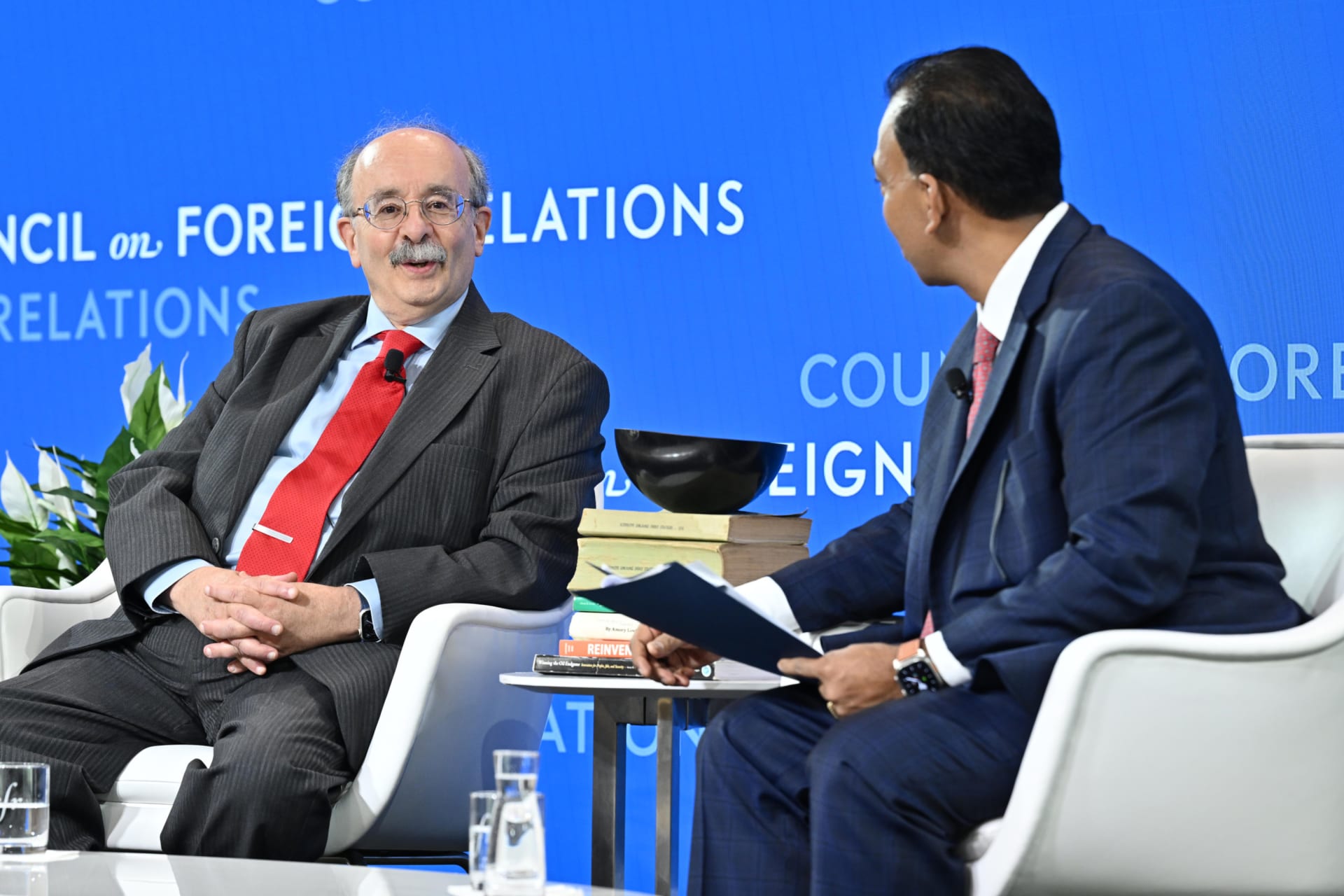
A Conversation With President Masato Kanda of the Asian Development Bank
Event date
Speaker
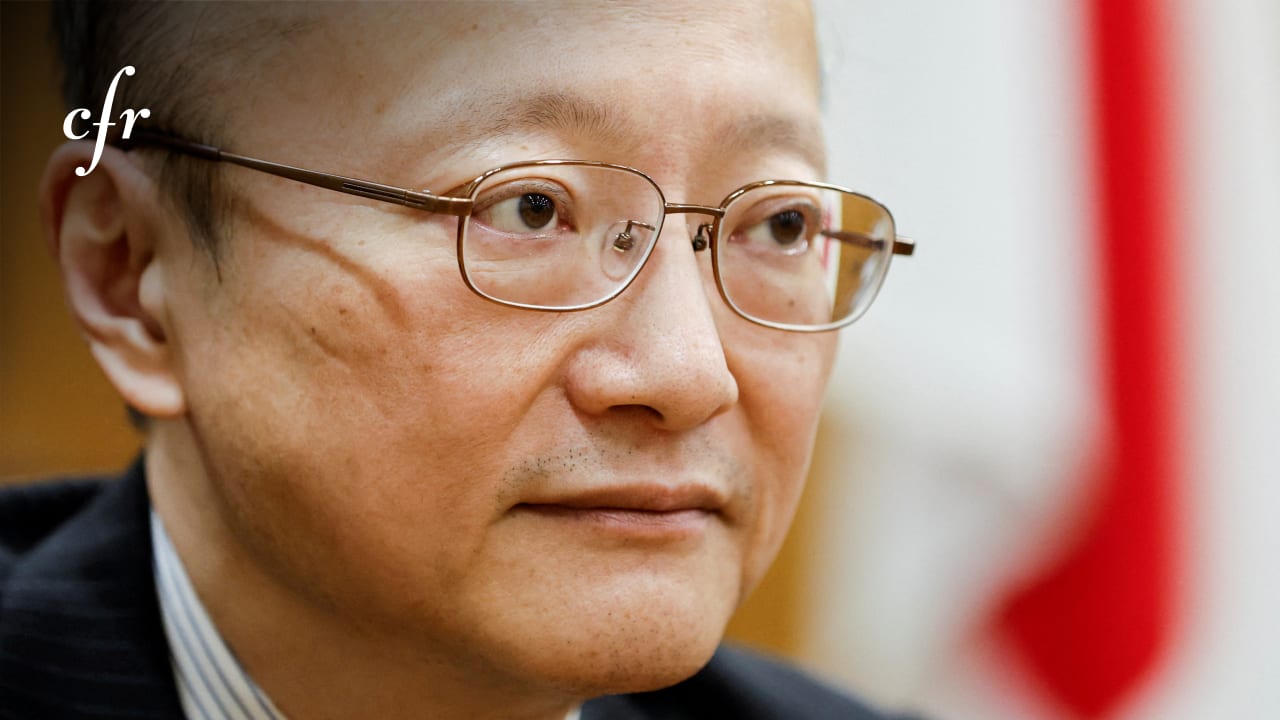
- President, Asian Development Bank
Presider
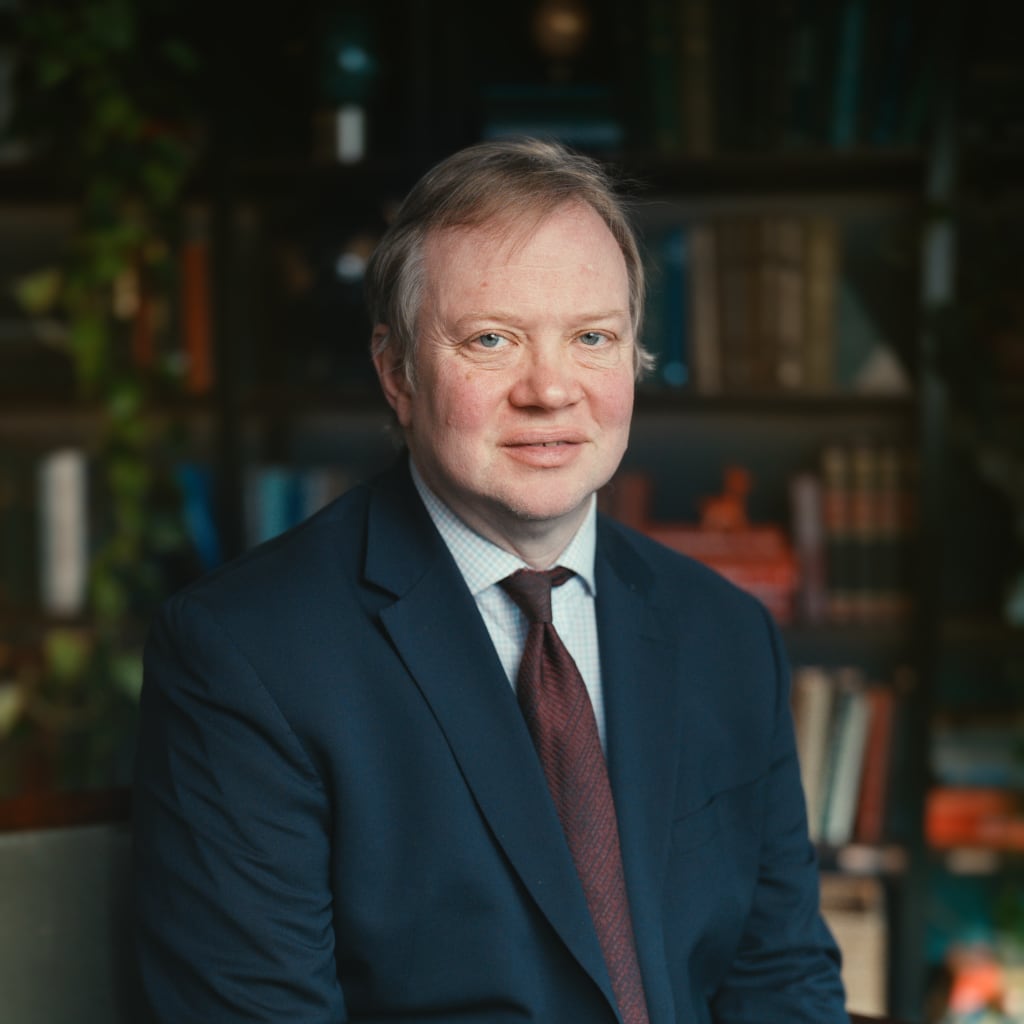 Brad W. SetserCFR ExpertWhitney Shepardson Senior Fellow, Council on Foreign Relations
KANDA: Good afternoon. Thank you very much, indeed, to the Council on Foreign Relations for the invitation. This is a privilege to address this prestigious group, particularly at such a consequential moment for the global economy. The conflict in the Middle East is not just a headline or distant geopolitical problem. It is a direct hit to the global economic engine. For those of us in Asia and the Pacific, the stakes couldn’t be higher. Our region is the world’s largest energy importer. We are right at the end of a long and fragile supply chain. But this crisis is about much more than the price of a barrel of oil. This shock travels through the fundamental arteries of the global economy—(inaudible)—finance, and factories.
When those channels seize up, the impact doesn’t stay in the Middle East. It moves quickly into Asian production lines, food costs, and household budgets. We are looking at a serious, systemic shock. If this conflict stays severe and elevated through early 2027, our latest projections show the growth across developing Asia could drop by 1.3 percentage points. At the same time, inflation could spike up by 3.2 percentage points. This disruption has triggered a massive secondary wave. Fertilizer prices have surged by 40 percent, which directly threatens food security. Air cargo fee rates for critical electronics and medicines jumped by as much as 450 percent.
History shows us that a crisis of this magnitude is also a catalyst. It is a moment to look at what is broken and fix it. We are currently in a period of intense global volatility. While that brings chaos, it also brings the opportunity to emerge stronger. We have to push through this by shifting our mindset. We must recognize that efficiency alone is a liability if our underlying resilience is weak. The Asian Development Bank is the anchor of stability for developing member countries in Asia and the Pacific. We are not just providing capital. We are providing a safety net—safety net to keep the region’s economies functioning. Our priority is keeping the essentials moving. This means the food, the fuel, and the medicine that people need to survive.
Our intervention has two main pillars. First, we are providing fast-dispersing support, budget support, to help government stabilize their economies and protect the lives of those most at risk. Second, our trade and supply chain finance program is ensuring the critical imports like food and energy continuity flow to the private sector. On the exceptional basis for this limited period we have reactivated support for oil imports under this program, to help our region manage rapid surge in prices and disruption to supply chains. The goal here is not just survive the shock. It is to use this period of uncertainty to build a foundation for more durable stability. By focusing upon execution and speed, we can turn this crisis into opportunities for regional cooperation.
We are facing unprecedented uncertainty, but let’s overcome the crisis with resolve. Thank you very much, indeed. (Applause.)
SETSER: President Kanda, thank you for your remarks.
I think we all know that Asia is the largest oil-importing region of the world. South and East Asia, including Southeast Asia, imports something like thirty million barrels a day, about a third of global oil. Modest domestic production. And it is also, of course, the region that relies the most on oil from the Gulf. Most of the oil that used to flow through the strait would flow into refiners throughout your region. How are you thinking about the transmission of this shock from the interruption in the physical flow of oil, and fertilizer, and aluminum throughout the economy?
KANDA: Yeah. Thank you very much. This is pretty much important question, because it doesn’t stop at oil. You’re quite right. Yes, Asia-Pacific are most giant on the Gulf oil and gas. Globally, 20 percent through the Hormuz Strait. But for the Southeast Asia, 60 percent. And for my home country of Japan, 95 percent. So it is really a tremendous shock. But the prices of oil and gas will be very much easily transmitted to the flight costs, the shipping costs, and so on. Everything will be affected. And also, the fertilizers or other petrochemicals will be very much an important input for every industry. But, for instance, the fertilizer already increased by 40 percent in prices, which will affect the agriculture in the future.
And in addition, for Asia, a number of countries are heavily dependent on the remittance in the Gulf countries, and also tourism through the Dubai, Doha, or Abu Dhabi. Finally, financial sector. This turmoil affected the Asia financial markets, you know, damaging quite heavily, for instance, their equity market—the 4.5 percent decrease in terms of their market capitalization in the equity market. And for the ten-year government bonds, the twenty—more than twenty basis points decrease—sorry, increase. And for their portfolio capital outflow, more than $20 billion from the region. So tremendous, you know, very much negative impact from this crisis.
And if I may, first, I’m very much concerned with even if—even if this war will end tomorrow, but the effect will endure, sustained. Because, for instance, you know, the many of the important facilities of production and shipping of oil and gas, destroyed. And it will take months, or in the case of the Qatar gas plant, years—a few years to restore. So you can’t expect the total recovery for many, you know, time. And also lagging effect. I talked about the fertilizer. And now we are heading for the planting season. So real impact on the agriculture will be coming later, you know, in autumn or even next year. So we’ve got to be very much vigilant for the long-term effect.
SETSER: I think everyone has become much more aware of lags in the process of producing oil in one part of the world, shipping it, and then consuming it in another. It clearly doesn’t all happen instantaneously. And with fertilizers, presumably, there’s an even longer lag. You’ve been around for a few years. How does this shock compare with the COVID shock? And specifically, are there particular products—you know, jet fuel, diesel fuel—where you are worried that key parts of your region may just experience outright shortages, be unable to find enough supply to even try to ration it by price?
KANDA: Yeah. That’s a really interesting question. Of course, the conflict is continuing and still full of uncertainty. So we can’t tell, for instance, which is bigger impact. But one thing is, the COVID-19 was more—much broader. I mean, both over the supply and the demand across all sectors. But in this case, the global demand has not collapsed, particularly for the supply side. So energy and shipping and the supply chain affected. So still, the impact is rather concentrated in part of the economy. This is a difference. But as for the energy price—(inaudible)—is really much more than in the case of the COVID-19, or, you know, after we observed after the Russian invasion to Ukraine. And this energy price shock is really, you know, stagflationary in terms of trade, impact on the economy, which is really, you know, of my serious concern. This is a difference.
And as you suggested, the scarcity issue is a bit different from the COVID-19. As I mentioned, we have lost some of the very important facilities of oil and gas production, which will not recover, restore, you know, be developed immediately. In the case of the COVID-19, after the, you know, lifting the lockdown, we could expect the immediate recovery of the economic activities. So this is a bit different situation. So some is better, some is worse. And, you know, it’s really interesting. And probably the solution may be different, accordingly. In the case of the COVID-19, ADB has immediately supplied the $10 billion of the budget support, in addition to the $9 billion of vaccine. So the speed and the scale is very much important. And we, ADB, are determined to do the same in this Middle East crisis.
SETSER: So you mentioned that your current, I assume baseline, estimate is that this particular shock will knock between a percentage point and 1.5 percentage points off growth, raise inflation by 3 percentage points. Can you talk us through how you came to that forecast? And tell us a little bit about what a worst-case scenario would look like. What is the embedded set of assumptions about the oil market, the gas market, fertilizer flows, that lead to the 1 percent fall in output?
KANDA: Yeah. Yeah, this is a tough question for all economists. Of course, we make some assumptions, but next day the assumption is found to be false because, you know, the situation is getting worse quite often. Very difficult. But directly to answer your question, our best scenario was made at the point of the March 10th, originally. And with the—in a sense, the optimistic case of this ceasefire in one month. That is the, you know, the case of the three. So last year we had 5.4 percent of growth. And this year was projected be 5.1 percent. But if the situation is getting worse than this scenario, for instance $155 per barrel oil prices, we project the 4.4 percent growth. So it means a 1 percent point reduction from the previous year. For inflation, the same. Last year, 3 percent. And we thought around the 3.6 percent originally. But now, in the worst-case scenario, 6.8 percent inflation this year. Which means doubling the inflation rate. Which is terrible.
SETSER: So, just to be clear, even with 155 (dollar) barrels of oil, you would still expect 4 percent growth?
KANDA: Yeah, 4.4. But it is getting worse and worse. (Laughs.) Maybe tomorrow, I may even worse scenario. (Laughs.) I don’t know.
SETSER: Oil shocks don’t hit all parts of the economy equally. We know that well here. We have parts of the economy that produce oil and make more money when oil prices go up. They don’t hit all countries evenly. Are there sectors that really worry you? Are there specific countries that you think could be tipped into—maybe not a crisis, but into trouble?
KANDA: Yeah. Thank you. Obviously, the countries with little buffer, for instance, they have very little fiscal space, are in a very difficult situation. But for the industrial category, obviously the net energy importers are most affected—like Korea or Pakistan. There are many countries. And our headquarter is in the Philippines. And now the president, Bongbong Marcos declared state of emergency about the energy. So it is really a difficult situation. And for smaller countries like Tonga or this country, actually 10 percent of GDP are for importing energy. It’s really serious situation.
And the second thing is, you know, the very interesting situation is remittance. Pakistan and Bangladesh are relying 5 percent of GDP upon the remittance. And many of the workers are in the Gulf countries. Very difficult. And tourism also. Again, the more—you have Sri Lanka or Thailand heavily relying upon the tourists, particularly the overhaul from Europe, the long term. And many of the tourists are coming to these countries through the Gulf transit—you know, as I mentioned, the Dubai or Doha, these places—and now the flight is canceled. And it’s a really difficult situation to expect the same entry to the—travels in these countries. So it quite depends, but many countries have the unique weakness.
And also the spillover effect in the sectors, like the fertilizers, affecting all agricultural countries. And the petrochemicals are, you know, affecting the pharmaceuticals. And even the semiconductors, you know, affecting almost all of the countries strong in IT, including my home country, or Taiwan, or others, because in Asia, you know, just in time, they don’t have the sufficient inventory, so very much vulnerable. And, actually, you know, probably you remember, this was quite the same lesson we learned during the COVID-19. But unfortunately, the change was not enough to be resilient against this time’s shock.
SETSER: Are there any airports in your region that are going to run out of jet fuel that we should avoid?
KANDA: (Laughs.) I don’t know, but not just—but it is reported that some of the European airports are running out of the fuel. So it’s a really critical situation.
SETSER: So you’ve described the magnitude of the shock. Stagflationary shocks are not the easiest for policymakers to respond to. I think many people will be interested in what the Asian Development Bank can do to help its members get through this shock. And what kinds of policies do you want to support? What kinds of policies should countries adopt even without your support?
KANDA: Yeah. Yes. Thank you.
We focus on the most vulnerable people, most vulnerable countries. Given the limited resources, we need to focus on the people in most need. And, you know, we have many instruments and many policies. And basically we have two styles. Immediate support is for the private sector, for the imports of the critical goods, like the energy or drugs and fertilizers. So our trade and supply chain finance program can support this kind of the imports immediately. Just twenty-four to forty-eight hours upon request we can deliver the financing for these critical imports. And we have already the 1.4 billion already for immediate use.
And last year in this program we have supported the 5.6 billion. And we have ambition to increase more than six billion. This is one thing. The second thing is the first disbursing budget support to help the countries to protect the vulnerable people. And our counter-psychological support finance is very much rapid. We can prepare, you know, around in the month. And it is really a very agile and flexible instrument. And the good news is we have much more firepower than in the case of the COVID-19 times, because of our—the capital adequacy framework reform, also all of the balance sheet reform. We have untapped $100 billion of additional lending capacity. So we have the larger sufficient resources to be able to support our member countries.
SETSER: Did that involve any—this is my personal question—did that involve any change in your leverage ratio? Or is that just more capital?
KANDA: Yeah, what it is—what we have done is, without the general capital increase, we have, in a sense, stretched our balance sheets to more efficient use of our capital. We created the 100 billion (dollar) headroom for the lending capacity, which enable us to increase 50 percent in our annual lending commitment. But we can use some of them for this crisis response.
SETSER: So there are a couple of policies that different countries around the world have adopted in response to the oil shock. I’m curious if you would recommend them for your members or be willing to support them, even. One is that Germany cut its fuel tax. It has a budget hit. Is that the kind of thing you would like to support with your budget support? Or is that insufficiently targeted?
KANDA: Oh, that’s really a politically sensitive question. (Laughter.) I have a strong belief that the budget support should be very much targeted on the most poor and time bound. But in reality, because of their—you know, the demands by population, it’s very harder for the politicians to abide by this kind of their orthodox policies. But still, we’d like to support only the program targeted for the poorest or the most affected industries, rather than the broad, massive support.
And another thing is, I don’t like too much distortion of the market signal. Price is—in a sense, should be allowed to pass through, at least to some extent, to make the behavioral change adapting to the new realities. You know, we can’t just suppress the prices. We need to, you know, hit a good balance. One is support to the most vulnerable people. And another thing is to help the transformation of the economy in a sound way. It’s really difficult, particularly in the political area. Always, you know, for instance, the trade subsidy was very popular, but, you know, very budget draining. And also, not so good for the market shape now. So it’s really difficult question. But we still believe in the more targeted and time-bound support would be more efficient and effective.
SETSER: So there’s another way some countries have tried to insulate their consumers from this shock, particularly countries with rather weak exchange rates. Some countries have used their central bank reserves and sold reserves into the market to try to limit depreciation pressure. Thailand has clearly done so. I think the Philippines has done so, even Korea. What’s your assessment of that policy?
KANDA: Yeah. This is, again, a difficult question. And actually, I’ve got many, you know, consultation from—(audio break).
But as far as it is driven by fundamentals, it is really a difficult situation. And another thing is, for many of the developing countries, they have rather limited foreign reserves. And I recommend the most efficient use of the foreign reserves, because the sound macroeconomic policy, including the fiscal consolidation and the monetary normalization, are, you know, rather broad foreign reserve is a very important question against the speculative attacks. So they need to even accumulate, to some extent, as a security for their domestic economy.
SETSER: I’m more willing to allow cases when countries with plenty of reserves would use that as a bridge during what could be a transitory shock, not a change in fundamentals.
Last question before I open it up to the floor. If you had to highlight one ADB program that you are putting in place right now that you think will make the biggest difference in helping your region manage this shock, what would you want to highlight?
KANDA: Not directly to manage this shock, but my first priority is revitalize or expand the private-sector development. Of course, including this response to the shock, huge resources needed. And we definitely need the mobilization of private capital. Public resources are never sufficient. But another thing is we need the market mechanism to be brought into the economic activities to be more efficient and effective. So in both ways, for the quantity of the needed resources for reform and the preparation for the future prosperity and response to the shocks, and also the strengthen the economic dynamism, we definitely need to strengthen the private sector development.
And we are trying to increase fourfold our private sector investment by 2030. And 50 percent of our sovereign intervention, our lending to public sector, is contributing to the private sector development, including the quality infrastructure and their skilling, and the policy reform, including deregulation and privatization. And this is one of the most important things I believe in our—in our region.
SETSER: Thank you. We are now ready for questions. One, and then two, three.
Q: Good afternoon. My name is Robert Bestani. And I’m with Georgetown University now, but for six years I had the pleasure of being the director general of the Private Sector Department of the ADB.
And so I must say that I’m very, very encouraged by all of the things that you have said. Certainly, of course, the support of the private sector department, including tourism and remittances, which we paid a lot of attention to. Unfortunately, since Mr. Chino the ADB has not been very supportive of the Private Sector Department. So with your arrival, I must say, I’m very, very encouraged, because I think the ADB can play a unique role in Asia that no other multinational can play. And so I think of I’ve had the privilege of knowing all of the director general—all of the presidents of ADB since Mr. Chino. I think you will be certainly at the head of your class, forgive me for saying that. Certainly your wisdom in hiring Isabel Chatterton, I think, was a very, very good move.
But my question really relates to the Asian investment bank—Asian Infrastructure Investment Bank. I worked very closely with President Jin when he was at ADB. So I know that institution rather well. And these are all political institutions in the final analysis. Certainly AIIB was a political institution. I’m curious as to what your perspective on the AIIB is, and how you see ADB’s role sort of working with them, if possible.
KANDA: Yeah. Yeah. Thank you very much. This is a rather popular topic, particularly among the politicians. (Laughs.) I’ve got to be a bit careful. But AIIB, I’ve been involved, you know, even in the discussion of the—you know, the actual foundation of AIIB. Eventually, as you know, Japan didn’t participate. But since then, I’ve been watching. And in a sense, I’m watching and sometimes working closely with the President Jin and the new president, Madam Zou.
Most important thing is completely different institution between two. You know, they are focusing on the infrastructure and no resident (mission ?) and no resident board. And, you know, quite different. We are talking about every sector. And we have the presence in almost all of developing countries. What the most important thing is, in my observation, AIIB’s policies in terms of the environment and social standards, because they follow the examples of ADB and the World Bank. In my observation, it is not so bad. You know, rather similar to ours. And in addition, our cooperation with the AIIB, AIIB is co-financing to the project of ADB, which is, of course, completely consistent with our policies of the environment, social, and other very high standards, including the integrity and so on.
And, you know, we don’t confine us to AIIB, you know, in the opposite way. So I can say our cooperation is completely, in a sense, safe. And I think our cooperation is actually filling the financial gap of the very important infrastructure projects in the country on the ground. But at the same time, I’m going to be pretty much conscious about some, you know, to be honest, political discussion in some countries. So, of course, I’m very much carefully scrutinizing the projects. We will cooperate, you know, case by case. But as far as I know, there is no problematic problem of the cooperation between the two institutions at the moment.
Q: Hi. Thanks. Zack Colman with Politico. I cover climate and energy.
You said that history shows us that a crisis of this magnitude is also a catalyst. So I’m wondering, how do you expect the region’s energy consumption and energy systems to change after this crisis?
KANDA: Yeah. Thank you. This is really—you know, for the energy composition of the energy reform is really, you know, the opportunities this crisis brought about, and are pretty much enthusiastic to take on these opportunities. One thing is, of course, the diversification of the energy sources, including nuclear. For the first time in the history of ADB, last fall we, you know, came into the field of nuclear power. But, of course, the renewables should be increased more. There are many things we have to do. And even for the fossil fuel, we need to diversify the, you know, destination. I mean, not only the Middle East, but probably diversified. It is really challenging. But so diversification, the most important thing is, you know, think about the broader policy mix—energy mix of the energy sources.
And another thing is our transformation, including the curbing on the energy consumption, more efficient way of life. There are many things we’ve got to do. And finally, I think the regional cooperation and integration is very much important. And I’m strongly supporting the so-called ASEAN power grid. We have already committed the $10 billion for the interconnectivity amongst the ASEAN countries for renewable energies, including their upgrading of the domestic grids. So, for instance, the hydropower or solar in Laos can be transmitted to Singapore. This kind of thing is now going in a very logical way. And the ADB is supporting at the center.
SETSER: Setting aside what you support, if you had to make a forecast, would you forecast that your region is going to rediscover the joys of burning coal for energy self-sufficiency? Or will the pivot away from coal for climate reasons continue?
KANDA: At the moment I don’t think coal is needed. But, you know, at the same time, we need to be more aggressive seeking for the alternatives, including nuclear. You know, everything, we have to think about it. And it is not so easy, but particularly we got to think about the unique circumstances facing each country. Some country can’t afford—you know, because of their landscape, you know, the wind power, solar power, they are difficult. And some countries are not having the hydropower opportunities. So one of the reasons why I’m talking about the nuclear is I need to provide to all countries some alternative to, you know, power their economy and help their population for the civilized lives. So it’s really difficult.
And in some focus, the ASEAN countries need to triple energy by 2050. So it’s a tremendous challenge. But I believe still some room. Not relying back on coal, but existing technology can fulfill these needs. But furthermore, what I’m really expecting, and I’m trying to invest particularly when I was in the Ministry of Finance of Japan, I had a budget responsible for the technology, fusion. If we can succeed in the commercialization of fusion technology, probably the situation of the human society can change. So I try to be very much optimistic about the future of the human beings, but we need the very good, innovative technologies.
Q: Thank you. Jessica Lee from Centrus Energy.
I was wondering if you could speak to the agreement reached with IAEA last year regarding nuclear energy, which you were just speaking about. You know, helping and supporting Asian countries that might be exploring that as part of their energy and development strategies. What has been happening with the IAEA since that agreement was reached?
KANDA: Sorry?
SETSER: Could you repeat the question?
Q: I wondering if you could comment on the agreement with the IAEA that the bank reached last year, and efforts that are underway to help Asian countries explore nuclear energy.
KANDA: Yeah. Thank you very much for your comments. Yes. Last November, the Secretary General Grossi came around to Manila to sign the MOU for the peaceful utilization of nuclear power. So while I’m promoting the nuclear power, but it must be, you know, safe and secure and, of course, against the proliferation. So I really need the help of the expertise of IAEA. And we are in a very good partnership.
Q: Thank you for—thank you for your remarks, Mr. Kanda. I’m Julie Chung. I was just until two months ago the U.S. ambassador to Sri Lanka. So I just missed your visit there.
As you focus so much on the Strait of Hormuz, we know that maritime security lanes, such as those outside Sri Lanka, are so important. So as you look at Indo-Pacific as a whole, is there more the ADB wants to and can do in terms of port infrastructure, maritime infrastructure, not just in countries like Sri Lanka that are so key for two-thirds of the world’s cargo, but in elsewhere in Asia? Thank you.
KANDA: Yeah. Thank you very much. I suggested the importance of the regional integration, the connectivity. And the maritime envisions very much important for the smooth trade. Now the world is—you know, seems a bit more fragmented. But I still believe in the strength of the free trade amongst the countries. And the good transport facilities, not only the hard, like the ports and the airports, but for their software, the harmonization of the regulations and customs modernization. These things are very much important for the facilities in the trades across the borders. So ADB is supporting quite massively, for instance, the cross-border custom modernization and the—you know, the cross-border road, and, of course, the construction of the modernized supports, and so on.
So you kindly mentioned Sri Lanka. And I just visited Sri Lanka last month. And I visited the southern part of the Colombo Port, which is really—you know, actually, it is really the future of Sri Lanka. I’m very much excited to see it. My hometown is Kobe in Japan. It is a port town. And, you know, I had something complicated feeling, but Sri Lanka is heading for the three or four times of the capacity of container handling. So now Sri Lanka is becoming the real hub for the maritime transport for the Indo-Pacific Ocean.
SETSER: Well, with that, I think we will wrap up. I just wish the IMF had done a better job with Sri Lanka’s debt sustainability analysis, and Sri Lanka was not facing debt to GDP of over a hundred for the next five years. But I will not editorialize any further. (Laughter.) Thank you, President Kanda, for taking the time to be with us today.
KANDA: Pleasure. Thank you very much, indeed. (Applause.)
(END)This is an uncorrected transcript.