A New Wave of Foreign Assistance: Innovative Financing and the Power of Commercial Diplomacy
Event date
Speakers
- Under Secretary of State for Economic Affairs, U.S. Department of State
- Senior Official, Office of the Under Secretary of State for Foreign Assistance, Humanitarian Affairs, and Religious Freedom, U.S. Department of State
Presider
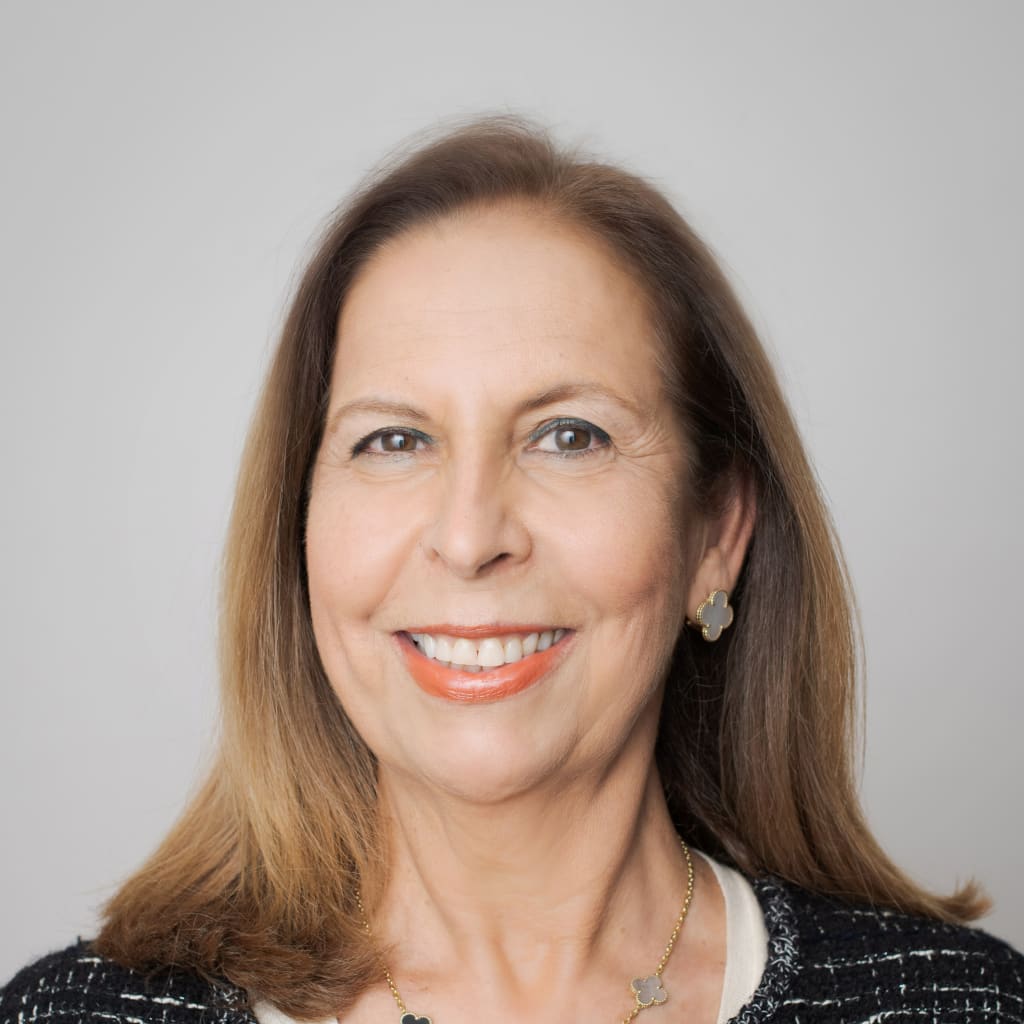 Founder and Chief Executive Officer, RockCreek; Member, Board of Directors, Council on Foreign Relations
BESCHLOSS: Good afternoon, and welcome to today’s Council on Foreign Relations meeting on “A New Wave of Foreign Assistance: Innovative Financing and the Power of Commercial Diplomacy.” I’m Afsaneh Beschloss. I’m founder and chief executive officer of RockCreek, and I’ll be moderating this meeting. I’m also fortunate to be a board member at CFR.
I’m very fortunate to be joined by Jeremy Lewin, senior official in the Office of the Undersecretary of State for Foreign Assistance, Humanitarian Affairs, and Religious Freedom; as well as Jacob Helberg, the undersecretary for economic affairs. I’d like to kickstart by asking both of you, just very, very briefly, how you got here, given your past. Just very briefly, maybe starting with Jacob.
HELBERG: I worked at a technology company called Palantir and decided to support the Trump administration’s presidential—well, the then-President Trump’s presidential campaign in late ’23 early ’24. And the rest is history.
BESCHLOSS: Very good. Jeremy.
LEWIN: Well, I think it’s not a secret to many. I ended up working with Elon Musk. I was actually supposed to do a very, very different job in the administration, working on sort of deregulation which is something that I am very passionate about as well. And then, you know, ended up getting tasked over with Secretary Rubio on some of their foreign assistance reforms. And then since then, you know, he’s a fantastic boss, and obviously it’s been a tremendous year and a half of foreign policymaking. And certainly some of the commercial diplomacy and foreign assistance stuff we’re doing now is at the heart of it, so.
BESCHLOSS: Well, we have a lot, you know, of great topics to talk about. Obviously, there’s been a lot of disruption to the whole aid picture, in the last fourteen, fifteen months. But also, the economies all over the world are going through a lot of change. We have a war going on. There’s just a lot going on in the environment that is impacting everything, I’m sure, that you’re doing.
To both of you, I wanted to ask, the administration has described this moment as the largest reform of U.S. foreign assistance since the Cold War. What do you think is the core strategic logic of that? And how are each of you seeing the implementation going today? Starting with Jacob.
HELBERG: Well, I really think this is obviously a question that Jeremy can really speak to much more intimately, obviously seeing foreign assistance. But from my vantage point, you know, at a macro level, Secretary Rubio really led a major realignment across the State Department to make sure that all of our initiatives and our efforts were an accurate reflection of our national interests. And so in the economic undersecretariat, that really meant coming back to our original roots, from when the economic undersecretariat was created in the early days of the Marshall Plan to focus on economic statecraft and strategy to defend our economic interests, but also use economics as a tool to achieve strategic outcomes. And since I was sworn in last October, I’ve had the opportunity to actually work with Jeremy’s team to establish a Pax Silica fund that’s been a really great way to leverage public dollars to actually catalyze private sector dollars in ways that really reflect the administration’s innovative approach to foreign assistance.
LEWIN: Yeah. I think, obviously, catalyzing private sector growth and sort of reorienting things to be focused on the national interests are at the heart of everything that we’re doing. I think, stepping back a little bit, President Trump, his foreign policy in this term, certainly, reflects a recognition that the old approaches weren’t working. That the world is very different than it was decades ago. That sort of we had a Cold War period, and then we had this sort of neoliberal moment. We had an architecture, particularly in the development space, particularly in the foreign assistance space, that reflected the sort of neoliberal consensus of the ’90s. And that that approach—and I think if you look at it empirically, if you look at competition with China and other rising powers, was not delivering for our national interest. It had grown into something that was serving its own interests at times, that was sort of not fast enough, that was not reflective of the president’s foreign policy. And so I think he sort of looked at that and said we needed to make very, very radical changes.
And so what changes are—you know, was he trying to make? I think certainly catalyzing private sector growth is at the heart of it. I mean, if you look at it, we’re never going to win the competition with any sort of centrally planned economy through sort of the use of foreign assistance dollars as such. I mean, they’re going to be tiny, tiny compared to the sort of private sector capital that our companies can bring to bear. So how are we in everything that we do catalyzing that multiplier effect? That’s number one.
Number two, you know, I think we were paying off a lot of what we call, like, sort of multiyear mortgages, for great war on terror programs, for legacy programs, and other stuff that sort of ate up a lot of the budget capacity. So some of the stuff that Jacob was talking about, we just didn’t have the firepower to make those big, concentrated investments. We had—and many of you are involved in the appropriations process. You know our foreign assistance budget has historically been drafted. It, you know, sounds like a lot of money, but by the time you’re done earmarking it for all these different things, down to, you know, $6 million here, $2 million here, $1 million here, for all of the different earmarks, all the multiyear programs, there’s not a lot of flex to actually make big, concentrated bets.
Also, our contracting structure and the way were doing things was just not fast enough. So you couldn’t leverage opportunities as they arise. And obviously, you know, even his critics must admit that President Trump moves fast, and likes to move fast. And so our foreign assistance architecture has to be just as fast. And so, for example, you know, President Trump secured a transformational peace deal with Armenia and Azerbaijan. We were able to bring in $400 million of U.S. foreign assistance resources to support the development of the TRIPP-plus economic corridor, something we’re working with Jacob’s team on, which is really going to be—that’s at the core of the peace deal.
President Trump is a dealmaker saying, you know, you’re fighting over this piece of land. What if the United States developed it for your mutual benefit, and then you don’t need to fight over it anymore? And so that’s the core of the peace deal. And we were able to leverage really quickly, in a matter of weeks, $400 million—which is a lot of money—and put it towards—we set up an enterprise fund, which is a private sector-driven model. We’re bringing in private capital. And we were able to do all of that because of the reforms in the way that we’re trying to operate. So I think that’s, like, one test case of many about how we’re trying to reorient foreign assistance, especially in the sort of economic investment space.
We’ve done different things with the lifesaving, you know, portion of our foreign assistance, you know. And I think in the health space we have a lot that we’ve done over the last year. We announced the America First Global Health Strategy in September of last year, which sort of said, look, you know, we’re spending a lot of money on health care. And the first phase of programs like PEPFAR were tremendously successful, if you look at where the HIV epidemic was in the early 2000s when PEPFAR was established. It was really a crisis, and there was a crisis of knowledge, crisis of resources. But the programs never really accounted for the fact that, by this point, many of the countries have made tremendous strides, and they have tremendous expertise. And so we never transition to self-reliance.
So the American First Global Health Strategy is about giving countries ownership and sovereignty over their health systems. And basically saying, look, if we’re going to give foreign assistance for your health care architecture, it should be in coordination with the government. We should make them coinvest. We should make them have skin in the game. We should have a pathway to self-reliance. And we should focus less on sort of technical assistance and shipping workers there, and more on delivering commodities at scale, supporting American biomedical innovation. Earlier this week at CSIS I announced another million doses of lenacapavir. The United States is going to support a 99.9 percent effective, twice annual injectable HIV prevention drug. So in coordination with The Global Fund we’re doing a market-shaping initiative to get that medication to high-burden countries in record time.
Market-shaping initiative, to my knowledge, that’s the first time we’ve ever done that. It’s sort of a private sector-oriented thing, something that philanthropy, private foundations have been doing for a long time, but the government hadn’t really caught up. So we signed more than thirty global compacts with different countries. We’re now in the implementation phase. And we’re moving them onto the plans. Those compacts are worth $21 billion. And the mobilization of domestic resources in Africa is the largest ever for healthcare on the African continent. So we’re really excited about that.
In the humanitarian space, we’ve sort of worked to reform what the U.N. does and how they do it. So I signed an agreement with Tom Fletcher, U.N. undersecretary-general for humanitarian affairs, in Geneva end of last year. So, you know, the U.N., we used to have hundreds of different grants with different U.N. agencies overlapping, sometimes in the same country. Sort of said, hey, let’s use a pooled fund structure, which is something the U.N. already uses but the U.S. never really bought into, get the money. One agreement that we can put policy terms in. One agreement for each country. And then the U.N.—and for the first time, we made them actually measure impact. So now they have to allocate the money based on who’s the best positioned provider to deliver impact. They have to work together. They’ve empowered the, you know, humanitarian or resident coordinator in the country. So that’s made it, we think, twice as effective for core lifesaving stuff. We’ve hyper prioritized it for core lifesaving activities. Twice as effective per dollar spent on saving lives. So that’s tremendously important.
I think just one last point. There’s been a critique of our foreign assistance, that it’s become more transactional. I would say—and I welcome Jacob’s thoughts on this—when we meet with countries, they welcome that. I mean a lot of other countries—and I think the secretary said this many times—the United States was living in the neoliberal moment for thirty years, whereas other countries never left the sort of traditional national interest-based form of diplomacy. And so they are now saying, welcome back. And they want to deal with us. I mean, that’s how the Chinese have been cleaning our clocks for decades, by being transactional. And there are critiques of the Chinese approach which becomes not transactional, but exploitative, right? And we’re trying to distinguish what we’re doing from what they’re doing. But transactionalism is the way the world works. You get something, I get something.
And when we reorient our foreign assistance around that, I think it actually becomes more durable because then we get to articulate to the community, to the American taxpayer, to the interagency, how the projects we’re doing are advancing the national interest. And it becomes harder for people to look at them and say, this doesn’t make sense. And so I think the countries see that. And, you know, candidly, I mean, you know, foreign assistance is—it’s a tool of diplomacy. And that’s really what our reforms were all about, putting assistance, which used to be largely in a separate agency, into the State Department, so that Jacob, as the undersecretary for economic affairs, or our regional bureaus have that as one of the tools in the toolkit. So, you know, different tools that we have in the diplomatic toolkit, they’re able to leverage that. And so it’s a work in progress, but we’ve made great strides so far.
BESCHLOSS: So great points. Thank you. I’m an economist by training, so what you said stayed with me. Measurement. Measurement of impact. So when you go through change, and, you know, the world does change, and we always all trying to sort of move towards a better future for the continents that you’re working on, particularly the examples that you gave of HIV and PEPFAR. So looking at something like that, do you feel that disrupting it completely, i.e., stopping and then starting again—because those things, to my—in my experience have had a cost, right, while you end up in a good place is the best way to go? Or is it better to be—sort of, go fast, super fast, with the change? But also what happens in a lot of the emerging markets that we all care about is that things do take long. Our own programs take long. Jacob and I were just talking before we came in here, the DFC now has 200 billion (dollars). It’s the largest amount that it has—am I right?
LEWIN: Its cap, yeah, 200 billion (dollars.)
BESCHLOSS: Yeah, exactly. So it’s the largest amount that it has had ever to put out. But they’re still writing policy, right? You’re through a year and a half. So by the time the policy is written and the money starts getting pushed out towards rare earth minerals or pharmaceuticals or some of the things we talked about, takes a long time for any human being. So with the plans and the disruptions, how do you think you can actually deliver, like, you know, the example—I love the example that you use on the on the HIV drugs, or, really, any of the other examples. How can we actually make sure it’s in the hands of the people who need them, to make them healthier and then more productive, which is what your goal is, right?
LEWIN: Yeah. Two points, I would say, in reverse order. I mean, I think, for example, with the agreement that we did with the U.N. there was a lot of criticism that we wanted the money to be pushed out quickly. The reason is exactly what you’re describing, to get it to the field quickly. With the health deals, we’ve moved really quickly, which means we haven’t been as—we haven’t discussed as much with the community and other people. We you have to, to go quickly, right? You know what Jacob was working on, Jacob moves incredibly fast, and has signed—you know, with the Pax Silica has tremendous momentum, and with this Pax Silica fund we announced it and then the next week he was, like, I want to meet. I want to start obligating it.
And it’s a culture shift in the department. It’s something the secretary is working on, you know, every day. And it’s something you have to, sort of, work very hard at. We’ve changed our contracting policies. We’ve updated all of that. You know, I think we are a little different than the DFC. We have a different risk tolerance, we have a different way of functioning. And I think that makes us very complementary to the DFC. I was at a panel yesterday talking—at the chamber—talking about Ukraine, and how DFC has the, you know, Ukraine reconstruction fund. We also have foreign assistance in critical mineral space and other spaces. It’s faster. It’s different. It functions different. It has a higher risk tolerance, because we’re not looking for a conventional financial return. So urgency is something we stress all the time. You know, it’s not one size fits all. But in the case of the TRIPP corridor, we were able to obligate a lot of money, the innovative structures that the president is setting up with the Board of Peace and other things can move quickly.
On the point about disruption, I’ll just say, you know, look, hindsight is 20/20. I think these types of reforms are hard. And you only have a moment you have an opening. And you have to do as much as possible. And you have to—you know, I think the process of creative destruction allows the room for, you know, big changes and big new prospective agendas. I also think that a lot of the early, and frankly politicized, depictions of the impacts were demonstrably false and have been proven demonstrably false. The impacts—we did do a lot of work to smooth the impacts, to preserve the programs that were critical to remain ongoing, in the health space, for example. Our PEPFAR data will be out very soon that reveals that, you know, I think we have tremendous—I’ll just give you a little secret.
There are currently more people on U.S. PEPFAR-supported antiretrovirals than there were before President Trump took office. And, you know, there were some data disruptions and other things that happened, but it was very, very short. And we did retain a lot more of the lifesaving programs than I think a lot of people were willing to admit. And so, you know, I also think that those impacts were exaggerated in the press. Of course, there are some. There’s no way to deny that. But we did our best to try to move as quickly as possible, while also being thoughtful about that.
BESCHLOSS: Maybe we could talk a little bit about financial innovation and the relationship between financial innovation, which you sort of worked on, and what you’re working on today. The size of the world bond—the emerging market, bond market, is close to, I think, over 100 trillion (dollars). World Bank budget, DFC, you know, other U.S. programs, European programs dwarfed by that. So what you’re trying to do, which is sort of marry the private sector and the public sector, is really key. What is working? What is succeeding? What’s not succeeding? And what’s new?
HELBERG: So we have had a pretty different approach, which is, you know, you could really go about—so our main North Star is we want to help address supply chain security. The framework that we have brought to bear to do that is by creating a coalition of countries that have unique capabilities at different layers of the supply chain stack that can actually make constructive contributions to fill the gaps where necessary. We have developed a series of first principles in December that we’re now implementing into specific types of—lines of effort. So one of them was just announced this morning. We signed a deal with the Philippines in order to—in order to develop and take possession of 4,000 acres, and begin the process of exploring the launch of an industrial park that can actually help shore up our supply chains and, more importantly, help us secure inputs that are vital for our supply chain security.
Ultimately, the two contrasting approaches are you can either try to do things in house when you’re in government—and, you know, the prior administration was obviously fairly forward-leaning in that. The CHIPS Act, in a lot of ways, did a lot of this, where it used a lot of public resources to make from the government direct investments in industrial activities. Or you can use policy tools to create the conditions that will actually set the private sector in motion, to use private sector dollars. And President Trump’s trade policy has obviously been a significant accelerant to investment in industrial activity in the U.S., which has been further accelerated by his policy on deregulation, on taxes, and so forth.
We have sought to adopt this ethos in our economic policy at the State Department by having a very product-driven approach to operationalize a lot of our initiatives. And so—especially on supply chains. And the basic rationale is, if our initiatives are products that can actually be commercially viable and usable by companies, they will be viable for the long term. And so that’s why every single initiative that we do is completely in lockstep with some of our country’s finest companies. We’re actually gearing up to roll out—to do a rollout in June of a number of these different initiatives that we’re very excited about. But ultimately, you know, it’s a—we’re very excited about having a very product-driven approach that’s commercially viable, that we can help incubate and be catalytic, but that ultimately will be met by demand from the private sector to be viable for the long term.
BESCHLOSS: Anything you want to add to that?
LEWIN: Well, just to piggyback on everything Jacob is doing. I mean, I think Jacob particularly has recognized, and our administration has recognized, that, you know, I think a lot of people in this room will fret about the fact that, I think, in many ways, we lost the global 4(G) and 5G race to the Chinese, particularly in developing countries. We see that in Latin America. We see that in Asia. Despite the pivot to Asia, China dominated transportation, it dominated telecom. And so the technologies of tomorrow that are going to drive value are artificial intelligence, high technology, software, all of that stuff. And we have tremendous private sector assets. I mean, we are currently the private sector leader. But the question about how you get that into other economies in a way that benefits our companies and certainly drives prosperity here at home, but also advantages our strategic interests, is really, really important.
So I know Jacob has pioneered, like, a full stack model. And it’s really important that we have that action plan as early as possible. And we’re very tactical about it, building out opportunities for our companies. I mean, I think the big thing here is the United States’ maybe biggest asset is our capital markets. Our capital markets are the wonder of the world. They’re by far the most efficient. The largest anywhere in the world. We have more than enough private sector money to do all of these things. So, as Jacob was saying, how do you create the conditions and how do you reorient the resources of government to allow that private capital go to the right place? Because, I mean, you can spend a billion dollars, two billion dollars of government money. It pales in comparison to the types of—you know, sums of private capital.
I mean, we have too much liquidity in the market, which is something that people, you know, are talking about all the time, right? And the question is, how can we, as policymakers, drive that liquidity towards investments that help reindustrialize here at home, help our companies win the technologies of tomorrow, but then also help our companies drive strategic objectives in high-priority areas? You know, and the number one area for us is Latin America. I mean, that’s evident in our National Security Strategy, our agency strategic plan. That’s a place where we’ve under-invested. I mean, the fact that the Chinese were beating us out in Latin America, in our backyard, is—you know, it’s a shame.
And so I think, you know, obviously Secretary Rubio has a deep understanding of that continent, but also the work that Jacob and his team are doing to make to—you know, to help bring American companies to opportunities there. And sometimes we can bring foreign assistance resources to help make the projects more attractive. The Chinese certainly subsidize projects. You know, and we have to recognize that that’s something we’re competing against. So if we can use assistance resources to help do pre-site work, construction work, and stuff that makes an infrastructure project, you don’t have to capitalize that. So it juices the return, makes it more attractive. That can help us beat out Chinese competitors. We also work very, very closely with the interagency to leverage our sanctions authority to work with USTR on trade policy and other stuff. So it’s really a whole-of-government approach that we’re doing.
BESCHLOSS: So we are in an environment right now, globally, again, U.S. included, where aid is getting cut back, right? Development assistance in general, broadly, is getting cut back. Ours has been cut back. I’m actually not—the Chinese figures are hard to decipher. You said they’ve been eating our lunch. I’d say they’ve also been eating our breakfast and dinner and everything in between. (Laughs.) But, you know, as we try to do this, we have fewer dollars that we’re putting to work. So how can we be winning this race, as we cut back so much? And how do we make sure that we actually do the things that you’re talking about?
HELBERG: If I could just jump in really quickly. I think a lot of the press always really focuses on cuts from public spending, but they really fail to cover the amount of money that we actually deploy as a country in different areas. And research and development is such a great example where the press has written so many articles about public cuts of public dollars in research and development. And this is a prime example of how you can do things in-house or you can create the conditions to allow the private sector to do things. As a country, we actually spend by far the most in R&D by a lot, on the planet. And no one comes close. We spend over a trillion dollars in R&D every single year as a country. China spends around 350 billion (dollars), from memory, and it’s the second. As a percentage of GDP, we’re probably in the top three.
And that’s because of our private sector. And so, you know, most of our innovations actually come out of the private sector, not the government. So when the government spends money on R&D, you know, there’s a real question as to does that actually translate to innovation? And the answer is probably not, because most of our innovations today we know are coming out of the private sector, and not the government. And so it’s, really, really important to shift our thinking. And I think one of the—one of the great contributions of the Trump administration is actually, you know, bringing in a team of people who have really spent a lot of time harnessing the private sector as a tool that has really been under-tapped and under-exploited for a very, very long time.
Because, as Jeremy was saying about our capital markets, the private—the American private sector really is our most potent, lethal foreign policy tool that we have. And, you know, we’re not China. We don’t have state-owned enterprises. We’re not there, you know, with vertically integrated supply chains building roads all over the place. We have companies that innovate and that build things better than anyone else. And so learning how to deploy them and harness them as a tool of foreign policy is really, really essential.
LEWIN: And just to piggyback on that, again, you know, to Jacob’s point, we’re talking about, you know, a few billion dollars of, you know, cut to official development assistance from the government. Pales in comparison. Jacob, in his first few months has mobilized several times that in private capital and global capital through Pax Silica and other things. I mean, the scale here of comparison—so it doesn’t really make a lot of sense. But also, a lot of the money that we were spending was actively crowding out private sector investment and creating dependency. I mean, I think one of the key challenges—when we talk to developing countries, they are excited to get away from the aid-centric model.
You know, and although some of them won’t admit it, I think a lot of our peer nations, you’re talking about cuts to foreign assistance that have happened from a lot of the other G-7 nations, from a lot of the developed world, it’s also a recognition that a lot of that aid-centric development was going to pay bloated NGO salaries, was going to, you know, create the conditions of dependency in a lot of these countries, and it wasn’t mobilizing he private sector. No country has become wealthy through aid. You know, I mean, it’s true. Every single development success story the last fifty, sixty years, ever really, has been private sector growth.
And so that’s what we need to key to. And it doesn’t mean that assistance can’t be a key part of that, can’t be a catalyst for that, but, you know, I think—and when you look at the pots of money that we are investing with, and those that we aren’t, it’s very focused towards that catalytic effect and the power of the—
HELBERG: And just to add a fine point to that, I mean, I’ve invested a lot of time traveling to different places since starting this role. And there isn’t a single place I’ve been to where people say, please send more nonprofits. What they always say is, we want to partner with the American tech industry. We want, you know, to be part of the AI revolution. We want to train our young people. So, for example, sub-Saharan Africa has a very, very substantial youth bulge that actually shapes and frames every policy decision they make because they, you know, are basically countries where 75-plus percent of the population is in their twenties. And that creates a lot of pressure on their public infrastructure and their economy. And so as a result, they’re very mindful of, how do we create opportunity for all these young people? And a lot of them are very interested in using technology to do that, you know, making them AI literate, and the rest. Having connectivity infrastructure. No one is asking for more nonprofits to be running around, you know, with handouts.
BESCHLOSS: I think I have a term called “sustainability,” which means different than what most economists use it—the way they use it. Which is to, you know, whatever you’re putting in, if you’re putting in a grant, eventually, it has to create something that is sustainable. If you’re putting in development aid, it has to become—to stand on its two feet. Obviously, I think that’s sort of the essence of the future. That’s how the Koreans and the Chinese used aid to be where they are, and other countries maybe did not. So I think, you know, looking at the—development economics has not really moved fast enough to catch up with new models. And we’re trying to experiment. So I think all of that is true.
But at the same time, I see in my day job, let’s say a Y Combinator was putting a lot of money in Africa, let’s say, five years ago. It was an experiment, exactly in the kinds of things you said. Which is, let’s try, because this is such a great young continent and there’s so many great startups, incredible a way to grow the economy. And I don’t want to exaggerate, but it would be great to see whether you’ve had experiences like that, because they’re not—they’re doing less now than they were before. It has not led to the kind of—you know, two things have happened. One is those things have not been as successful because they haven’t had scale. And what would you do to change that? That would be very important. Two, the U.S. returns have been so huge that the U.S. private sector and the international private sector comes here. And the big challenge for development economists has been, if you look at the equity markets in emerging markets, the returns have been so far below anything else. So, again, going back to the private sector, how do you really do something which is at scale?
HELBERG: Yeah. So, I mean, I think, with respect to the Y Combinator example in sub-Saharan Africa, I actually think, you know, the fact that we haven’t seen a sub-Saharan African Silicon Valley is not necessarily—you know, I don’t think it necessarily speaks poorly about sub-Saharan Africa. It actually, I think, simply reflects a broader trend that there are very, very few Silicon Valleys out there. You know, arguably, there aren’t very many Silicon Valleys in Europe. You know, arguably, you know, maybe not any. There’s obviously some—you know, a handful of really good companies, but not a lot. And so, yeah, there’s something just very unique about American culture and our—that has to do with appetite for risk, our desire and our willingness to, you know, be comfortable with discomfort for very prolonged periods of time.
I mean, I’ll give you one subtle example as someone who actually lived eighteen years in Europe, so I’ve sort of seen the contrast in my lifetime. Americans treat work as a path to personal fulfillment and, you know, achieving your dreams. It’s really part of the American ethos, the American dream. In Europe, a lot of people kind of treat work as a chore. And it’s just a cultural difference that is kind of hard to quantify, but that really, really has a big impact at scale on people’s willingness actually, you know, venture on the very painful journey that is starting a company. It is not fun for a very long time. Starting a company means a lot of people will probably dismiss you for an extended amount of time. And you’re probably going to hear no a lot.
And if you don’t live in—and that’s true when you live in a risk-taking culture. When you live in a culture that’s averse to risk, you’re going to have an even harder time actually attracting, you know, venture capital dollars. So, you know, the U.S. has really been able to benefit from a very, very unique mix of cultural characteristics that have actually made it possible for entrepreneurs to do quite well here. Arguably, Israel and China have been, you know, other sort of hubs for technological innovation. But they’re very few and far in between. But, you know, talent really is a universally distributed thing.
And so obviously, if you look at Silicon Valley, I mean, it’s a community where companies have really hired people from around the world. And so ultimately, you know, one of the things that we’re looking at, through the Pax Silica initiative, is leveraging, you know, some of the talent and unique areas of expertise in different places to create a network that is greater than the sum of its composing parts.
LEWIN: Can I add a few other thoughts, from sort of a structural point of view and a policymaking point of view?
BESCHLOSS: Oh, absolutely.
LEWIN: I also think that a lot of these countries have been failed by the international community and by wealthy donors. And their potential was sort of taken from them by the paternalism of the aid model. You know, I think we have a lot to do—and I’m excited next week at the G-7 and development ministerial in France to talk about some of the reforms that I think a lot of our partners agree with. Mobilizing more domestic resources. Anticorruption. All of those other things, you know, creating a pro-business climate. Changing how we measure foreign assistance, again, to look at impact. Getting away from the aid-centric model, so that we do give aid it is, to your point, something that becomes sustainable, in your meaning of the term, you know, because it’s crowding in private capital, because it has a pathway to building something there.
So, I mean, I think what we’ve done for a long time is shipped money to poor countries to make ourselves feel better, while taking all their talent, to Jacob’s point. I mean, while attracting it here. And so, you know, I think the United States has benefited from that, but if we’re going to win the next century a lot of what we’ve got to do is help build pro-U.S. economies in these places. Which means helping them develop pro-American characteristics. You know, it means continuing—
BESCHLOSS: Or maybe their own characteristics.
LEWIN: Well, right, I mean, but a lot of the ones that are—you know, a lot of the success stories in global development, they do share many American, you know, characteristics, to Jacob’s point. And, you know, pro-business—we could call it whatever you want. But, you know, mobilizing domestic resources, having accountability, using the tax base, having pro-business regulation. We’re talking about Europe. I mean, Europe has basically shot itself in the foot several times over through its, you know, regulatory scheme. And so, you know, what example does that teach often for developing countries? A lot of developing countries have very serious capital controls. They have, you know, huge corruption problems. You know, they have very onerous restrictions that make it hard to invest there. And so investors, you know, understandably, decide to invest in the United States.
And so they need to be more attractive. And that’s not zero-sum. You know, that’s positive sum. And it’s—you know, a lot of what we’ve been doing, you know, or at least talking about doing for many, many years. And I think the real challenge for us in this administration is how do we turn that into action as well, which is where the sort of urgency comes in.
BESCHLOSS: Jacob, you cofounded the Hill and Valley Forum on the premise that American technology and private capital, exactly as you were both talking, will be central to the U.S. National Security Strategy. How does that fit into the development work that you’re doing now? Or doesn’t it?
HELBERG: So, yeah. I mean, well, the Hill and Valley Forum was really—it started out really primarily as a domestic effort. And the basic premise back when it was started was that everyone was paying attention to the relationship between Washington and Beijing, and no one was paying attention to the relationship between Washington and San Francisco. And the reality is we have a system that is based on voluntary collaboration. Our companies are actually private companies. And they take our government to court all the time. You know, a lot of times—sometimes they agree to work together, and, you know, a fair number of times they don’t at all. And so having that connection actually be a constructive relationship, where we have our world’s best innovators that work with our policymaking community to solve our hardest problems, is really something that I think was incredibly important.
Because at a time when obviously our public resources are being spent much, much more deliberately, it’s really important—technology really has an important role to play, because it’s the essence of doing more with less. A lot of the debate is focused on doing more with more or less with less. And tech is really about doing more with less. And so we started the Hill and Valley Forum to actually help improve that relationship. And it’s really, you know, interesting how just four years ago it was a tiny room and, you know, it was very counter cultural and, you know, almost a little bit controversial. And today it’s sort of become, you know, hyped and mainstream, almost. And to the point where some people say that there’s all these companies that pretend to be patriotic but that are secretly grifting, you know. I don’t know if it’s true or not. But, you know, the fact that that’s even a topic shows that it’s actually—you know, become there’s a hype factor to wrapping yourself in the flag, which I would argue is a good thing.
So I’m not totally sure how it fits into development. I think, you know, the basic extrapolation to the development world is—I think really dials back to the outsized impact that the private sector and technology solutions can play to solve hard policy challenges. We’re seeing this in a number of ways. I mean, to Jeremy’s point, people are really, really excited about Trump’s business-centric approach to foreign policy, because I think they see that as a ladder of opportunity. And they want American companies. And they bring up tech companies a lot. And so it’s just an interesting dynamic, because as the Hill and Valley Forum has grown over the years, we’ve seen more and more international—an international footprint take hold. So, you know, this year we actually had a delegation from the UAE, from Taiwan. The vice president of Taiwan has now delivered virtual addresses at the Hill and Valley Forum for several years in a row. And we had several ambassadors, including from the U.K., Australia, and a number of other allied countries, who have attended. And it really speaks for the interest that other countries have in our technology industry.
BESCHLOSS: So you’ve both worked on AI from the early days, in your previous lives. Now, in a world which is becoming more unequal, whether it’s here, whether it’s the countries that you’re concerned about and working, on every day, what are you doing about, you know, bringing AI—we talk technology more broadly—because if these countries get left behind, even in the humanitarian area, you know, people are living in sort of our poverty, and now with energy prices making them even poorer, with everything else going on in the world making them even poorer. How are we going to use AI as a force of growth for these people? Is there any plans? Or is that something that you’re thinking about?
HELBERG: So I think one of the—so, first of all, when we when people talk about AI, I think there’s a little bit of an insinuation that we’re only referring to the AI models. And in reality, the models don’t get created, and they don’t run in a vacuum. And we really have to look at the whole stack. The AI revolution has led to record demands in energy, and copper, and nickel, and, you know, record transportation of these goods through different trade routes. Record demand for compute, for electricians in the U.S. Demand for electricians are at an all-time high.
And so the point is, is that a lot of countries who are actually, you know, developing and emerging countries, really see a role for themselves to play in different parts of the supply chain at different layers, based on different ways that they can contribute. Because they know that there is a lot of economic value to be extracted at all layers of the stack. And I think that’s very much one of the reasons why we’ve actually gotten a lot of interest with the Pax Silica initiative, because people know that it’s a full stack approach. And so they kind of see ways that they can contribute, and ways that their country might actually be able to extract economic value out of it.
BESCHLOSS: Sort of the Indians did the datacenters. A hundred years ago the Latin Americans jumped on the telecoms. You know, they couldn’t get telephones into their houses, but the telecom revolution changed their lives. So is there ways where this could be a lifechanging—you know, as you said, it’s how you use it. It’s not the LLMs, but it’s how you use it. Or would they be left behind?
LEWIN: AI is going to lead to a tremendous increase in global productivity. It’s going to transform the way that we think about resource scarcity and all of these other things. And so I think, you know, Jacob’s full stack approach is exactly right. I mean, right now a lot of countries that produce minerals are going to see a huge increase in demand. And we’re making sure that they are able to capture it through some of the structures that we’ve pioneered. The reconstruction fund. The minerals agreements that we signed with the Congo and other countries allow their private—you know, American companies to invest in these places and put money back into the communities. So that’s important.
But also, you know, you talked about energy prices, right? And everyone’s focused on the Strait of Hormuz and what’s going on in the Middle East right now. But President Trump has from day one pursued an energy abundance agenda. I mean more and more and more energy. And that’s incredibly important, because energy is going to be, you know, maybe the limiting factor. So as he creates an agenda where we’re leveraging America’s energy dominance to help drive prices down in the long run and to create the supply that allows for large-scale reindustrialization and large-scale industrial growth, and that’s going to affect our partners too. I mean, we’re working to—it’s not just we’re reindustrializing United States first of all. But it’s also friendshoring. It’s also making sure that our supply chains are in our allies, like what Jacob is doing with Pax Silica. Tremendous manufacturing investment that’s going to go into our partner countries, which is going to drive wealth in those places.
And then they’re going to get access to American AI models. And those models are going to help them make their economies that much more productive. And the social benefit of that increase in productivity is a very hard and abstract policy question, about how you distribute the benefits of AI, what you do if productivity actually gets—you know, goes up by what many predict—the multiple that many predict it will. But, you know, what we can do on the foreign policy space is make sure that we’re going to win that race, and not, you know, some of our other competitor nations, so that American models are at the top and we capture as much of the value chain as possible. But also, that we build it on a broad base of our friends and allies. I mean, that they get an opportunity to participate in that value chain, both because it’s in our strategic interest to have our friends and allies contributing.
You know, we know—we’ve seen that some of our adversaries have created market-cornering positions in some of these scarce inputs. And so, I mean, I think one of the things in this administration is how do we—and energy was one, coming in. I mean, the Biden administration did not want America to be energy independent. They did not want an energy abundance agenda. There were a lot of things that they were doing. We came in, energy was a place where President Trump has invested a lot of effort in making sure that we produce as much energy as possible, recognizing that as a constraint. Minerals, another area where we’re investing a lot of time and attention. Electricians, industrial—I mean, these are all things that I think across the administration we work with the interagency to address the scarce inputs for the AI full stack approach. And it’s something that we’re also doing in our partner nations to make sure that they’re able to help us, and vice versa.
BESCHLOSS: My last question—
HELBERG: And if I could just actually add one more point on the point of diversions, because I think it’s really important. Jeremy talked about productivity. And it really is so true that AI is really going to lead to a step change in productivity, where everyone—AI is a tool. And it is geography, you know, neutral. It is—you know, it is values neutral. Ultimately, the birthplace of the AI revolution will have a natural first mover advantage, just like the birthplace of the industrial revolution accelerated more quickly than the rest of the world. And, you know, an interesting stat is the White House Council of Economic Advisors a few months ago published a report that basically talked about artificial intelligence than the great divergence. And how there is a chance that the economies that adopt AI first start to accelerate more quickly than the rest of the world.
Now that doesn’t mean that the rest of the world is necessarily growing poorer or growing slower. It just means that they—the AI-led economies will start accelerating. So for most of human history, when we were living in agrarian societies, economic growth was between zero and 1 percent, the industrial revolution came. We had a secular shift in the growth band of GDP growth, where GDP growth started to shift between 1 and 3 percent. That unlocked compounding growth, which started to see the beginnings of this hockey-like growth trajectory for our societies. With AI, if it leads to a similar step change in productivity, you’re likely to see a further shift in the growth band, in our secular GDP growth, north of 3 percent.
And an interesting stat is Pax Silica’s signatories, which are arguably farther along and the adoption of AI, have grown—since the release of ChatGPT in 2022, have grown between 3 and 4 percent, compared to the G-20 which has grown closer to 1 percent. Which is a real, you know, difference. And so, you know, there is a chance that we, along with other AI-led economies, see an acceleration in GDP. But that’s not necessarily a bad thing. I mean, much of the economic growth of the last twenty-five years was convergence. And, you know, it’s—if we grow more quickly, that is actually something that we shouldn’t beat ourselves up about. It’s a good thing, because we should want to grow as fast as we can.
LEWIN: One last point—
BESCHLOSS: So I think we have to go to questions. But go ahead, fast. Sorry.
LEWIN: OK. Well, AI tools also enable us to deliver assistance to the poorest nations really quickly, so they can skip many steps on the development curve. So, I mean, talking about Ukraine, for example, the way that they’re leveraging digital and the applications sector to deliver government services and deliver education, for example. We talk about investment in, you know, places like Kenya with M-PESA, payment applications, peer-to-peer payments, other stuff like that. When they get AI tools, you can educate millions of people without having to have the same footprint, the same cost structure. So it totally changes the game in that way. And it’s something we’re also looking at in our assistance portfolio to make sure that the poorest nations get some of the benefit, where we are doing concessional grants.
BESCHLOSS: Thank you for that. We’re going to now turn to our members for questions. And just to remind everyone, we are on the record.
Q: Hi. Kimberly Reed. I served in the first—Kimberly Reed. I served in the first Trump administration as chairman of the Export-Import Bank, and actually reopened the bank after four years of closure, in part because of the China competition issue, I would say.
One of my frustrations, when I would get Google Alerts on what other export credit agencies were doing around the world was beating American businesses to the deal. And so a lot of this takes place, obviously, locally. And State, I think, is best positioned to kind of be the eyes and ears across all agencies. And just wondering what you’re doing on this, and hopefully we can do more. Thanks.
LEWIN: I mean, I think Jacob is doing a ton in mobilizing, you know, his contacts and the private sector, too. I mean, one part of it is, yes, local, our people in the field. And we are—and through the reorganization we put more power into the regional bureaus, into our posts. We tried to reduce the amount of bureaucracy and sort of the stuff that cuts out their ability to get stuff to the seventh floor at the State Department, where we’re making a lot of the decisions. But also leveraging the private sector, because the private sector also are in all of these places. And they know about deals. And so I think reorienting the types of inputs that our people in the field are paying attention to. Is it the private sector in a country? Is it an American company? Or is it, you know, other sort of development actors? And then, you know, leveraging the connections, Jacob mentioned, of the people in the administration who are working directly with the private sector to scope out those opportunities and to be as quickly as possible—go as quickly as possible.
HELBERG: We also launched the Commercial Diplomacy Pipeline, that allows all of our ambassadors overseas and their staff to actually route and triage a lot of inbound information about projects, tenders that can then get triaged back to us on the seventh floor to review and to consider for backing, basically.
BESCHLOSS: Margaret, did you have a question?
Q: Is there a microphone? Thanks. Thank you so much. Hi. I’m Margaret Brennan from CBS.
Jeremy, I wanted to ask you, when I see your name these days most often it’s in connection with announcements about aid to Cuba. I was wondering if you could speak more specifically about that. What’s the, you know, trade route there on that front? And I believe, to date the administration has mainly used Catholic Charities or parts of the Catholic Church to deliver the millions in aid that have been pledged. Can you talk about that? Is this case just different than others? And if so, why?
LEWIN: Like, certainly, I think the president and Secretary Rubio talk quite a lot about Cuba. Cuba is incredibly important. As the president has said, Cuba has been a failing nation for a long time. It’s failed because of its communist political system and an economic system that, Secretary Rubio said, doesn’t make any sense. It doesn’t resemble anything in the known world. I mean, even North Korea is more advanced in terms of its economic system. And so, you know, they were relying on subsidies for a long time. First, that was Soviet Union, because of political subsidies. Then it was Venezuela, which had essentially become sort of a colony of Cuba. I mean, when we found Maduro in Miraflores he was guarded by Cubans, but they were also sort of holding them hostage, in a sense. And so they were getting billions of dollars of free oil and other benefits. They continue to get economic support from Russia and China that’s basically geopolitically motivated.
So, you know, Cuba doesn’t really have an economy, so to speak. And the results for the Cuban people are tragic. And it really is horrible. And so I think, you know, President Trump has said, Secretary Rubio has said, we’re talking to the Cubans. Proud to be supporting them in that role. You know, and I think, as the president has said, Cuba and its leaders should make a deal, and make a deal—we’re—
Q: Are you part of that deal?
LEWIN: We’re more than happy to come in and help provide assistance, provide our—you know, have, as the president has talked about, the huge community, diaspora community of Cuban Americans who want to go invest in Cuba. But the prerequisite is political and economic change, because that failed communist system of seventy years has not delivered any sort of prosperity. It’s not investable. I mean, no one will go invest in Cuba. Every single person from multilateral development banks to, you know, the Russians, the Chinese, certainly Americans, you know, other global investors, the Spanish, everyone that’s invested money in Cuba the last seventy years has lost it because they don’t pay it back, because their economic system doesn’t work. It’s not investable. And so what the president said and the secretary has said is that they need to make serious reforms. And so we’re engaged in a diplomatic process with them. But other than that, I’ll have to let the secretary and president speak, sorry.
BESCHLOSS: Questions?
Q: Thank you.
I think there’s been a lot of rising anti-Americanism in the world, especially given the vast amount of civilians killed in Iran, what many have described as a genocide in Gaza that the U.S. has provided weapons for. Is that inhibiting some of this commercial diplomacy? How are you finding partnering, Mr. Helberg, as you travel across different continents? Do partners want to work with the United States?
HELBERG: Well, the Philippines just gifted us unconditionally 4,000 acres. So I think it’s going pretty well. We’re not seeing any slowdown in interest or in desire to partner with the United States. And you know, quite frankly, it’s—you know, a fact that is really underappreciated by our domestic media environment is President Trump is incredibly unpopular (sic) with leaders overseas. A lot of the reasons really trace back to what Jeremy was saying earlier, is that if—you know, they know that he comes from the business sector, that they understand his incentives, they know that he is extremely pragmatic, and people really like that. They like the pragmatism because they understand that there is, you know, some sort of deal that could be reasoned or worked out in a way that could be mutually beneficial. So we signed Finland today as well, which is, you know, the third country in the EU to join. So as far as we can tell it’s full steam ahead, and there’s no diminishment in interest.
BESCHLOSS: Go ahead.
Q: Patricia Wu, Access Partnership.
I think this question is perhaps for Undersecretary Helberg. Thank you so much for sharing the updates on Pax Silica. You mentioned that you’re interested in looking to leverage networks and unique capabilities. And you also mentioned the power of the private sector. I was wondering, you’ve commented on the countries that have joined, but if you could share a little bit about what you’re looking for from the private sector, what kind of insights, capabilities you think they can bring to the table, and that you’re looking for?
HELBERG: Sure. So our focus is really on the technology supply chain. And so from that, we sort of reverse engineer the kind of capabilities needed in order to have a secure supply chain throughout the entire ecosystem. From the sources of energy to the minerals that feed into all the various inputs that are needed to have that supply chain, we’ve spent a lot of time having very close consultations with Taiwanese companies who have a very, very prominent role in the supply chain ecosystem.
And obviously our sort of think tank intellectual community has focused a great deal on TSMC, but Foxconn is another major company that is incredibly important for advanced manufacturing. Very, very important. And so we—you know, we’re looking at companies in Japan and South Korea who really play critical contributions to this whole ecosystem. Singapore, which, you know, often gets ignored in big international groupings, produces 10 percent of the world’s semiconductors. So that is—you know, that is what I mean when I say we take a company-centric approach and a capabilities-based approach.
Q: Hi. Maggie Dougherty with the Eleanor Crook Foundation. We’re a private family foundation that works on combating global malnutrition.
You’ve talked a lot about the private sector. Can you talk about how you plan on partnering with philanthropies to work on foreign assistance?
HELBERG: On partnering with who?
Q: Philanthropies.
LEWIN: No, absolutely. I think it’s something, and I think our teams have been talking recently. But, you know, sort of getting that multiplier effect using—look, as Jacob said, people still want to deal with the United States government. They want to partner with the United States government. And so we can leverage our resources, yes, our financial resources, but also our ability to convene groups of people, including our philanthropists. We have tremendous wealth in this country, and a lot of people who do want to use that wealth and to help development objectives. And so I think one of the key things that maybe we didn’t do as well in the past is using the institution of government, again, to create the conditions for private philanthropy to come in.
And so we talk with a lot of the, you know, leading foundations about how they can support our work, how they can support. I’ve talked to a lot of the major foundations, including some you might be surprised about, about how they can support in various ways the America First Global Health Strategy and the pathway to self-reliance. So a foundation who won’t want to be named, but, you know, was paying, for example, consultants to help some developing countries that signed MOUs with us develop the best pathways to self-reliance implementation plan for a sort of bilateral agreement. And that’s something where a philanthropy can, you know, help provide a government with technical assistance in a very time-limited way. You know, also matching and other stuff like that that we can do with major foundations. So it’s certainly something we’re hoping to announce more partnerships soon.
Q: Hi. I’m Sherri Kraham Talabani. And I’m from Kurdistan, Iraq. I have a local NGO there.
You talked about fostering investment and growth, but we’re in an unstable region where U.S. companies are very impacted by instability, both regional and domestic. And I wondered, is foreign assistance considered for that segment of countries that is not maybe ready for trade and private sector-led growth? Are you—you talked about conducive environments. Are you investing in stabilization? Are you investing in conflict prevention, those types of activities? That’s one.
And then the second question is about effective modalities for U.S. foreign aid. You talked a bit about international NGOs, maybe the beltway bandits getting very bloated, most of the money staying here, funding operations here, maybe less getting out to the field. Well, local NGOs are a very effective modality. And they have been in the past. To the extent that the USG can support local organizations, we understand the political economy of the countries that we’re in, the funds are all going to the field, our costs are lower. our operating expenses are lower. And so I wondered if you look at local organizations as an effective modality for U.S. foreign assistance going ahead.
The other thing that I would say is, in terms of strengthening governance and working in partnership with local government, I think local organizations are best suited to support the burden shifting that you’ve talked about. And how can we get local governments or foreign governments to take on a greater share of their development investments than the U.S. foreign aid driving development? I think that’s good.
LEWIN: Well, I would say we might disagree that, you know, countries in the Middle East aren’t ready for private sector investment. I think they are. I know Jacob’s been there. I know we’re working—
HELBERG: Many times. (Laughs.)
LEWIN: (Laughs.) Work with our gulf partners. And Iraq, you know, has a ton of resources. They are ready for private—they want private sector. And when we talk to them—
HELBERG: They’re probably the most decisive.
LEWIN: So they want private sector investment. I think that no country in the world, save maybe like Cuba and North Korea and some others that still cling to failed ideas of communism, doesn’t want and can’t take private sector investment. You know, we are investing a ton of time and attention into conflict prevention and stabilization. The president himself, as the president of peace, has invested countless hours of his own time into solving, you know, global conflicts, very challenging conflicts. He’s invested more time, certainly, than the last administration in trying to solve the tragedy in Sudan, secured the Gaza, you know, peace agreement, and is standing up the Board of Peace to deliver a long-term path to prosperity there. So he’s investing a ton.
But he’s investing in what’s the most important catalyst for growth, which is peace. I mean, without that peace, and without those structures—and it’s peace, in the first instance, through hard diplomatic work, and then those structures where you bring in the private sector. And even the Board of Peace or the TRIPP corridor that we were talking about are examples of how you can leverage the private sector, even at the very earliest stages of conflict prevention, and to put countries on a path to prosperity. So it’s absolutely something that we think about. And, you know, again, through the health strategy, we are absolutely working with local actors.
BESCHLOSS: On that note, I’m going to thank you both for joining us today, and our members. And thanks, Mr. Lewin. And thanks Undersecretary Helberg. (Applause.)
(END)
This is an uncorrected transcript.