Shadow Fleets: The Future of U.S. Oil Sanctions Enforcement
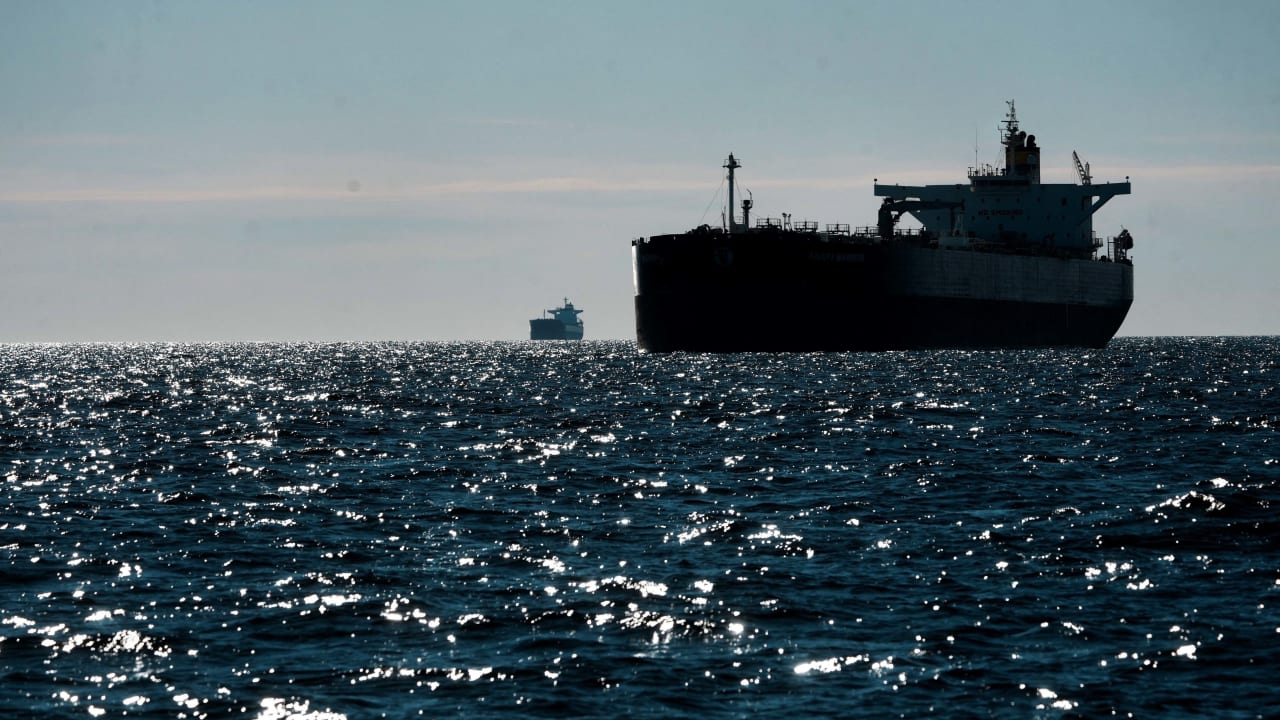
Event date
From Climate Realism and Energy and Climate Program.
Speakers
- Professor of Practice, Johns Hopkins School of Advanced International Studies; Of Counsel, Covington; Former Acting Undersecretary of Treasury for Office of Terrorism and Financial Intelligence (2015–2017); Former Director of the Office of Foreign Assets Control, U.S. Department of the Treasury (2006–2015)
- Advisory Board, Davis Center for Russian and Eurasian Studies, Harvard University; Senior Fellow, Kyiv School of Economics
- William Barton Rogers Professor in Energy, MIT Sloan School of Management; Former Deputy Assistant Secretary of Treasury for Climate and Energy Economics (2021–2022)
Presider
- International Affairs Fellow, Council on Foreign Relations; Former Senior Sanctions Policy Advisor, Office of Foreign Assets Control, U.S. Department of the Treasury (2023–2025)
VIGIL: Good afternoon and welcome to today’s CFR event, titled “Shadow Fleets: The Future of U.S. Oil Sanctions Enforcement.”
We are joined by members and guests here in D.C. and on Zoom. And a reminder that the meeting is on the record, like you just heard.
Before we begin with introductions, I want to thank CFR’s Climate Realism Initiative and the Greenberg Center for Geoeconomics for supporting this event. My name is Roxanna Vigil. I’m an international affairs fellow here at the Council and a former senior sanctions policy advisor at the Treasury Department’s Office of Foreign Assets Control. I will be presiding over today’s discussion.
And I’m delighted to introduce our three speakers today.
First, we have Adam Szubin. Adam is a professor of practice at Johns Hopkins School of Advanced International Studies, and is also Of Counsel at Covington. He served as the acting undersecretary for treasury and financial intelligence at the Treasury Department from 2015 to 2017 and was the director of Treasury’s Office of Foreign Assets Control, OFAC, from 2006 to 2015. Prior to joining Treasury, Adam served as counsel to the deputy attorney general at the Department of Justice and worked as a trial attorney in the Civil Division, serving as a member of the Terrorism Litigation Task Force.
Next, we have Catherine Wolfram. She is the William Barton Rogers professor of energy economics at the MIT Sloan School of Management. She previously served as the Cora Jane Flood professor of business administration at the Haas School of Business at UC Berkeley. She served as the deputy assistant secretary for climate and energy economics at the Treasury Department from 2021 to 2022. And since 2025 Catherine has served on the COP-30 ad hoc Council of Economists and chaired a working group on climate coalitions. And she’s published extensively on the economics of energy markets.
And to my far right, we have Craig Kennedy. He is an advisory board member and an associate of Harvard University’s Davis Center for Russian and Eurasian Studies. He’s a historian, energy commentator, and a retired international finance professional. He worked for over twenty years, advising corporate clients worldwide. In the ’90s he opened the Moscow office of Cambridge Energy Research Associates. Craig has cooperated closely with the International Working Group on Russia sanctions.
So I’d like to start with setting the scene of how we got here with regard to oil sanctions, their impact and shortcomings. The United States has spent the last decade and a half or so using sanctions to target oil exports and oil revenue of adversary nations, first Iran, then Venezuela, and Russia. Today we have three experts who have been directly involved in designing, implementing, and analyzing the impact of oil sanctions. The shadow fleet, which consists of hundreds of vessels engaging in deceptive practices to evade sanctions to transport millions of barrels of crude per day are an intended by product of the West’s own sanctions—are an unintended byproduct of the West’s own sanctions decisions against Iran, Venezuela, and Russia.
Now, with the largest global oil disruption in history from the war with Iran and the uncertainty over when the Strait of Hormuz will reopen and under what conditions, the United States has remarkably issued temporary sanctions relief to facilitate Iran and Russia to sell oil that was loaded on vessels, including oil that was loaded on the sanctioned shadow fleet vessels. So, Adam, I’d like to start with you. You spent over a decade in leadership roles at Treasury across several administrations. Most of that time you were the head of OFAC. You were instrumental in building and enforcing the Iran sanctions architecture that ultimately brought Iran to the negotiating table. What made this sanctions pressure campaign against Iran work? And what were the essential conditions that made it possible?
SZUBIN: Yeah, well, thank you. And thank you for the smart question. Thank you also for the invitation to be here. I want to thank CFR and former student of mine, Anne Healy, for facilitating this invitation.
I mean, the first thing I’ll say is a disclaimer. Which is, at the time we were assembling the Iran energy sanctions, there was not a high level of confidence that they would work. We were hoping, because you’re not going to be able to mount significant new pressure on a highly sanctioned country without going after their foreign oil revenues. Oil and gas is their main source—was and is their main source of foreign revenues. The U.S. has had basically no business with Iran at the time period we’re talking about, 2005-2006. And so if we couldn’t pressure those oil revenues, we knew we would fail.
At the same time, I think all of us think of energy as a market that’s extremely difficult to restrain—high demand and lots of ways to get energy to market. The tool we chose at the time was primarily a banking sanction. And it was negotiated with Congress, where what we call a secondary sanction was issued. And it held a sword of Damocles over the countries who imported Iranian oil. And it said to them, if the banks that you’re using to pay for your Iranian oil aren’t willing to go along with what we’re calling a significant reduction series, we will cut them off from the United States. In all cases, whether you’re talking about China, South Korea, Japan, India, South Africa, the banks that tend to handle large energy imports are the largest banks in those countries, all of which were highly dependent on their access to the dollar.
Now this is called a “secondary sanction,” because they weren’t paying Iran via the dollar. They were paying Iran in other currencies. But what we were saying is, we don’t care. We will cut you off from the dollar, which for these banks would have been a death sentence. And it was a pretty complex regime in which the country’s imports from Iran as a whole had to be going down significantly every six months. And colleagues from the State Department and the Energy Department were negotiating with them to see reductions, typically of 10-15 percent every six months. And with that, they would qualify for a waiver. And with their waiver the bank was insulated against sanctions, if they agreed to basically escrow all the funds that Iran was earning and only allow Iran to spend them on bilateral trade with the host country or humanitarian imports.
I know that’s a mouthful, but that was the structure as crisply as I can describe it. And what it offered at core was a big carrot and a big stick. The carrot was, if you’re Japan or if you’re India, your bilateral trade with Iran will go up, because the money that Iran is earning from their oil sales in your country can really only be used for bilateral trade. And in each of these countries, there was a trade imbalance with more value heading from Iran than in the other direction. So as a practical matter, what it meant was Iran became desperate to buy more Japanese computers and cars, South Korean products, Indian textiles and rice, in order to make use of the money that was otherwise unusable by them. And so the cooperating countries got a big boost in terms of their exports. And it was a boost that wasn’t available to other countries. That was the carrot. And, of course, the stick I’ve already described, which was if you don’t go along, your banks will face sanctions.
We thought we might be able to see a 30 percent impact, if things went well, on Iran’s oil exports. And in fact, we were able to bring down Iran’s oil exports by 60 percent—six-zero—which was far beyond, I think, even our optimistic assessments. I will say, because I’m sitting up here with energy market experts, the predictions were, if we could take 10 or 15 percent of Iran’s oil off market oil would spike to around $200 a barrel. Now, of course, Saudi Arabia putting more oil on the market helped quite a bit with this. (Laughs.) And I think a drop in energy band over this time period. But we were also very lucky that the 60 percent drop did not result in a big spike in oil prices.
VIGIL: Thank you for that very concise overview of a lot of history.
Catherine, you were involved in the design of the Russia price cap policy. In the Russia case, oil sanctions went in a different direction, away from going after oil exports—like Adam just described—and instead focused on the price of oil. Can you share why the price gap approach was chosen, and what were the alternatives that were considered but ruled out?
WOLFRAM: Sure. Great to see everyone here. I see some former colleagues from Treasury.
So I guess I’d like to put everyone back into where the world was in 2022, February of 2022 when Russia invaded Ukraine. We were kind of coming out of the pandemic. There are all these dislocations. China was still under lockdown. Not many exports coming out of China. We were already worried about inflation. And, like, in general, the global economy was just dislocated. Had never come out of a pandemic before. Adam talked about being worried about the Iranian oil coming off the market, or some share the Iranian oil coming off the market. I think that the world was really worried about Russian oil. Russia was, like, more than two times bigger of a supplier compared to Iran.
And they weren’t necessarily—the oil markets weren’t worried about Russian oil coming off the market because of something Russia did, or something that the war brought. Like, literally this day after the invasion, oil prices went down. What the market was worried about was the sanctions response, I think. There was a Wall Street Journal editorial comment that came out at the beginning of March that suggested, like, let’s ban—let’s put an embargo on Russian oil. And I remember, we probably all know this because of the Iran thing, you can check world oil markets at like 6:00 p.m. Sunday night in the East Coast, because that’s when the Asian markets open. And I checked the markets after that discussion had had been foaming in D.C., and the market went up to, like, 130 (dollars). It had been, like, 90 (dollars) when Russia invaded Ukraine.
So I think that was just an indication of how worried the market was about taking, you know, six, eight million barrels a day off the market. And so the price cap was designed, like, in the face of this economic dislocation, the potential for some kind of global recession. The price cap was designed to very explicitly do two things, harm Russia but keep the Russian barrels on the market. And so the price cap was designed to say, Russia, it’s fine if you sell oil. In fact, we want you to continue exporting oil. We just don’t want you to export it for more than $60 a barrel.
So you asked about the alternatives. And I’m glad you did, because, like, sometimes people say, ah, the price cap didn’t work. And they say, well, look, the war is still going on, so obviously it didn’t work. But I think it’s important to compare the sanctions policy that we adopted to alternatives. One alternative, of course, is to do nothing. But that became absolutely politically untenable, not just in the U.S. I would say especially in the EU that there was such strong resistance to the Russian invasion. There were the, like, pictures from the town that starts with B.
KENNEDY: Bucha.
WOLFRAM: Bucha. Thank you. Thank you. That came out at the time. The other alternative was the outright embargo. As I said, I think the markets were very worried about that. My husband used to joke that my main benefit to the U.S. government was that I knew how to multiply by 10. And the idea was that for every barrel—every million barrels of oil a day you took off the market, prices would go up by 10 percent. Like, one million barrel you got 10 percent, five million barrels a day, that’s like half of Russia supply, you got 50 percent increases in oil prices. We were definitely worried about that. So I think that the price cap was this kind of—we were stuck between a rock and a hard place. And this was the attempt to thread the needle and achieve both goals, of hurting Russia but also keeping oil markets relatively well supplied.
VIGIL: Thank you, Catherine.
Craig, you’ve tracked the impact of the price cap policy and the growth of Russia’s shadow fleet. Can you share your perspective on what the impact of the policy has been? And can you explain how Russia’s shadow fleet has grown since 2022, and to what extent Russia’s fleet differs from the shadow fleets used by Iran and Venezuela before January 20, or January 3 in the Venezuela case?
KENNEDY: OK. That’s a lot. You may need to remind me of what to cover. But thank you very much for inviting me today. And it’s fantastic to be on the panel with people who are so deeply involved in the sanctions process itself.
And I would say, regarding the price cap and its effectiveness, it’s actually part of a suite of sanctions that were being put in place. And perhaps the sanction that is often most overlooked, but maybe even had the greatest impact of all, was the decision by EU G-7 countries, especially Europe, to stop importing Russian oil. Because most of Russian oil actually was exported to Europe. And not only that, it was exported on European-owned and insured tankers. And so most of Russia’s exports actually go by sea. And they traveled a very short distance. And what, effectively, Catherine and the team at Treasury were attempting to do was to take advantage of Russia’s dependency, both on exports to Europe, but also the reliance on our shipping infrastructure to see if there was some way to keep those barrels on the market, but make them less valuable for Russia.
So one way to do that is to say, if you’re going to ship them, and you have to ship them out to the Baltic and the Black Sea because that’s where the infrastructure is, they’ll have to go much further to get to market. All the way to India, or in some cases all the way to China. And that adds $10 a barrel to your cost. It comes right out of your pocket. And then you layer on top of that the requirement that you’re going to have to sell at below the price cap. So this was an issue that Moscow actually figured out even before the price cap was being discussed. (Laughs.) It was actually after the April massacres in Bucha that the Kremlin began convening and having discussions about what happens if they impose sanctions, because the Europeans were talking about it already. We are deeply reliant on European shipping. They can—they can withdraw all of their shipping capacity from us, and we won’t have a way to get our oil to market.
So it’s at that point, in April/May of 2022, that Putin decides—and, you know, you can see this in the public record—we’re going to assemble our own standalone independent fleet. The problem is, they need 600 vessels to keep Russia’s exports taking over. And you can’t build that number of vessels. There are long lists at the shipyards for building new builds. So they had to go into the market and actually start buying them. And as they did that, it bid the price way up, and it doubled the price of a seventeen-year-old Aframax. So they’re spending $40 million a pop for these vessels. But it helps them to get around the price cap, because the price cap only applied to Western maritime services. So it’s a Western-owned tank or a Western-insured tanker. And Russia started this process of creating its own standalone shadow fleet.
But, unlike what happened in Iran, it wasn’t illegal to buy Russian oil. So you’re an Indian or a Chinese importer, you know, it’s not illegal. So there was no need to engage in the type of subterfuge that you had. It was very open trade. It was just not on tankers that we were able to enforce the price cap on. So that creates a challenge for us. Fortunately, it’s super expensive to buy all these vessels. So Russia has not been able to build a big enough shadow fleet to service all of its needs. And then sanctions on the tankers themselves, especially OFAC sanctions—OFAC has now sanctioned a third of Russia’s entire shadow fleet—effectively take those tankers out of use. Indian refiners will not touch cargoes on those tankers.
So today here we are, four years on. Russia still relies on Western-owned or -insured tankers for half of its exports. And that creates some new opportunities for us to sort of layer on top of what we have already to see if there are better ways to squeeze down the revenues. But late last year, there was a new suite of additional sanctions put in place. Very effective. Russia was losing an additional $10 to $15 a barrel. And this is one of the reasons why Russia’s economy underperformed so badly and so surprisingly in the first quarter, and why revenues for oil exports were down 45 percent year on year. Because people in Treasury, people in Europe, continued focusing on sanctions, figuring out what was working, what wasn’t working, and put new things in place. But there’s more to do.
VIGIL: Thank you, Craig. And then the next part of the discussion we’ll go into some of what more there is to do. So that’s perfect. So we’ve laid out the—we’ve gone from Iran restricting oil exports and getting the world, remarkably, to agree to the use of these restricted accounts. Then to a shift in the Russia price cap policy, really designed around a different set of constraints focused on restricting revenue. And a complicated enforcement picture, like you’ve mentioned, Craig, with the growth of the shadow fleet.
I’d like to turn to the future use of oil sanctions as an economic pressure tool against Iran and Russia. And I’ll also note that Congress has played a really important role in shaping these debates and in advocating for the use of economic pressure against Iran and Russia. And that will continue. So Iran has been able to recover some of its oil exports after hitting a low A few years ago. The shadow fleet and its infrastructure has been a part of that. And we’ve seen an initial thirty-day general license issued by OFAC as a result of the war in an effort to increase supply and bring price down. That authorized the delivery and sale of Iranian oil that was loaded on vessels, including sanctioned shadow fleet vessels. Which, notably, this general license did not include any payment restrictions.
So, Adam, the general license expired two days ago. We don’t know if it’ll be renewed. So for now, it expired. But if it is renewed, like the Russia one was renewed for another thirty days, are there examples from past restrictions, like the overseas escrow accounts that you described, that should be considered for further relief in this disruption? And in the long term, what are the tools that, in your view, have been the most effective at imposing pressure on Iran, that should be considered in the debate on what future Iran sanctions pressure looks like?
SZUBIN: Yeah. Those are really good and hard questions. I was hoping for really weak and soft questions, but I guess I need a different moderator. (Laughter.) So that’s a good reminder for me for next time.
I mean just to speak to the elephant in the room, the fact that, under a policy of maximum pressure against Iran, the administration in the U.S. authorized the sale of billions of dollars’ worth of Iranian oil is pretty striking. And it’ll be interesting to see whether that license is renewed. I know that politically it did not go over very well among either party on the Hill to see this kind of license being issued to Iran in the middle of hostilities. I mean, I don’t think that’s—it’s hard to think of a precedent for that, of active military hostilities with another government and extending them the license to be able to sell their oil.
I think if there was the ability to escrow those funds so that Iran’s oil would come to market, but they would be deprived of all or some of the benefit, that would obviously be ideal. Both from an energy markets point of view, as you’ve heard from my colleagues, but also from depriving Iran of the benefit of those revenues. I don’t know who the ultimate takers will be for these barrels. And I do have a sense that you’re not seeing those tankers reach Western markets. OFAC’s license would legally allow a U.S. company, a U.S. importer, to take Iranian oil. But no one’s going to touch it, given the fact that this is a temporary license, given the fact that there is so much stigma attached, and I could just give a long list of other consequences—reputational risk, plaintiffs who have judgments against Iran for terrorism deaths trying to attach those revenues. I mean, there’s just risk after risk after risk. And so these licenses are really there to reassure third-country buyers, probably in places like India and China, to get them more comfortable.
VIGIL: Thank you. And then, for the last questions, if we could just keep our responses short.
SZUBIN: I’m sorry.
VIGIL: No, no. That was great. That was great.
So, Craig, in your writings, you’ve laid out a set of recommendations for increasing pressure on Russia. And you alluded to them just now. Can you walk us through what you recommend and why you think these are the pressure points that would work for the next phase of pressure on Russia? And to what extent, if there’s time, can you mention how you see this Russia waiver playing into sort of the broader pressure campaign against Russia?
KENNEDY: Mmm hmm. Maybe just briefly on the waiver. First of all, I talked about some sanctions late last year. And effectively, what they were doing is they were making Russian oil much riskier for Indian buyers to import and for Western shippers to ship. And so shipping costs were going up. Indian buyers are demanding deeper discounts. And in some cases, just not buying. And Russia found itself struggling to find buyers. And you started seeing a glut of oil on the water building up, as ships with cargoes anchored off the coast of Oman with no buyers. And this is what effectively created the glut that the waiver is now providing relief to. So the Indians can sort of buy all of that oil that’s sitting in the Gulf of Oman and take some pressure off the markets. Happens for thirty days. If you stop it, we’ll probably start seeing that bubble build again, and the discounts for Russian oil increasing.
In terms of what we can do going forward, again, the real advantage—or, I should say, the vulnerability of the Russian oil industry is a vulnerability Russia’s had literally for centuries. It’s very weak when it comes to maritime transportation. It relies heavily on other people’s vessels to get their oil to market. We have a proven tool now for sanctioning Russian shadow tankers, such that their buyers will not touch cargoes on those tankers. So if we say, for example, had OFAC harmonize its sanctions list with the sanctions list—the tanker sanctions list in Europe, which covers the entire shadow fleet—OFAC only does a third—that would effectively move Russia’s shadow fleet off of the market, apart from some very risk-tolerant buyers in China, which aren’t nearly large enough to buy everything that Russia has to sell.
That then pushes everything back onto the Western fleet. We go from 50 percent back up to 100 percent. Those Greek ship owners are collecting freight tariffs already, or freight fees from Russian traders. You simply add a surcharge onto that. You can call it a tariff, a surtax. Call it what you will. So instead of paying $20 to get your barrel to India from the Baltic, it’s now going to cost you 35 or 40 (dollars). And that extra surtax is effectively—it’s clawing back the windfall profits that Russia is making in a high oil environment. That gets collected by a G-7 payment authority and used to support Ukraine. You can’t cheat it. It’s very easy to monitor.
The question is, how do you get Russia to stop using the shadow fleet? Or how do you get India to stop using those shadow fleet tankers today? And it’s either OFAC extending its sanctions footprint, or Europe using its superpower. Adam talked about the dollar being essential for Indian banks. For Indian refiners, European insurance—especially U.K. insurance—is essential for importing crude and exporting product. And the Europeans are looking very closely at this option now as a way of suppressing the use of the shadow fleet without OFAC involvement. They’ve already started experimenting on it with a refinery in China. Watch this space.
VIGIL: Thank you. And then, before we open it up to questions, Catherine, you’ve also written about recommendations on how to increase pressure on Russia, with some overlap but also some differences with what Craig just outlined. Can you share some of where you agree, where you take a different approach, and elaborate on recommendations that haven’t been mentioned?
WOLFRAM: Yeah, sure. Let me first—I know we’re, like, an energy gang up here. Let me make one point that I think is implicit in everything people have said, but very important to highlight. So before the war, Russia—about 45 percent of the Kremlin’s revenues were from oil sales. With Iran, it’s more like 80 percent. I mean, like, a petrol state is literally so dependent on petrol, on oil dollars. And so anything you can do to reduce those dollars, cut off those dollars, like, you can’t build drones or pay troops, if you’re Russia and you’re using troops from North Korea. So yeah. Just to emphasize how important that is in this context.
So on the Russian question, we have thought very similarly to what Craig described. I wrote an op-ed in the New York Times with an economist colleague of mine back in March. And we decided to call it a tariff, because we thought it might appeal to the current administration. So why doesn’t the U.S. collect a tariff on every barrel of oil that comes out of Russia? We suggested using secondary sanctions to enforce it. So that’s a tool that I think, you know, is extremely powerful, and not one that Craig mentioned. But just threaten if a buyer takes a shipment from Russia that hasn’t paid this tariff, then you have to be subject to secondary sanctions.
I think that the advantage of the tariff, and I think one of the—not shortcomings, but one of the kind of mysteries with the price cap, was where the value was going. If Russia was selling below the price cap, and the Brent price was, say, $20 above the price cap, there was that $20 floating around somewhere, going to some Dubai trader or, you know, the Indian refinery. We don’t really know where that went. But if we impose this tariff, then we know exactly where the money is going. We’re collecting it. And we can use that for Ukrainian reconstruction. You know, you can use it for whatever we want. It’s money that’s coming to the U.S. So this is something that’s been introduced in a bill in Congress and would love to see it go somewhere. We’ll see.
VIGIL: Thank you, Catherine.
So at this time I’d like to open it up to questions. Invite participants here in Washington and on Zoom to join the conversation and ask questions. So please raise your hand and I’ll do my best to call on folks. We have a question right there.
Q: Hi. Thank you very much. My name is James Siebens. I’m a fellow at the Stimson Center.
I want to ask how you would describe the impact that sanctions enforcement has on de-dollarization, and the trend of countries like Russia and China and Iran attempting to find ways to avoid the SWIFT system as a means of resilience against U.S. sanctions. Thank you.
VIGIL: Catherine, do you want to start with this one?
WOLFRAM: Yeah, I’ll try that. That’s always the concern, right? If you use the power of the dollar to try to impose penalties, then countries that think they might be subject to those penalties in the future, maybe China, will try to look for alternatives to the dollar. And we’re seeing that happen. I personally—I mean, as—like, as difficult as you make it to use the dollar, the alternatives are just not that strong. The Chinese control—capital controls of the yuan are very intimidating to investors. They don’t want something that’s as heavily controlled by the Chinese government. So, I mean, I think, yeah, every sanctions policy that we rely on the U.S. dollar to enforce, we’re making it a little bit harder. But I think we still have a lot of runway there.
VIGIL: Craig, did you want to add anything?
KENNEDY: Just to add something. I spent over twenty years in banking. And both of the banks I worked at, Morgan Stanley and Bank of America/Merrill Lynch, had big commodities businesses. And one of the things that amazed me early on when I was getting into the business is how much larger the paper market for oil is than the physical market. It’s twenty to thirty times the size of the global physical market. It’s huge. And it’s all dollarized. You can’t de-dollarize that. And so it’s hardwired into the global energy trade. Yes, Russia is going to be able to do bilateral physical trades with Europe, because there’s a balance of yuan and ruble trade. And it’s small enough. But if you start to try to scale that up you just can’t get—you can’t escape the dollar. At least not for the foreseeable future. I don’t want to sound complacent about it, but when you look at it from a banker’s perspective and you look at it from the paper market perspective, you just—you can’t get around the dollar.
SZUBIN: Could I add a thought too? I just don’t want to be left out. (Laughter.) I agree in the short term with optimism or, you know, just security based on the fact that there aren’t viable options. And when people think about de-dollarizing, that question is misleading, because it’s asked in the abstract. Whereas the real question is, a move from the dollar to X. And so until you can name X—whether that’s a stablecoin or the digital yuan or the euro. And as you say those out loud and consider them, you see the shortcomings, as Catherine said. So I share that optimism.
I think medium to long term, it is worrisome that every BRICS get together the number-one issue on the agenda is alternatives to the dollar. And even more worrisome is the fact that we’ve heard this from European capitals as well. Old traditional close allies have, in recent years, been talking about the hegemony of the dollar and how much leverage it gives over German companies, French companies, who feel in some ways more beholden to U.S. foreign policy than to their own. So to me, that is a source of longer-term concern.
And my answer when I’m asked about it is to proceed multilaterally whenever possible. The Iran sanctions were an example of that. We actually were acting with U.N. Security Council support. Russia and China didn’t join us in the oil sanctions, but they did join us in viewing Iran’s covert nuclear program as a threat, and as a threat that warranted economic pressure. And in the example that Catherine is giving, you have this—obviously, you don’t have the Security Council. Russia is on the Security Council. But you do have the EU, U.K., Australia, and a whole host of other countries—Canada, the U.S.—all working together and rowing in the same direction.
That’s what I think reduces pressure to say, well, the dollar is a source of bullying—a unilateral source of bullying. So, to the extent possible, my advice to sanctions policymakers would be to knit together those coalitions.
VIGIL: Thank you. Question in the back.
Q: Sure. Hi. Daniel Silverberg. I’m with Capstone, a consultancy.
First, thank you all for your service. We often say that to the military, but in the sanctions context I think you guys did as much, if not more, for national security. You, Sumona, Amy, Jordan, a number of folks in this room. It’s like an emotional reunion of the sanctions team.
Second, if you had your previous jobs, what paper would you be writing in preparation for the Xi summit to deal with the shadow fleet? And, realistically, what’s your outlook for what might happen on the shadow fleet in that discussion? Thanks.
VIGIL: Which one of you would like to take it first? I think you probably each have something to say. Craig, would you like to start?
KENNEDY: (Laughs.) My previous job was at a bank, so. No, but China is interesting because you’ve got, you know, ten million-plus barrels a day of import. Twenty-five percent of that is relatively sanctions insensitive. It’s the independent refineries. And they’re set with a quota. But that quota has been enough to keep Iranian and Venezuelan oil afloat, because that’s where all of that sanction oil has been going. And that’s been problematic for sanctions. I think you’re in a better position to judge, but the fact that there is that relative intolerance there. The rest of China is less tolerant to OFAC risk, I think it would be fair to say so. The question is, can you lean on China? Or rather, can you request, respectfully, that they asked the independent refiners to be more compliant with sanctions? But I’m not certain that that conversation—I’m sure it’s been had before, and you’re in a better position to share what the response was.
WOLFRAM: I mean, I frankly—I’m not sure I would be writing that paper. I think I would be writing papers on critical minerals, on—I don’t know, I see that is kind of pretty far down the list of asks. And do we really want to go with that ask, when we’re exposed on other things? So I’m not sure I see that that paper getting written, to be honest.
SZUBIN: If China was willing to grant you a wish when it came to oil imports, what would your wish be?
WOLFRAM: Oh, like, take—only take below the price cap. (Laughs.) Or pay the tariff, you know, whatever. Yeah. For sure.
SZUBIN: And I think one of the bonuses baked into this price cap idea is—and you didn’t articulate it as a carrot, but it is—for the purchasing countries they’re getting a discount off of the market price of oil if they’re cooperating. Which ought to be a big bonus. Now, as you mentioned, it’s not clear if they end up with the bonus or if it goes to an intermediary. And I know there’s some opacity on that.
WOLFRAM: Yeah. So Eddie Fishman just had an article in the Foreign Affairs about, like, what makes an effective chokepoint. And an effective chokepoint, he had three criteria. But one is that it’s actually a chokepoint. The other is that, like, you can’t find substitutes to it. And the third is that by enforcing that chokepoint you put more harm on your adversary than you inflict on yourselves. I think we’ve experienced that with the Strait of Hormuz chokepoint. It’s putting a lot of pressure on U.S. consumers and U.S. politicians. And the fact that with the price cap we were basically, you know, asking China and Russia to accept cheap oil, low-priced oil, that made it much more effective to try to get buy-in to something that’s actually benefiting countries that aren’t necessarily aligned with the idea of punishing Russia.
VIGIL: Thank you. There were a few hands raised, so we’ll go in the front, and then we’ll go to you next. And then there was someone else, here.
Q: Toby Gati. I worked in the Clinton administration at INR, assistant secretary, and in the White House.
Today, there was an article in the Times, “Can the U.S. Blockade Iranian-Linked Ships Anywhere in the World?” Now they didn’t use the word “shadow fleet,” because it’s not the same as with Russia, but it would declare any ship aiding Iran, regardless of location on the high seas, to be a target. I mean, it’s more military. And I just—I wish you could clarify for me. Is this a logical extension of the idea of going after a shadow fleet? You’re not so much—obviously, Iranian ships aren’t shadow fleets in that same sense.
But are we seeing an expansion of the idea? Because they have a quote by Secretary Bessent saying, Operation Economic Fury, whatever the hell that is, and he called it the financial equivalent of bombing campaign, secondary sanctions on institutions internationally, like banks, that are dealing with Iran. Is there any connection between the idea of the success with the Russians and dealing with the Iranians? And I realize it’s more a war situation, but are people in the administration thinking that the two are somehow linked?
WOLFRAM: I can’t speak for the administration, but I—to my mind, there’s, like, kinetic warfare, and there’s economic warfare. And so a blockade, a military blockade, and trying to chase all these Iranian tankers all over the high seas, that sounds like, hard, just physically, and expensive. We’ve got a lot of our Navy tied up in something like that. And so to me that’s an opportunity to use economic warfare as an alternative to the, like, yeah, kinetic or naval warfare. I mean, why not just use sanctions, go after the buyers of the Iranian oil with secondary sanctions or something like that? But it’s not costless, as we just discussed on de-dollarization, but nor is the blockade.
VIGIL: Yeah, and I think when—you know, I sort of view the Venezuela blockade as an indicator that the sanctions—although they achieved what they were designed to do, which was deprive the regime of revenue—ultimately failed to achieve the political objective, which was to bring about a change in the ruling party there. And so I saw it as, on the one hand, a sign that sanctions had failed to achieve a political objective. In part, I think the things were mismatched. But then ultimately this very, very costly and sort of extreme response to sanctions policy that hadn’t achieved it.
KENNEDY: I just had one more thing as well. If you look at the Venezuela blockade, and you look at it closely, it’s actually quite interesting. There were a lot of ships around that theater, but the ones that got interdicted, that actually got physically seized, all had one thing in common. They were all stateless at the time that they were initially encountered. And that may sound, well, what does that matter? But, actually, under the U.N. charter of the law of the sea, it matters immensely. Because a stateless ship, or a ship flying a false flag, does not enjoy the same sovereign jurisdiction protections that are flagged—a properly flagged ship does.
But we observe it, nonetheless. And we observe it actually very scrupulously. And there’s a there’s a large amount of case law in the United States that talks about when you can seize a ship. And we were very correct, interestingly enough, on Venezuela, at only going after the stateless ships at the time that were flying false flags. Ones that had proper flags weren’t seized. There was one or two Panamanian flagged ships that were boarded. And the Panamanians withdrew their sovereign protection during the process, because we presented evidence that those ships were in violation of blah, blah, blah.
So it’s actually quite interesting. But the problem is, once you seize these ships, you’ve got to do something with them. You’ve got to take them to safe harbor. They have lots of oil on board. There are also issues about what do you do with the crew? Who pays for it? Who pays for the safety of the ship, because it’s laden with oil. You can’t fire on the ship to disable the engine room because it’s got two million barrels of oil in it. So it’s not like that cargo ship that they went after the other day. And you’ve got to have specially trained teams that can slide down ropes onto moving ships and take over the ship and command it. So it’s hard to scale that up, quite simply. It’s not a silver bullet solution. Anyway, sorry to go into that kind of Hollywood-type graphic drama.
VIGIL: Questions. Yeah.
Q: Hi. I’m Marc Levinson, historian and economist.
At the moment, the Federal Maritime Commission is conducting an investigation of flags of convenience, and how they might affect U.S. commerce. I think this relates to the matter we were just discussing a moment ago. Do you see this as another avenue for imposing maritime-related sanctions on other countries?
KENNEDY: So I just want to make a—first, an initial statement about shadow—the shadow fleet really didn’t come onto the stage as a big thing until Iran. And one of the big achievements of the liberal global legal order, postwar, was actually the U.N. Convention of the Law of the Sea, and specifically how we manage oil spill risk. It took years to negotiate the Convention on Oil Spill Risk Liability. And it was very complicated to do. But it was achieved by a consensus built by countries from around the world, by shippers, by traders, by oil producers, by consumers. And it was a real achievement. And it vastly reduced the spillage risk in the industry, and protected coastlines around the world. And it’s worked pretty well. I don’t want to be here defending the tanker industry but, you know, relative to what we had before, big improvement.
The shadow fleet goes at the very fabric of that global legal order. It subverts it in so many different ways. Flags of convenience are often a legitimate thing, but when you start seeing flag hopping as a way of trying to avoid sanctions, then invariably you’re also looking at compromises on safety regulations, bogus insurance, and a lot of more risk for everybody else. And when it gets scaled up, it’s a big problem. So any solution we have that can help disincentivize the use of the shadow fleet or accepting cargoes from the shadow fleet is a big win for the postwar liberal order, and it’s one of its signal achievements. I didn’t—I don’t know if I addressed your question, but that was my little speech on that.
WOLFRAM: Yeah. I mean, related to that, the shadow fleet that Russia actually owns and operates, they are, quote/unquote, “insuring it themselves.” But if there’s a big oil spill with one of those, I would bet good money that Russia doesn’t pay out on that insurance policy.
VIGIL: Thank you. Yes, right here.
Q: Hi. Doug Rediker. This is primarily for Adam. Good to see you.
SZUBIN: Hi.
Q: What is the role of Congress moving forward? You’ve got things like CAATSA, on the nuclear side you’ve got INARA. These are, you know, what are supposed to be constraints on the executive’s ability to give up on sanctions and related issues in negotiations, specifically with Iran, amongst others. But this administration seems to be taking a liberal approach to its feeling of constraint by Congress. So I’m just curious, if it’s CAATSA or anything else, if you think Congress plays any role as sanctions play out in these negotiations.
SZUBIN: Yeah. I mean, it’s a great question. I think I see two layers to the answer. One would be, in the current political moment, given Republican control of both houses of Congress, and then the other would be post-November where we don’t know what will happen but certainly, many commentators are forecasting that there could be a change in control of one or both. In the current moment, I think there’s very few guardrails on the administration, as your question points out. That doesn’t mean there are none. And I do expect that there are quiet conversations between Republican congressional leadership and the White House about what is going to be given away to Iran. And I bet there are some pretty heated conversations about these oil licenses and renewal of the oil licenses. So the fact that Congress has been quiet, or Republican leadership has been quiet, doesn’t mean they’re not restraining the administration behind the scenes somewhat. But I would acknowledge I don’t think we’re seeing signs of major constraints.
Should there be a change in control, then, of course, the statutes that you mentioned are written to be extremely tough. I mean, they were written by congresses, including Democrats, who were very skeptical and worried about what a Democratic president might do at the negotiating table. And the codifications of sanctions are far tighter than what we had seen in prior statutes, let’s say, codifying the Cuba sanctions. I compare them in my class to a straitjacket. You can’t even issue a significant license to a single company without bringing it to Congress first. So those constraints are still there. As you point out, there’s still good law. And if there’s a new sheriff in town, they could be quite meaningful.
VIGIL: Here. Right here, question in the front.
Q: Hello. Thank you for this very interesting discussion. Tatiana Gfoeller, retired U.S. ambassador.
We’ve touched a little bit on the potential risks of de-dollarization. But could you elaborate more on what, if any, have been the negative consequences on Western economies of sanctions? We all know the negative, obviously, effects on the Russian and Iranian economies, possibly Chinese. But what about on our economies? Thank you.
WOLFRAM: I mean, I can—I can start. It depends what the sanctions do. But if the sanctions are effectively an embargo and take the oil off the market, then it’s a global market and the prices go up. So I think that was—yeah, as I indicated, in kind of mid-March 2022 I think that the oil market was reacting to even the hint or the whisper of that as a possibility. And, as we see, that the oil energy markets are so essential to the world economy, that could lead to kind of cascading effects to the rest of the economy. I think that’s the primary, like, dilemma, right? How do you—how do you hurt petro states, but, in a world where it’s a global oil market, kind of preserve the economy?
SZUBIN: I would add, when you look sort of industry by industry there can be winners and losers. And sometimes the losers might be U.S. or Western companies. It’s very interesting to look at how China is observing and trying to leverage the current sanctions climate between the West and Russia, between the West and Iran. So I’ll just give one example. An earlier question mentioned SWIFT. SWIFT is not a financial institution, but it is a messaging company or cooperative that handles secure, encrypted messaging among banks, especially for cross-border payments. And it was effectively a monopoly.
That monopoly was then leveraged in the Iran case where Iranian banks were basically unplugged from the ability to communicate the way all other banks communicate. And that produced real pain for the Iranian economy and for Iranian trade. That was then leveraged again in the case of Russia. And China’s not going to just sit still and wait for it to happen to China. So China’s developed its own system for secure messaging with other banks. And that has seen a lot of growth in the last five or ten years. So you could look kind of industry by industry and see who are the winners, who are the losers. I’m just giving that as one example. But it really does vary.
VIGIL: I’ll just add—oh, go ahead.
WOLFRAM: No, go ahead.
VIGIL: Add a point on Venezuela. Because in the Venezuela example, the oil that came off the market because of Venezuela sanctions didn’t impact the global market. But it impacted the U.S. market, because the United States was the biggest buyer of Venezuelan crude before the sanctions. Then China became the biggest buyer after the sanctions, because of their risk tolerance and their demand. And in addition to that, the U.S. was the largest market of selling diluent to Venezuela to process its heavy sour crude before the sanctions. And after the sanctions, they had to source diluent from Iran and from Russia.
So now what we’re seeing, in the post-January 3 situation, is essentially a reestablishment of presanctions dynamics. Where we are now, again, the largest buyer of Venezuelan oil, and the largest seller. So I do think there is—you know, to your question, after a certain amount of time when sanctions hadn’t achieved the political objective, there was some harm done to our own national interests, including national security, economic, and foreign policy interests.
Craig.
KENNEDY: Just in that same vein, if we think about geography, Europe has taken a much, much bigger economic hit than the United States has, to state the obvious. But some things aren’t so obvious. Obviously, they’re paying much higher gas prices because they were the primary destination for Russian gas, when it comes to revenues. Most of gas in terms of revenues and profits were from European sales. They lose money domestically. And China is a tiny amount in the relative scheme of things. So, but that trade worked both ways. So Russia—Europe is paying not only higher gas prices, but Europe is also—was also the primary provider of capital and technology, primary provider of foreign direct investment in Russia. The Europeans have willingly, most of them, taken all of those hits and withdrawn from Russia, because the threat the war poses is so great. It’s much larger than the U.S.
Just one more statistic to give a sense of magnitude. 2014, just before the Crimean invasion, $735 billion of foreign debt. That’s how much Russia had in total foreign debt, most of that through Western banks and institutions primarily based in Europe. All of that is—almost all of that is gone now. Russia has a small fraction of that. And that’s all business which has been lost to European financial services. So Europe has really taken a much larger hit economically than the U.S. has. U.S. has always followed Europe, and at a distance. Oil companies as well—BP, $24 billion write down; Total, $4 billion write down. We had one company that took a write down and it was for an investment back in the 1990s. It was Exxon. It was about $4 billion to Sakhalin. So just it doesn’t compare.
VIGIL: I think we have time for one or two more questions. And maybe we have—OK, why don’t we take the question right here, the gentleman behind, and then we’ll—if we can take the three questions together, and we’ll try to get through them for the last round.
Q: I’ll be brief. Isabella Bennett, McKinsey and Company, former U.S. Treasury.
One of the reasons that this administration seems to be pursuing kinetic activity in terms of blockades is because they don’t think sanctions are as effective. And so what would you say to that? How effective are the Russian sanctions? Obviously, the war still is going on, and they have the finances to support it. So what do you think in terms of how effective the sanctions are?
Q: Hi. Jonathan Chanis, New Tide Asset Management.
I understand from context in Venezuela that the regime is only receiving about 65 percent of the oil revenue. Do we have any idea where the other 35 percent is going?
VIGIL: Thank you. And then across the aisle.
Q: Sherri Goodman, Atlantic Council and Council on Strategic Risk. Thank you all. It’s been a very interesting discussion.
I think this is mostly for Craig. Before the Russian invasion of Ukraine in 2022, Putin had very ambitious goals to monetize the northern sea route as a toll road for transportation from ports in Asia, Shanghai to Europe. And we have heard much less about it since ’22. Do you see that now with what’s happening Iran, that Putin and Russia will eventually want to do more? I know it’s a long—very long-term play that depends on Chinese investment. But do you see this as an alternative future supply and transit route?
VIGIL: Adam, if you can take the how effective are sanctions question?. And then I’m happy to take the Venezuela one. And then we can do the last one.
SZUBIN: Yeah. I guess my—it’s a very big question you’re asking. I guess my shortest answer would be, sanctions can be effective if there’s a lot of energy put into enforcement and implementation. That doesn’t mean they will be effective. And they’re never 100 percent. But you were setting up a comparison, which I think is the right way to look at it. How effective are they as compared to an embargo? And as we’ve heard today, embargoes are extremely costly in terms of naval resources and in terms of funds to sustain. I don’t think there’s anyone who thinks it’s doable with respect to Russia. Are we really going to be boarding Russian government ships? And also, I don’t see a chokepoint when you look at the map where we could presume to have a bottleneck. So I think sanctions, as Catherine was saying earlier, really have a lot to recommend when you’re comparing them to military.
The last thing I’ll say is a military embargo has traditionally been viewed as a cause of war, unlike economic sanctions. Although some have said, well, a complete embargo is almost tantamount to an embargo—naval embargo. But if you’re imposing a naval embargo on a country, it is close to a declaration of war. And there’s a lot of risk and potential unintended consequences that can come from that.
VIGIL: Really quickly, on the Venezuela question. The short answer is no. And that there are a lot of concern about the lack of transparency and how the oil proceeds are flowing to Venezuela. According to the administration and the executive order they issued on January 9, they’re supposed to be going—the funds are supposed to go into a U.S.-controlled, Treasury-controlled account, and from there be dispersed with the authorization of the secretary of state, after approval of a budget that Venezuela submits to the Department of State that gets approved, and the payments are then audited after being spent by an auditing process that the Venezuelans select and pay for. But no specifics on any of this have been provided. And President Trump made very clear that this whole process would benefit the American people. It’s not clear how it will benefit the American people and how the proceeds that are the U.S. portion of it are being collected and being—and planning to be spent.
The last question.
WOLFRAM: Was directed at Craig.
KENNEDY: Just to echo something Adam said, first of all, on the interdiction approach, the 300 tankers coming out of Russian ports a month, and the practicalities of seizing and holding that many is daunting. You layer on to that the fact that you need to get navies to do that. There’s been a lot of time spent on discussions in the Baltic littoral with lawyers, maritime lawyers, working with the government, et cetera, to get them comfortable with finding some provision in the law of the sea that allows you to do this without actually making it a declaration of war. It’s just very difficult to get a consensus from a government lawyer that this is fine, we will not get sued for this. Because, after all, you’re stopping ships that are private ships and have a right of free passage and an enhanced right of passage through something like the Danish straits. So it’s tough to get legal support for interdiction in those cases.
On the northern sea route, really interesting question. It certainly shortens the route, especially if you are shipping out of the Arctic region. And Russia is trying to develop more of its oil up there. There’s a massive project called the Vostok project that Rosneft is behind. You know, one to two million barrels a day of production. But it’s dead in its tracks now with a huge amount of cash that’s been spent on infrastructure development because there’s one thing they can’t do themselves, nor can the Chinese do for them. And that is to have an ice-class oil tanker that’s able to break through two-meter sea ice. For that, you need a special piece of equipment called an Azipod. It’s only manufactured in two places in the world—Finland—(Vuosaari ?)—and ABB in Sweden.
And so this project is now stalled for several years. It’s part of the reason why we even got a banking problem in Russia, because there’s all this debt that’s been built up and it’s not being serviced. And it’s part of a broader challenge that Russia has right now in maintaining its oil curve going out. So sanctions, again, things you wouldn’t think would have an impact actually have all sorts of repercussions if they’re in place long enough and you know where to look to measure it.
VIGIL: Thank you so much for joining today’s meeting. And please join me in thanking Adam, Catherine, and Craig. (Applause.)
(END)
This is an uncorrected transcript.