Cambodia-Thailand Conflict Continues to Escalate
By experts and staff
- Published
- CFR Editors
Welcome to the Daily News Brief, CFR’s flagship morning newsletter summarizing the top global news and analysis of the day.
Subscribe to the Daily News Brief to receive it every weekday morning
Top of the Agenda
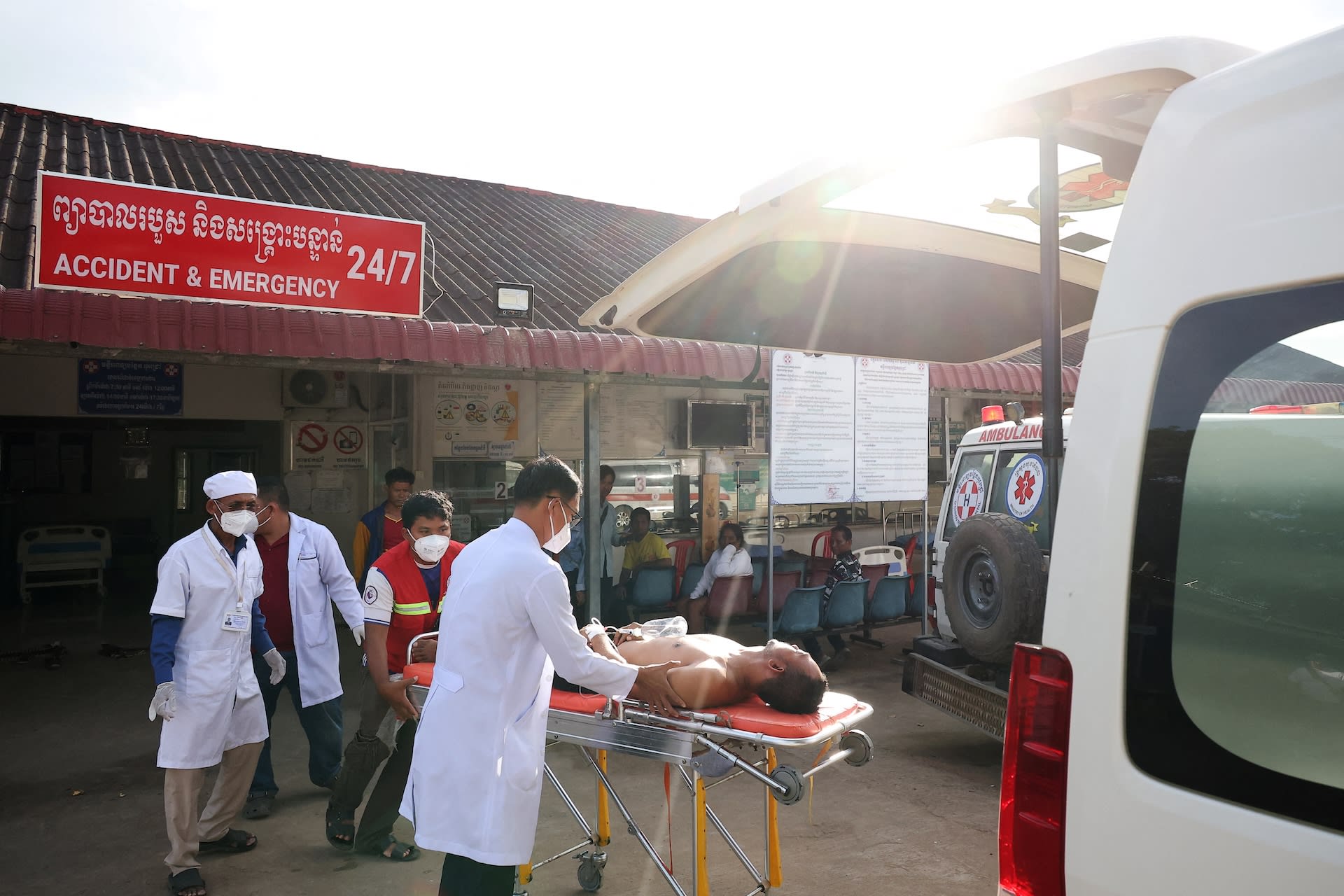
Thailand moved to block fuel from reaching Cambodia yesterday as the countries’ border conflict continues to escalate. Dozens of people have been killed and more than five hundred thousand displaced this month in the latest round of fighting, officials from both countries said, despite attempted mediation last week by U.S. President Donald Trump. Trump claimed to have ended the countries’ long-simmering border conflict after it flared in July, and wrote after speaking to each leader on Friday that the countries had agreed to pause fighting. But Cambodia did not echo that claim, and Thailand rejected it.
The context. Thailand has leaned into the conflict with Cambodia as its embattled government prepares for new elections following a breakdown in its coalition. Thai Prime Minister Anutin Charnvirakul dissolved parliament on Friday to avoid a no-confidence vote, and yesterday Thai authorities announced a snap election will take place on February 8. Anutin is from a pro-military party, whereas his domestic political rivals the Shinawatra family had long leaned on their relationship with Cambodian politician Hun Sen to de-esclate border tensions.
What comes next. At Thailand’s request, a mediation session with the Association of Southeast Asian Nations (ASEAN) originally set for today has been pushed back to December 22. Cambodia has said that it supports ASEAN chair Malaysia’s mechanism for a truce, while Thailand said that it will only stop firing if Cambodia stops first. Phnom Penh says that as Thai attacks hit deeper into Cambodian territory, they risk hitting camps for the displaced; Thailand denies targeting civilians. In the meantime, international leaders—including those of China, the United Nations, and the Vatican—are all calling for military restraint.
“It cannot be overstated that the border conflict has shifted Thailand’s political environment, and this may well be by design by Thai elites…it is certainly a strong possibility that the Thai army and possibly the monarchy wanted to restart the border conflict to help pro-military and pro-monarchy parties.”
—CFR expert Joshua Kurlantzick
Across the Globe
Talks on guarantees for Ukraine. U.S. and European leaders committed to work toward providing a “legally binding commitment” to defend Ukraine in the case of a future attack, European leaders said in a joint statement yesterday. Ukrainian President Volodymyr Zelenskyy, as well as unnamed U.S. officials, told reporters that Washington had offered security guarantees akin to those in NATO. German Chancellor Friedrich Merz said that the current talks represent “the opportunity for a genuine peace process.”
Probe of Australia attack. “Early indications” suggest the two attackers who killed fifteen people in Sydney over the weekend were inspired by the self-declared Islamic State, Australia’s federal police commissioner said today. She added there was no evidence that other people were involved in the attack but that the investigation remained in its early stages.
New Delhi’s air pollution. More than two hundred flights were canceled and fifty trains delayed in New Delhi, officials said yesterday, as the city experienced its worst air pollution levels in weeks. Last month, air pollution sparked rare protests in the city. Its smog levels worsen in the winter, when nearby farmers clear land with fires. India’s Supreme Court is due to hear a case tomorrow that argues authorities are not doing enough in response.
Washington’s war on drugs. Trump declared illegal fentanyl and its core precursor chemicals to be weapons of mass destruction in an executive order yesterday. He directed agencies to probe and prosecute fentanyl trafficking, and to consider devoting military resources to the problem. Separately, the United States and Paraguay yesterday signed a security agreement that Washington said would tighten military and economic cooperation and help fight drug trafficking. Meanwhile, the U.S. military announced it bombed three alleged drug boats in the Eastern Pacific.
FBI probes bomb plot. Federal officials yesterday said they arrested four left-wing activists in a probe, alleging that the activists had planned a New Years Eve attack on two California companies. Authorities opened the investigation in part because Trump had instructed the FBI to pursue left-wing extremist groups in the United States, the first assistant U.S. attorney for the Central District of California said.
India’s charges on Kashmir. India’s anti-terrorism agency charged two Pakistan-based militant groups—Lashkar-e-Taiba and the Resistance Front—and six individuals for an April attack in Kashmir that killed twenty-six people and sharply escalated regional tensions. Two of the people charged are in Indian government custody, and three are deceased. The charges say that Pakistan’s government supports terrorism against India; Islamabad has repeatedly denied this in the past, but did not immediately comment on the latest charges.
Iranian laureate beaten. Iranian security forces beat Nobel Peace Prize laureate Narges Mohammadi on the head and neck after detaining her last Friday, according to a post attributed to her family on Mohammadi’s social media account. Mohammadi told her family she had been accused of cooperating with Israel, the post said; the charge can carry the death penalty. Iranian authorities did not respond to a New York Times request for comment; they told state media that Mohammadi’s rights were being respected.
Trump’s appeal for Jimmy Lai. Trump said yesterday that he had asked Chinese President Xi Jinping to consider releasing Hong Kong pro-democracy media mogul Jimmy Lai, who was convicted this week on multiple conspiracy charges. Trump did not specify when his conversation with Xi occurred. U.S. Secretary of State Marco Rubio wrote on social media yesterday that he echoes Trump’s call to release Lai.
What’s Next
- Today, a World Trade Organization General Council meeting begins in Geneva.
- Today, ByteDance faces a deadline to sell its operations of TikTok in the United States.
- Tomorrow, the European Union holds a summit with western Balkan countries in Brussels.