A Guide to the Gaza Peace Deal
Months into a long-awaited ceasefire between Israel and Hamas, strikes are constantly breaking out and major obstacles still remain for the Trump-led cohort in negotiating lasting peace.
The Board of Peace met for the first time in Washington on February 18 for much-anticipated deliberations about Gaza’s future. Twenty-seven countries that have signed onto the board were present at the meeting.
Envoys from nearly fifty countries in total attended, some only as observers. The United States’ NATO allies have broadly declined invitations to join the board, citing concerns about the scope of its charter and invitations to countries whose leaders have outstanding arrest warrants with the International Criminal Court, such as Russia.
U.S. President Donald Trump, who chairs the board, announced at its first meeting that the United States would commit $10 billion to the body, but didn’t provide details on where the funds would come from. Other countries collectively pledged $7 billion toward Gaza’s reconstruction, with Kuwait and the United Arab Emirates expected to contribute up to $1.2 billion to the board’s coffers. The World Bank estimated last year it would cost more than $70 billion to rebuild Gaza.
The coming weeks will see the board attempt to chart a course through the ceasefire’s second phase, which includes plans to navigate governing a postwar Gaza, bring aid into the enclave, and work to negotiate Hamas’s disarmament and Israeli troop withdrawal. Those are all critical components of the ceasefire agreement—and areas in which the board, the warring parties, and other mediating nations have historically held differing positions.
The peace plan, which the Trump administration proposed in October 2025, entered a first phase when Israel and Hamas agreed to a ceasefire that month, and was supported by a UN resolution that November. The plan shifted to its second phase only recently, after Israel confirmed in January 2026 that Hamas had returned the remains of the last hostage from its October 7, 2023, attacks, thus fulfilling the agreed-upon terms of the first phase.
Here’s what the twenty-point peace plan entails.
What is the Board of Peace?
The board, which Trump said he hopes will “be the most consequential International Body in History,” was initially floated with a focus on redevelopment and governance of Gaza until 2027, when the Palestinian Authority (PA) would take over. However, the charter signed at the annual World Economic Forum meeting in Davos in January and obtained by the Times of Israel does not limit the board’s scope to Gaza—perhaps opening a door to a broader mandate that critics fear would compromise or compete with the United Nations.
The board has multiple hierarchical tiers.
Executive board. There is a seven-person executive board at the top, with Trump as the lifetime chair, who cannot be removed unless by unanimous vote. The executive board will set agendas for the full Board of Peace, and oversees and implements the board’s mission. Other than Trump’s potential removal, its decisions will be made by majority vote, and executive members get two-year terms.
Executive Board members include Trump’s son-in-law, Jared Kushner, U.S. Middle East envoy Steve Witkoff, World Bank President Ajay Banga, and former British Prime Minister Tony Blair.
Full board. The next tier is a broader Board of Peace body that includes members from various countries. Countries can buy permanent membership for $1 billion, or otherwise serve three-year terms. Figures on the full board include Argentine President Javier Milei, Hungarian Prime Minister Viktor Orbán, and Israeli Prime Minister Benjamin Netanyahu.
Technocrat committee. Finally, there is a committee of Palestinian technocrats to oversee day-to-day operations; it is the only body of the Board of Peace that has Palestinian representation.
The White House has confirmed that Palestinian official Ali Sha’ath will lead the technocrat committee. It also includes the deputy minister of planning for the PA, former director of the Palestine Islamic Bank, and the president of the University of Palestine, among others.
Several countries were absent from the invite list or notably rejected the invitation, including Canada, France, Germany, and Spain. Trump has also asked Russian President Vladimir Putin to join. Putin has yet to accept but is “studying all the details of this proposal,” according to Kremlin spokesperson Dmitry Peskov.
What is happening now in phase two of the ceasefire?
The second phase sketches out ambitious long-term goals, including standing up a stabilization force and transitional government to oversee Gaza. As the Board of Peace moves forward with its roadmap for Gaza’s reconstruction, participation from Israel and Hamas has sometimes been called into question. Israel only agreed to participate as a board member on January 21, while the only Palestinian representation is on the technocrat committee.
However, getting Israel and Hamas to agree and cooperate on next steps could prove difficult, particularly when it comes to transitioning control of Gaza away from Hamas. Netanyahu has repeatedly said that the next phase should not focus on rebuilding the enclave, but disarming Hamas and the demilitarization of the Gaza Strip. Meanwhile, Hamas has reaffirmed its “commitment to all the terms of the agreement,” the scope of which included the group’s disarmament, according to the White House. However, as the ceasefire shifted into its second phase in January, Hamas contradicted Washington and said it never agreed to that provision. Several outlets, including the BBC, AFP, and Al-Monitor, also reported recently that Hamas is working to reassert control in areas where its members are present.
Both sides hold positions that are not in line with each other or the blueprint being supported by the international community. For example, the peace plan does not guarantee the establishment of a Palestinian state, a longtime goal of the PA, the Palestine Liberation Organization, numerous UN Security Council resolutions, and the policy position of several U.S. administrations. Though Israel said it supported the UN resolution, Netanyahu has previously resisted having the PA play a role in governing Gaza, made attempts to place pressure on its presence in the West Bank, and been opposed to Hamas having a spot in Gaza’s governance.
“The first stage of this peace plan [was] the easy part,” CFR Senior Fellow for Middle Eastern studies Elliott Abrams told CFR. “As world attention turns away when the fighting stops, these intractable issues will be no less difficult to solve than they have in the past decades.”
Yet the fighting has not stopped and both sides accuse the other of violating the truce.
Since the start of phase two, Israel is still committing near-daily strikes in Gaza targeting what it claims are Hamas threats. The Hamas-run Gaza health ministry estimates that the death toll in Gaza now tops 72,000 Palestinians, not including missing residents presumed dead under the acres-worth of rubble. The Israel Defense Forces (IDF), Israel’s military, disputes this figure. The IDF has also accused Hamas of attacking and killing its soldiers in numerous separate instances, and of crossing the withdrawal line it has held since the start of the ceasefire.
On February 2, Israel reopened the Rafah corridor between the Gaza Strip and Egypt that it had closed for nearly two years, allowing the United Nations and partner agencies to move a small number of residents either into the enclave or out of it to get medical attention, as well as limited aid—but humanitarian experts say significantly more is needed. Despite increases in aid after the October ceasefire, “we have been struggling with food insecurity and improper access to medication—and still we are,” Tahani Samra, a doctor stationed in Gaza for the nonprofit Project Hope, told CFR. “If [Gazans] are not struggling with malnutrition itself, they are struggling with malnutrition complications.”
To help further secure on the ground, an International Stabilization Force (ISF) is currently being planned by the United States and partner countries, with Indonesia as deputy commander. The same day as the first Board of Peace meeting in Washington, Major General Jasper Jeffers III, the ISF’s newly appointed leader, announced that five countries would directly contribute troops and that two more, Egypt and Jordan, had pledged to train police, which Egypt’s prime minister confirmed later that week. He also said the ISF would start deployment in the southern city of Rafah, train police there, and “expand sector by sector,” splitting Gaza into five designated sectors. The plan is to ultimately deploy twenty thousand ISF troops and twelve thousand police, while some reports indicate plans for a five-thousand person military base in Gaza that the ISF would operate in.
One of the biggest challenges for the ISF could be Hamas fighters, who are still active in Gaza and whose leadership still reportedly rejects the peace plan provisions for its disarmament and surrender of future leadership in the enclave. The aim is for the ISF to serve as the primary security force in Gaza, replacing the IDF, which currently maintains its troops there and has also not announced a public date of progressing its withdrawal.
Apparently separately to the Board of Peace, U.S. Ambassador to the United Nations Mike Waltz announced in late January that independent international monitors would supervise a process of demilitarization in Gaza, which would “include placing weapons permanently beyond use through an agreed process of decommissioning, and supported by an internationally funded buy back and reintegration program.” Details on this group are still lacking.
What happened during phase one?
In the first phase of the peace plan, which took place between October 2025 and January 2026, Israel and Hamas agreed to the following set of parameters—the implementation of which often saw mixed success.
A ceasefire. Israel and Hamas agreed to halt fighting. This initial ceasefire went into effect on October 10 after Israel’s cabinet formally approved the agreement. Trump’s peace plan sketches this out as “all military operations, including aerial and artillery bombardment, will be suspended, and battle lines will remain frozen.” However, Israel’s military action in Gaza reportedly intensified until right up to the ceasefire deadline.
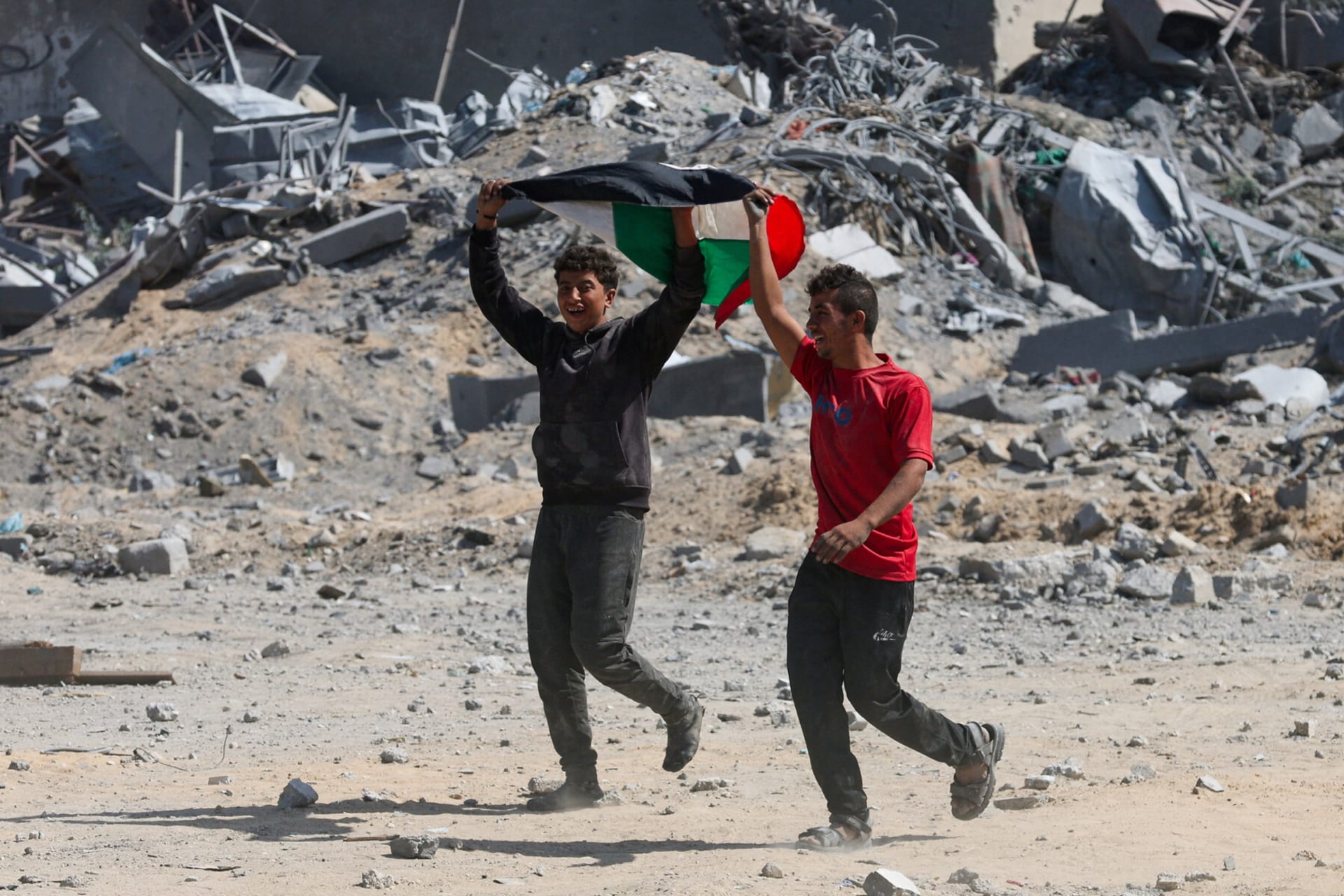
After the truce, many Palestinians returned to Gaza City after an Israeli military spokesperson declared it safe. Hamas reportedly began mobilizing thousands of security forces to reassert control over areas of Gaza recently vacated by Israeli troops and faced accusations of attacking and killing Israeli soldiers.
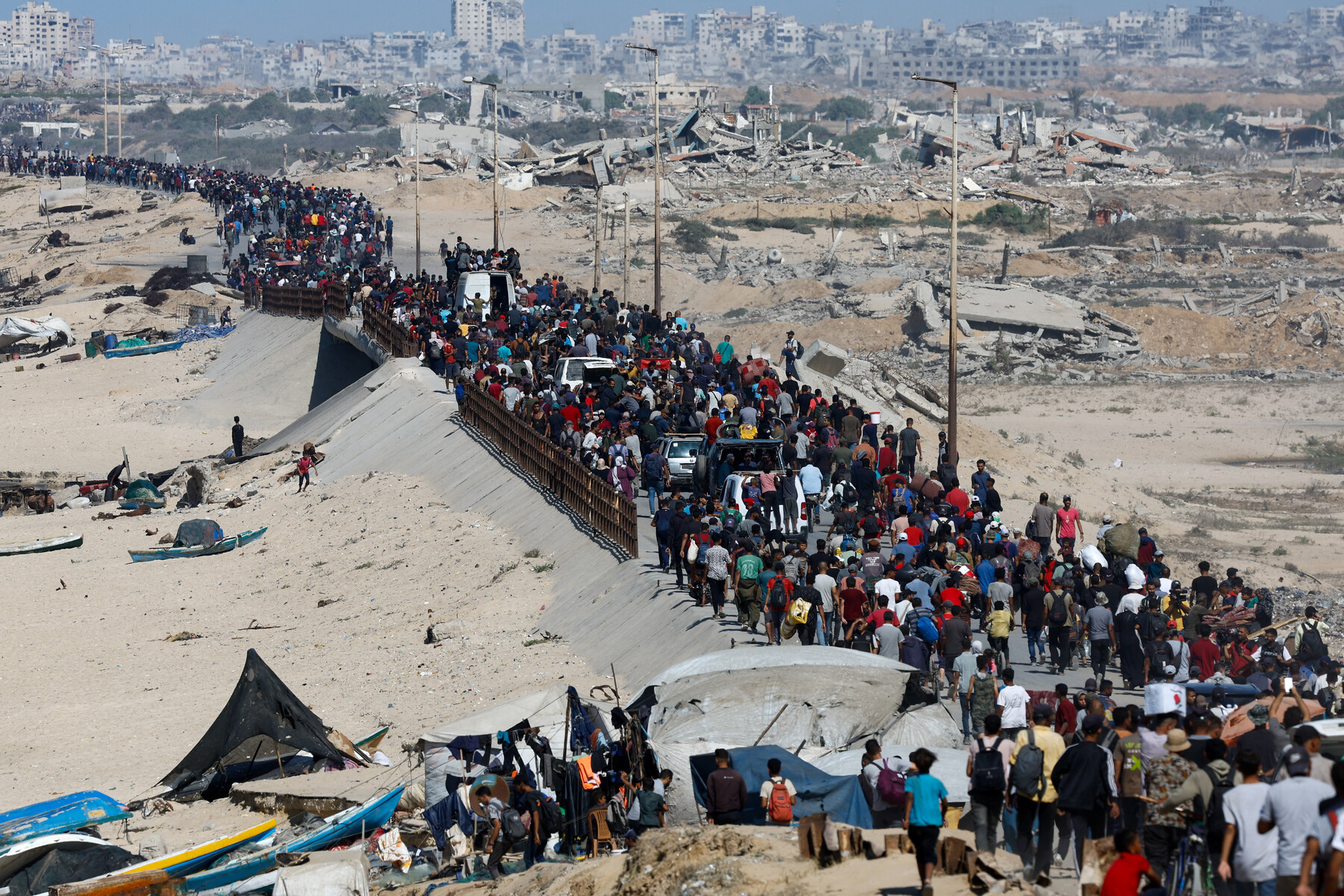
Meanwhile, Israel reportedly adopted a hardline approach to guarding the withdrawal line at the direction of Israeli Defense Minister Israel Katz after two IDF soldiers were killed in Rafah on October 19. There were multiple reports of Israel’s military striking “near or east” of the withdrawal line that have led to casualties, according to the UN Office for the Coordination of Humanitarian Affairs.
A military drawdown. In the first phase of the ceasefire, the IDF agreed to withdraw their troops up to a so-called yellow line that leaves it in control of 53 percent of the enclave, with very few Gazans living in that zone. The White House released a map of the Gaza Strip that showed the first of three stages of Israel’s withdrawal.
Future stages indicated withdrawals to around 40 percent and 15 percent of Gaza’s territory. The final stage keeps a security perimeter around the enclave until it is “secure” from any “resurgent terror threat.” Some reports using satellite imagery show that the blocks laid out to demarcate the line have actually been moving deeper into the enclave, rather than further back. (The IDF has rejected this claim.)
A hostage and prisoner release. Hamas agreed to return the last hostages it had taken in October 2023 within seventy-two hours of the IDF withdrawal. In exchange, Israel agreed to release 250 Palestinian prisoners serving life sentences, 1,700 other Gazan detainees, and the bodies of 15 Palestinians for each deceased hostage it received. Several high-profile political figures at the top of Hamas’s release list were not included in the swap.
The twenty living hostages were released back to Israel on an October 13 deadline, and the remains of twenty-five hostages were also returned. Hamas missed the deadline to return the last of the deceased hostages, which had been a point of contention for Israel. The Israeli military also accused Hamas of falsifying some remains, which the International Committee of the Red Cross condemned. By January 26, Israel confirmed that all hostages and hostage remains have been returned to Israel.
Troop deployment. Israeli troops remain stationed at the Rafah border crossing with Egypt after reopening it in February 2026. The United States also sent two hundred troops to Israel in late 2025 to monitor the ceasefire and help with aid delivery, as well as determine next steps in governance and security inside Gaza. No U.S. troops will be deployed directly inside Gaza, officials have said. The European Union said in October that it was ready to deploy a long-standing humanitarian mission at the Rafah crossing “as soon as conditions allow.” As of Rafah’s February reopening, a European monitoring group is stationed at the corridor to facilitate the movement of residents into Gaza.
During U.S. Vice President JD Vance’s late October visit to Israel, the United States unveiled a Civil-Military Coordination Center, where the two hundred troops operate. The center monitors the ceasefire and facilitates “the flow of humanitarian, logistical, and security assistance” by international partners into Gaza, the U.S. military said in a statement.
Aid delivery increases. The plan said that “full aid” would be sent to Gaza “without interference,” which Trump later specified meant six hundred aid trucks per day. This was to include, per the UN Security Council resolution, “rehabilitation of infrastructure (water, electricity, sewage), rehabilitation of hospitals and bakeries, and entry of necessary equipment to remove rubble and open roads.” Israel opened the Zikim border crossing for aid flow into northern Gaza in November, a channel that had been closed for months.
The UN-backed global hunger monitor has previously said there is an “entirely man-made” famine in Gaza and emphasized the need for the resurgence of aid, with more than three-quarters of the population still struggling with acute food insecurity. Israel claims that Hamas has undermined aid efforts and has forcefully denied the famine determination, which it said is based on Hamas data and a manipulated process.
Austin Steinhart, Will Merrow, and Christina Bouri created the graphics for this article.