Trump Declares ‘Armed Conflict’ Against Cartels
By experts and staff
- Published
- CFR Editors
Welcome to the Daily News Brief, CFR’s flagship morning newsletter summarizing the top global news and analysis of the day.
Subscribe to the Daily News Brief to receive it every weekday morning.
Top of the Agenda
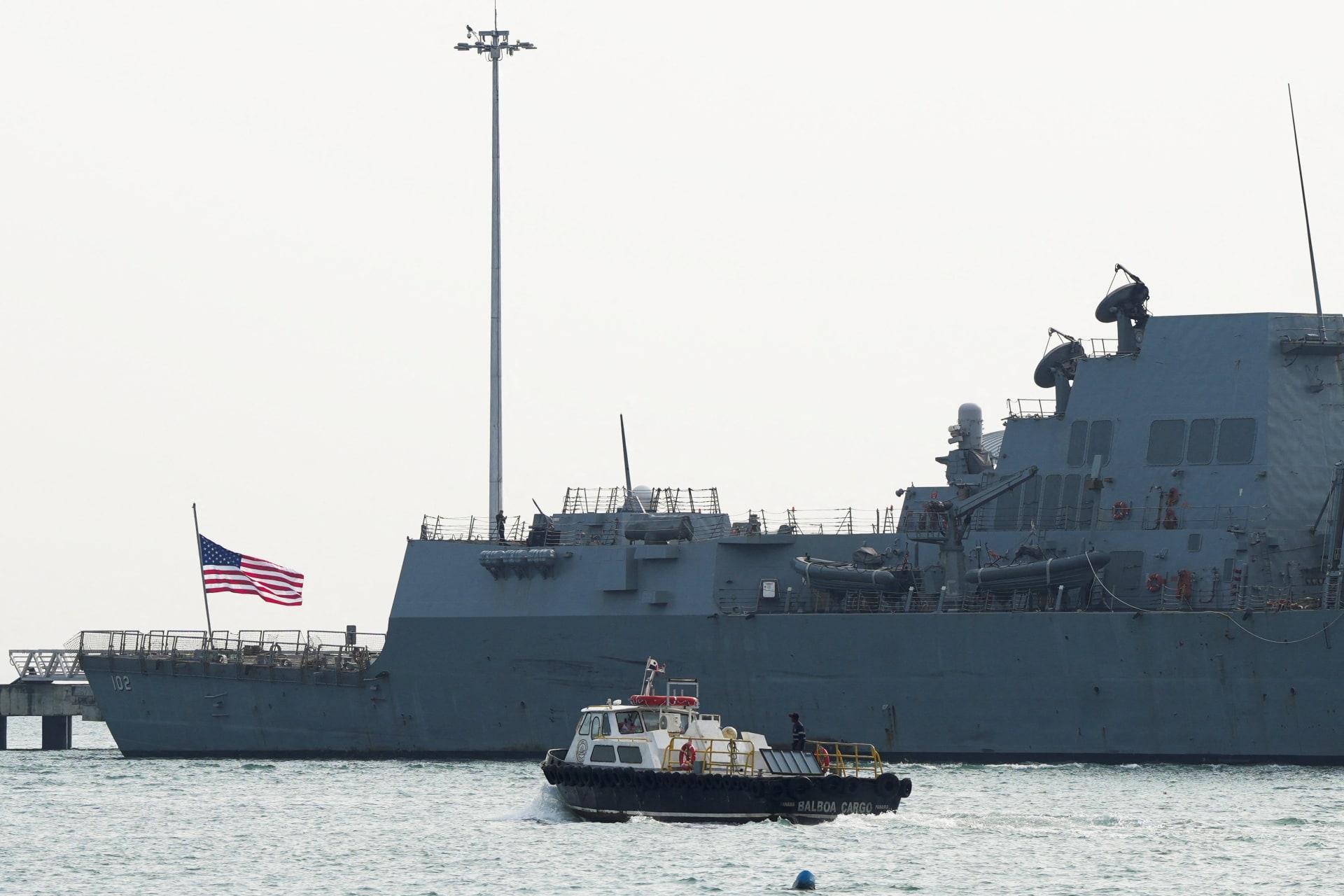
In a confidential memo to Congress this week, Trump declared that the United States is in an “armed conflict” with drug cartels and will treat their members as “unlawful combatants,” multiple news outlets reported. It marks a sweeping assertion of war powers without prior Congressional approval. Lawmakers from both parties had called for the Pentagon to provide legal justification for its recent deadly strikes on boats near Venezuela during a closed-door meeting Wednesday. The White House claimed without providing evidence that the boats carried drug traffickers.
The details. Under international law, countries in an armed conflict can kill enemy fighters and detain them without trial—a major step beyond the legal framework on drug trafficking, which typically allows suspects to argue their case in court. The Trump administration had already moved beyond the framework for drug trafficking by designating some Latin American drug groups as terrorist organizations, and this week’s memo referred back to those designations. But it did not specify the names of the cartels party to its newly declared armed conflict, and neither did Pentagon officials who briefed lawmakers this week. The memo also did not disclose the standards the U.S. government would use to decide whether someone is sufficiently connected to a cartel to warrant targeting.
The context. Trump’s legal argument echoes the argument the Bush administration made when declaring war against al-Qaeda after the September 11, 2001 terrorist attacks. However, Congress debated and authorized military force in that case, and legal experts have highlighted differences between the threat posed by al-Qaeda compared to that of drug smuggling organizations. Venezuelan officials have decried the U.S. military buildup and strikes off its coast, calling them disproportionate and accusing Washington of pushing regime change.
“We see a presidential administration really inflating, in a very dramatic way, its power to use military force. And that’s why, I think, at a bare minimum, we’re deserving of a very clear explanation, not only of the bases for some of these actions—the legal bases—but also what are the limits to this sort of expansive theory of national security emergency or even war.” —CFR expert Matthew Waxman, The President’s Inbox
Across the Globe
Western pressure on Russia. The United States will provide Ukraine with intelligence to carry out long-range missile strikes on energy targets inside Russia, unnamed sources told multiple news outlets. Ukraine did not comment on the development. Separately, French authorities detained the captain of a ship they accused of being part of Russia’s “shadow fleet” to evade Western sanctions on Russian oil. French President Emmanuel Macron described the measure yesterday as a bid to increase pressure on Moscow.
China-India flights. Direct flights between the countries will resume by the end of this month following a five-year hiatus, India’s foreign ministry said. The flights were paused during the COVID-19 pandemic and never resumed as a result of ongoing border tensions. Yet China-India relations have warmed in recent months, and an Indian airline announced daily flights to China starting October 26.
Drone at Munich airport. A drone sighting grounded flights at Munich’s airport overnight, the latest in a string of unexplained drone incidents in European countries. Many countries remain on high alert following alleged Russian airspace violations in Estonia, Poland, and Romania last month. While the Kremlin has denied airspace violations, a Russian foreign ministry spokesperson said yesterday that Russia was not in a “cold war” with the West, but rather one of “fire.”
Drones in Haiti. Government drone strikes in a campaign against suspected gang members in Haiti have killed at least 559 people, including 11 children, the UN human rights chief said Thursday. Addressing the Human Rights Council (HRC) in Geneva, he said that most of the strikes were “likely unlawful under international human rights law.” Haiti’s envoy to the HRC did not mention the drone strikes when addressing the body.
Myanmar’s military advance. The military said it has regained control of Kyaukme, a district capital seized by rebels last year. Rebel fighters did not immediately contest the claim and their offensives in the region have slowed after multiple China-brokered truces earlier this year. Meanwhile, the military has accelerated its efforts to regain rebel-controlled areas ahead of the country’s planned December 28 elections.
Morocco’s protests. Youth-led anti-government protests calling for better education and healthcare continued for a sixth consecutive night yesterday, despite news that police had killed three protesters the day before. Some activists called for the resignation of Prime Minister Aziz Akhannouch, who urged dialogue yesterday to address protester demands. Youth-led demonstrations have also upended politics in Nepal and Madagascar in recent weeks.
Brazil-China investment fund. The two countries will create a $1 billion investment fund to support clean energy, infrastructure, and artificial intelligence projects in Brazil, the country’s development bank said. The bank will contribute $400 million to the fund while the Export-Import Bank of China will contribute $600 million. A Brazilian official called it the first such bilateral fund between Brazilian and Chinese institutions.
Update to EU-Morocco deal. The European Union (EU) and Morocco agreed to update their trade agreement to include special labels for products that come from the breakaway Western Sahara region. The move follows a 2024 European Court of Justice ruling that Brussels violated the self-determination rights of people in the Western Sahara because its trade deal with Morocco did not originally include such labels or a consultation process.
What’s Next
Today, parliamentary elections begin in the Czech Republic.
Tomorrow, Japan’s ruling Liberal Democratic Party holds a leadership election.
Tomorrow, Georgia holds local elections.
- Sunday, Syria holds parliamentary elections.