The U.S. Trade Case on Brazil: Expediency Over Principles
Recent U.S. pressure on Brazil is a reminder that countries should reserve their legal right to retaliate to avoid being complicit in undermining the rule-based trading system.
By experts and staff
- Published
- James Wallar
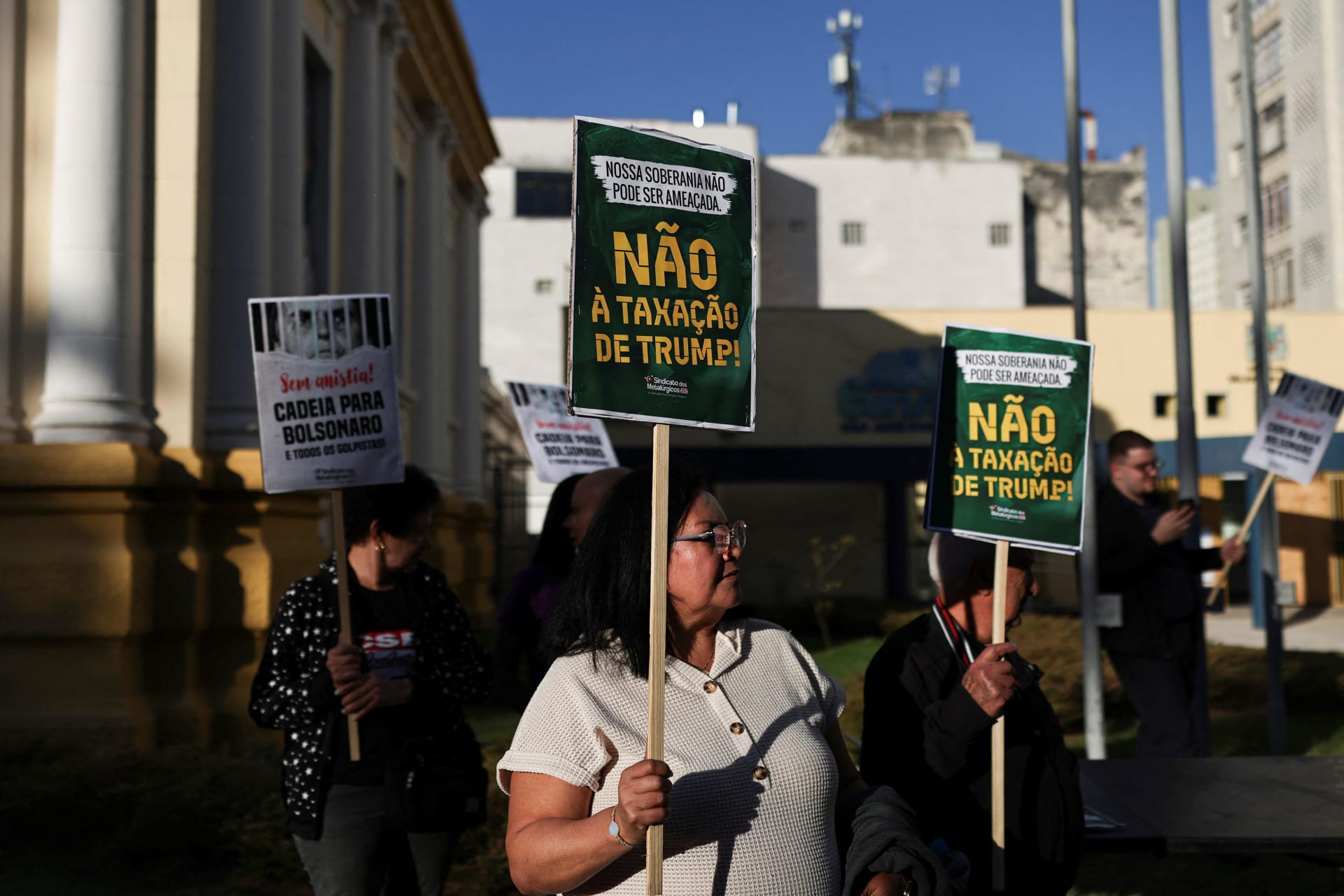
The Trump administration’s assault on Brazil provides the most detailed anatomy of the White House’s tactics in its trade actions since Liberation Day on April 2. To gain leverage, the administration has framed Brazil’s actions (in this case, the trial of former Brazilian President Jair Bolsonaro and liability laws regarding social media posts) as a threat to national security and a violation of fair-trade practices. In doing so, the White House has ignored international rules and trade agreements enshrined in U.S. law.
In the case of Brazil, the Trump administration has also challenged the sovereignty of that country’s Supreme Court and central bank. Moreover, among the alleged Brazilian unfair trade measures are practices consistent with President Donald Trump’s own philosophy, such as reducing the enforcement of anticorruption and environmental protection laws. Respect for sovereignty and rule of law has been replaced by expediency and dominance. Those tactics suggest that even countries that have negotiated a framework agreement, such as the United Kingdom and Vietnam, are likely to face the threat of more, and higher, tariffs.
Critics could argue that countries that have made a deal with Trump (regardless of how enduring those deals prove) are complicit in undermining the international market and rules-based trade system. But countries can, and should, opt to reserve their rights under Article XXIII of the World Trade Organization, which allows countermeasures (i.e., retaliation) when a member, in this case the United States, does not abide by its obligations. Such a reservation could seem minor in the current atmosphere, but the gesture would signal those countries’ continued commitment to the rules-based system. It could also be useful in the future should the next administration retain Trump’s tariffs.
Trump’s Case Against Brazil
The Trump administration began its pressure campaign on Brazil in earnest last month. On July 9, President Trump sent a letter to Brazilian President Luiz Inacio Lula da Silva (Lula) that condemned Bolsonaro’s ongoing trial as well as censorship on Brazilian social media, and threatened tariffs in response. Then, on July 18, the U.S. Trade Representative (USTR) released a Federal Register notice of a Section 301 investigation of alleged unfair trade practices in Brazil. Trump then issued an executive order (EO) on July 30. Taken together, they provide details of the administration’s tactics to gain leverage.
Notably, the letter and EO complained about the Brazilian Supreme Court’s trial of Bolsonaro for attempting a coup after losing the 2022 presidential election. Such a domestic legal procedure is fundamental to national sovereignty and has nothing to do with international trade; notably, USTR did not include this charge in its Section 301 investigation.
In the letter and EO, President Trump complained that U.S. social media firms were disadvantaged by the Brazilian court’s ruling that, in certain situations, those companies could be liable for posts from third parties that are contrary to Brazilian law. The EO argued such postings enjoy freedom of speech protections under the First Amendment. Brazil’s attorney general made the obvious point that “all companies, domestic and foreign, operating in Brazil are subject to our laws, just as Brazilian companies comply with U.S. regulations when operating in the United States.”
The matter was supercharged by Bolsonaro’s son, Eduardo Bolsonaro, who has lobbied the Trump administration to pressure Brazil and, in particular, Brazilian Supreme Court Judge Alexandre de Moraes, who issued the social media decision. Trump Media and Rumble are now suing Moraes. Why Brazilian and American consumers and businesses should pay to settle this feud is unclear.
National Security as a Bargaining Chip
The EO regards the trial and social media ruling as threats to U.S. national security that justify a 50 percent tariff on Brazil (an additional 40 percent on top of the current 10 percent) under the International Economic Emergency Powers Act. However, in this so-called emergency, 43 percent of the value of imports are excluded from the tariff increase. Moreover, it is unclear how a Brazilian court enforcing domestic law on a Brazilian national is a threat to U.S. national security. This provides another example of the Trump administration’s expansive interpretation of the International Economic Emergency Powers Act (IEEPA) that could be used in the pending U.S. Court of Appeals case challenging the use of that statute to impose tariffs. The U.S. assistant attorney has admitted to the court that invocation of IEEPA is a “bargaining chip.”
The July 30 EO shifted away from the July 9 letter’s assertion that Brazil’s tariffs and nontariff barriers have cause unsustainable trade deficits that pose a threat to national security—the justification used to announce reciprocal tariffs on countries listed on Liberation Day. In fact, Brazil was not on the Liberation Day list, as the United States has run a trade surplus in goods with it since 2008.
New Charges in USTR’s Section 301 Investigation Are Not Credible
USTR’s 301 case, meanwhile, lists eight issues, only three of which (transfer of personal data outside Brazil, protection on intellectual property rights, and tariffs on ethanol) were cited in its National Trade Estimate report published four months earlier. The five new issues are
- the Brazilian Supreme Court ruling on social media;
- advantages provided to the government-developed electronic payment service Pix, a central bank digital currency that is faster, cheaper, and more secure than credit cards, bank accounts, and private cryptocurrencies. Pix is used by two-thirds of the population, and many countries are exploring similar currencies;
- unfair preferential tariffs given to Mexico and India. Hypocritically, the United States also gives preferential tariff rates to developing countries and trade partners. Brazil is a party to the Global System of Trade Preferences Among Developing Countries dating from 1988 that includes India and Mexico, and has a separate Regional Trade Agreement with Mexico;
- the lack of enforcement of anticorruption measures that could disadvantage U.S. companies. Ironically, Trump’s February 10 executive order called for a 180-day pause in the enforcement of the U.S. Foreign Corrupt Practices Act because its “…enforcement against American citizens and businesses … actively harms American economic competitiveness”; and
- the “lack of effective enforcement of [Brazil’s] environmental laws and regulations,” which results in timber, livestock, and produce unfairly competing with U.S. goods. In contrast to the Bolsonaro administration, Lula’s government has sought to toughen enforcement of environmental protections. USTR’s case is hurt by the Trump administration’s lax enforcement of U.S. environmental laws and exemption of tropical wood and wood pulp from the new 50 percent tariff. The administration already has the authority to ensure that illegally logged timber is not imported into the United States under the Lacey Act.
Those charges of unfair trade practice clearly lack credibility. The strategy appears to be twofold: (1) to maintain tension with trading partners so they acquiesce to some of the Trump administration’s demands, opting for what appears to be a less harmful outcome, and (2) to keep the public enthralled with the tariff show and demonstrate the administration’s dominance of U.S. trading partners.
Going along and giving up only encourages more of the same. Twelve Section 232 investigations, nine of which are still underway, are likely to result in sector-specific duties, such as those in place on aluminum, copper, and steel. Countries that value a market-oriented rules-based system may want to work together to counter U.S. bullying. This seems to be behind the EU’s structured cooperation with members of the Comprehensive and Progressive Agreement for Trans-Pacific Partnership. While the United States opts for expediency and dominance, others could prefer principles and mutual respect; over time, those principles have proven their worth.