Violence Is a Growing Threat to Press Freedom Worldwide
Violence against the press is a rising trend worldwide—whether in the line of fire in fierce conflicts, or on the front lines of covering repressive regimes.
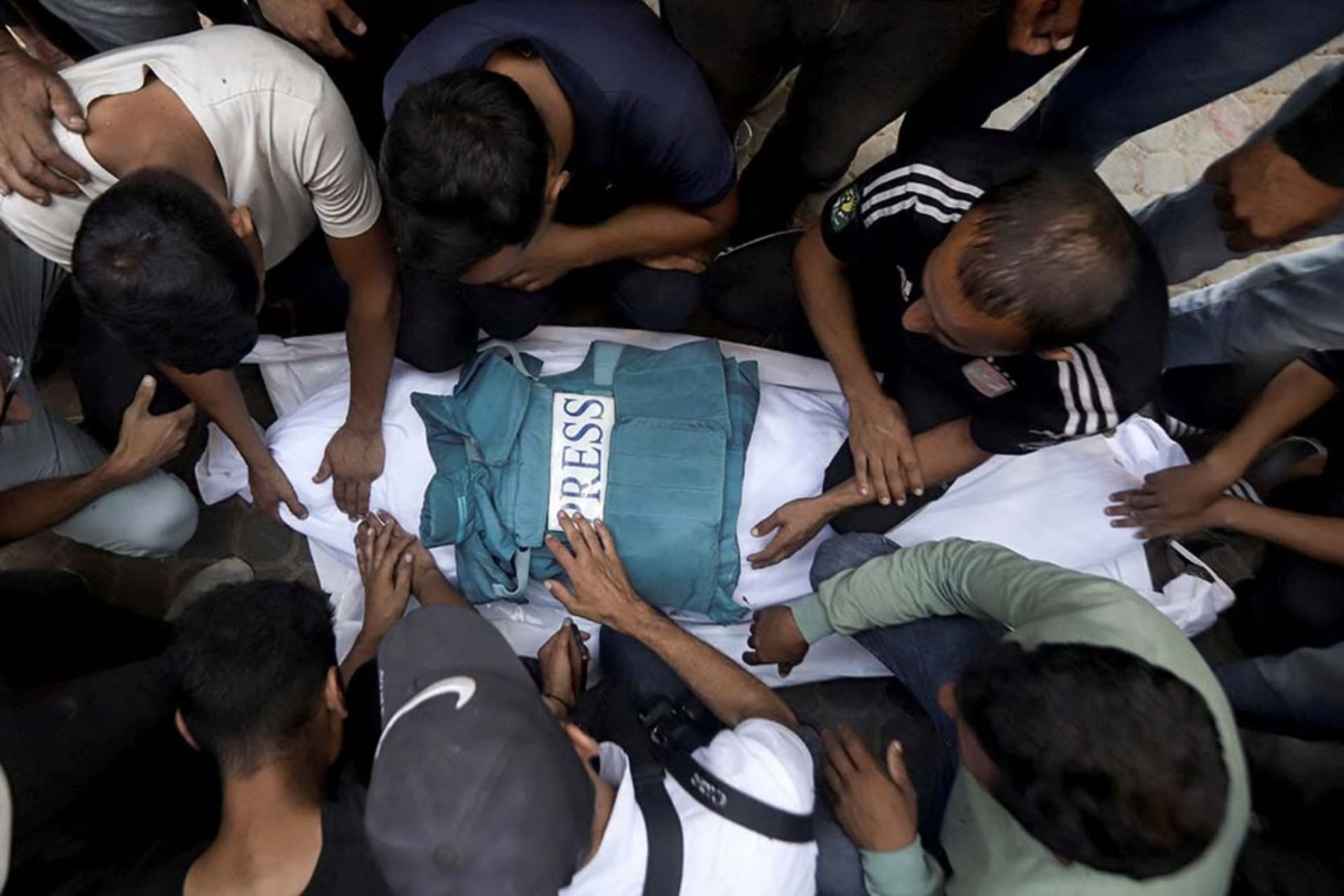
Every four days, a journalist somewhere in the world is killed in connection to their work, according to the United Nations—and that trend is rising, despite it being a breach of international law. There have been at least 72 media worker fatalities this year so far, and a total of 125 in 2024.
The growing number of killings “follows a pattern in which journalism, more generally, is being targeted by those in power through a variety of means to stifle independent reporting,” Jodie Ginsberg, CEO of the Committee to Protect Journalists (CPJ), told CFR. There has been a sharp rise in the number of journalists imprisoned or assaulted while on the job, too.
Ginsberg stressed that it is not just authoritarian regimes that are seeing this growth. “That’s also happening in supposed democracies—and that’s a trend we’ve been watching for several years.”
It’s not a new problem, CFR Press Fellow Alan Cullison, a former Wall Street Journal correspondent in Afghanistan and Ukraine, echoed. Journalist violence is a “timeless issue,” he said. The recent rise in press violence largely stems from an overreliance on freelancers without the backing of major outlets in dangerous reporting environments, and “the declining belief that journalists are objective non-combatants.”
While violence against journalists is a global issue, problem areas often emerge in more localized conflict zones. CFR explores the deadliest areas for journalists of late, according to watchdog data.
Gaza Strip
Since Hamas’s October 7, 2023, attack on Israel precipitated the ongoing conflict, a high percentage of recorded violence against journalists has been concentrated in the Gaza Strip. CPJ reported in February that Israel was responsible for 70 percent of reported journalist killings worldwide last year, and estimated that 203 have been killed in the territory since the outbreak of the war. Of them, 189 were Palestinian. Gaza’s Hamas-run government media office puts the total even higher, at 238. Meanwhile, Israel’s military has repeatedly denied intentionally targeting members of the press.
Foreign reporters are not allowed to enter Gaza, so local journalists are the only ones in the enclave able to cover the fallout from the conflict. Both CPJ and Reporters Without Borders (RSF) have characterized some of Israel’s attacks as directly targeting journalists, such as an August 10 strike that killed five Al Jazeera media workers in Gaza City. Israel claimed responsibility for the attack, saying it had deliberately targeted the reporters because they had a “terrorist affiliation” with Hamas. Israel provided no evidence to support the allegation.
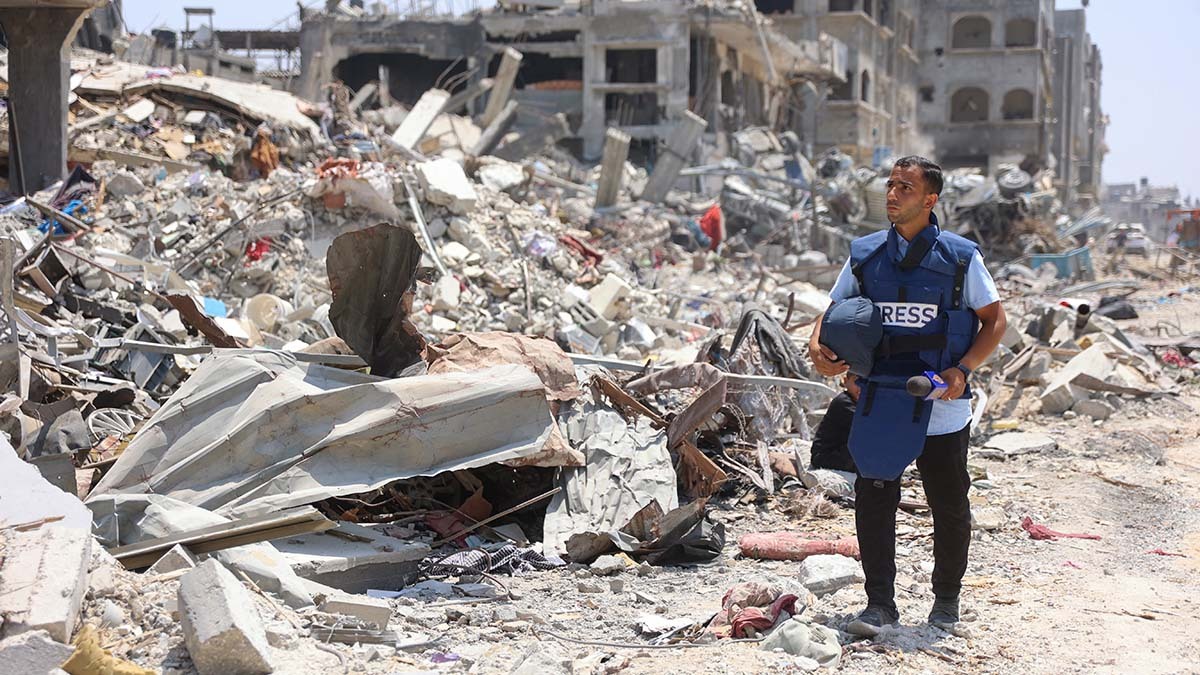
“We’ve received a lot of messages from journalists in Gaza who are terrified of being the next one targeted,” Martin Roux, the head of the crisis desk at RSF, said.
News outlets are also verbalizing their concerns. Al Jazeera said it “condemns, in the strongest possible terms” the “horrific crime[s]” against its own journalists, including the five killed in the August Gaza City tent strike and another five killed a week later in a “double-tap” strike on Gaza’s largest remaining hospital. The Associated Press and Reuters also denounced the hospital strike, noting that the location was protected under international law and calling on the Israeli government to explain the journalists’ deaths.
Agence France-Presse (AFP) raised alarm that its journalists faced possible starvation in Gaza by mid-2025, after global monitors declared famine in the area. “Since AFP was founded in 1944... none of us can ever remember seeing colleagues die of hunger,” the outlet’s union said.
Sudan
Sudan was tied as the second-highest country for journalist deaths in 2024, CPJ reported. The country has become a dangerous conflict zone since civil war erupted in April 2023 between government forces and a rebel group, resulting in famine and mass displacement.
At least 90 percent of Sudan’s media ecosystem has been completely destroyed. The Sudanese Journalists Syndicate has tallied more than 550 violations against media workers and more than 30 deaths since the war’s outbreak (CPJ puts that tally at 9 deaths). The premises of some media outlets have been ransacked and many journalists fled the country when the war broke out, Roux said.
“There are certain areas in Sudan that are just not covered by reporters,” he added, both because few journalists remain and because the war is generally undercovered, especially by Western outlets.
Pakistan
Pakistan climbed to six journalist deaths last year amid a spike in political unrest over economic woes, disputed elections, and media censorship after Punjab province enacted a harsh defamation law. RSF ranks Pakistan as one of the most dangerous countries in the world for journalists, with multiple murders every year—often linked to corruption. Pakistan’s government, using mass surveillance that often leads to detentions and enforced disappearances, appears to be “prepared to silence any critic once and for all,” RSF wrote.
Mexico
Mexico has consistently had one of the worst records on disappeared journalists dating back to at least the nineties, due in part to corruption by public officials and threats from organized crime groups. Deaths recorded by CPJ rose from two in 2023 to five in 2024, ending a period of relative quiet among gangs and political groups ahead of the country’s June 2024 election.
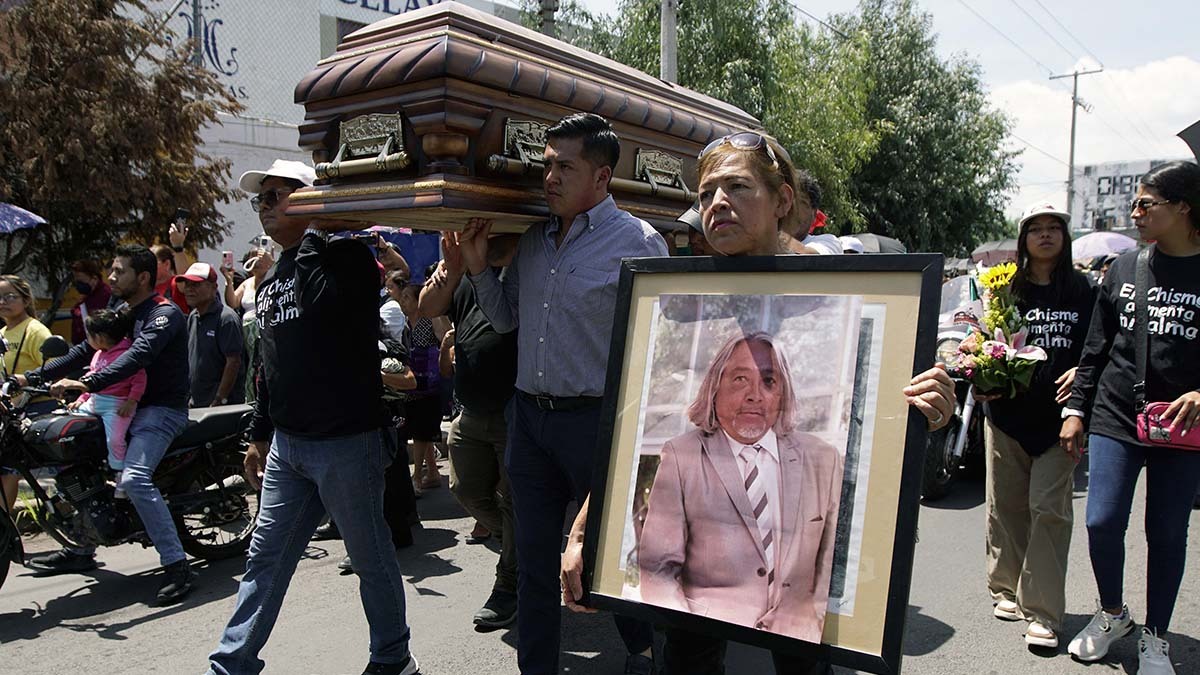
All of these cases were linked to the journalists’ reporting on corruption, crime scenes, environmental issues, and public complaints, among other things, Roux said. Ginsburg agreed, adding that Mexico had “a high degree of collusion between people in positions of power and criminal enterprises.”
However, Latin America’s overall press violence rates are rising at an alarming pace, with RSF reporting that journalist deaths in the region in 2025 have already surpassed last year’s total.
Ukraine
At least sixteen reporters have been killed since the outbreak of the Russia-Ukraine war in 2022. RSF has tallied nearly 150 attacks on Ukrainian press by Russia, and Roux said he’s spoken with several Ukrainian journalists who have been targeted by Russian forces.
CFR’s Cullison said his own experience covering conflict from inside Russia was rife with fears of kidnapping. Russia is a notoriously hostile environment for independent and foreign journalists—with many now banned or labeled as “foreign agents”—often leading to arbitrary detentions, and sometimes, even torture. The Russians have become “increasingly malevolent” toward reporters, Cullison told CFR, drawing on his own experience in the region covering the Second Chechen War and now Ukraine as a war journalist.
In recent years, as geopolitical tensions have further isolated Russia on the world stage, the country has become more and more unfriendly to reporters. At the time of writing, RSF has documented forty-eight media workers currently being detained in Russia.
Syria
Syria notched four journalist deaths in 2024, CPJ reported, and currently ranks 177 out of 180 on RSF’s Press Freedom Index. The transitional government installed after the ousting of longtime dictator Bashar al-Assad brought some months of calm, but has since faced renewed instability after a spate of violence broke out in the Sweida region in July. Israeli air strikes in Damascus that month, too, severely damaged a local media office and killed and wounded several journalists. The country still remains a volatile place for women reporters especially, due to rampant sexism and gender role expectations creating higher security risks, according to RSF and accounts from women journalists in Syria.
A Growing Trend—Even in the United States
Even in places once considered bastions of press freedom, threats to journalists are growing. Over the past decade, for example, violence against journalists in the United States has gone up, as political rhetoric has increasingly vilified the press since the 2016 election cycle, CPJ said. In Los Angeles, during demonstrations over federal raids in June–July of this year, RSF recorded at least seventy attacks on reporters by police. The majority of U.S. press attacks in 2025 occurred over the summer at protests across the country over the Donald Trump administration’s hardline immigration and deportation schemes. These predominantly unfolded in California, but also in states like Georgia, Minnesota, Oregon, and Texas.
As the Trump administration pulls federal funding from state-supported outlets, it sends a signal of eroding support that could become more dangerous, watchdogs say. “Politicians’ open disdain for the media has trickled down to the public,” RSF wrote. The U.S. Press Freedom Tracker has already counted 27 arrests or criminal charges and 104 instances of assault on the press so far this year.
The mounting threats make journalists’ work even more crucial. “It’s very important for us to continue to elevate and champion fact-based reporting and the value of fact-based reporting to all of us as a public good,” Ginsburg said. Especially given that “where attacks on journalists begin, further restrictions on other freedoms and liberties are sure to follow.”
Austin Steinhart contributed to the graphics for this article.