The Iran War’s Hidden Front: Food, Water, and Fertilizer
While world energy markets are in upheaval over the halt in fossil fuel shipping through the Strait of Hormuz, there is also a brewing crisis over a sharp cutback in food supplies that normally transit the Gulf.

Michael Werz is a senior fellow at the Council on Foreign Relations. His work focuses on the nexus of food security, climate change, migration, and emerging countries.
The consequences of the Iran conflict, which are already being felt in the region, will reverberate globally as an exacerbated food crisis swells. The normally bustling Gulf is not only a regular channel for crude oil but for food and crucial agriculture fertilizers as well. But with the war at risk of expanding and the Strait of Hormuz shuttered, the effect on these states and the role they are unable to play in global food markets will prove significant.
The countries in the region—which boast over 60 million people—are particularly exposed to food shocks. They are almost entirely import-dependent when it comes to rice (77 percent), corn (89 percent), soybeans (95 percent) and vegetable oils (91 percent), according to Institute for Public Policy Research. Any disruption of supply chains will quickly have significant consequences. In Iran, food price inflation has risen 40 percent in the past year, prices for rice have increased sevenfold, green lentils and vegetable oil threefold. It is likely that new overland transport corridors will open, putting Russia, Turkey, and Syria in a position of strategic control over vital supplies. Saudi Arabia traditionally imports through its Red Sea ports which have been massively affected because of attacks by Iran-aligned Houthi rebels.
The Middle East, including the Gulf countries and Northern Africa have high wheat consumption (over 200 pounds per capita per year) and it is no coincidence that skyrocketing bread prices and food insecurity were contributing factors during the Arab Spring rebellions in 2011 and 2012. In Egypt, then the world’s largest wheat importer, the political situation became unmanageable when a once-in-a-century winter drought in China, a flash drought in Russia, a wet harvest season in Canada, dry conditions in Australia, and catastrophic flooding in Pakistan led to global wheat shortages. These external shocks intensified social, economic, environmental, and climatic changes that led to an erosion of the social contract between citizens and governments in Northern Africa and the Levant.
Food and water threats
This conflict takes place at a time when the global situation is already unstable with more than 670 million people (over 8 percent of the world’s population) suffering hunger and a number of crisis hotspots pushing large groups into starvation and Phase Five of the Integrated Food Security Phase Classification (IPC) scale. IPC is a tool for improving food security analysis and decision-making. Phase Five is its highest level and classified as “famine with solid evidence.” Currently this situation exists in:
- Sudan, due to the ongoing internal conflict and resulting mass displacement.
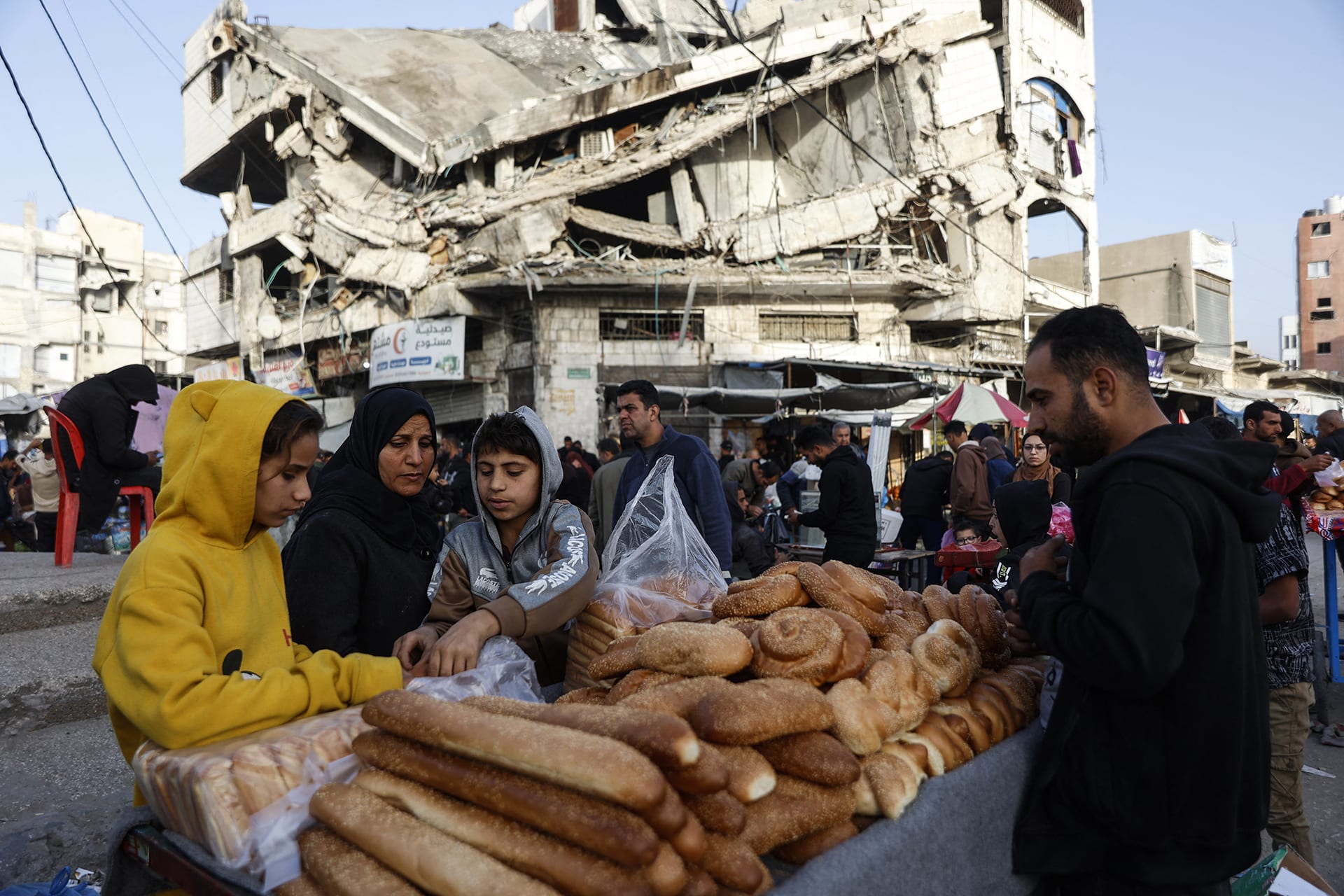
- The Gaza Strip, despite a partial resumption of humanitarian assistance since the ceasefire agreement following extreme aid access constraints.
- Yemen, due to escalating conflict, damage to infrastructure, and humanitarian aid constraints.
- South Sudan, due to extremely critical levels of food insecurity following the escalation of violence and armed conflict.
- Mali, due to critical levels of acute food insecurity which are likely to persist, driven by conflict that continues to disrupt livelihoods and markets.
Water is also of concern. The first Iranian attacks on desalination plants in Bahrain and strikes landing close to a massive complex with forty-three desalination plants in Saudia Arabia indicate yet another layer of strategic warfare. The entire Gulf region is extraordinarily dependent on desalination technology with four hundred plants in the GCC member states producing almost 40 percent of global desalinated water. In Kuwait, 90 percent of the drinking water depends on these plants, 86 percent in Oman, and 70 percent in Saudi Arabia. In total, 100 million people in the region rely on these water sources.
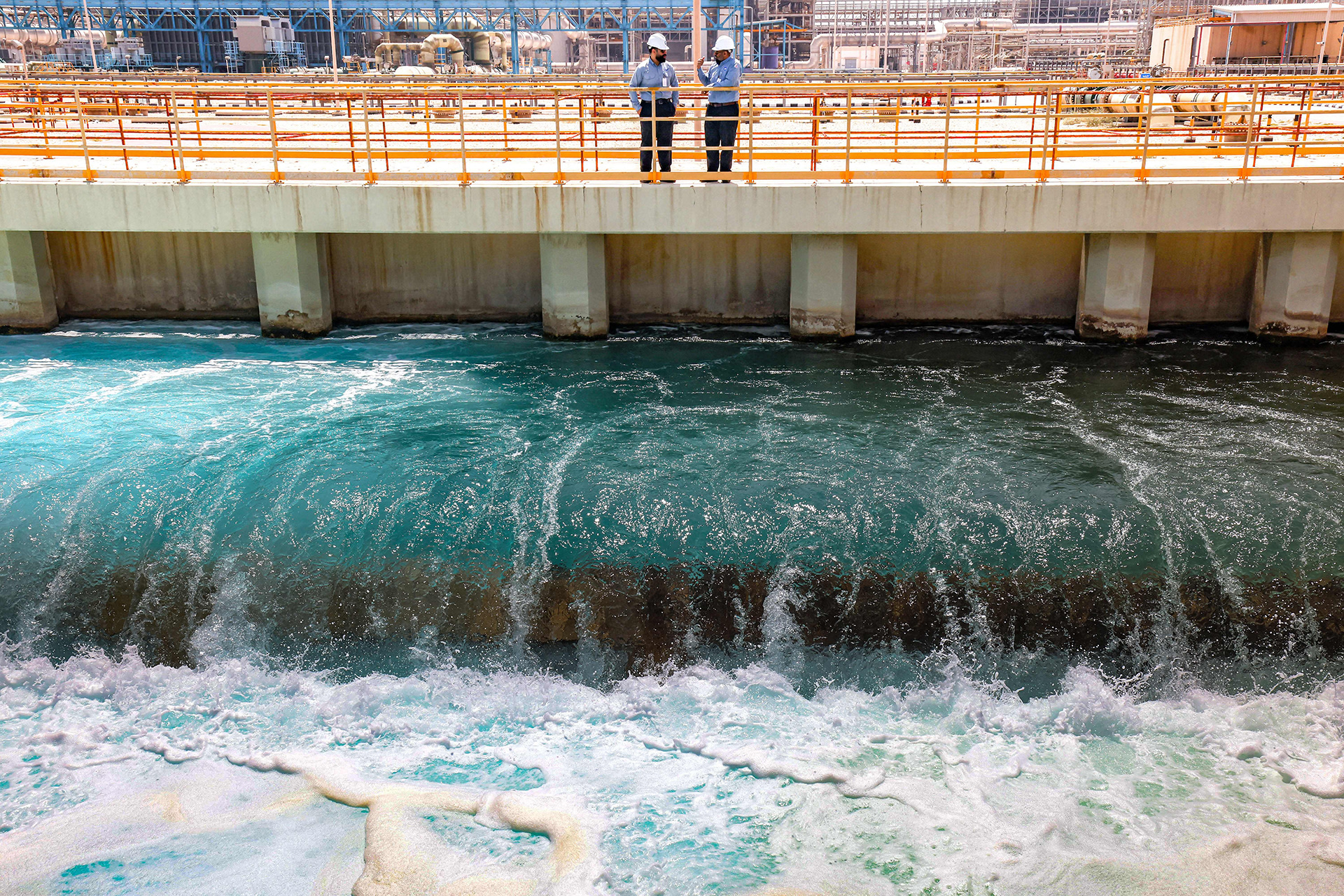
A leaked 2008 cable sent from the U.S. Embassy in Riyadh documented that one desalination plant supplied over 90 percent of Riyadh’s drinking water and stated that the city “would have to evacuate within a week” if the plant, its pipelines, or associated power infrastructure were seriously damaged or destroyed. Political leaders in the region understood back then that water was (and is) more important than oil to the national well-being. Today, Saudi Arabia is even more dependent on desalination plants. Energy-intensive technology provides almost three-quarters of its drinking water.
Fertilizer constraints create a food security ripple effect
Little discussed is the role the region has in global fertilizer exports. Fertilizer accounts for up to 25 percent of agricultural commodity production costs, and the war is putting one third of global fertilizer trade at risk of disruption. The shipment of natural gas has declined precipitously, which affects feedstock for nitrogenous-based fertilizers. Meanwhile, conflict-afflicted Bahrain, Oman, Qatar, and Saudi Arabia, are critical exporters of fertilizers like urea, diammonium phosphate (DAP), and anhydrous ammonia.
With shipping activity through the Strait of Hormuz affected, the effect on global fertilizer exports is enormous and will generate cascading effects. Countries across the world had already increasingly relied on the Gulf states to offset fertilizer losses from the war in Ukraine and growing Chinese export restrictions. But with about one quarter of global fertilizer production passing through the Strait of Hormuz, prices are already spiking. In the Middle East, the price for urea rose by 19 percent within a week, creating new fiscal challenges for agriculture sectors across the globe.
The current situation underlines the devastating dynamic unleashed in the early days of the Russian invasion in Ukraine. Transportation interruptions and trade restrictions affected already limited fertilizer supplies and increased cost by half, the blockade of Ukraine’s Black Sea ports cut off substantial grain exports and Ukrainian fertilizer. At the time, Russia produced 25 percent of the world’s raw materials for fertilizers, the export of which the Kremlin restricted immediately. A chain reaction followed: countries restricted or halted their food exports. Serbia stopped exporting wheat, corn, flour, and cooking oil. Argentina, India, Indonesia, and Turkey took similar measures. With nearly half of the world’s population depending on food produced with the help of fertilizers, rising food prices further complicated efforts to combat hunger in conflict-ridden and fragile states like Afghanistan and Haiti.
The effect Russia’s invasion had on fertilizer markets has been among the most consequential and lasting economic spillovers of the conflict—still felt now. It has restructured the global fertilizer trade, kept prices structurally elevated well above prewar levels, and exposed the extreme concentration risk in a market where a small number of geopolitically volatile nations hold outsized control over a critical input to global food production. The cost was most pronounced in vulnerable societies, with the conflict driving a total of 27.2 million more people into poverty and 22.3 million more into hunger in the two years following the invasion. As so often is the case, Sub-Saharan Africa was particularly exposed.
The systemic weaponization of food, water, and fertilizer
Prominent and well-documented case studies include confrontations in Gaza Sudan, Tigray, and Yemen. Together, they show that the food weaponization can take different forms—the manipulation of food aid, the use of food as a recruitment and retention tool, and the targeting of agricultural infrastructure. While some of these strategies to weaponize food have been used for centuries, a closer analysis of modern case studies reveals a new quality: Their global scope and use to further geopolitical goals. This requires a broader reassessment of how governments define national security, and which responses are needed to deter new types of security threats, including globalized food weaponization. The Iran conflict underlines how vulnerable food security is to the development of geopolitical crises.
The Ukraine invasion and the Iran war have secondary fiscal consequences that are significant as well. Donor countries, mostly Western ones, are scaling back Overseas Development Funding due to, at least in part, dramatic increases of defense spending. The first week of the war in Iran reportedly exceeded $11.3 billion, and some estimate that U.S. costs could remain as high as $1 billion per day. European Defense spending rose from $378 billion in 2020 to $693 billion in 2024, above the spending levels reached at the end of the Cold War. The UN secretary-general has warned that the dramatic rise in military spending “coincided with a marked deterioration… in progress toward the Sustainable Development Goals.” These goals cover a set of seventeen global objectives set by the United Nations in 2015 to address social, economic, and environmental issues by 2030.
Defense spending increases are crowding out resources that could otherwise go to development because “with limited resources… governments need to make trade-offs” between military spending, development and climate investments, and domestic priorities, according to a Stockholm International Peace Research Institute (SIPRI) analysis. Based on currently available data by SIPRI and donor budget reports, increased defense spending, the closure of the U.S. Agency for International Development and shrinking European development investments will result in a likely annual development finance loss between $21 billion and $32 billion until 2030.
In light of these non-traditional threats and new weaponization strategies, foreign policy, which has traditionally focused on advancing one nation’s interests, is now increasingly about solving national, regional, and global problems that affect everyone in myriad and often unpredictable ways.
This draws back to Iran, where the systematic weaponization of food, water, and fertilizer in a thirsty region makes this the first true twenty-first-century conflict that could unleash a slow-motion famine machine. Water and food aren’t humanitarian concerns at the periphery of the conflict but—given the thin margin of error when it comes to functioning water and food supply in the region—are rapidly becoming the conflict’s most consequential terrain. At scale, the war-driven fertilizer shock combined with climate-stressed growing seasons, depleted grain reserves, and debt-constrained governments should be considered a threat to the world at large. If left unaddressed, it has the potential to convert a regional military conflict into a global humanitarian crisis.
This work represents the views and opinions solely of the author. The Council on Foreign Relations is an independent, nonpartisan membership organization, think tank, and publisher, and takes no institutional positions on matters of policy.