A Super El Niño Looks Likely This Year. Here’s How to Limit the Worst of Its Deadly Heat
The rare climate pattern associated with prolonged periods of intense heat now requires ramped up planning by authorities at all levels to prevent deaths and avoid damage that can be severe. So far, government action has fallen far short.
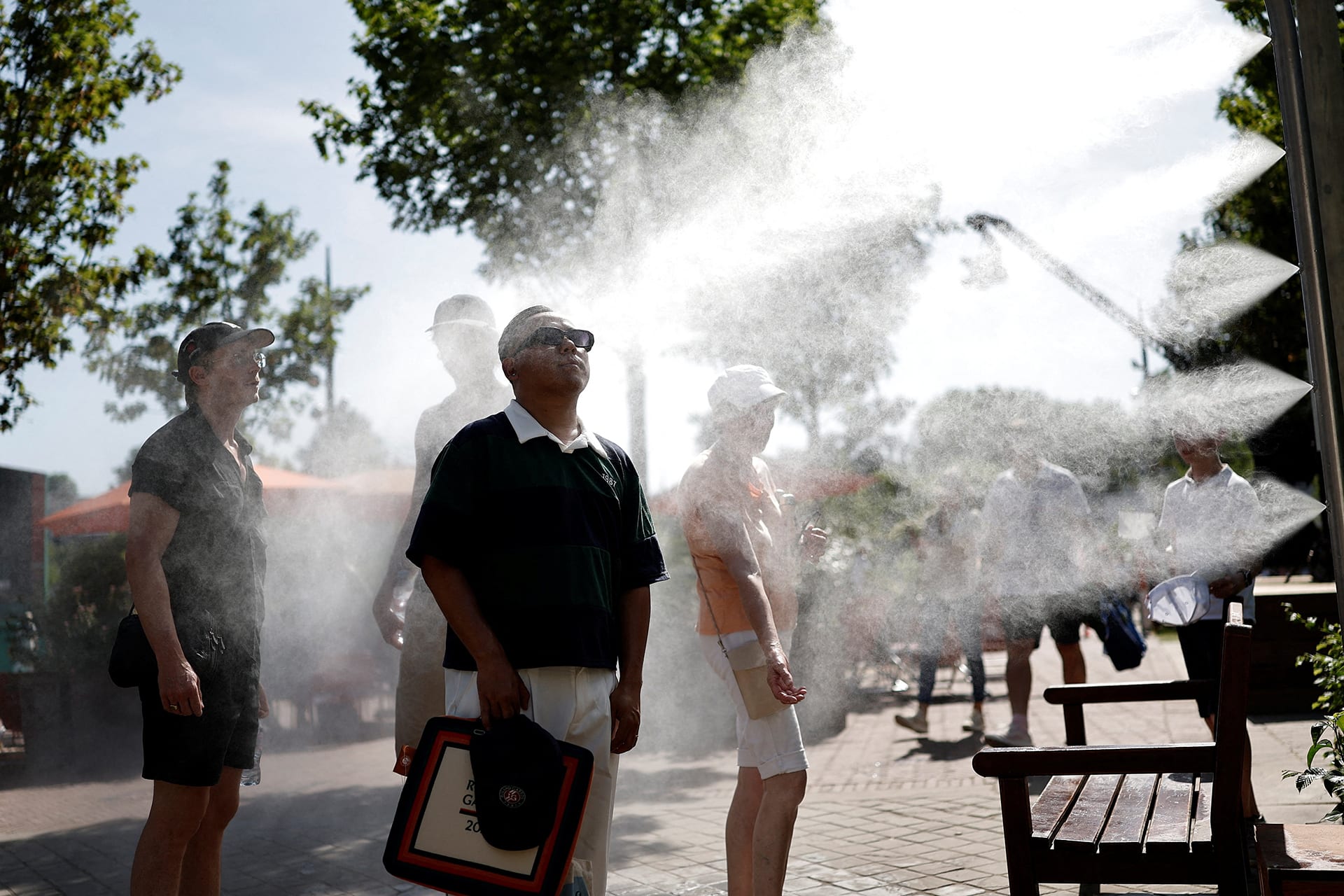
By experts and staff
- Published
 Alice C. HillCFR ExpertDavid M. Rubenstein Senior Fellow for Energy and the Environment
 Kathy Baughman McLeodChief Executive Officer of HERA
Alice C. Hill is an expert on the risks associated with climate change and a former senior director for resilience policy on the National Security Council. Kathy Baughman McLeod is chief executive officer of HERA, a global non-governmental organization dedicated to women-centered heat solutions.
The National Oceanic and Atmospheric Administration (NOAA) has confirmed that the climate pattern known as El Niño is already underway and will likely strengthen through the Northern Hemisphere winter. But what has meteorologists really concerned is the two-in-three chance that this pattern will grow very strong—into what is known as a “Super El Niño”—between November 2026 and January 2027. This pattern, combined with accelerating climate change, could inflict record-breaking temperatures, threatening the livelihoods and health of billions of people around the world. Governments and communities need to act quickly before the effects take hold.
El Niño is a naturally occurring climate pattern that historically lasts between nine and twelve months and forms about every two to seven years. It often contributes to some of the highest temperatures on record, as the most recent El Niño did in 2023–2024. A Super El Niño is rarer—with only a few on record—and more deadly. During these events sea surface temperatures in the equatorial Pacific rise by 2.0°C (3.6°F) or more above the historical average, bringing even higher temperatures. Once that heat is released into the atmosphere, it can amplify already elevated global temperatures driven by climate change. Although El Niño effects—including high heat, extreme rainfall, wildfires, and extended drought—vary across regions, forecasts project that nearly all parts of the globe will experience above normal temperatures during June, July, and August of this year.
This comes on the heels of the eleven hottest years on record, and at a time when food and energy systems around the world are already strained from the U.S.-Iran war and its resulting fuel and fertilizer shortages. Extreme heat is the deadliest climate hazard, killing more people than floods, fires, and hurricanes every year. Without significant adaptation, heat is expected to cost the global economy more than $2 trillion annually by 2030 through lost productivity.
It is already responsible for more than half a million deaths annually (this figure, now 545,000 annually, is generally accepted as very conservative due to a dearth of mortality data) and harms the health of hundreds of millions more. Studies have found that the economic damage from El Niño can run into the trillions, with a paper published in the journal Science in 2023 showing that the 1997–98 El Niño caused $5.7 trillion in global income losses, with consequences particularly severe in poorer tropical regions.
Turning Down the Temperature
Before the effects of an El Niño and possibly a Super El Niño ricochet across the globe, governments and communities should prioritize interventions that reduce heat exposure quickly. This is especially important for those already living and working in potentially dangerous conditions, such as workers exposed to extreme temperatures for an extended period or those in jobs that require strenuous labor such as construction and waste recycling. Many effective heat solutions—early warning systems, coordinated governance, worker protections, passive cooling, and community preparedness—are scalable and adaptable across both high- and low-income settings.
But these investments have to run in parallel with action governments can take immediately. As with other natural disasters, heat demands dedicated emergency funding. On the ground, that means opening cooling centers and hydration stations, alerting senior care facilities to take protective steps for residents, and ensuring hospitals have protocols to identify and treat heat illness.
These measures save lives in immediate need, but their effectiveness multiplies when paired with systems that anticipate dangerous heat before it arrives. One of the most effective tools is a Heat Early Warning System (HEWS). These allow governments to monitor and predict dangerous heat days, communicate specific risks, and trigger emergency measures such as public alerts, drinking water distribution, outreach to elderly residents, open cooling centers, and adjust work schedules. While proven to significantly lower mortality (after France’s deadly 2003 heatwave, the government introduced a HEWS that helped achieve 68 percent lower deaths than expected during a major heatwave three years later), their success depends on a combination of political will and expert guidance.
In California, after the state experienced one of its longest and most severe heatwaves in 2022, a commission of technical experts informed legislation that created CalHeatScore, the nation’s first statewide system to rank heat waves by severity and projected health effects, like hurricane categories. More than issuing blanket alerts, its ZIP-code-level data and heat mapping enable local governments to tailor public health campaigns, deploy resources more equitably, and inform preparations for major events, including the preparations for the 2026 World Cup matches played in California to help ensure the safety of fans, workers, and communities alike.
But alerts alone are not enough. Heat preparedness often fails because responsibility is fragmented across public health, labor, infrastructure, and emergency response systems. Several local efforts show that chief heat officers—or designated officials serving a similar role—can help bridge these silos, oversee heat action plans, and ensure that responses reflect the realities of the most vulnerable, including outdoor workers and those in the informal economy. In Freetown, Sierra Leone, for instance, heat governance has helped connect public education efforts, including SMS messaging to city residents during extreme heat events, with forward-looking resilience strategies such as shade infrastructure and urban cooling centers.
The U.S. Heat Burden
In the United States, heat response officers or offices have been established at the local level, including in Miami-Dade County, Los Angeles, and Phoenix, while Arizona became the first state to create a chief heat officer position. But the United States, like many other countries, has no requirement for a heat emergency declaration and no single agency with clear authority to coordinate a national heat response. Legislation pending in Congress, including the Coordinated Federal Response to Extreme Heat Act and Preventing HEAT Illness and Deaths Act, would formalize such a structure and establish mechanisms to improve federal coordination, but the bills have not advanced.
Until recently, the National Integrated Heat Health Information System (NIHHIS), an interagency effort created by NOAA and the Centers for Disease Control (CDC), served as the backbone for the scientific data and tools that help local communities plan for extreme heat. The 2024–2030 National Heat Strategy represented the nation’s first-ever federal framework for addressing the health, economic, and infrastructure risks of extreme heat. Under the Trump administration, this foundation is now eroding. Federal preparations for heat waves have faltered, with cuts proposed and enacted to NOAA’s research capacity, sidelining of proposed permanent federal workplace regulations for outdoor workers, shrinkage of grant programs that help cities adapt to heat, and cancellation of funding for NIHHIS Centers of Excellence, which support local heat monitoring and community resilience.
Yet even as U.S. federal support wavers, some cities and communities are not waiting. For example, Phoenix has invested in cool pavement and cool corridors programs to lower temperatures in the city. In Miami-Dade County, air conditioning units were installed for all public housing and the County Mayor Daniella Levine Cava declared May 1 of every year the first day of “heat season,” like hurricane season, to call attention and raise awareness.
National leadership on extreme heat, both in the United States and elsewhere, remains the exception rather than the rule. While hundreds of cities have adopted heat action plans, only a handful of countries have developed national strategies to address heat as a systemic health and economic risk. The United Kingdom’s National Heat Risk Commission has emerged as a leading example, bringing together experts across government, health, infrastructure, finance, and civil society to develop recommendations for a more heat-resilient nation. Elsewhere, countries such as Australia, Greece, and Spain have strengthened national heat-health warning systems and preparedness measures. Yet despite rising temperatures and growing economic losses, few governments have established comprehensive national frameworks to manage extreme heat, leaving a significant gap in climate adaptation and public health policy.
Cool Structures
As El Niño conditions strengthen and the risk of a Super El Niño grows, many communities will face dangerous heat long before major infrastructure projects can be completed. That makes low-cost, rapidly deployable cooling measures—such as shade structures and reflective white roofs—an essential part of heat preparedness. In Ahmedabad, India, the Mahila Housing Trust helped install cool roofs across thousands of informal settlement homes, making indoor spaces more tolerable during extreme heat. Wealthy nations and multilateral institutions, including the World Bank, the United Nations, the World Meteorological Organization, and the Green Climate Fund have helped low-income countries build early warning systems and cooling infrastructure. But as with other forms of adaptation, heat adaptation remains significantly underfunded relative to the scale of the threat.
Heat adaptation should also protect livelihoods, not just lives. For the more than two billion people working in informal economies, extreme heat can quickly become an economic crisis. In 2023, a parametric heat insurance program launched in a partnership between the non-governmental organization HERA and India’s Self-Employed Women’s Association provided women working in the informal economy automatic payouts. Since then, the model has expanded to other countries, including the United States. Because payouts are triggered automatically when temperatures cross a set threshold, recipients receive funds rapidly, without waiting for lengthy post-disaster damage assessments, helping vulnerable households and businesses recover before losses cascade into sustained poverty.
A Super El Niño may intensify dangerous heat in the months ahead, but the deeper warning extends beyond a single climate event. Extreme heat is no longer an episodic disaster; it is becoming a defining condition of life in a climate-changing world. The tools to reduce harm already exist. For the most vulnerable, the preparation window is closing; cooling infrastructure takes months to install, early warning systems require training and practice to be effective, and community outreach must take place before, not after, a crisis. The question is not only whether governments will act, but whether they will act in time.
This work represents the views and opinions solely of the authors. The Council on Foreign Relations is an independent, nonpartisan membership organization, think tank, and publisher, and takes no institutional positions on matters of policy.