Balancing a Bigger China

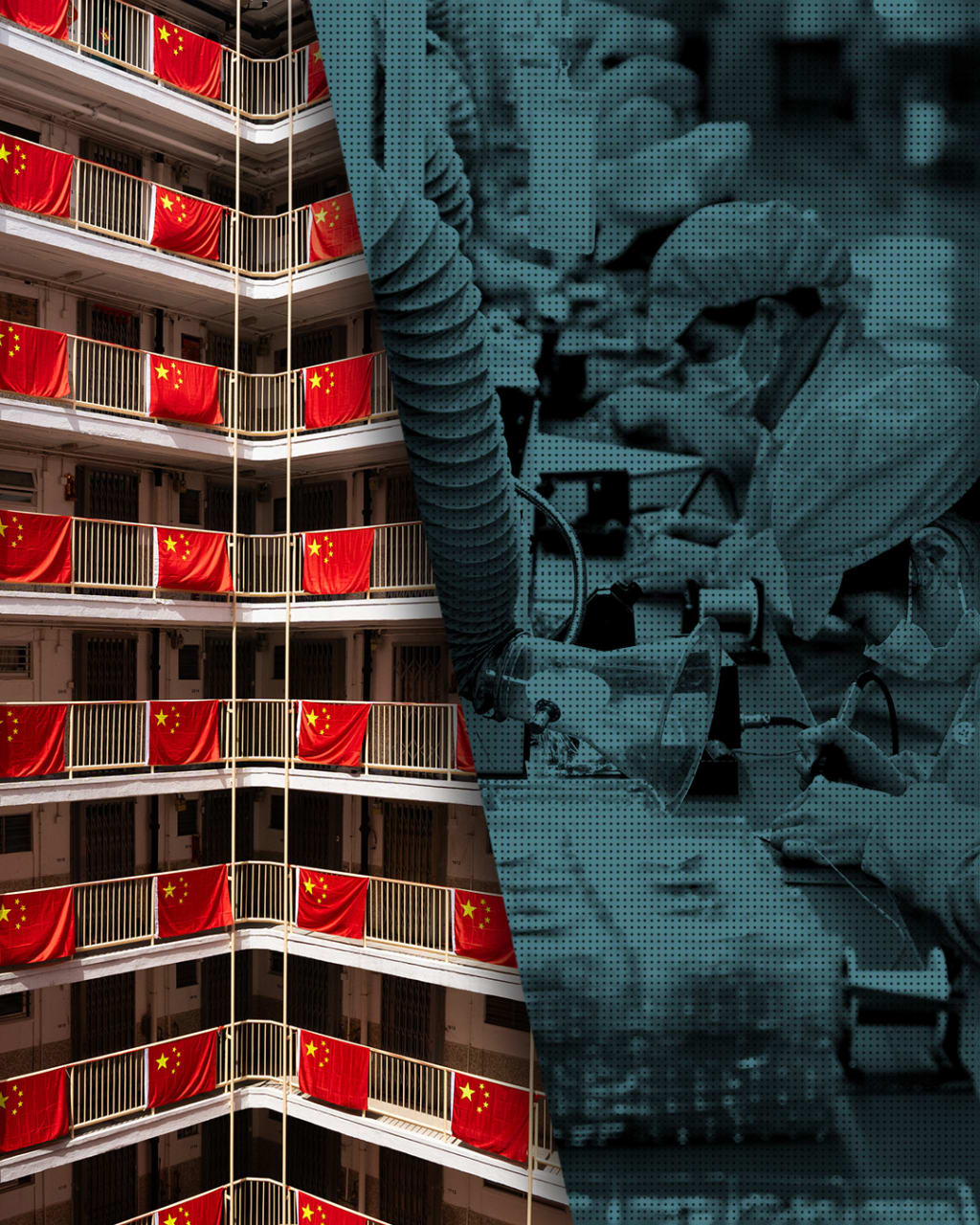
The balance of power in the world is shifting. American national capacity alone is no longer adequate to balance China’s growing strength. For the first time in its modern history, the United States faces a rival with greater scale across most of the dimensions that matter for great power competition. As a result, the key strategic question for the future of American statecraft is whether Washington can build what former U.S. Deputy Secretary of State Kurt Campbell and I have called “allied scale”—the ability to pool capability with its partners across the economic, technological, and military domains.
[Video: https://vimeo.com/1192641203/f7cdf20362]
The rise and fall of great powers has often turned on scale. Among industrialized states with comparable productivity, the larger ones tend, over time, to win. Britain rode a first-mover advantage in industrialization to global dominance and lost it to Germany and the United States, both of which had larger internal markets and deeper talent pools: between 1870 and 1910, Britain’s share of global manufacturing fell by half. At the end of World War II, the United States accounted for half of all manufacturing. Now, that sense of scale belongs to China, and the American position today is closer to Britain’s in 1900 than to its own in 1945.
China has four times the population of the United States, and its economy, while slowing, is roughly 25 to 30 percent larger than the U.S. economy when measured by purchasing power parity. Its manufacturing capacity is twice that of the United States, exceeding the next nine countries combined. China produces twenty times as much cement as the United States, thirteen times as much steel, three times as many cars, and twice as much power. It accounts for two-thirds of the world’s electric vehicles, three-quarters of batteries, 80 percent of consumer drones, and 90 percent of solar panels and refined critical minerals. It is pulling ahead in the next industrial revolution: it installs half the world’s industrial robots and produces more active patents and top-cited scientific publications annually than the United States.
The military balance is changing, too, largely because of that industrial strength. China fields the world’s largest navy, holds the largest stockpile of conventional cruise and ballistic missiles anywhere, outproduces the world in drones, and likely possesses the world’s most advanced hypersonic systems.
China has real problems: a shrinking and aging population, stressed local-government finances, debt at 300 percent of GDP, stalled productivity, and a private sector still recovering from Beijing’s crackdowns. But China can be slowing economically and growing more formidable geopolitically at the same time. Demographic decline may not have significant impacts for another ten to fifteen years. China’s debt levels are not too much higher than those of the United States, Britain, India, or Japan. And its housing downturn, while serious, has also led the state to redirect lending to industrial policy, which is making the country more competitive even as a tremendous amount of capital is wasted.
But even though China has greater scale, the United States has a decisive advantage. Combined with its partners—Australia, Britain, Canada, India, Japan, Mexico, New Zealand, South Korea, Taiwan, and the European Union—the picture changes. That coalition has more than twice China’s GDP at purchasing power, accounts for roughly half of global manufacturing to China’s one-third, spends more than twice what China spends on defense, and produces substantially more patents and top-cited research.
The traditional American alliance model, designed in the Cold War, has treated partners as dependents—recipients of protection, providers of bases, and occasional contributors of industrial capability. What is required now is to transform the alliance system from a collection of managed bilateral relationships into a platform for pooled capacity-building across domains. Allies are not trip wires, vassals, or status symbols; they are cocreators of the capacity the United States cannot generate on its own.
How might this work in practice? Japanese and South Korean shipbuilders—two to three times more productive than American shipbuilders—would help rebuild U.S. naval capacity. Taiwanese semiconductor manufacturers would build more of their fabs on American soil. A coordinated tariff and regulatory wall would protect allied industrial bases from Chinese overcapacity. An “economic Article 5” akin to NATO’s collective defense clause would commit coalition members to a collective response when Beijing coerces one of them. Underneath would lie joint industrial policy, harmonized export controls, aligned research protections, and serious investment in joint war-fighting capabilities. The United States would share more of its best military technology with allies it has historically kept at arm’s length.
Critics rightly charge that such a strategy will be challenging. President Donald Trump has raised tariffs on U.S. allies, threatened to seize territory from a NATO ally, and dismissed allied concerns over the fallout from the current Iran war. He has suggested the United States may withdraw troops from Germany, raised tariffs on India above those on China, and been reluctant to support Japan as it faces Chinese economic coercion. The result is that U.S. partners are vocally to de-risk from the United States.
Those are serious challenges. But the rupture need not be permanent. The alliance system has overcome challenges before. The Vietnam War deepened transatlantic tensions, the “Nixon shock” abruptly took the United States off the gold standard, the Plaza Accord depreciated the U.S. dollar and economically strained Germany and Japan, the Soviet Union’s collapse removed a key logic for allying, and the invasion of Iraq divided U.S. allies. Partnerships even strengthened after the first Trump term, thanks to determined policy from the Biden administration and independent initiatives from allies. The elevation of the Quad (the partnership between the United States, Australia, India, and Japan); the creation of AUKUS (the trilateral pact between Australia, the United Kingdom, and the United States); and various plurilateral efforts to coordinate on security and technology point to a deeper logic of cooperation.
The system may prove resilient to the Trump shock. Europe’s reliance on the American market may rise as exports to China fall. Allied dependence on American AI models may also grow. And allies’ efforts to rearm against China and Russia rely on American weapons, innovation, and capital. Both Democratic and Republican policymakers may be able to persuade U.S. allies that the most offensive policies of the second Trump term were products of personality, not harbingers of new American statecraft. And the Trump administration may itself return to alliances in its own way. In February, at the Critical Minerals Ministerial, a U.S.-led forum that brought fifty-four countries to Washington, DC, Vice President JD Vance openly called for a “trading bloc among allies and partners” to balance China.
Regardless, rebuilding trust and credibility will take time. A new American statecraft will have to start humbly, building trust through small projects and reengineering cooperation around two-way flows of capacity that reduce fears of asymmetric interdependence. One could imagine a bargain: allies invest in American reindustrialization, and in exchange, the United States offers access to its technology and its market. That bargain could plausibly attract bipartisan support at home as a path to American renewal and reciprocal commitment abroad as a path to dealing with China’s excess capacity.
That strategy is the only viable way to achieve scale big enough to matter. The alternative is dismal: a United States that, by acting alone, finds itself smaller, more isolated, and outclassed.
More from the Future of American Strategy >>