Between Two Orders

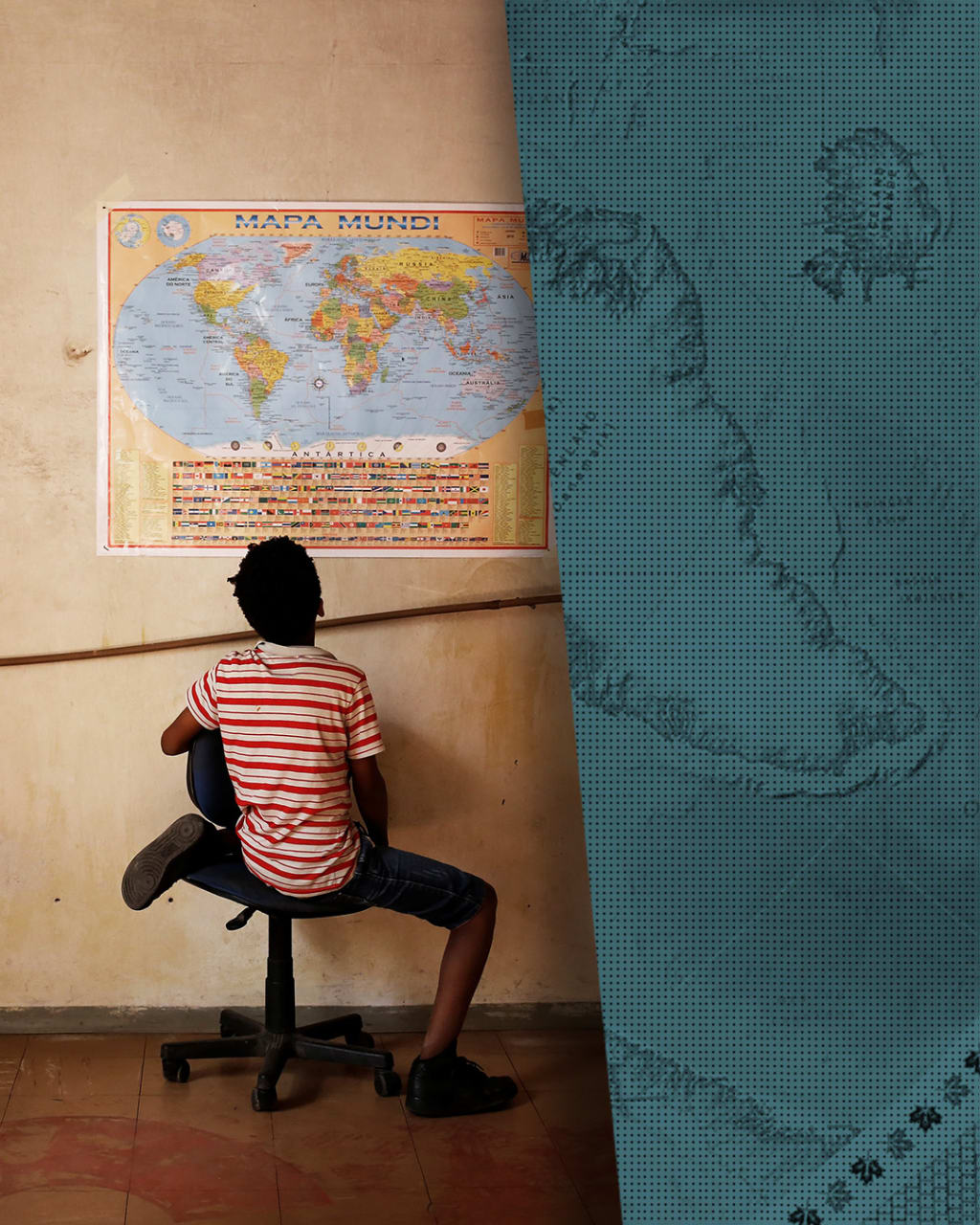
As he sat in prison in 1930, at the opening of a fateful decade, the Italian political theorist and anti-fascist Antonio Gramsci wrote: “The crisis consists precisely in the fact that the old is dying and the new cannot be born; in this interregnum a great variety of morbid symptoms appear.”
Gramsci was writing about an earlier era, but he succinctly captures the essence of the dilemma at the heart of today’s debate over the future of U.S. grand strategy. The old world order is expiring, the next world order has yet to be imagined, and the resulting interregnum is producing a wide range of morbid symptoms.
Mounting rivalry between the United States and China, Russia’s war against Ukraine, a U.S.-Israeli attack against Iran that expanded into a region-wide conflagration, wars in Sudan and the Democratic Republic of Congo—great power competition is back, and major conflicts are afflicting many quarters of the globe. The interdependent and globalized markets that emerged after the Cold War are unraveling, falling prey to strategic decoupling and protectionist barriers. The world is becoming decidedly less free. Autocratic regimes are becoming more autocratic. And countries that were once thought to be stable democracies, including the United States, are stumbling and backsliding. Across much of the democratic world, the political center is not holding.
Those morbid symptoms, alongside other destabilizing developments, are the product of two tectonic shifts that are pushing the world into a Gramscian interregnum. One is a redistribution of global power that will end the West’s long run of material and ideological hegemony. After the Cold War ended, the economies of the United States and its democratic allies accounted for almost 70 percent of global GDP. As the twenty-first century opened, the world’s top five economies were the United States, Japan, Germany, the United Kingdom, and France.
But power is now rapidly shifting from West to East and North to South. By 2060, the aggregate economic output of the Western democracies will total less than 40 percent of global GDP. During the second half of the twenty-first century, three of the world’s top four economies will likely be in Asia: China, India, and Indonesia. By 2100, more than 80 percent of the world’s population is expected to be African or Asian. At that time, Europe, whose great powers once colonized most of the world, is expected to represent around 10 percent of global GDP. A decentered and multipolar world lies ahead.
The second tectonic shift is that the industrial age is rapidly giving way to the digital age, with automation and evolving technologies transforming labor markets and undermining the social contract of the industrial era. Although free trade has made matters worse, technological change is the dominant driver of the socioeconomic dislocation hitting the middle class and pushing workers from well-paid manufacturing jobs to low-wage employment in the service sector.
In the United States, many workers find it hard to make ends meet and see few opportunities for upward mobility. Inequality is also spiking; the richest 10 percent of American households now own over two-thirds of the nation’s total wealth, while the top 1 percent holds 31 percent—only slightly less than the bottom 90 percent of all U.S. households. Those trends are dividing the country along socioeconomic, educational, and rural/urban lines. And the problem is poised to worsen. Initial evidence indicates that firms that integrate artificial intelligence (AI) into their operations reduce their overall numbers of employees, suggesting that widespread AI deployment will do more to displace the workforce than enlarge and enrich it. The advance of the digital age is thus eroding the broadly shared prosperity and the ideological centrism that long anchored U.S. democracy and steadied U.S. statecraft.
President Donald Trump and his America First brand of statecraft are byproducts of those tectonic shifts. Trump’s political ascent represents an electoral backlash against a U.S. political establishment that was badly mismanaging the diffusion of power and insufficiently responsive to the plight of the millions of Americans whom automation and globalization left behind. But even if Trump is adept at dismantling an old order that needs to come down, he is doing little to construct the order that comes next. His unilateralism, rather than channeling and shaping the diffusion of power, is setting allies and adversaries alike on edge, magnifying the centrifugal forces that are fueling international instability. His tariffs are failing to bring home manufacturing jobs and are instead disrupting international commerce and exacerbating the affordability crisis facing working Americans.
If U.S. grand strategy is to meet the moment, it needs to focus on managing both of the tectonic shifts under way. Washington should look over the horizon and anchor the transition to a decentered and multipolar world. The next order will need to be pluralistic and explicitly facilitate cooperation across ideological and geopolitical dividing lines. Democracies will need to compete respectfully in the marketplace of ideas with countries that adhere to alternative forms of governance. China, Russia, and other autocracies will need to live comfortably alongside liberal democracies. All countries will need to tolerate differences over values and governance to prioritize the wide-ranging cooperation needed to tame great power rivalry, arrest climate change, manage technological advance, and address other global challenges.
The second top priority for the United States is to design a new social contract for the digital age. Reindustrialization is a delusion. The promised manufacturing revival produced by tariffs and industrial policy will not even come close to employing a sizable portion of the U.S. workforce, most of which is already in the service sector. Instead, the United States and other deindustrializing democracies need to map out the future of work in the digital age and educate citizens for the jobs of the future. Rebuilding the middle class and reviving the political center is the starting point for revitalizing liberal democracy.
The comeback of liberal democracies would give them the functionality and purpose needed to anchor the transition to a new international order. A political recovery would also enable democracies to outperform autocracies when it comes to delivering for their citizens. At a time of immense geopolitical and ideological flux, democracies need to get their own houses in order if they are ultimately going to prevail against autocratic alternatives and again tilt history toward more freedom and justice.
More from the Future of American Strategy >>