Congress Checks Out
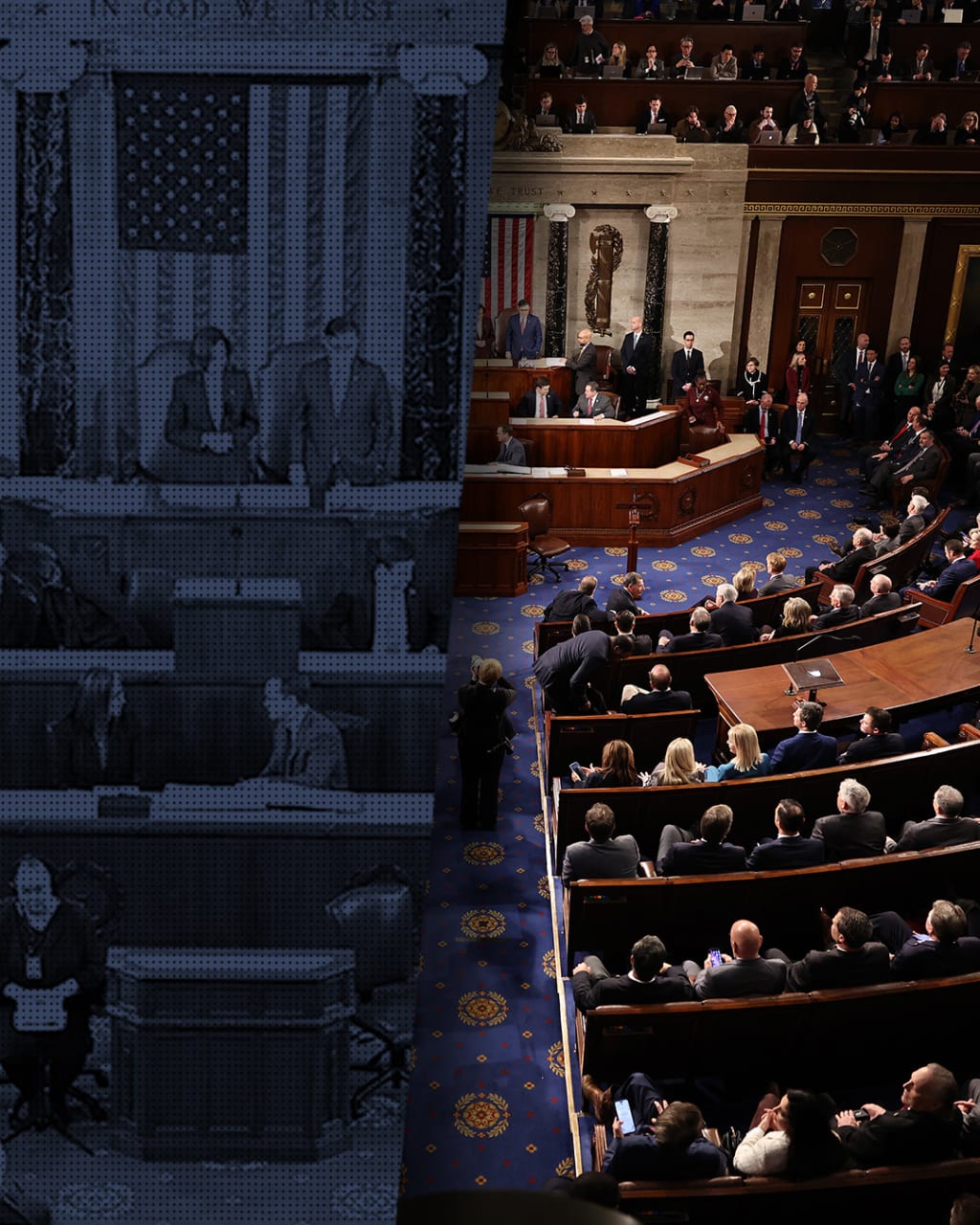
When I began my career as a U.S. Senate staffer in 1975, senators were very powerful men and women. The most powerful of them were the committee chairs—the grand dukes of the realm. Those men influenced presidential foreign policy and were consulted by the White House and the cabinet. President Ronald Reagan, for example, conducted serious negotiations with Congress on the NATO Two-Track decision regarding intermediate-range missile deployment in Europe, and sought congressional backing for the Nicaraguan Contra rebels. Support from Congress mattered. And though politics did not necessarily “stop at the water’s edge,” as Senate Foreign Relations Committee Chairman Arthur Vandenberg put it in the 1940s, national security matters were rarely treated as purely partisan issues.
[Video: https://vimeo.com/1192638887/940dc4e979]
That has changed. When it comes to foreign policy decisions, presidents now rarely seek congressional support and, even when they do, they tend to get little from the opposing party. Presidents act alone, claiming powers that Congress seems unable or unwilling to challenge. While the opposition party invariably denounces administration policies and actions, it does not have the power to ameliorate or block them. Partisanship has grown in strength, and so too have the fringes in both parties. The loudest voices are often those without wide public support, seeking to stoke division.
To some degree, this new reality reflects the disappearance of the old foreign policy “establishment,” a partly mythical but partly real group of men whose prestige and experience gave their views great weight in both parties and most administrations. Republicans Robert McNamara, McGeorge Bundy, and C. Douglas Dillon were cabinet members under John F. Kennedy, Democrats Paul Volcker and John Connally served in high posts under Richard Nixon, and in the Jimmy Carter years when I was newly in Washington, Republicans James Schlesinger (secretary of defense) and William Webster (FBI director) were serving in the Carter administration. Reagan hired Democrats Max Kampelman and Paul Nitze for top positions. Today, it is difficult to name comparable civilians whom a president of the other party would name or who would easily accept a position under the opposition.
Another contributing factor to today’s partisanship is the nature of information flows. When I served in the Reagan administration, what was written in the widely read Time and Newsweek magazines, or said on the evening news broadcasts on the three major networks (ABC, CBS, and NBC), was critical to gaining public support and in gauging public opinion. Work stopped in many government offices at 6:30 pm, so everyone could watch the network news. Today, there is an endless supply of cable TV voices, networks, online sources, Substack columns, social media platforms, and other sources of information. Although those venues can help voters get information, many studies suggest that people tend to look for information from sources with which they are in agreement. So, the left has its sources and the right its own, reporting different “news” and deepening partisan splits.
If those factors continue unchecked, three changes are likely to result in the sphere of foreign policy and grand strategy. First, almost every policy will become either a Republican or a Democrat undertaking, lacking the support of the other party. Broad public support will, therefore, be hard to acquire, particularly because voters will get their information from partisan sources. Forget the water’s edge: policymaking on national security issues will be increasingly seen as a left- or right-wing activity, reflecting the views of one party or faction rather than advancing the interests of the nation. Criticism will not be viewed as an effort by the “loyal opposition” to improve policy, but as a politically motivated attack.
Second, presidents will be freer to make policy. As the political gulf widens, members of Congress will increasingly be seen as partisan actors who need not be listened to, weakening Congress as an institution. In some respects, this change will empower the presidency but, in others, it will weaken the office—presidential actions will be seen through a partisan lens, and a president will be solely reliant on his party for support. Lacking the ability or inclination to forge a consensus will make foreign interventions shorter than those mounted in the days when the nation could unite around a shared mission. The broad middle in American politics is now much narrower than it used to be. The portion of the electorate to which a president can realistically appeal for backing is also smaller than it once was. The resulting narrow basis of support will create a fear of losing it, thereby giving a future president a powerful incentive to avoid casualties. This constraint could make more dangerous military action too politically costly to contemplate, but whether that is a helpful limit on “adventurism” or a dangerous inhibition on U.S. ability to meet potential security challenges depends on the policy perspective of the analyst.
Third, policies will likely be shorter-lived than those in the past. Containment, for example, lasted from roughly 1945 to 1990 under both Democratic and Republican administrations, because it rested on an elite and popular consensus on the need to stop the spread of communism. If such a consensus is now impossible to form, a decades-long policy will be replaced by four- or eight-year policies. Presidents could feel not that they are advancing an agreed-upon policy—which they wish to leave, strengthened, for their successors—but are instead using their limited time in office to work faster, strike harder, and achieve any goals they have. This may have happened already with respect to U.S. policy toward China. If the time horizon of U.S. policies has been reduced, then Washington’s ability to craft durable policies to deter hostile powers and build alliances with friendly ones will also be reduced. That potential mismatch alone will make policy successes more challenging for every president—and for the country. Grand strategy cannot change every four or eight years, and requires a base of support and a time horizon that future presidents could find is but a fond memory. The United States’ main rivals will gain a serious advantage if they are able to think in far longer terms than American policymakers about strategy.
More from the Future of American Strategy >>