Countries React to SCOTUS Tariff Ruling
By experts and staff
- Published
Welcome to the Daily News Brief, CFR’s flagship morning newsletter summarizing the top global news and analysis of the day.
Top of the Agenda
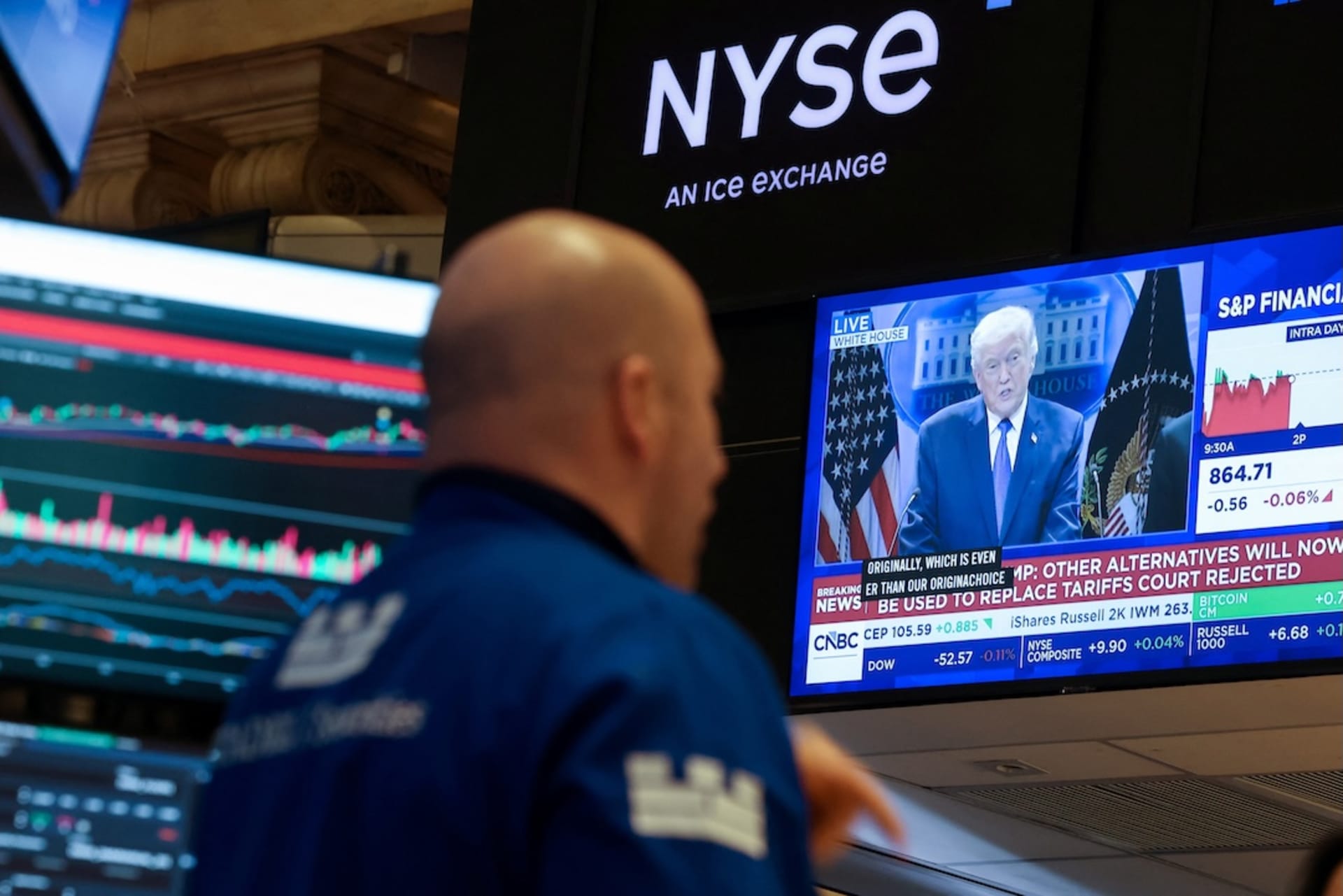
U.S. trade partners are assessing the fallout of Friday’s U.S. Supreme Court ruling striking down many of Trump’s tariffs, while multiple U.S. business groups call for refunds to begin. Following the 6-3 ruling deeming Trump’s tariffs under the International Emergency Economic Powers Act (IEEPA) illegal, the White House moved to preserve the levies under other tariff authorities. The blockbuster ruling has emboldened U.S. trade partners, with some foreign officials publicly stating their legislatures have not yet ratified recent trade deals with Washington that were crafted with the now-voided tariffs in mind. China called today for the United States to lift its unilateral tariffs on trading partners.
The details. U.S. customs authorities told importers today they would stop charging IEEPA duties at midnight tonight—just over three days after the ruling, and just as new Section 122 tariffs are due to take effect. The White House issued a proclamation Friday stating those tariffs would be 10 percent; Trump wrote on social media Saturday he would raise them to 15 percent. Those duties are scheduled to stay in place for 150 days—the maximum allowed under Section 122—giving the administration time to prepare fresh tariffs under other authorities. Trump’s tariffs that did not rely on IEEPA—such as those on steel, aluminum, and copper products—remain in place.
How it’s playing out. An Indian trade delegation postponed planned travel to the United States to review the implications of the new tariffs. Over the weekend, Malaysian and Indonesian officials noted they had not yet ratified their recent trade deals with Washington, both of which included mass investment pledges. Trump’s newly announced 15 percent tariff is higher than what some countries negotiated and lower than others. In Japan, which secured a 15 percent base tariff rate through a deal that included a $550 billion investment commitment, the tax chief of the ruling party called the tariff situation “a real mess.”
“Though this ruling settles an important legal matter, the battle over tariffs is far from over. While American businesses and consumers may cheer the court striking down Trump’s second latest tariff adventure, the court decision is likely to be a temporary break in the president’s ongoing trade wars.”
—CFR Senior Fellow Inu Manak in an Expert Take
Across the Globe
Mexico’s hit on cartel boss. The Mexican government announced yesterday its forces had killed one of the country’s most-wanted cartel bosses. The United States provided intelligence support for the operation and commended the Mexican military afterward, the White House press secretary wrote on social media. The operation sparked retaliatory attacks by organized crime groups across Mexico, which blocked roads and set fire to buildings such as banks and supermarkets.
Dispute over oil flow through Ukraine. Ahead of a European Union (EU) meeting today, Hungary threatened to block new sanctions on Russia and loan for Ukraine over a dispute regarding Russian oil. Last month, Ukraine said a Russian drone hit a Soviet-era pipeline, which halted the flow of Russian oil through Ukraine to Hungary and Slovakia. The two countries, which rely on the pipeline, have accused Ukraine of slowwalking the restart. In response to Hungary’s threats regarding aid for Kyiv, EU foreign policy chief Kaja Kallas said “we should not tie together things that are not connected to each other.”
Plans for more Iran talks. Negotiations between the United States and Iran over Tehran’s nuclear program will likely continue in Geneva Thursday, Iranian foreign minister Abbas Araghchi told CBS News yesterday. While unnamed U.S. officials also confirmed plans for the meeting to multiple news outlets, they stressed Trump is still considering military strikes using the large-scale U.S. deployment in the region. In Iran, meanwhile, antigovernment protests have reignited as the new school semester begins in spite of the regime’s recent brutal crackdowns.
India-Brazil cooperation. Government bodies and private companies from the two countries signed at least twelve cooperation agreements during Brazilian President Luiz Inácio Lula da Silva’s visit to India, the Indian foreign ministry announced Saturday. They include plans to cooperate on access to rare earths, steel, and pharmaceuticals. Bilateral trade grew 25 percent in 2025, reaching around $15 billion.
Madagascar-Russia ties. Madagascar President Michael Randrianirina pledged “full cooperation” with Russia following a trip to Moscow late last week. The visit was a departure from Madagascar’s diplomatic tradition, in which former colonial power France is typically the president’s first official visit. Randrianirina, who took power in a coup last year, will travel to France tomorrow. While Russia was Madagascar’s 46th-ranked trading partner in 2024, that bilateral partnership has grown through Russia’s training the country’s military and providing weapons.
Armed man shot at Mar-a-Lago. Secret Service agents and a sheriff’s deputy shot at an armed man who entered Trump’s Florida resort early yesterday morning, a Secret Service spokesperson said. The Palm Beach County Sheriff said the man raised his gun to a shooting position when confronted. Authorities are investigating the incident. It’s the latest apparent threat to the president, who has faced multiple assassination attempts.
U.S. boat for Greenland rejected. Officials from Greenland and Denmark rejected the U.S. hospital boat sent to Greenland by Trump, who announced on social media that Washington would provide medical care to those in need. Greenland’s Prime Minister Jens-Frederik Nielsen noted the territory has free public healthcare.
What’s Next
- Today, the United States and Mauritius begin bilateral security discussions in Port Louis.
- Tomorrow, the Asia-Pacific Forum on Sustainable Development begins in Bangkok.
- Tomorrow, Trump delivers the State of the Union address in Washington, DC.
What You Missed: 2026 Milan-Cortina
We hope you enjoyed 2026 Winter Olympics updates from the Daily News Brief! Here’s a final installment:
Gold again for U.S. hockey. Days after the women’s team emerged victorious, U.S. men’s hockey won gold on Sunday, defeating Canada. Team USA’s Jack Hughes scored the winning goal in overtime—even after having parts of his teeth knocked out earlier in the match. It was the first U.S. men’s hockey gold since 1980. The game occurred at a moment of political tension between the two governments, though the New York Times reported that the mood in the stands was focused primarily on hockey.
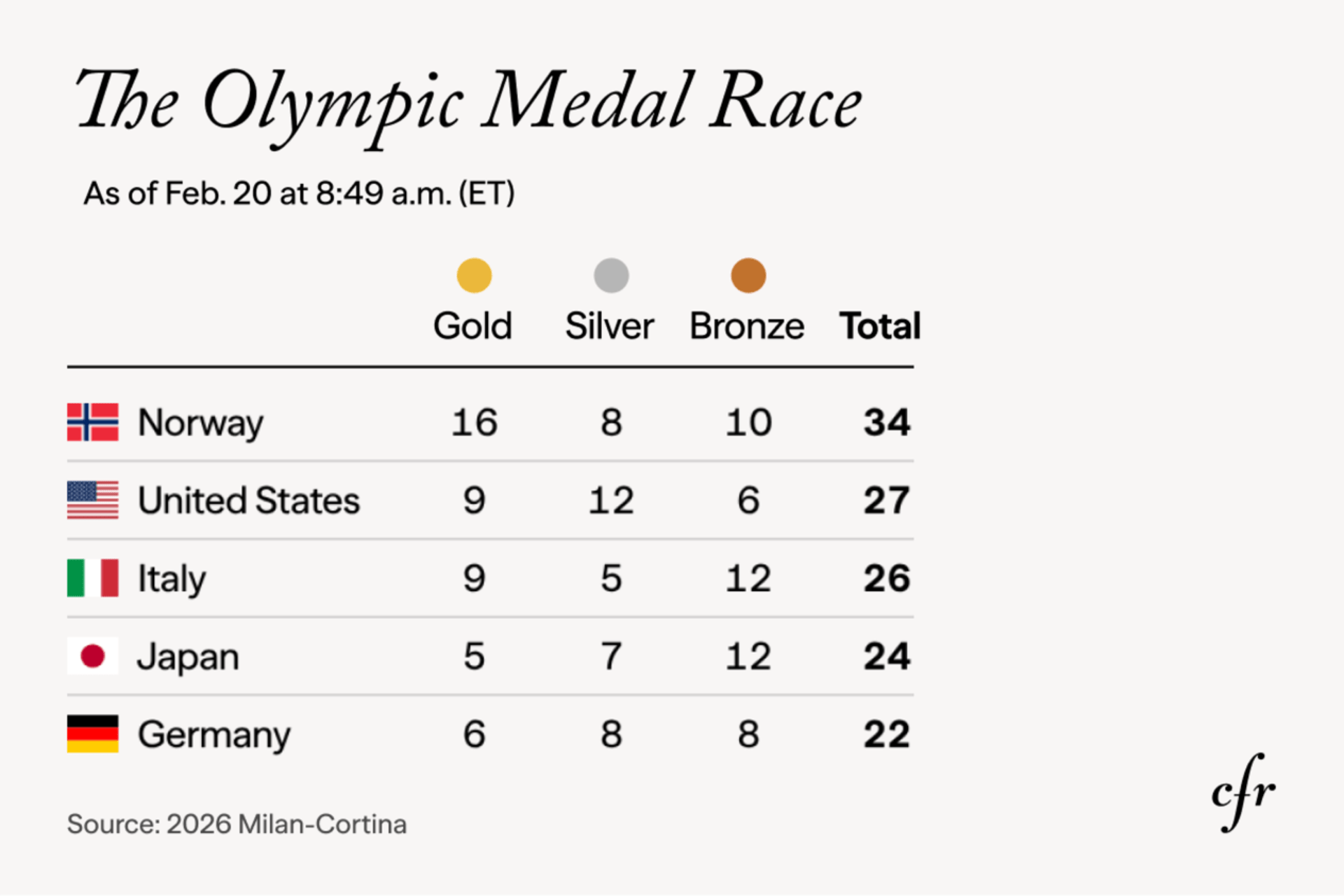
Norway’s continued dominance. Norway won the most gold medals for the fourth consecutive Winter Games (in 2018, it shared that distinction with Germany). The country of only around 5.7 million people consistently excels in sports in part because it prioritizes athletics in schools. Youth competitions are banned from including scores until twelve years of age, encouraging kids to test different sports. Norway’s biggest star at this Games was cross-country skier Johannes Høsflot Klæbo, who won six gold medals out of the country’s eighteen total, the most of any Winter Olympic athlete at a single tournament. “I’m just chasing the feeling of those last one hundred meters,” he told The Athletic.
Closing ceremony. Last night in a Verona amphitheater, thousands bid farewell to the tournament to the sound of Italian music ranging from opera to techno. (Check out photos here.) The amphitheater will also be used to open the Milan-Cortina Winter Paralympics, which run from March 6 to March 15. The Winter Olympic flame torch was metaphorically passed to France, where the 2030 contest will be held in the Alps. But there are more Olympics to look forward to before then: in 2028, the Summer Games are coming to Los Angeles.