Why Are More U.S. Allies Exploring Ties With China?
As the United States becomes a less reliable trade and security partner, several U.S. allies are seeking to keep an open door with China—but experts caution these moves are neither sustainable nor realistic.
U.S. President Donald Trump is visiting Beijing this week to meet with Chinese President Xi Jinping for the first time in nearly a decade. Since Trump returned to office in 2025, several U.S. allies have made similar trips, sending a clear message to Washington: An unstable geopolitical environment and unreliable U.S. support is driving them to bolster their relationships with other countries.
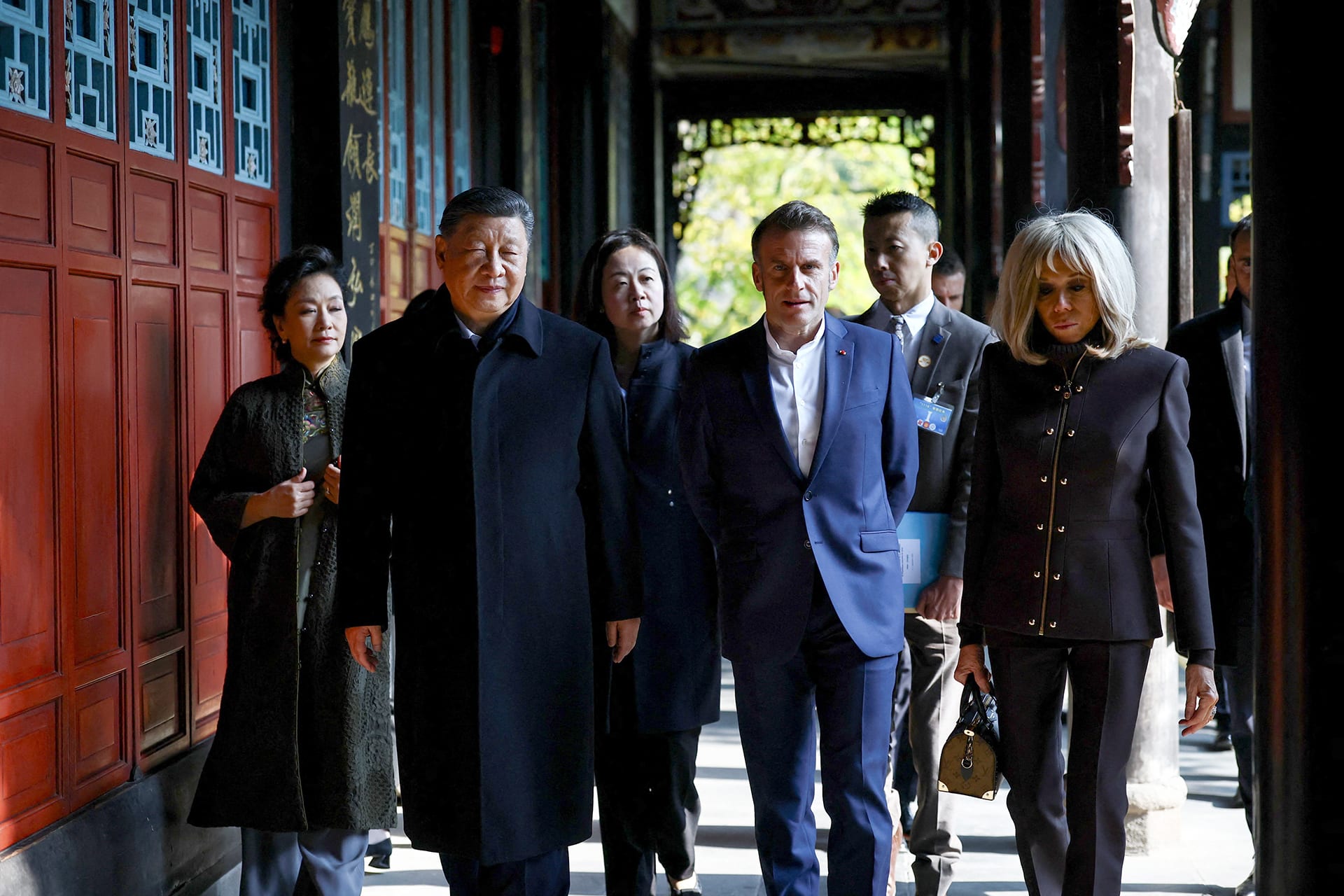
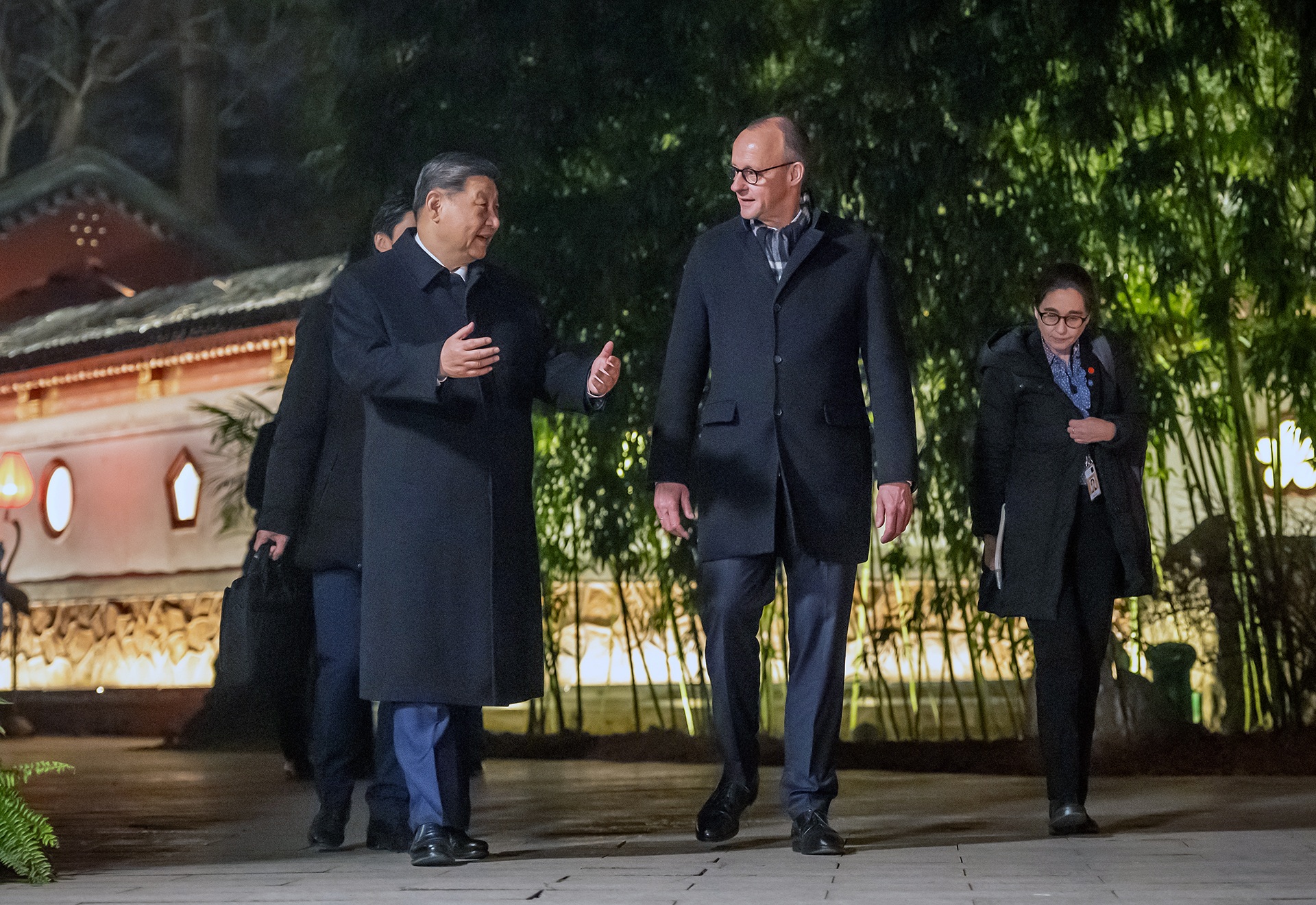
Engaging more with China appears to be a critical component of this strategy. European leaders and other close U.S. allies, like Canada and the United Kingdom (UK), met with Chinese President Xi Jinping in Beijing this year for first time since Trump’s first term. Irish leader Micheál Martin’s January meeting with Xi in Beijing was the first of its kind in fourteen years. According to an analysis by Semafor, trips by Western officials constitute about half of all diplomatic visits to China during Trump’s second term so far. Visits to China by U.S. Indo-Pacific allies, such as Australia and South Korea, have picked up in the past year as well.
Given the U.S. president’s decision to travel to China, CFR examined which countries have met with Beijing since 2025, the major themes that were discussed, and whether it has shaped any new agreements.
Which countries’ leaders have met with Xi since Trump returned to office?
Leaders of nine major European, Indo-Pacific, and North American allies have met with Xi in Beijing since 2025: Australia, Canada, France, Finland, Germany, Ireland, South Korea, Spain, and the UK.
Some of these countries’ leaders meet regularly with Beijing. Australian leaders have met annually with Xi since 2022, and France’s and Germany’s leaders have met consistently with China, sometimes facilitating trilateral dialogues. Other countries, however, have seen an uptick in bilateral meetings with China under Trump administrations. Prior to UK Prime Minister Keir Starmer’s January 2026 visit, the previous UK leader to make the trip to Beijing was in 2018, under Theresa May. The last time a Finnish prime minister visited Beijing prior to this year’s trip by Petteri Orpo was in 2017. Notably, Spanish King Felipe VI made a state visit to Beijing in November 2025 for the first time in eighteen years.
Why are U.S. allies meeting with China?
These meetings come as the Trump administration has slapped unprecedented tariff rates on its major trading partners and has taken a more assertive military posture—including threatening to annex Greenland, capturing Venezuelan leader Nicolás Maduro, and the current war the United States and Israel has waged on Iran, which has roiled global energy markets.
These moves have eroded trust in the United States as a reliable security and trading partner. According to a Politico poll of Canadian, German, French, and British nationals, respondents would prefer to depend on China over the United States and say their country should move closer to China—a sentiment strongest among young people.
Since the COVID-19 pandemic revealed vulnerabilities in global supply chains, the European Union (EU) has looked to pursue “open strategic autonomy,” which aims to reduce the bloc’s economic reliance on other countries for critical sectors, including “de-risking” from China. Today, some analysts argue that this strategy is now being applied to the United States.
“Middle powers must act together because if we’re not at the table, we’re on the menu,” said Canadian Prime Minister Mark Carney in a speech earlier this year at the annual World Economic Forum in Davos.
What was discussed during the meetings?
These U.S. allies vary in their level of engagement with China. Australia, Canada, and France produced joint statements from their meetings, while other countries such as Finland, South Korea, and the UK signed several memoranda of understanding with China.
CFR analyzed press releases from the Chinese foreign ministry for each of the nine leaders’ meetings, and several themes emerged: trade and business agreements, green energy commitments, increasing interest in technological and artificial intelligence (AI) cooperation, underscoring global governance, and increased people-to-people ties.
Trade, tariffs, and business deals. China is the top trading partner for Australia, Germany, and South Korea, and second- and third-largest trading partner for Canada and the UK, respectively. Against the backdrop of Trump’s proposed sweeping tariffs on several U.S. trade partners, these countries’ leaders have signaled an interest in diversifying their economic and security relationships.
Since coming into office in 2022, Australian Prime Minister Anthony Albanese has made stabilizing Canberra’s relationship with Beijing a top foreign policy priority. During their 2025 meeting, Australia and China agreed to review their free trade agreement (FTA), which commenced last November. South Korea also pledged to finalize the second phase of its FTA negotiations with China by the end of this year. The China-South Korea FTA has been stalled for the last decade, but ahead of the summit, South Korean President Lee Jae-myung said he saw this year as an opportunity for “full-scale restoration” of bilateral relations.
Other countries successfully reached new tariff rates. Canada set a goal to increase exports to China by 50 percent by 2030, and in exchange, China agreed to lower tariffs on canola oil exports to 15 percent (from 85 percent). After UK Prime Minister Keir Starmer’s visit, China agreed to halve tariffs on Scotch whiskey to 5 percent, a move the UK government said could generate almost $400 million for the British economy over the next five years.
Energy and electric vehicles (EVs). China is leading the world in renewable energy, accounting for more than 40 percent of global renewable energy capacity in 2024. These green energy advancements have been a major focus with U.S. allied countries—especially as the Iran war causes oil and gas prices to soar. Australia and China agreed to cooperate on energy security in April following oil disruptions from the blockade in the Strait of Hormuz. China made up a third of Australia’s jet fuel imports last year.
The war “is now causing these countries to accelerate longer-term plans to build out solar and wind power, install batteries to balance their grids, and expand the role of electric vehicles. China is the clear winner,” David M. Hart, senior fellow for climate and energy, wrote for CFR.
As the world’s largest EV exporter, China has been outpacing U.S. and European manufacturers, which have led these countries—as well as others like Brazil, Canada, and India—to impose high tariffs on Chinese EVs (though some individual Chinese automakers have exemptions in the EU). But Carney’s Beijing visit made headlines earlier this year for loosening Canada’s restrictions, allowing up to 49,000 Chinese EVs to enter its market at a 6.1 percent tariff rate, which were previously in lockstep with the United States at 100 percent.
CFR Senior Fellow for China and emerging technologies Chris McGuire said Canada’s EV market expansion was driven more by the fundamentals of its economy rather than a political moment. “I think allies generally have rising concerns about [Chinese EVs],” McGuire told CFR. “But while we’re not seeing broader EU trade agreements, what’s happening is that [U.S. allies] are not taking measures to block Chinese access to their market, or cooperate on export controls restricting technology from going to China.”
Technology cooperation and AI. AI emerged as a theme of discussion in several leader meetings: France, Germany, Ireland, South Korea, and the UK all mention the need to collaborate on AI, the digital economy, and other emerging fields. But, a vast majority of these agreements do not contain many details about deepening cooperation in tech, McGuire said. That’s for several reasons, he explained: “Number one, [China’s] offerings in most of the highest-tech areas are worse [than the United States’]. And number two, these countries are very heavily enmeshed and embedded in the U.S. ecosystem. They’re not about to try to pivot—that’s not realistic.”
Global governance. Language around respecting multilateralism, underscoring the role of the UN system, and promoting free trade appeared in all of the meetings with U.S. allies. However, these statements are largely symbolic, experts say. Despite discussing the ongoing war in Ukraine with France and Germany, Beijing still has not condemned the war or Russia. China itself regularly undermines global norms; rights groups have raised concerns about the lack of human rights considerations in these readouts, calling out Western countries with large Chinese diasporas, such as Canada and the United Kingdom, for making trade deals in exchange for citizen safety. “We’re seeing a lot of language about how these countries’ leaders are saying it is necessary to see the world as it really is,” Joseph Torigan, senior fellow for Asia studies, told CFR.
Chinese soft power and diplomacy. There were also some people-to-people developments from these meetings. Prior to Starmer’s visit, the UK agreed to open a Chinese embassy in London. Following talks with China, Canada, and the UK nationals now benefit from visa-free travel entering China for business or tourism purposes, starting mid-February to the end of the year. France, meanwhile, is poised to receive two giant pandas in 2027 following Macron’s visit—a sign of boosted China-France relations.
Are these meetings significant?
Experts generally agree that these meetings do not signal U.S. allies shifting tides toward China in a meaningful way. “It’s more style than substance,” McGuire said. He told CFR these meetings instead serve to express frustration with the United States. “Countries see an open door to go to Beijing and don’t feel any pressure to take additional actions to de-risk… or to slow down the Chinese and prevent their access to their own technologies, because we’re [the United States] not doing that,” he added.
Countries are trying to figure out how to weigh the costs, both economically and militarily, of depending less on the United States in an increasingly uncertain future global order, Torigian told CFR. “They have an inclination, but they don’t have clear game plans,” he noted.
One potential strategy is an “a la carte” perspective. “Yes, they’re going to have relations with the United States,” Torigian said, “but they’re also going to explore the extent to which they can have relations with each other as well as China,” which could potentially afford Beijing more time and space to continue developing its leverage with the United States and other countries.
Surina Venkat contributed to this article.
Colophon
Data Visualization
- Austin Steinhart