Even In a Historic Energy Crisis, ASEAN Fails Again
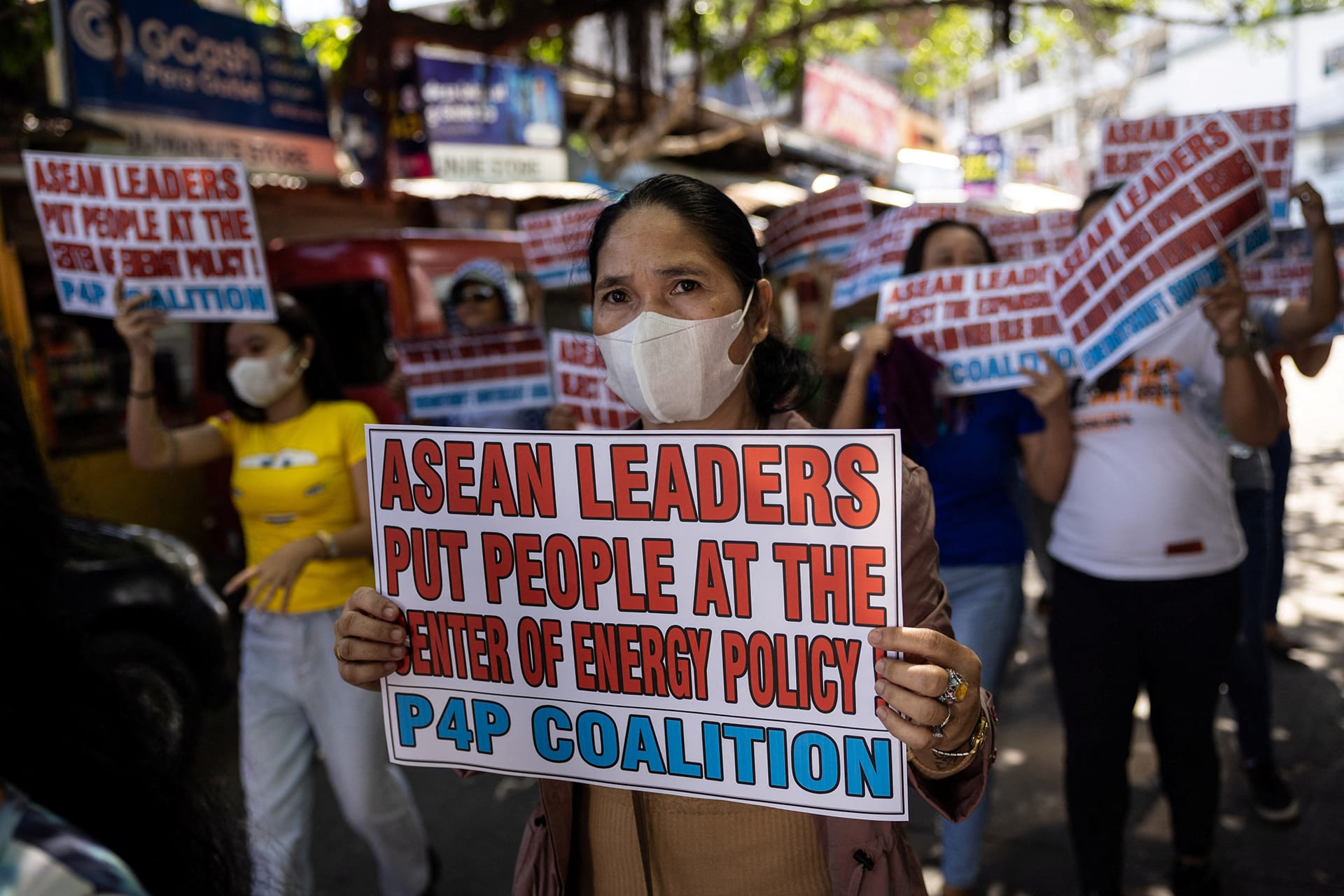
Facing its gravest economic crisis in years, ASEAN convened its leaders’ summit amid expectations that its member states might finally be able to unite on an energy plan. Instead, the grouping again demonstrated why it remains one of the world’s most paralyzed and useless multilateral bodies.
By experts and staff
- Published
 Joshua KurlantzickCFR ExpertSenior Fellow for Southeast Asia and South Asia
Joshua Kurlantzick is senior fellow for Southeast Asia and South Asia at the Council on Foreign Relations.
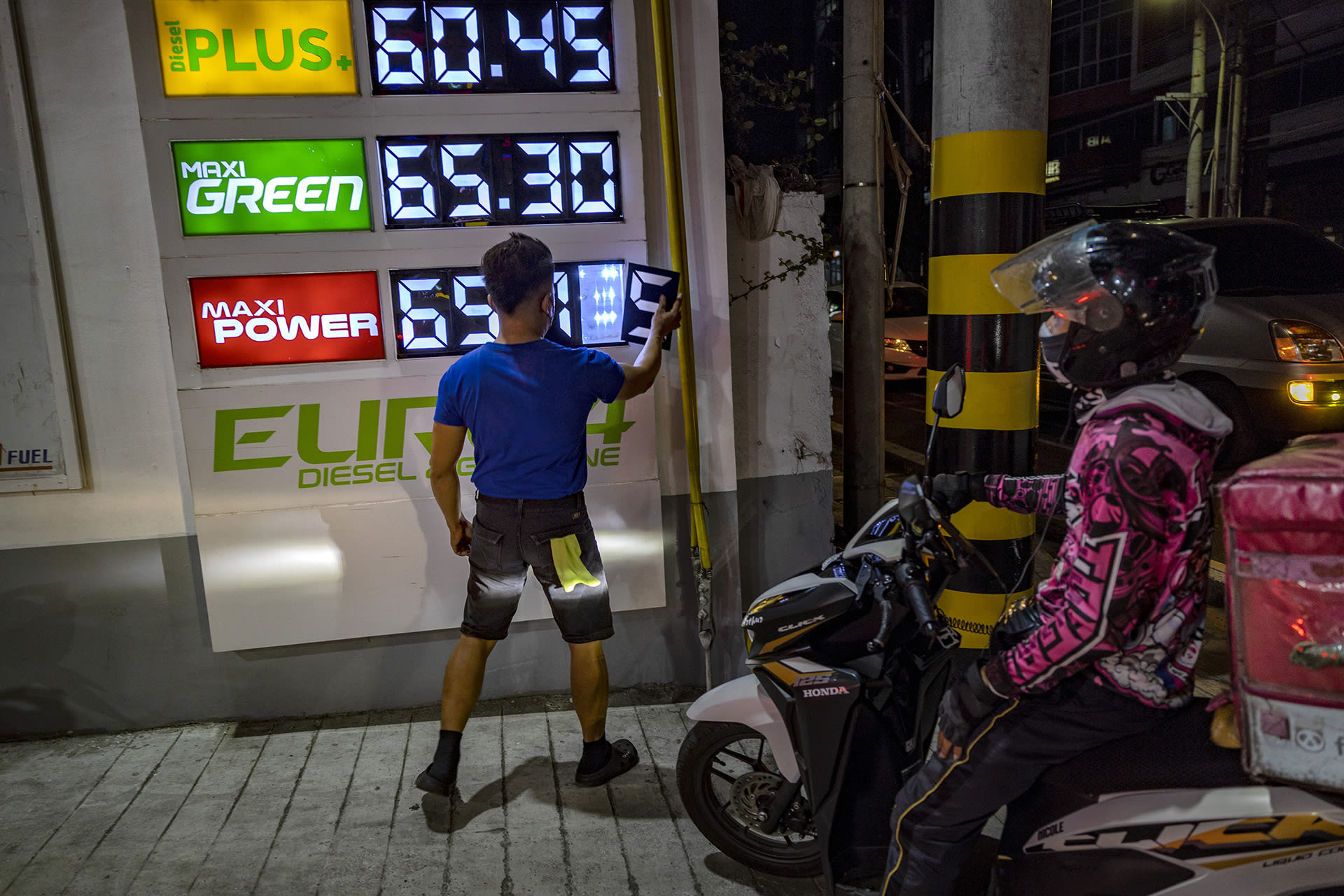
When leaders of the eleven states in the Association of Southeast Asian Nations (ASEAN) gathered last week for the annual leaders’ summit, they did so amidst a punishing economic background. The Iran war has severed or severely disrupted the flow of Gulf energy to Asian markets, sending fuel prices across Southeast Asia to record highs and tipping several member economies toward recession. The bloc’s combined GDP growth forecast has been slashed by the Asian Development Bank by as much as 2.3 percentage points under a prolonged conflict scenario—the most severe downward revision since the 1997 financial crisis. Fuel shortages in the Philippines and Vietnam have led to rolling blackouts and power outages hitting off-grid communities hardest, while Thailand has introduced fuel rationing measures not seen since the oil shocks of the 1970s.
Against this grim tableau, ASEAN heads of state arrived in this year’s host capital, Manila, carrying enormous expectations—from their own publics, from foreign investors, and from officials in their countries—that this summit would be different from the usual ASEAN talk shop.
Both ASEAN officials and outside analysts had, in the weeks leading up to the summit, spoken with unusual urgency about the need for a coordinated regional energy strategy. Senior officials from Indonesia, Malaysia, and Thailand had given public statements calling on the bloc to develop a joint emergency energy reserve, a coordinated approach to accelerating renewable energy imports from China, and a framework for ending competition among Southeast Asian states on the spot market for dwindling liquified natural gas (LNG) supplies from the Gulf. Experts at think tanks across the world, including Singapore and the United States, argued that the Iran war had created a rare political window—a genuine crisis—that could finally compel ASEAN to act as a coherent unit.
The answer, as history should have suggested, was that even the Iran crisis did not create a window ASEAN could utilize. Once again, ASEAN failed to produce any agreed-upon plan to address the energy crisis—or, for that matter, virtually any other pressing issue on the summit’s agenda.
The failure to agree on a joint energy plan was the summit’s most consequential failure, and its most predictable one.
The summit’s formal sessions were dominated by lengthy discussions of the energy situation, with leaders offering apocalyptic rhetoric of how the Iran war will damage the region even as they declined to agree on any remedy. Indonesian President Prabowo Subianto, whose government has been among the most vocal in demanding collective action, opened the plenary by warning that Southeast Asia risked being “caught between great powers while our people suffer in the dark.” He called on member states to establish a regional strategic petroleum reserve—a proposal Indonesia has tabled at three consecutive summits without success. Philippine President Ferdinand Marcos Jr., whose country has been among the hardest hit by the energy disruptions, went further, telling fellow leaders that the bloc’s inability to act as a unit was “a luxury we can no longer afford.” He urged ASEAN to immediately convene an emergency ministerial-level energy task force with a mandate to reach binding agreements on energy cooperation within ninety days.
Malaysian Prime Minister Anwar Ibrahim sought to play the role of consensus builder, proposing a more modest set of measures that he suggested could attract unanimous support. These included a voluntary information-sharing mechanism on energy reserves, a joint diplomatic outreach effort to Qatar and the United Arab Emirates to secure new LNG supply contracts, and an ASEAN-wide task force on renewable energy efforts. “We must be realistic about what we can achieve together,” Anwar told the assembled leaders, “but realistic does not mean passive.” Singapore’s Prime Minister Lawrence Wong voiced support for Anwar’s ideas.
But the eleven member states could not agree on anything. On the sidelines of the formal sessions, Vietnam and Thailand held bilateral talks, ignoring the multilateral agenda, on a potential energy-sharing agreement, while Brunei and Cambodia—both heavily reliant on fossil fuel revenues—lobbied quietly against any collective commitment toward renewables. Anwar acknowledged that the summit had not produced the breakthrough on energy cooperation many had hoped for but insisted that the conversations had “laid vital groundwork.” When pressed on what specifically had been agreed upon, he cited the voluntary information-sharing mechanism about energy reserves and a vague, non-binding plan to dispatch a joint diplomatic mission to Doha [PDF] and Abu Dhabi to discuss future LNG exports.
The failure to agree on a joint energy plan was the summit’s most consequential failure, and its most predictable one. Indonesia’s proposal for a regional petroleum reserve collapsed for the same reason as before: member states cannot agree on how to fund it, who would control disbursements, or what situation would trigger a release from the reserve. Thailand, facing domestic pressure to prioritize maintaining its own petroleum reserves ahead of signing onto any regional sharing arrangement, refused to commit to a fixed contribution to a regional strategic reserve. Vietnam’s government, which has been in quiet negotiations with Beijing over a Chinese-financed LNG terminal, was reluctant to endorse any regional energy measures that could complicate those talks. And Cambodia, under Hun Manet’s leadership, aligned itself firmly with the Chinese position that energy security is fundamentally a bilateral rather than a multilateral matter—a stance that effectively gave Beijing a proxy veto over any serious ASEAN energy security ideas.
But the summit failed on many other issues, too. It failed on trade, on South China Sea tensions, on digital infrastructure, and on climate adaptation. Instead, the summit produced the same thin gruel that ASEAN summits reliably serve: aspirational language, working groups, and no binding commitments.
On the South China Sea—where Chinese assertiveness has intensified in parallel with the Iran war as Beijing has calculated that Washington’s attention and resources are focused elsewhere—the bloc again failed to agree on a Code of Conduct for the Sea, a process that ASEAN has been “negotiating” with Beijing for more than two decades, with no conclusion in sight. On digital infrastructure, a proposal to create an ASEAN AI governance framework was deferred to a working group. On climate adaptation finance, a plan to pool resources for flood and drought mitigation was tabled amid disputes over burden-sharing formulas.
Or take the Myanmar question, which has festered for years as the junta’s brutal repression of its own population has drawn condemnation from human rights organizations and many governments. It was again shuffled aside, with the summit producing only a vague communiqué reaffirming the bloc’s non-binding Five-Point Consensus on Myanmar. The Five-Point Consensus—which was negotiated in 2021 and calls on the junta to cease violence, release political prisoners, allow humanitarian access, and engage in dialogue with opposition groups—has been violated by the military at every turn, yet the summit produced no new measures, no deadlines, and no consequences for the now military-installed civilian regime’s actions.
The failure, again, to make any progress on Myanmar was, in the eyes of many observers, the most glaring illustration yet of what critics have long argued—that ASEAN’s consensus-based structure, in which any single member can effectively veto collective action, renders the organization congenitally incapable of responding to genuine emergencies. Several ASEAN members, including Thailand and Laos, maintain close economic ties with Myanmar and blocked any language that would have introduced consequences for Naypyidaw’s behavior. A proposal by Malaysia and Indonesia to suspend Myanmar’s ASEAN membership pending compliance with the Five-Point Consensus was rejected by other states, as it has been at every summit since the 2021 coup. This even as civil war in Myanmar has turned the country into a de facto failed state where roughly half the population lives in poverty and three-quarters of it are near the poverty line.
Human rights organizations watching the proceedings were scathing in their remarks on the summit’s approach to Myanmar. “ASEAN has once again chosen institutional comfort over the lives of the Myanmar people,” said a statement from Fortify Rights, a Southeast Asia-focused rights group. “The Five-Point Consensus is not a peace plan. It is a mechanism for delay.”
Delay, alas, is what ASEAN does best.
This work represents the views and opinions solely of the author. The Council on Foreign Relations is an independent, nonpartisan membership organization, think tank, and publisher, and takes no institutional positions on matters of policy.