As Democracy Falters Worldwide, Authoritarians are Winning
Between a reduction in freedoms in the U.S. and an uptick in organized collaboration among autocracies around the world, Freedom House’s most recent Freedom in the World report paints a stark image of the future of democracy in 2026.
By experts and staff
- Published
 Joshua KurlantzickCFR ExpertSenior Fellow for Southeast Asia and South Asia
The global monitor of rights and democracy, Freedom House, today released its annual report, Freedom in the World 2026. Freedom House has long noted that global freedom has been declining, warning in earlier reports that it had been falling for 15, 16, 17 years, etc. But this version of Freedom in the World was the starkest yet about the global collapse of democracy and the rising power and collaboration of autocratic states which are working together, no longer just in ad hoc ways, to undermine democracy around the world.
The Freedom House report was, overall, appropriately depressing. It found: “Global freedom declined for the 20th consecutive year in 2025. A total of 54 countries experienced deterioration in their political rights and civil liberties during the year, while only 35 countries registered improvements.” It added that the United States was one of the countries rated “free” that experienced the biggest declines in freedom last year. The only three countries who became freer in 2025, according to the report, were tiny Fiji and Malawi, as well as Bolivia.
Perhaps even worse, Freedom House reported, “the indicators pertaining to media freedom, freedom of personal expression, and due process declined the most,” and notably came under extreme pressure not only in autocracies but also in many democracies.
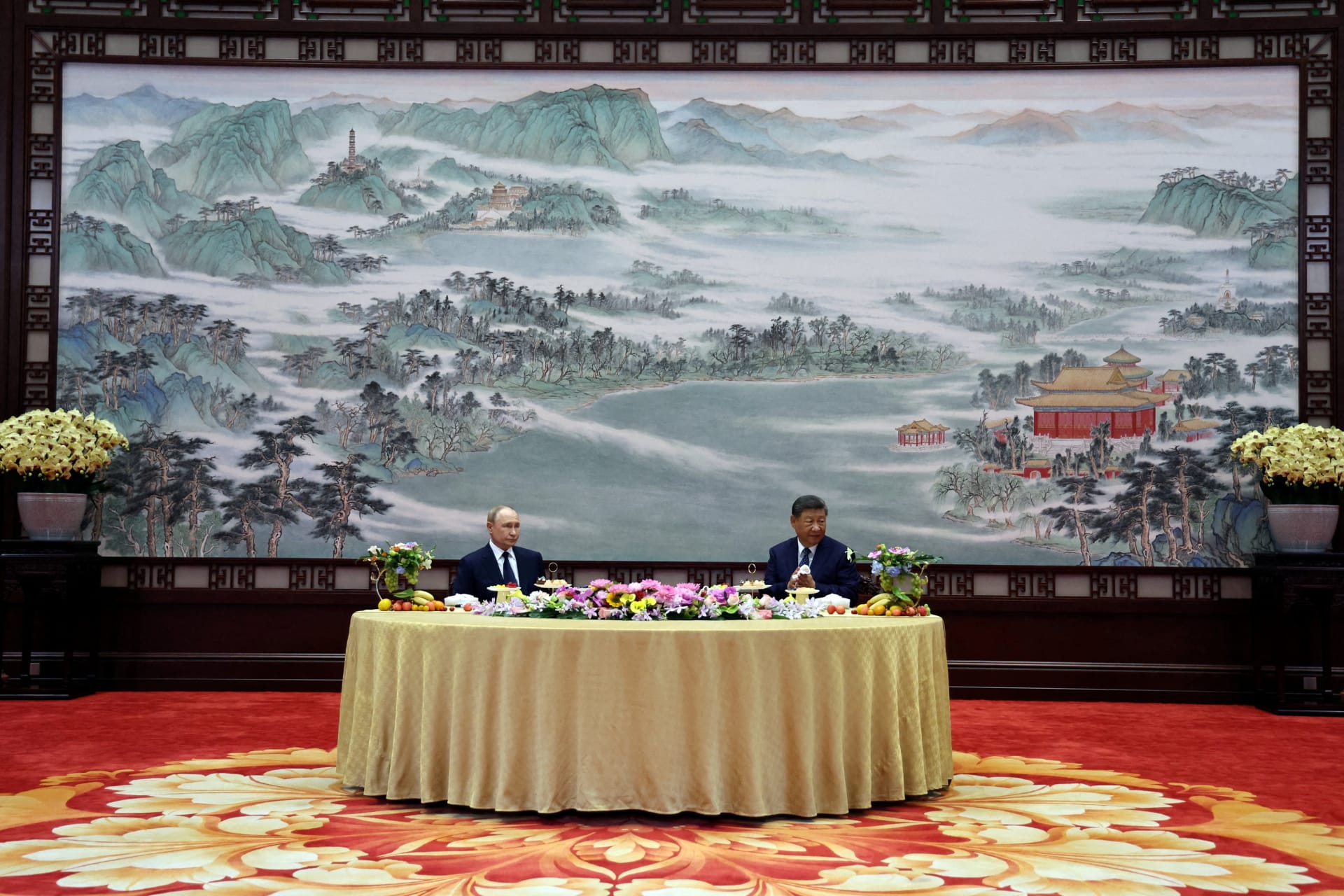
The point that autocracies have moved from ad hoc cooperation to more clear regular collaboration, for the longer-term, is finally beginning to be recognized by world leaders and scholars. Freedom House notes that: “A growing number of authoritarian regimes [have] banded together to undermine civil society groups, international institutions, and election monitoring in a campaign to make the world safer for autocracy.”
Similarly, a new report and database also released this week, created by the group Action for Democracy and titled Authoritarian Collaboration Index: Mapping the Global Autocratic Ecosystem, shows how authoritarian collaboration has become routinized. The Action for Democracy report notes: “The web of global authoritarian collaboration is not merely a series of ad hoc deals; it is increasingly underpinned by an expanding institutional infrastructure. These forums, congresses, coordination frameworks, and state-aligned networks lower the transaction costs of cooperation by institutionalizing elite contact, standardizing narratives, and providing recurring venues through which actors exchange operational practices, messaging strategies, and personnel. Over time, they also function as mechanisms of political socialization: they normalize a shared repertoire of governance claims, cultivate trusted intermediaries across countries and sectors, and help crystallize an authoritarian-leaning normative framework that can be mobilized in multilateral and information environments.”
At the same time as autocratic states, from the biggest to the smallest, are building collaborative networks, the most powerful rich democracies, from the United States to Germany to Japan, are focusing on their own domestic problems, cutting support for democracy promotion and humanitarian aid, and in some cases facing challenges to democracy at home. The United States, in particular, is in many ways facilitating the collapse of post-World War II institutions, rejecting democracy promotion and aid in general, and itself speeding up the arrival of a world with no order, other than one that Thomas Hobbes would have recognized in the 17th century: the powerful do what they want.
Freedom in the World 2026 clearly recognizes this trend. Its lead essay notes: “Although democracies’ foreign policy practices have not always matched their rhetoric, the world’s democratic governments have tried for decades to resist the autocratic assault by supporting human rights defenders and independent journalists, working together through multilateral organizations, and calling out rigged elections. But recently, democracies have begun to pivot from these priorities. While remaining deeply dedicated to multilateralism, European governments have substantially reduced funding for Overseas Development Assistance (ODA), moving away from long-standing commitments to support global civil society. In the United States, 2025 was a transformative year for foreign policy, as the new presidential administration suddenly cut funding for foreign assistance and international organizations, decided to end US commentary on the fairness of foreign elections, threatened the sovereignty of allies, and engaged in legally ambiguous unilateral military actions abroad.”
In fact, in my opinion the Freedom House 2026 report’s lead essay was actually too sanguine about the long-term future of democracy. It noted that “most democracies remain resilient in the face of daunting challenges … Despite internal pressures and threats from foreign powers, democracies continue to demonstrate that their domestic political systems are responsive and capable of course correction.”
That conclusion about democracy’s resilience does not seem, to me, to jibe with many events in recent years, from the wave of coups in West Africa to the collapse of Pakistan’s fragile democracy, the brutal end of a democratic experiment in Myanmar, and the teetering of many parts of southeastern Europe and Russia on the verge of democratic failure as well. The report does discuss the wave of West African coups; the Serbia chapter contains realistic warnings about the country’s backsliding, and the report accurately notes that militaries are becoming more involved in politics in many parts of the world – but I am not sure that faith in democratic resilience is correctly placed.
And even states that seem to have made progress toward reversing democratic backsliding, like Poland, are finding how incredibly difficult it is to do. According to an article published last year in the Journal of Democracy, after the pro-democracy Civic Coalition had won control of parliament in 2023 from the increasingly authoritarian Law and Justice party, Civic Coalition and its leader, Donald Tusk, found that “a key legacy of democratic backsliding is a series of institutional traps that are difficult to counteract without resorting to the same decisionist methods that made them. Proceduralist approaches risk leaving the damage unrepaired and demobilizing supporters, while more decisive action may require capitulation to the illiberal playbook.”
In other words, in order to reverse some of Law and Justice’s illiberal actions, Tusk was forced to use executive power, some of which was unclear that he possessed, to succeed. In doing so, many critics argued, he was using illiberal methods in an attempt to remedy Law and Justice’s prior illiberal actions – not exactly a recipe for real democratic restoration.
Overall, the authoritarians are winning, even if Nicolas Maduro was removed this year and the war in Iran could damage that major autocratic regime. They could be stopped – I am working on a book about authoritarian collaboration and potential remedies – but it will take close cooperation between the United States, Europe, and other leading democracies. With the current state of U.S.-Europe relations, and the White House’s disinterest in democracy promotion, it seems hard to imagine such cooperation anytime soon.
Joshua Kurlantzick participated in creating Freedom in the World 2026. However, he only produced the country reports on Brunei, Bhutan, Cambodia, and Laos. He played no role in the report’s overall essay or any other sections of the report.