Venezuela’s Democratic Transition Needs Women, Including Machado
Women have been on the frontlines fighting Maduro’s dictatorship, and other countries’ transitions show that women’s participation is vital for democracy to succeed
By experts and staff
- Published
- Caroline Hubbard
The U.S. removal and detention of former Venezuelan President Nicolás Maduro has drawn mixed reactions over the tactics employed, with ongoing debates about its legality. However, it has also opened a potential window for Venezuela to move from authoritarian rule toward a multiparty democracy long demanded by Venezuelans and supported by many international stakeholders. Discussions are beginning to coalesce around the characteristics of a transition needed to produce a peaceful resilient democracy, one that will not only result in democratic institutions and processes, but that can meet the needs of all its citizens, withstand future authoritarian tactics, and lead to lasting peace.
Whether countries’ transitions are from authoritarianism or conflict, evidence illustrates that post transition democratic resilience is strongly linked to the degree of gender equality achieved in and through the transition itself. As noted in the 2023 U.S. Strategy and National Action Plan (NAP) on Women, Peace, and Security (WPS), “The status of women and the stability of nations are inextricably linked: higher levels of equality make countries more prosperous, secure, and democratic.” Authoritarian leaders understand that the reverse is also true. The Maduro regime, like many anti-democratic leaders, has treated women’s systematic disempowerment and exclusion from formal decision-making as integral to controlling political outcomes and maintaining power. This pattern was underscored in 2024 when opposition leader María Corina Machado was barred from the presidential race despite winning the opposition primary by a landslide.
Venezuela’s prospects for a peaceful transition to democracy may depend on the country’s ability to shift these power dynamics. Formation of new governing institutions during periods of political transition such as this represent an opening to break autocratically aligned patterns of gender inequality. In these moments of flux, the development of new institutional structures and rules, as well as broader governance frameworks, can enable women and other marginalized groups to secure specific legal reforms and political commitments, including greater representation in politics, which is strongly associated with democratic resilience. For example, constitutional reform processes undertaken as part of political transitions in South Africa, Tunisia, Nepal, and Colombia enabled women to win institutional commitments to gender equality and women’s political participation.
Despite strong evidence linking gender equality and women’s political empowerment to democratic resilience, several conditions must be met to achieve this outcome. Women must quickly mobilize support and apply sustained pressure through civil society, and women leaders must be included as decision-makers within transition negotiations. Additionally, because men continue to make up the majority of stakeholders in these processes, outcomes depend on incentives for male power holders. Commitments to gender equality are often driven by international pressure, strategic bargaining, and an explicit objective to anchor transition processes in a rights-based framework.
The good news is that, in the case of Venezuela, several key enabling factors are present to varying degrees, including an increasingly coordinated feminist civil society working across political divides, the presence of feminist leaders within the pro-democracy opposition movement, and articulated commitments among opposition actors to a human rights–based democratic transition. Unfortunately, it is not a given that there will be sufficient international pressure for a gender transformative process.
The case of Egypt offers a clear warning to Venezuela’s opposition movement. Although women participated prominently in the protests and actions that led to former President Hosni Mubarak’s removal during the Arab Spring, women and their priorities were largely excluded from the political transition that followed, and women’s electoral representation declined after the revolution. While women’s organizations in Tunisia’s transition benefited from long-standing autonomous mobilization and strong coalitions with other parts of civil society, Egypt’s experience was shaped by state feminism, repression of independent organizing, and a divide between elite urban feminists and rural women. These factors constrained the consolidation of a sustained, independent women’s movement capable of articulating joint demands and exerting necessary pressure on male dominated opposition actors during the narrow window provided by Egypt’s transition process.
One of the most critical factors in successful democratic transitions is the inclusion of women leaders in formal transition negotiations who are able to ensure that women’s priorities shape political settlements. A strong and growing body of research on this topic has shown that when women are engaged in these processes, the resulting agreements are more stable and parties are less likely to engage in violence. Transition agreements are 64 percent less likely to fail and 35 percent more likely to endure at least fifteen years when women are meaningfully involved in their conception. In Colombia, women’s participation on both sides of the negotiating table helped broaden the agenda and embed more than one hundred gender-related commitments in the final peace agreement, including measures aimed at increasing women’s political representation.
Similarly, in Yemen,1 Tunisia,2 and in Bolivia, women successfully pushed for seats within formal transition bodies and leveraged their presence to secure durable gender equality commitments in post-transition governing documents. Including women with strong links to feminist groups and civil society organizations is particularly important, not only for sustaining gender equality on political agendas, but for ensuring that these commitments reflect the priorities and lived experiences of women across the country rather than elite interests alone. These connections can help ground post-transition reforms in broader social demands, strengthening both their legitimacy and durability.
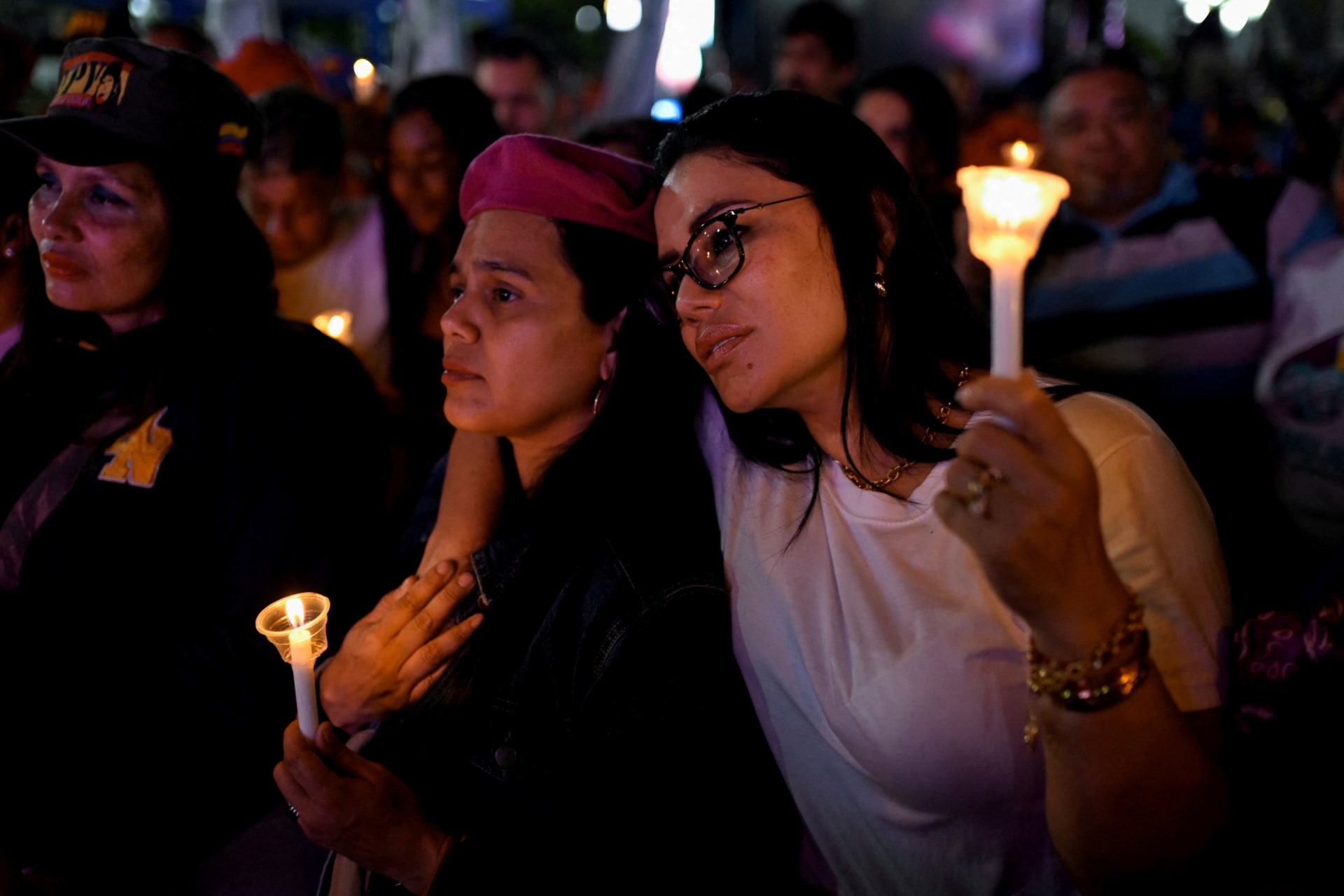
Venezuela is not starting from zero. In addition to the visible leadership of Nobel Peace Prize laureate María Corina Machado, women activists have played a critical role in advancing non-violent peaceful resistance and mobilizing communities to advance democracy and human rights, including through direct engagement with formal political institutions, often in the face of significant backlash. Women hold key leadership roles across a range of opposition parties, including María Beatriz Martínez, president of Primero Justicia; Adriana Pichardo, political coordinator of Voluntad Popular; and Andrea Tavares, secretary-general of La Causa R, among others. Women in civil society, such as Rocío San Miguel, president of the watchdog NGO Control Ciudadano, have increasingly mobilized around a shared agenda shaped by their long-standing exclusion from formal decision-making power and by the economic and social crises that have disproportionately affected them across political and ideological divides. These and related efforts have linked women across civil society, political parties, and elected office, creating cross-stakeholder networks with shared priorities that are well positioned for this moment.
Of most immediate concern is for stakeholders to affirm that a genuine democratic transition will occur. As the Venezuelan opposition’s win in 2024 demonstrated, neither an electoral victory nor the removal of an unelected leader is sufficient to guarantee a transition to democracy. Across each stage of a country’s transition, whether sliding back toward authoritarianism or moving toward reconciliation, there are moments of opportunity for women’s inclusion that can profoundly shape outcomes related to power, peace, and democracy. Without the leadership, inclusion, and sustained mobilization of women, Venezuela’s chances to return to democracy after decades of repression will be far dimmer.
Caroline Hubbard served as Senior Gender Advisor in USAID’s Bureau for Democracy, Human Rights, and Governance from 2022–2025. She has more than 20 years of experience advancing women’s political participation and democratic governance, including more than a decade at the National Democratic Institute, where she served as Senior Gender Advisor and Deputy Director for Gender, Women and Democracy.