Global Agenda: Trump’s Health Scheme
By experts and staff
- Published
- Guest Blogger for the Internationalist
This blog post is part of a series entitled Global Agenda, in which experts will identify major global challenges facing President-Elect Trump, the options available to him, and what is at stake for the United States and its partners. This following post is authored by Laurie Garrett, senior fellow for global health at the Council on Foreign Relations.
When United Nations Ambassador Samantha Power speaks about health issues, she often notes with pride that nearly 4,000 United States military personnel did battle against Ebola in West Africa, along with 165 Cuban doctors. It’s a Barack Obama-era linkage not likely to be repeated in the new Donald J. Trump administration, tying together an outbreak on foreign soil, U.S. soldiers, and physicians from, of all places, Cuba.
Concern runs high in global health, research, and development circles all over the world about changes expected in 2017, though to date neither President-Elect Trump nor his transition team have offered any indication that such things as malaria control, rising diabetes levels in nearly all societies, access to medical care in poor countries, or pandemic preparedness are on their radar. The stakes for people all over the world, however, are terribly high. The U.S. government, through a variety of agencies and programs, is by far the most generous donor in the world, and plays an active, often dominant, role in defining health, development, and food policies for the entire planet. Whether viewed as global dependency upon the U.S. government, or responsible generosity from the richest nation on Earth, the programs are enormous, and their impact also huge. For example:
Compared to American domestic spending on health, these foreign outlays are trivial, but the dependency at the receiving end is tremendous because the U.S. pieces of the programs’ small pies are overwhelming. Trump administration cuts, should they transpire, would be devastating.
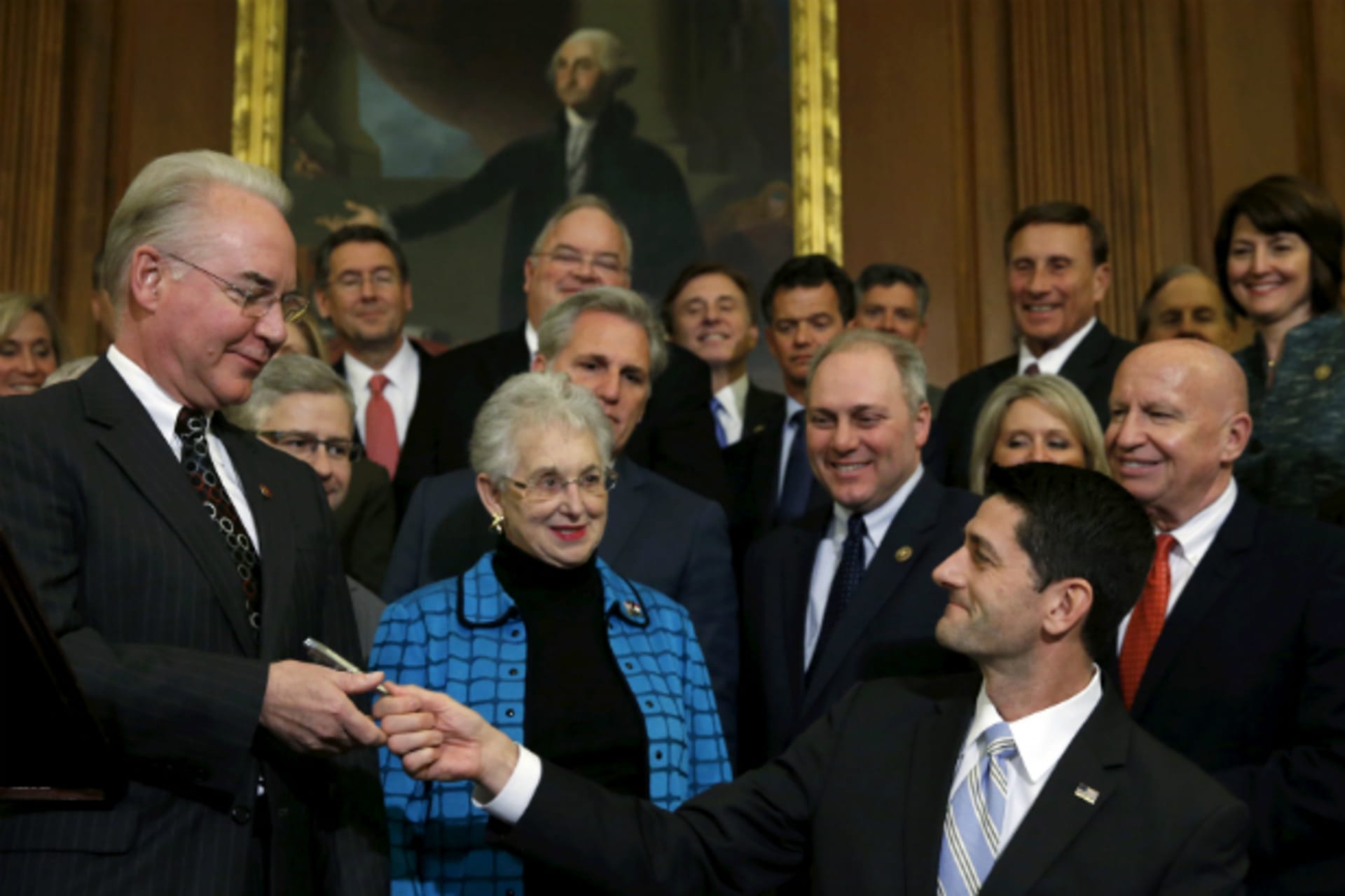
The U.S. 2017 federal budget is $3.8 trillion, with 28 percent of that going towards health care, more than defense spending. Combined federal, state, and local FY 2017 healthcare spending is estimated at $1.5 trillion. President-Elect Trump has focused his attention on reducing government spending on health through elimination of the Affordable Care Act, or “Obamacare,” that currently provides insurance and added coverage for more than 36 million people, and overhaul of Medicaid (currently covering 72.5 million Americans under 65 years old) and Medicare (covering 53.9 million people over 65 years old). On November 29, he named private medical cost consultant, Seema Verma, to head Medicare and Medicaid, and Georgia Congressman Tom Price, an orthopedic surgeon, to be secretary of health and human services (HHS). Calling the duo his “dream team,” Trump vowed Verma and Price will turn domestic health programs upside down, drop immigrants from government-financed services, promote private insurance and payment programs, and provide financing for individuals through a combination of vouchers and tax write-offs, neither of which are likely to be useful to those currently covered by Obamacare. Price has promoted the Empowering Patients First Act in the House, which would lift most regulations on medical practices and let patients shop for care financed by health savings accounts (vouchers) and tax credits.
But while Verma and Price, in close collaboration with House Speaker Paul Ryan, are busy shifting American healthcare into the private sector, and deregulating the pharmaceutical and medical industries, what will the administration be doing on the global scale? Asked if PEPFAR should aim to double by 2020 the number of people worldwide who receive anti-HIV medicines with U.S. taxpayer support, then-candidate Trump responded, “Yes, I believe so strongly in that, and we’re going to lead the way.” Impact2016 notes, however, that Trump was not a fan of foreign assistance programs.
Congressman Price has consistently voted against the Affordable Care Act, all forms of funding for family planning or abortions, expansion of federal healthcare funding for children and poor single mothers, the Global Food Security Act, the Obama administration request for $1.9 billion in emergency Zika funds, the United States Global Leadership Against HIV/AIDS, Tuberculosis, and Malaria Reauthorization Act, and opposed every piece of legislation favored by Planned Parenthood, earning a 100 percent rating from National Right to Life.
Andrew Bremberg, policy advisor to Senate Majority Leader Mitch McConnell, is leading the Trump transition team’s health effort, and will make many of the changes and appointments within HHS, including leadership of the Food and Drug Administration, the Centers for Disease Control and Prevention, and the National Institutes of Health. He served a number of policy roles inside HHS during the George W. Bush administration, but his views of global health programs are not known. Trump’s choice for secretary of state will be critical, as the U.S. Agency for International Development and PEPFAR programs are handled through U.S. embassies.
Tea leaf reading renders the Trump global health scorecard for 2017–2018 as:
The only time Donald Trump addressed a global health issue at length—well, in a Tweet storm— was in 2014 when physician Kent Brantly and nurse Nancy Writebol acquired Ebola infections while working in the Liberian epidemic, and were scheduled to be airlifted to Georgia for emergency care. “KEEP THEM OUT OF HERE!” he tweeted, in all-caps, calling President Obama a “Psycho!” for allowing the ailing health workers’ return to America. Clearly then-realtor Trump didn’t share Ambassador Power’s enthusiasm, linking Ebola, U.S. troops, and Cuban doctors.
Follow IIGG on Twitter: @CFR_IIGG. Or like us on Facebook: (fb.me/CFRGlobalGovernanceProgram).