As Zelenskyy Meets Trump, Ukraine’s Political Crisis Reveals a Silver Lining
Zelenskyy arrives in Washington carrying a political crisis of his own making, after the ouster of his popular defense minister triggered protests across Ukraine. But by forcing him to answer for it, Ukraine’s civil society has once again demonstrated the strength of Ukraine‘s democracy.
By experts and staff
- Published
 Liana FixCFR ExpertSenior Fellow for Europe
- Program Coordinator, Securing Ukraine’s Future and the Wachenheim Center for Peace and Security
Liana Fix is an authority on European security and transatlantic relations and leads the Securing Ukraine’s Future initiative at the Council on Foreign Relations. She is the author of the forthcoming book Germany Rearmed: The Return of War and the End of Illusions. Molly Carlough is a program coordinator for Securing Ukraine’s Future and the Wachenheim Center for Peace and Security.
Tuesday’s meeting between Ukrainian President Volodymyr Zelenskyy and President Donald Trump at the White House is meant to revive stalled ceasefire negotiations with Russia, but it comes at a moment of self-inflicted crisis at home for Ukraine’s leader. In a recent cabinet reshuffle, the country’s popular reformist defense minister, Mykhailo Fedorov, was removed after only six months in office. Fedorov and his supporters allege that his agenda had become too disruptive for the entrenched interests that surround wartime defense contracting.
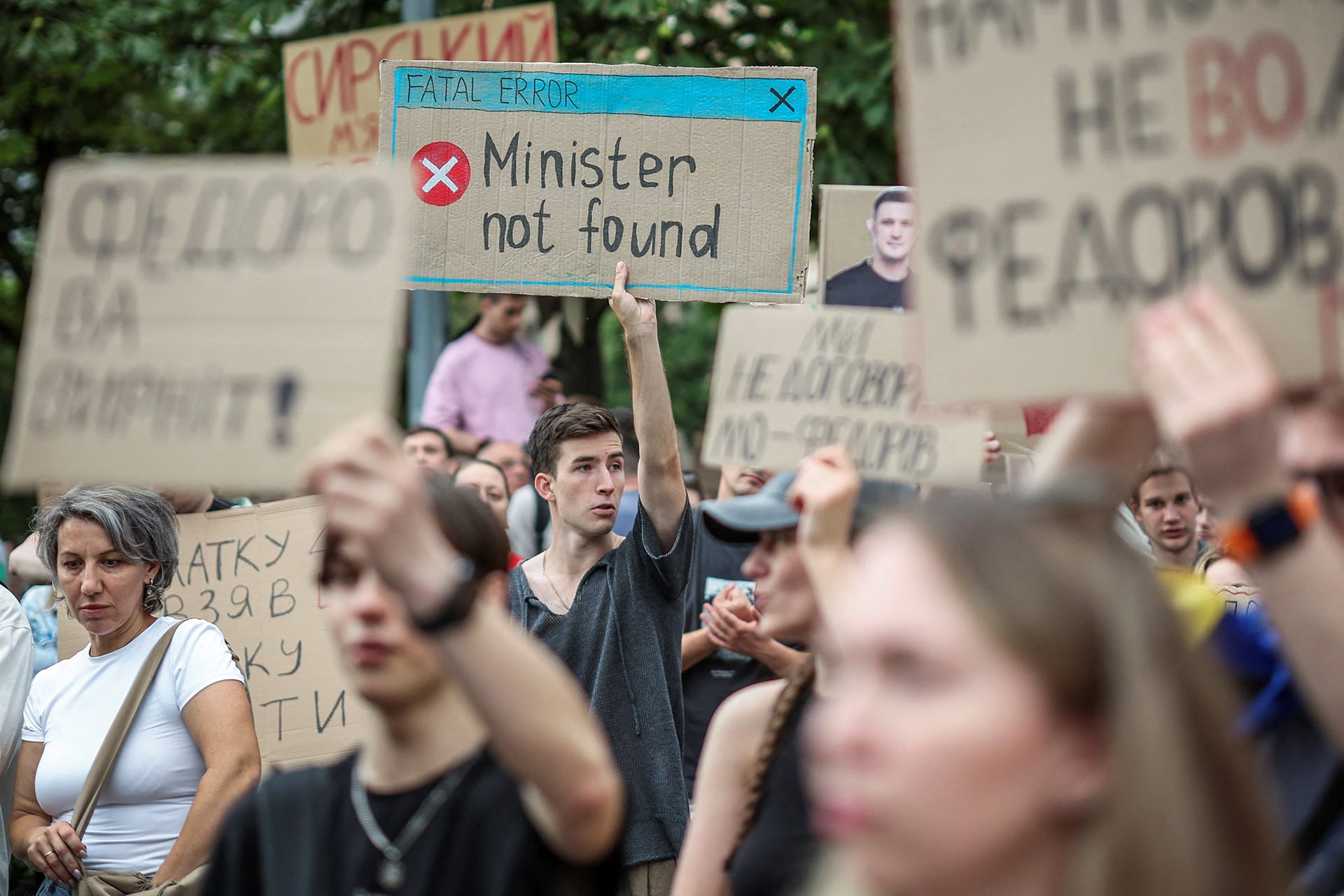
Zelenskyy may have expected the move to pass quietly, as most of his wartime reshuffles have. Instead, Ukrainians took to the streets in Kyiv and other cities. Not for the first time in this war, Ukrainians forced concessions from their political leaders—proof, again, of the resilience of Ukraine’s wartime democracy. Whether Ukraine’s allies in the United States and Europe see it that way could shape whether Kyiv retains the political and financial backing it needs to sustain its gains through a dire winter.
The Ukrainian public credited Fedorov with pushing procurement reforms and an anti-corruption agenda inside the defense ministry—like open tenders and contract audits. But Fedorov clashed with the Commander in Chief Oleksandr Syrskyi, often described as a more traditional military leader representing a centralized Soviet-era command structure in the army. The firing points to a rift inside the military command between the fast, technology-first way of fighting that Fedorov preferred, which has advanced Ukraine’s rapid development of drone technology, and the more conventional human-centric approach by Syrskyi.
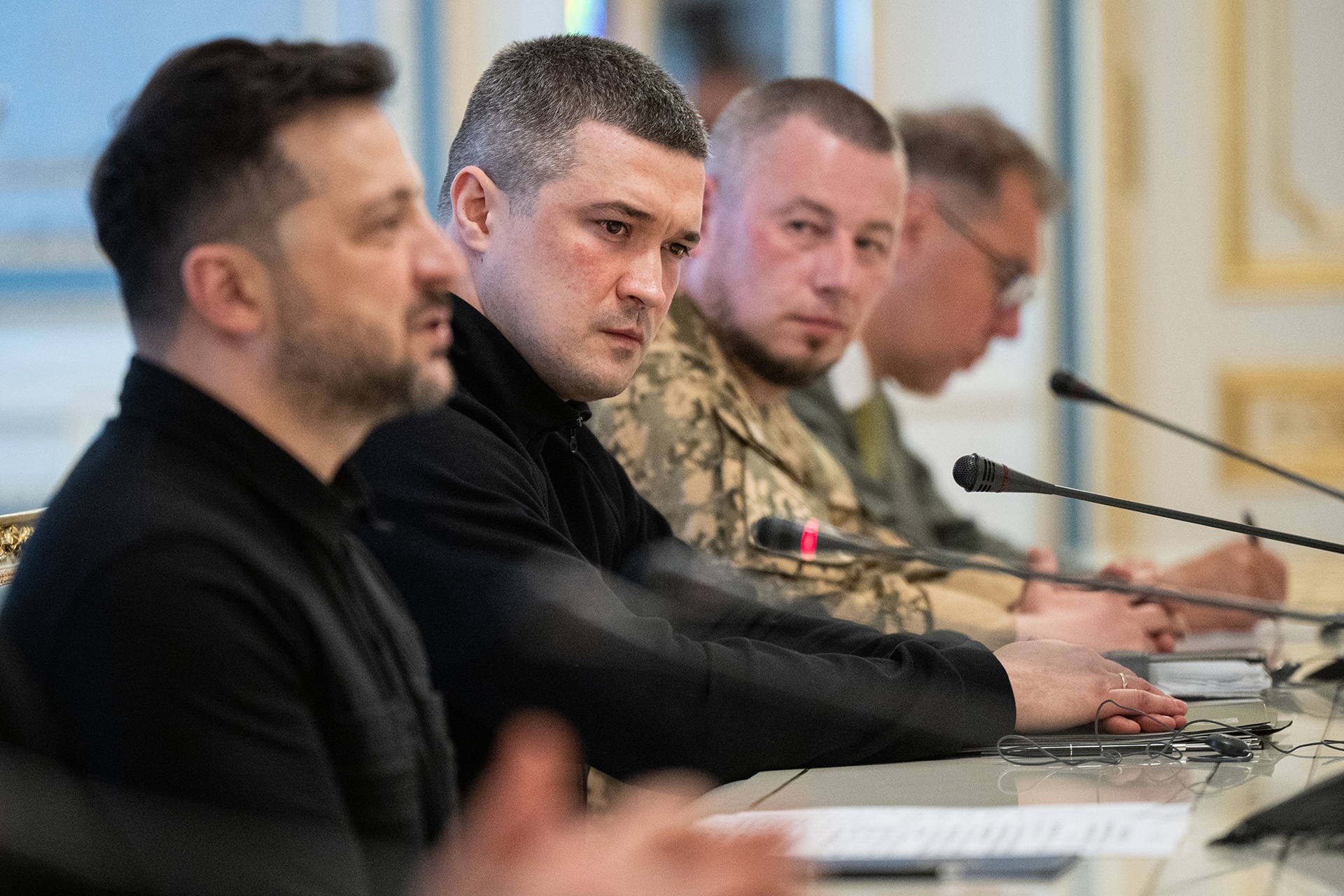
Facing protests and public pressure that favored Fedorov and his reform agenda, Zelenskyy eventually replaced Syrskyi with a younger and more reform-minded general, Mykhailo Drapatyi. The Ukrainian president has since offered Fedorov a series of alternative posts—most recently deputy prime minister for military innovation, along with a senior national-security advisory role—in hopes of bringing the politically tense episode to a close. But Fedorov has so far refused to return to anything other than the defense ministry, publicly rebuffing a president to whom he had shown years of loyalty and, in the process, raising his own political profile. According to reports, figures in Zelenskyy’s inner circle have accused Fedorov of harboring presidential ambitions.
On the battlefield, the crisis has unfolded precisely as Ukraine had begun to regain momentum against Russia, which is particularly worrisome. It raises the concern that political maneuvering in Kyiv could set back performance at the front with another tough winter ahead. For example, Fedorov had sought to consolidate existing brigades rather than stand up new ones, and to concentrate scarce personnel and equipment in the most effective, technology-driven units. Currently, there is only an acting defense minister, and Drapatyi—the new military commander—still has to establish his own authority. There is a real chance that this personnel volatility could have a negative impact by slowing down and delaying necessary reforms in the defense ministry and defensive preparations on the battlefield.
The domestic crisis also carries risks for Ukraine’s relationships with the United States and Europe. EU Defense Commissioner Andrius Kubilius, calling the dismissal “quite a big surprise,” warned that it would raise the question of why such a figure was being replaced. Brussels has committed a €90 billion loan for 2026–27 to Ukraine and its military. Now this central financial lifeline—tied to conditions such as the rule of law and the fight against corruption—could be under threat. An impression that Ukraine’s reform efforts are stalling, or being reversed, could also bear on Ukraine’s EU accession effort, which advances chapter by chapter and includes benchmarks on rule of law and corruption.
The crisis could also have implications in Washington. Zelenskyy arrives as momentum revived behind Russia-sanctions legislation. The passing of Senator Lindsey Graham (R-SC)—a close ally of Ukraine in the U.S. Senate and an architect of the legislation— has driven that growing support, and sentiment on Ukraine seems to be shifting within Trump’s MAGA coalition as well. Ideally, Zelenskyy can make use of this opportunity instead of remaining mired in a scandal at home that undermines his credibility and leadership.
The silver lining is that the crisis showed, once again, the strength of Ukraine’s civil society. As during the Orange Revolution and the Euromaidan, Ukrainians took to the streets. This time they were driven by genuine concern that Ukraine’s modestly positive war trajectory and its reform and good governance agenda were under threat. Their efforts forced a correction in the middle of a war and under martial law, and there could be further changes made.
This is not the first time that common Ukrainians have played this role since the war began. Their protests in 2025 already compelled Zelenskyy to restore the independence of Ukraine’s anti-corruption agencies. In demonstrating that it can still impose checks on power under these conditions, Ukraine’s democracy and civil society are showing exactly the resilience that Russia has bet, wrongly so far, that it lacks.
This work represents the views solely of the author(s). The Council on Foreign Relations is an independent, nonpartisan membership organization, think tank, and publisher, and takes no institutional positions on matters of policy.