Global Development 2.0: Assessing a New UN Roadmap
By experts and staff
- Published
- Stewart M. PatrickJames H. Binger Senior Fellow in Global Governance and Director of the International Institutions and Global Governance Program
Last week the UN’s latest “High-Level Panel of Eminent Persons” released a long-awaited report on global development. The resulting document—A New Global Partnership: Eradicate Poverty and Transform Economies through Sustainable Development—is not only a good read, it’s also a compelling blueprint for extending prosperity to the world’s poor.
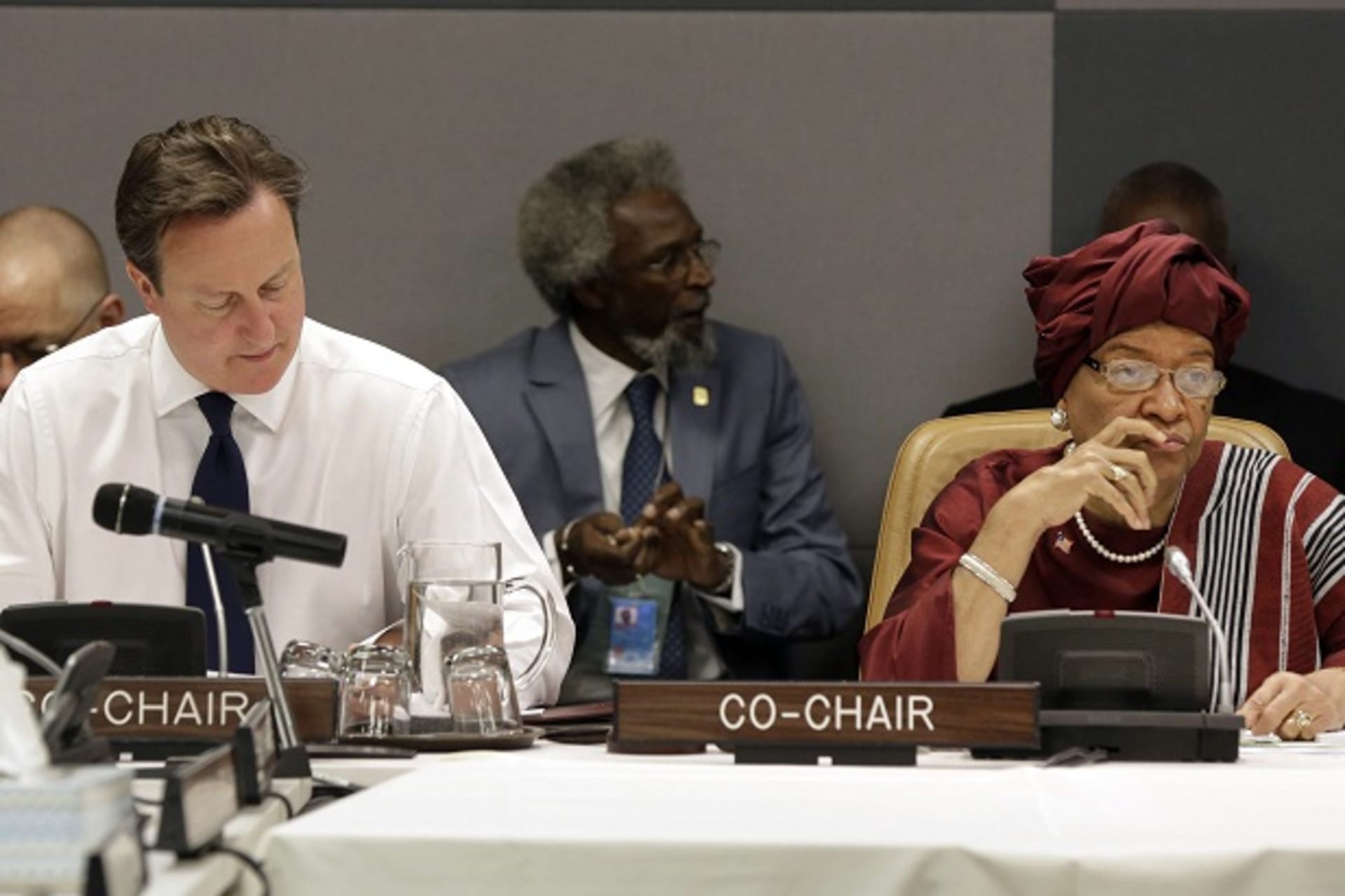
Formed in July 2012, the panel of twenty-seven luminaries had a clear mandate: to craft a “single, universal… agenda” to guide development cooperation once the Millennium Development Goals (MDGs) expire in 2015. The panel—cochaired by Indonesian President Susilo Bambang Yudhoyono, Liberian President Ellen Johnson Sirleaf, and British Prime Minister David Cameron—succeeded admirably. While building on the MDGs, the report widens the aperture of global development to consider new horizons and avenues to reach them.
The MDGs, as the report notes, have mobilized unprecedented global support for development cooperation, particularly when it comes to foreign assistance. While the MDGs’ precise impact is hard to gauge, the years since 2000 have witnessed “the fastest reduction of poverty in human history.” The number of people living in absolute poverty has declined by 500 million, and the incidence of infant mortality has declined by thirty percent. These are monumental achievements.
At the same time, the MDGs were heavily focused on meeting basic human needs. As such, they overlooked other preconditions for sustainable development, among these security from violence, the provision of good governance and the rule of law, protection of human rights, reliable infrastructure, access to energy, and responsible environmental stewardship. The MDGs also framed development cooperation, narrowly, as essentially an aid-driven relationship, in which wealthy donors provided charity to the tin cups of demanding recipients. This ignored the many other policy instruments both sides could deploy, from trade to investment to technology transfer.
The new report corrects these gaps by proposing an innovative post-2015 agenda organized around five broad themes, accompanied by twelve “illustrative” goals. The five themes are:
So far so good. But how to realize these broad shifts? Here, the report pulls its punches a bit, offering only an “illustrative” (rather than “prescriptive”) list of twelve new goals to replace the MDGs. This decision may disappoint some readers. But it’s strategically wise. The ultimate goals will be hammered out within the UN General Assembly (UNGA), which guards its few prerogatives jealously. In such a context, the panel’s subtle, indirect approach may pay greater dividends.
The report’s twelve proposed post-2015 development goals are:
1. End Poverty
2. Empower Girls and Women and Achieve Gender Equality
3. Provide Quality Education and Lifelong Learning
4. Ensure Healthy Lives
5. Ensure Food Security and Good Nutrition
6. Achieve Universal Access to Water and Sanitation
7. Secure Sustainable Energy
8. Create Jobs, Sustainable Livelihoods, and Equitable Growth
9. Manage Natural Resource Assets Sustainably
10. Ensure Good Governance and Effective Institutions
11. Ensure Stable and Peaceful Societies
12. Create a Global Enabling Environment and Catalyse Long-Term Finance
Each of these goals is accompanied by 4-6 “measurable targets,” ideally allowing one to gauge progress. (For example, a target for “securing sustainable energy” includes “doubling the share of renewable energy.”) As the report concedes, refining these targets, as well as developing accurate indicators with sufficient global coverage, will require a lot more technical work.
One of the report’s most promising recommendations is its call for a “data revolution for sustainable development.” It has become a cliché, of course, that we live in an era of “big data.” What is less well known is the degree to which digital connectivity, including mobile telephony and social media, has begun to change the development landscape, empowering individuals and enabling communities to make large improvements in the quality of their lives and livelihoods. The same technologies can be usefully marshaled to gather timely data on local conditions and needs, domestic and international responses, and development outcomes.
Recalling how far the world has come since 2000, the authors are “convinced that the next 15 years can be some of the most transformative in human history.” Their report offers a useful roadmap for that journey.