Governments Declare Emergency Energy Policies in Response to Iran War
By experts and staff
- Published
Welcome to the Daily News Brief, CFR’s flagship morning newsletter summarizing the top global news and analysis of the day.
Top of the Agenda
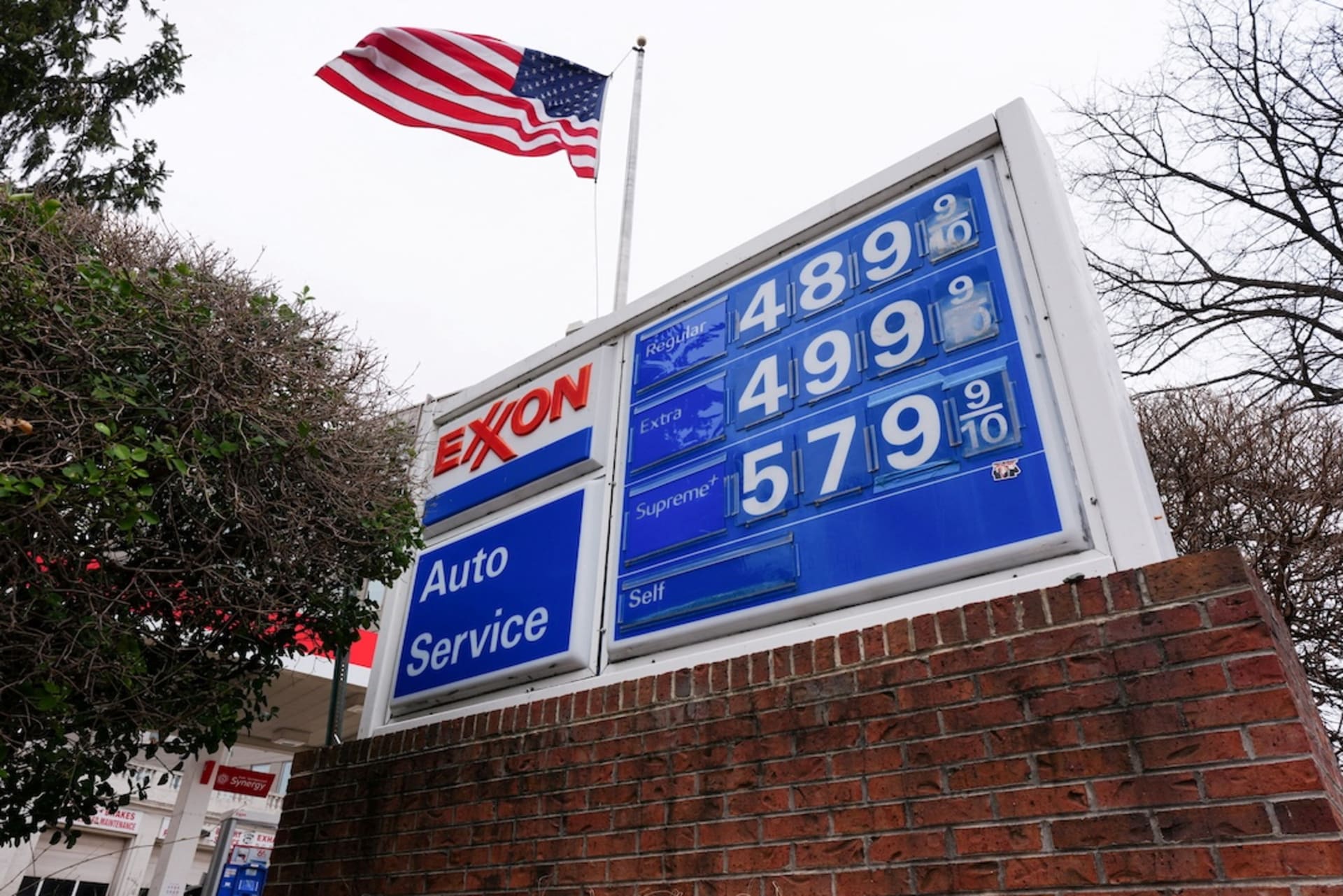
Governments and companies are sounding alarms about energy market disruptions due to the Iran war. The Philippines declared a national energy emergency yesterday amid plans for a transport workers’ strike. The CEO of United Airlines said it could hike fares by 20 percent if high jet fuel prices persist. Though oil-importing Asia faces many of the most severe energy strains, new data this week that pointed to slowing business activity in the United States, the Eurozone, and the United Kingdom (UK) suggest the war is affecting economies worldwide. Average U.S. prices at the pump for regular gasoline have risen one dollar over the past month to $3.98 per gallon, according to AAA.
How governments are responding. The Philippines’ energy emergency authorizes the government to take extraordinary steps to procure oil imports, and the country is in talks with the United States about obtaining permission to purchase oil from U.S.-sanctioned countries. Slovenia and Sri Lanka have introduced fuel rationing, while countries including South Korea are encouraging voluntary fuel conservation.
How companies are responding. A handful of energy companies that depend on the Strait of Hormuz for exports or that have been attacked declared force majeure, meaning they will not fulfill some contracts. The squeeze on oil from the Middle East has triggered another wave of force majeure declarations by petrochemical companies—mostly in Asia—that rely on it. German chemical giant BASF has also said it is raising prices on many goods by up to 30 percent.
Efforts to address the bottleneck. The UK has offered to host a summit on creating a “viable, collective plan” to reopen the Strait of Hormuz. Meanwhile, the United States has sent Iran a fifteen-point plan for ending the war that discusses maritime routes, an unnamed official told the New York Times yesterday. But Iran has said it has steep demands for reentering talks after the United States and Israel recently attacked during negotiations. Tehran has called for some steps, such as the closure of U.S. bases in the Gulf, that an unnamed U.S. official told the Wall Street Journal were “ridiculous and unrealistic.” In another sign the war could stretch on, multiple news outlets reported yesterday that the United States plans to deploy several thousand more troops to the Middle East.
“In a matter of weeks, the Iran war has generated massive uncertainty about the future of the Middle East and rocked the global economy…Every major stock market has fallen since the war started, and central bankers, economists and policymakers have projected that a drawn-out war could cause inflation to spike and undermine economic growth worldwide.”
—CFR expert Joshua Kurlantzick and CFR’s Annanbel Richter, World Politics Review
Across the Globe
Denmark’s close election. Danish Prime Minister Mette Frederiksen resigned today after her center-left party showed its worst results since 1903 in parliamentary elections yesterday. Though Frederiksen’s popularity rose amid Denmark’s resistance to U.S. threats over Greenland, domestic economic issues featured prominently in the campaign. No political coalition won an outright majority, meaning negotiations are required to form the next government and Frederiksen could return for a third term.
Russian drone attack. Russia fired nearly one thousand drones and twenty-three cruise missiles at Ukraine in a twenty-four-hour period, Ukrainian officials said today—one of the largest such barrages of the entire war. At least seven people were killed in the attacks. The Russian air offensive follows Ukrainian territorial gains last month. February was the first month since 2023 that Ukraine gained more ground than it lost, military analysts told the Guardian.
EU-Ghana defense deal. Ghana yesterday became the first African country to sign a security and defense partnership with the EU. The partnership covers areas such as climate, counterterrorism, and border management. Brussels has pledged tens of millions of dollars in security assistance to Ghana since 2023 and this week delivered surveillance drones, anti-drone guns, and motorcycles.
Report on supposed anti-drug strike. A joint Ecuadorian-U.S. strike this month that both countries said targeted drug traffickers actually appeared to have hit a dairy farm, the New York Times reported yesterday. Three farm workers told journalists that Ecuadorian soldiers choked and electrocuted them before releasing them. Ecuador’s government said it relied on U.S. “intelligence and support” to identify the farm, and the country’s military claimed it found evidence of illicit activity on the property but did not elaborate. The Pentagon’s press secretary declined to discuss targeting details, citing operational security.
Russia’s nuclear energy cooperation. Russia and Uzbekistan signed a roadmap for nuclear energy cooperation and a contract for a new nuclear power plant yesterday, Russian state nuclear company Rosatom said. The deals follow a joint Russia-Vietnam announcement Monday that Russia will help to build a plant there.
Afghanistan prisoner release. U.S. citizen Dennis Coyle, an academic who was detained by the Taliban in January 2025, has been released, Secretary of State Marco Rubio announced yesterday. Rubio thanked Qatar and the United Arab Emirates for their support in the matter and said Washington was still seeking the release of multiple other Americans detained in Afghanistan.
Chile’s shift on UN nomination. Chile, where right-wing President José Antonio Kast was inaugurated this month, dropped its support for former center-left Chilean President Michelle Bachelet’s nomination to be United Nations Secretary General. She had been nominated by Chile’s former leftist government, as well as Brazil and Mexico. Bachelet said yesterday she would maintain her candidacy with the support of the latter two countries.
Israel’s ambitions for Lebanon. Israel’s defense minister said yesterday the country plans to militarily control southern Lebanon below the Litani River, an area that amounts to almost a tenth of the country. He described the strategy as creating a “security zone” in response to Hezbollah threats, while a senior Hezbollah lawmaker said the group would “confront” Israel’s offensive. Lebanon’s government did not immediately comment.
What’s Next
- Today, Denmark holds parliamentary elections.
- Tomorrow, a meeting of Group of Seven foreign ministers begins in France.
- Tomorrow, the UN Security Council discusses the Central African Republic.