U.S. Announces Mission to Support Strait of Hormuz Shipping
By experts and staff
- Published
Welcome to the Daily News Brief, CFR’s flagship morning newsletter summarizing the top global news and analysis of the day.
Top of the Agenda
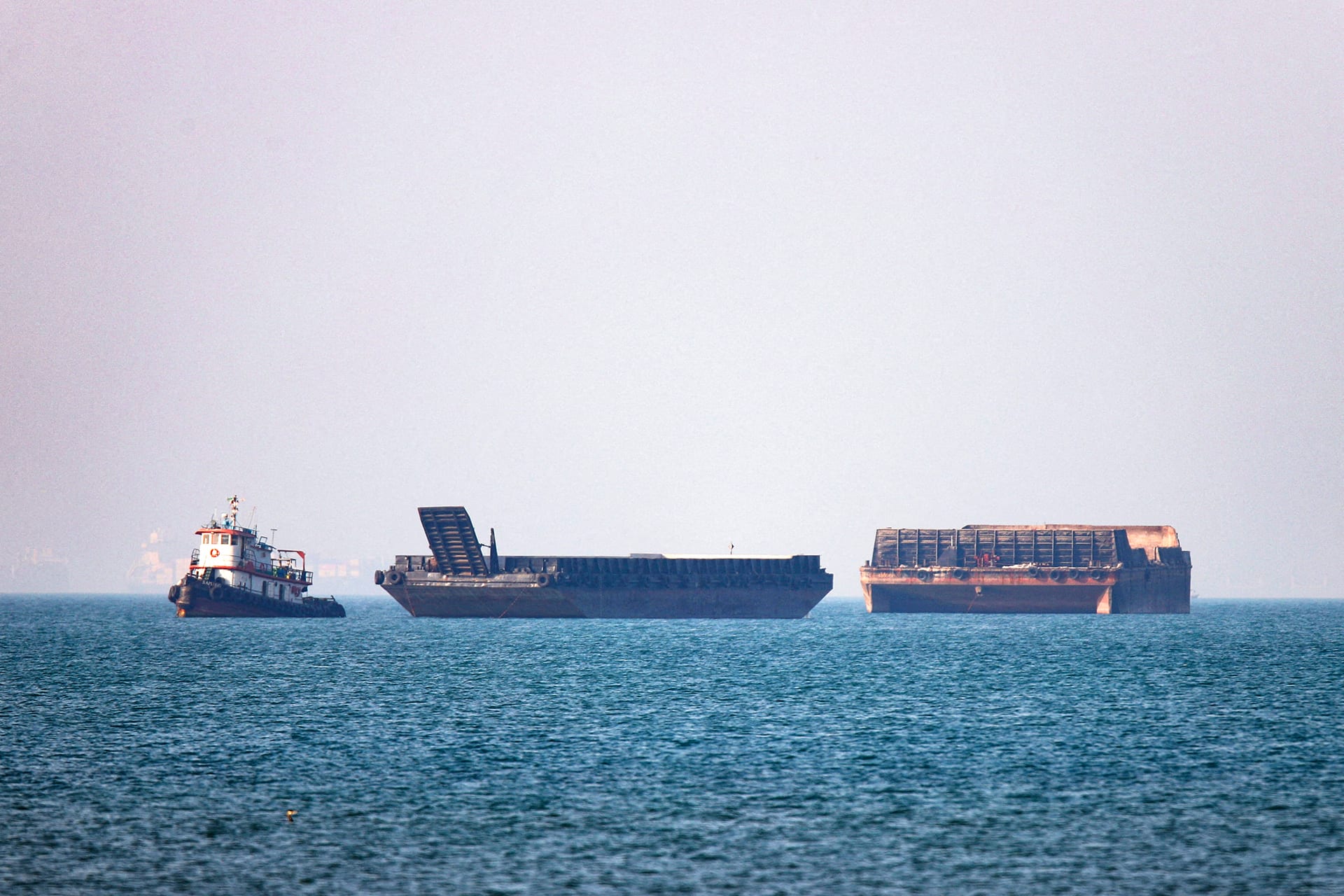
U.S. President Trump announced an effort yesterday to guide commercial ships through the Strait of Hormuz while indirect diplomacy between the United States and Iran continues. Trump wrote on social media that the U.S. mission would support ships from countries not involved in the war, while U.S. Central Command (CENTCOM) said more than one hundred aircraft would take part. The announcement came as Iran’s foreign ministry said yesterday it was reviewing Trump’s response to its latest peace proposal.
The new Hormuz mission. CENTCOM said the mission would begin today. Rather than U.S. naval escorts for commercial ships, the mission will provide diplomatic and insurance assistance to coordinate passage, unnamed senior U.S. officials told the Wall Street Journal. While Trump said “Project Freedom” was being carried out “for the good of” Iran and others, the head of Iran’s parliamentary national security commission wrote on social media that U.S. interference in the strait would be considered a ceasefire violation.
Where diplomacy stands. Tehran’s latest proposal calls for ending the war within thirty days rather than agreeing to Washington’s proposal for a two-month ceasefire, Iran’s semi-official news agency Tasnim and state-owned outlet Press TV said. Other Iranian demands reportedly include the withdrawal of U.S. forces from surrounding areas and the release of frozen Iranian assets. Trump told Israeli public broadcaster Kan yesterday that Iran’s proposal was “not acceptable,” though the United States allowed the crew of an Iranian ship it had seized to be transferred to Iran in what mediator Pakistan called a “confidence-building measure.”
Where fighting continues. Despite a ceasefire agreement in Lebanon, Israel warned residents of southern Lebanon yesterday to evacuate their homes ahead of renewed Israeli military operations. The evacuation order covered the area north of the Litani River, stretching beyond the area Israel previously said it would occupy.
“Whether the war ends in a negotiated settlement or in a frozen standoff, it’s possible that transit in the Strait of Hormuz does not return to prewar levels… the war’s economic consequences are asymmetrically distributed, with Gulf states and low-income energy importers as far away as the South Pacific among the hardest hit.”
—CFR President Michael Froman, The World This Week
Across the Globe
U.S. pullback from Germany… The United States plans to withdraw around five thousand troops from Germany by six months to a year from now, a Pentagon spokesperson said Friday. The Pentagon said the move would return troop levels to their pre-Ukraine war levels. Washington will also walk back plans to deploy new long-range weapons in Germany, an unnamed Pentagon official told the Financial Times. The move follows Germany’s refusal to join offensive U.S. military operations in Iran and aligns with the Trump administration’s push for Europe to take more responsibility for its own defense.
…and allies’ response. German Defense Minister Boris Pistorius and NATO both said the Pentagon announcement underscored the importance of greater defense spending among European countries. Pistorius called the move “foreseeable” but said that retaining U.S. troops in Germany was in both countries’ interests. NATO said it was working to “understand the details” of the announcement.
Trump’s tariffs on EU cars. The United States will apply a 25 percent tariff on European Union (EU) car and truck imports, Trump wrote on social media Friday, claiming Brussels was violating its 2025 trade agreement with Washington without specifying how. That deal set a 15 percent U.S. tariff rate for European imports. The European Commission said it was seeking “clarity” about the move, abiding by its commitments, and would “keep our options open to protect EU interests.”
China spurns U.S. sanctions. Beijing will not comply with recently announced U.S. sanctions on five Chinese oil companies that purchase Iranian oil, China’s commerce ministry said Saturday. It argued the sanctions were illegal and targeted normal economic activities. Washington justified them by saying Iran’s oil sector funds its army and terrorist partners. Trump is expected to visit China later this month.
Spirit Airlines closure. The low-cost U.S. airline announced Saturday it was shutting down, citing the recent spike in jet fuel costs and previous financial difficulties. It is the first major U.S. airline to go out of business due to financial strains in twenty-five years. Talks with the Trump administration about a potential bailout fell through last week.
Iranian Nobel winner hospitalized. The Norwegian Nobel Committee called yesterday for Iranian authorities to transfer 2023 peace prize winner Narges Mohammadi to her medical team in Tehran, warning her life was in danger. Authorities brought Mohammadi to a local hospital Friday after she lost consciousness in prison. Mohammadi was jailed in December after criticizing the government.
Mexican officials step down. A governor and a mayor from the northwestern state of Sinaloa announced temporary leaves of absence after being indicted by the United States on drug trafficking charges. Both denied the allegations. Their departures from their posts mean they are no longer immune from prosecution under Mexican law.
Lai in Eswatini. Taiwanese President Lai Ching-te arrived in the country Saturday via an Eswatini government aircraft, weeks after his initial trip was canceled due to Beijing reportedly pressuring nearby countries to deny him overflight rights. Eswatini is the only African country that formally recognizes Taiwan. Taiwan “will never be deterred by external pressures,” Lai wrote on social media.