Guest Post: Ending Genocide in the Twenty-First Century
By experts and staff
- Published
- Guest Blogger for the Internationalist
The Internationalist will be taking some time off, but please enjoy the series of upcoming guest blogs. Below, my colleague Farah Thaler, associate director of CFR’s International Institutions and Global Governance program offers insight on the future of genocide prevention.
Preventing genocide and other atrocities is arguably one of the most urgent challenges of our times. The difficulty, as underscored, by Secretary of State Hillary Clinton—the keynote speaker at a symposium hosted by the United States Holocaust Memorial Museum, in partnership with CFR and CNN— is that “there is no one-size-fits-all solution. Every situation requires a tailored and careful response.”
The brutality in Syria, and the inability to find a solution to the escalating civilian casualties, show that work on this front is both complex and political. And sadly, mass atrocities do not only occur in the most visible cases through state-sponsored campaigns, as in Syria. But also—as the secretary of state highlighted—in myriad incidents that target the vulnerable and voiceless (i.e. mass rape or infanticide). In these instances, awareness, let alone, solutions are absent.
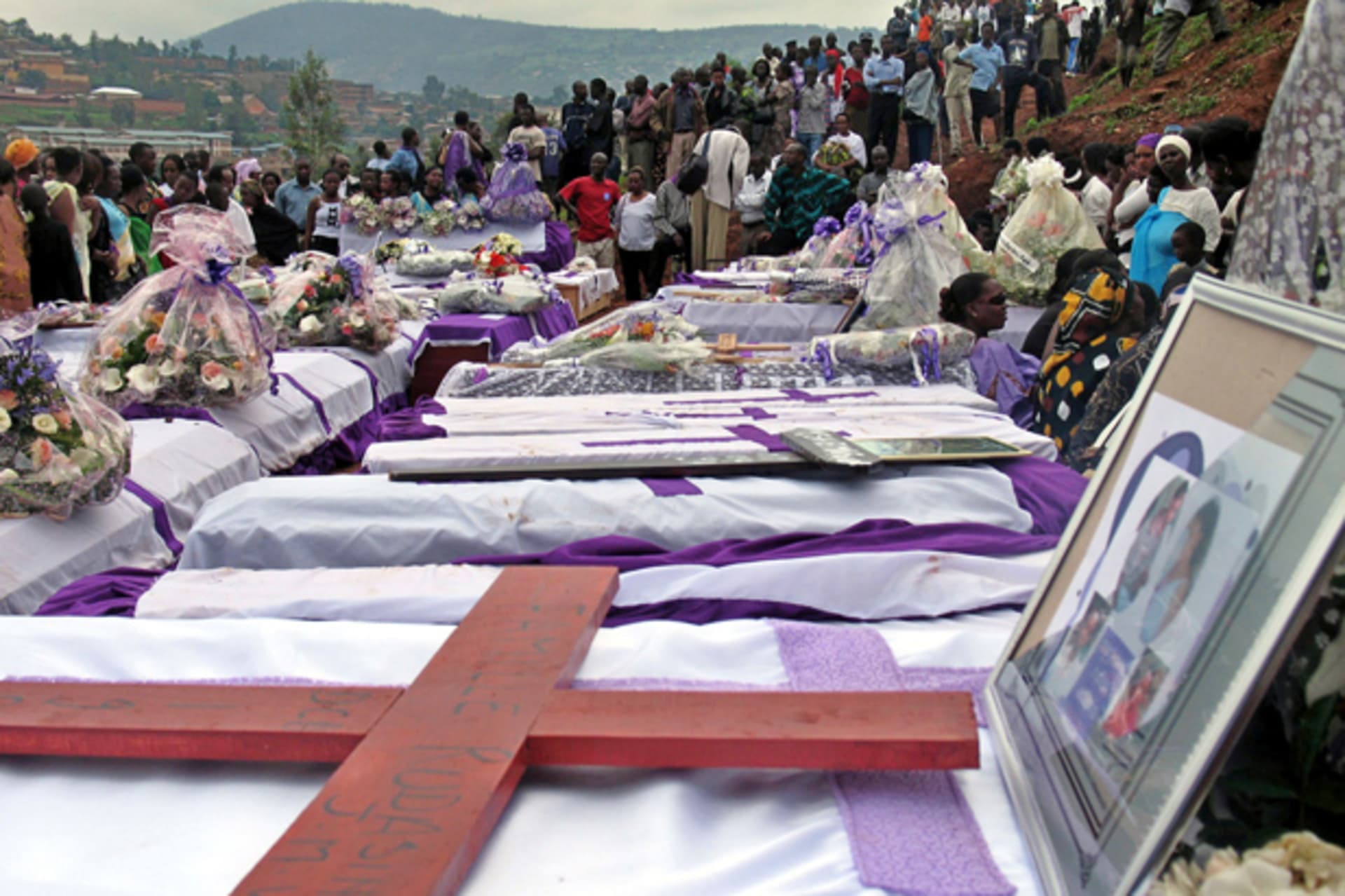
The event reminded us that genocide is preventable. In every case, there are foolproof warning signs—such as hate crimes, viral and print propaganda, and organized campaigns to marginalize populations. And yet, the signs often go undetected, overlooked, and are even ignored despite the known lessons of the Holocaust, and the horrors of the Armenian, Cambodian, Rwandan, Bosnian, and Darfur atrocities.
Still, we have come a long way since 1944. Today, countries recognize—and agree—that genocide undermines our common humanity. And the institutional arsenal has vastly improved. An international convention on genocide legally defines and criminalizes genocide under international law, and major institutions such as the UN Security Council, NATO, and the International Criminal Court (ICC) have successfully shamed, sanctioned, attacked, or trialed and sentenced perpetrators of mass atrocities. These achievements have been crystallized in the recent ICC sentencing of Thomas Lubango for recruiting child soldiers in the Democratic Republic of Congo, and in the conviction of Charles Taylor at the international tribunal for the civil war in Sierra Leone.
Despite these successes, efforts still fall short of what is needed.
For one, major powers continue to prioritize diplomatic wrangling over genocide prevention at the UN Security Council (UNSC). After three rounds of draft resolutions aimed at ending the Assad regime’s campaign of violence, and subsequent vetos by China and Russia, the UNSC is paralyzed. Repeated calls for “never again” are smeared by the reality of politics.
At the same time, diplomatic missions—led by regional heavyweights and international leaders—have achieved mixed results. Kofi Annan’s efforts in averting electoral violence in Kenya were remarkably effective, but the diplomatic overtures toward the Syrian regime have failed to produce results.
In the backdrop is the growing rift over the Responsibility to Protect (R2P)—the idea that a state should protect its citizens against genocide, war crimes, crimes against humanity, and ethnic cleansing; and if a state fails, the responsibility falls on the international community, which will not preclude military intervention as a last resort. The concept, which UN member states unanimously endorsed in 2005, is losing its foothold as states protest infringement on sovereignty and internal affairs. It comes as no surprise that some of the most vocal hostilities stem from ardent defenders of sovereignty: China and Russia.
So what is the United States doing to address genocide? The Secretary of State highlighted some strategies: