How I Got My Career in Foreign Policy: Carla Anne Robbins
From her elementary school classroom to the editorial board of the New York Times, Carla Anne Robbins felt most excited when learning about the world. She sat down with CFR to discuss how that trait shaped her journalism career.
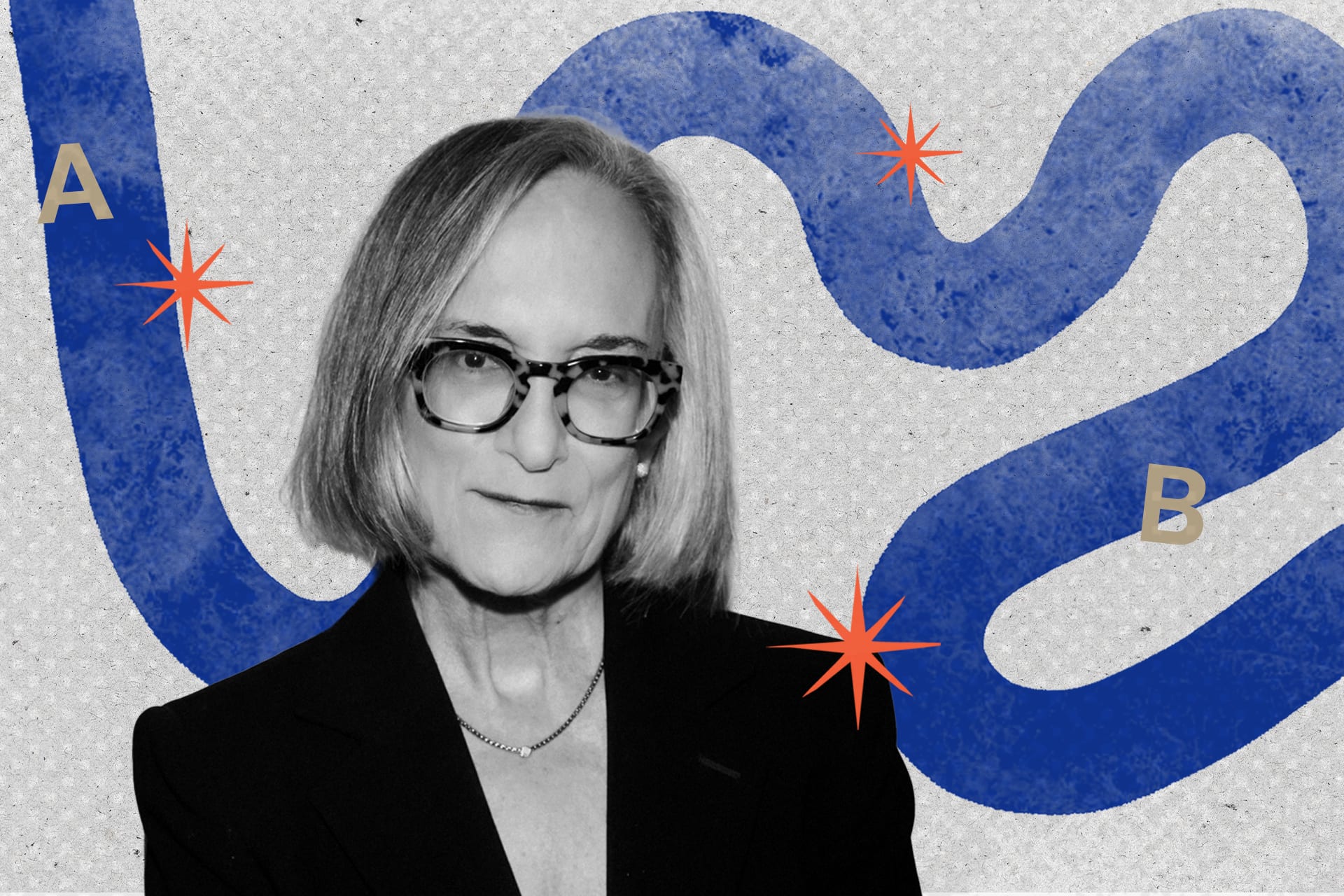
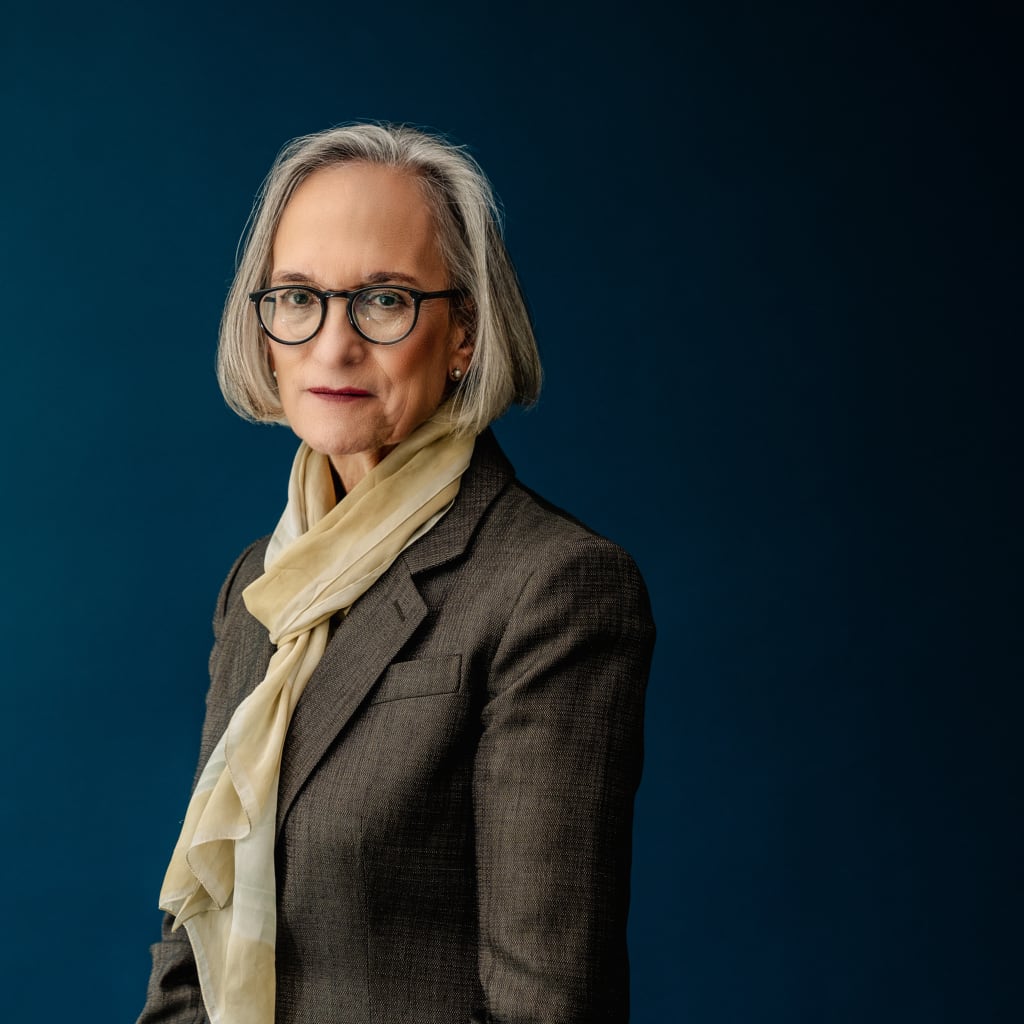
When Carla Anne Robbins moved to Washington, DC, as a child, she was excited by the city’s political and global focus. Even while studying for a PhD, she knew she wanted to be a reporter asking people why they made decisions. Robbins has traveled the world to cover all kinds of foreign affairs stories for magazines and newspapers—including the Wall Street Journal, where she was part of two teams that won Pulitzer Prizes. After serving as the New York Times deputy editorial page editor, she’s come full circle, teaching international affairs at Baruch College’s Marxe School. She is also a senior fellow at the Council on Foreign Relations. Read more about how her time at school taught her she’d rather be out asking questions and how her career took her everywhere from Fidel Castro’s office to a ballistic missile submarine to find the answers.
Here’s how Carla Robbins got her career in foreign policy. If you’re interested in this series, check out more editions here.
What did you want to be when you were growing up?
I briefly wanted to be an astronaut. Then we moved to Washington because my dad spent a year in the Pentagon during the Kennedy administration. It just felt like a magical place where everybody—kids in my elementary school—was talking about politics and even the Bay of Pigs.
When we went back to Long Island, I left thinking, “I don’t know exactly what I want to do, but I want to go back.”
When did it become clear that you wanted to work in journalism?
My mother was a total news junkie. She got so many newspapers at home, but we didn’t know anybody who was a reporter. I never thought of it as a career option. I went to college during the Vietnam War and I ended up taking a lot of classes about documentary film and photography. I was always circling around it. I went to grad school mainly because I was good at going to school and it was another way to keep learning about the world.
As intellectually gratifying as that was, I quickly figured out that I didn’t want to read people’s analyses of why [former Cuban leader] Fidel Castro was making certain decisions. I wanted to ask Fidel Castro why he was making these decisions, and that’s journalism.
Coming out of school, you started at BusinessWeek editing in New York and then covering the State Department. What did those first roles teach you about reporting international topics?
I sort of had to fake it to get hired by BusinessWeek. There was a brewing debt crisis in Latin America when I was interviewed, and I knew about the region because I’d written my doctoral thesis on Cuba. When the crisis hit, I was suddenly seen as really valuable, even though I didn’t know anything about banks or collapsing currencies.
I knew how to study, and that’s a really big part of journalism. The people who parachute into places and read three clips aren’t very good at their jobs. Graduate school taught me how to do research. That has helped me throughout my career. It’s impossible to write about national security without understanding the importance of other topics, like economics. I also had incredible colleagues who were willing to teach me.
It’s clear that you wanted to do overseas, on-the-ground reporting right away. Your next job, as Latin America bureau chief for U.S. News & World Report, offered that. How did that placement shape the way you thought about coverage?
My first story was the overthrow of Jean-Claude “Baby Doc” Duvalier in Haiti. My then-boyfriend, now husband, was working at the Miami Herald, and his editor told me I had to get down there because Baby Doc was going to fall. I told my new boss at U.S. News I had to go, and he said, “But you’re still learning the magazine.” I said, “You want me to cover this stuff?” I’d never been a foreign correspondent. I got on a plane and thought, “I have absolutely no idea how to do this.”
I called my boyfriend, and he said, “find Alfonso Chardy,” the Miami Herald reporter there who was a news machine, “and do everything he does.” That’s what I did.
Chardy was a fantastic reporter and incredibly gracious and I paid him back. When Baby Doc left on a plane, I was one of the first people to get back to the hotel and get a phone line to the United States. I filed my story and then handed the phone to Chardy so he could file his story, then the Herald transferred the phone to the next newspaper, and so on. That’s the way the business is.
The determination you had to go get the story despite being written off as too early in your career is so inspiring. And it paid off, because you moved on to the Wall Street Journal next. Being a foreign policy reporter there must have opened a lot of doors.
I think being a foreign correspondent and seeing the impact of U.S. policy on the ground made me a better policy writer once I got back to Washington. The mistake is to just see one side: either just seeing policy the way Washington describes it or wants to see it, or just seeing the impact of policy on the ground without understanding how it’s made. If you can see both of those things, then you have a really good story or the chance for a better policy. The Wall Street Journal let me do those stories. I would see what Washington policymakers thought they were doing, and then actually go to the country and see if it was working. I never took that for granted.
Writing for the Journal did open a lot of doors. I was inside the room in a way that I’d never been before. People talked to me in part because they knew I was fair, I did my homework, and I didn’t waste their time. But I knew that first they talked to me because I was at the Wall Street Journal.
How did you choose which stories to pursue?
The news makes a lot of the choices. I started covering diplomacy and national security at the Journal two days before Bill Clinton was inaugurated, so Bosnia and Kosovo consumed years of my life. 9/11, Afghanistan, and Iraq consumed all of us. When the news came out that Iran was hiding uranium enrichment, I began writing about that cat-and-mouse game.
When you can, you grab stories that intrigue you. My father-in-law was a Naval Academy graduate. He had been on a submarine and gotten two Silver Stars in World War II. He was the loveliest, most laid-back human being you’d ever meet—except if you said women could be on submarines.
The Journal was doing a series on the post-Cold War defense budget. I thought, “You know, I write about nuclear weapons,” and I figured, “How else am I going to illustrate this for readers, but by going in a ballistic missile submarine?” It’s a really great way to tell the story, and maybe I wanted to drive my father-in-law crazy.
This was a decade before women were allowed to serve in submarines. We used to visit him in Annapolis, and we’d go to the officers’ club for brunch on Sundays. I’d walk with our daughter who was around four or five years old at the time, and I’d say to her, “You could go to college here, and then you could be in submarines.”
What a phenomenal way to capture the narrative. How have you seen reporting on foreign policy change since you started?
It was an easier time then, newspapers were wealthy. And before digital news, if you didn’t work for a wire service, there were fixed deadlines. Once the paper closed, you were off the clock until the next day. The depth of the internet and the capabilities it has given journalism, the narrative storytelling, the visual potential, are fantastic. The demands are also enormous, because you are telling stories in real time, all the time.
The business has always been dangerous, but since 9/11 and the Iraq War, journalists have increasingly become the targets. Think about Danny Pearl. More than 200 journalists have been killed in Gaza since October 2023.
Having reported from around the world, what did these experiences teach you about how to tell global stories to readers back home?
These are complicated concepts, but people will read stories. You bring them places they may never get to see and introduce them to people they may never get to meet.
When you’re in Washington, it’s also about going out and listening and explaining. Our job is not to become insiders, shadow secretaries of state or national security advisors. It is to analyze without fear or favor. A former national security advisor, whom I’d known for a long time, sat down next to me at a dinner a few years ago and said, “You know, I liked you a lot more when you were a reporter than when you were an editorial writer.” I said, “I’m the same person. The difference was you didn’t know my opinions when I was a reporter.”
He looked at me as if that had never occurred to him, and I’m quite proud that he didn’t know my opinions while I was reporting. I learned from that conversation that officials are far more thin-skinned than I realized. I wouldn’t do it differently. It was an interesting insight into these people I’d covered for decades.
As you just mentioned, you moved from reporting to becoming the deputy editorial page editor at the New York Times. What was it like transitioning from reporting to opinion writing?
Before I went to the Times, I said to my husband that I didn’t know if I could do the job, and he just laughed. It’s not that I didn’t have strong opinions. As an editor, I had to learn about New York City politics, health-care reform, even horse racing—which was fun and intellectually disciplining, because editorials are all rigorously analyzed. It’s not like you just say, “That’s good, and that’s bad.” “Should” is a lazy word. It needs to be a reasoned argument, which requires research and reporting and then it has to be written in a few hundred words. It is much harder to write short than long.
This was also a period when the newspaper was in crisis, between the financial crash, the internet, and the drop in advertising in the hard-copy paper. The Times had to make a decision about its future. I was lucky to be part of the committee considering whether to put up a paywall. It seemed like the only choice to me. Looking back, I didn’t fully realize how much of a risk the paper was taking, betting people would pay a lot for the news online. The Times has built an incredibly beautiful and successful digital paper.
What advice do you have for aspiring journalists who want to enter the field right now?
It’s hard because it’s a shrinking business, but I wouldn’t dissuade someone from going for it. Hands down, this the coolest thing you could possibly do. It is a license to be excited about the world around you, to ask questions, to meet interesting, bedeviling, awful, fascinating human beings, to go places, see things, and tell wonderful stories.
I do worry, though, when people tell me they’re going to freelance in places like Libya or Syria or covering the war in Ukraine, without the tether of a news organization. It’s dangerous out there and you need a lot of support.
Did I help make the world a better place? The world looks pretty messed up now. But I felt like it was an important job. I didn’t do it for that reason—I would have done it anyway.
In addition to being at CFR, where you were the co-host of The World Next Week podcast, you’re now also a professor at Baruch College. What does your work look like today?
I lead a roundtable series at CFR called National Security in an Age of Disruption. I rely a lot on my news judgment for those conversations with topics like the strained state of civil-military relations and whether the Golden Dome is Star Wars redux. I’m also the moderator of CFR’s monthly Local Journalists webinar series, which brings together CFR experts and local journalists from around the country to connect global and local stories like immigration, and tariffs, and covering extremism. The generosity of the business is also clear there, with people sharing ideas on how to cover difficult stories and find sources.
For my day job, I run a Master of International Affairs program at the Marxe School at Baruch College. My mother’s–the news junkie’s–alma mater. She never got to see me at Baruch, but she did see me go to the Times, which she loved.
I was supposed to be at Baruch for a year after I left the paper. Then they asked me to write a proposal to create a master’s program, and I thought, “I know how to write things.” As soon as I finished, they said, “Well, why don’t you run it?” We graduated our first class in 2019. I’m very proud of our students, some of whom are the first members of their family to go to college, let alone get a master’s. They bring extraordinarily diverse life experiences. The conversations in class are challenging and smart. Nobody takes anything for granted. They want to fix the world. And they are getting fellowships and interesting jobs.
A beautiful full-circle moment, I think it would make your mother very happy to hear this.
To close our conversation, we’ve discussed so many fascinating anecdotes from times on the job, but what’s one story from behind-the-scenes of your reporting that most people don’t know?
A few years after I got my PhD, I went to Cuba for a story and I got to ask Fidel Castro why he made the decisions he did. The thing about Castro was, when you interviewed him, he always started after midnight and you could never just talk to him for two hours, because he would talk and talk and talk. If you ran out of questions, he would start interviewing himself. He would say in Spanish, “You might ask me…”
I had lots of questions for my story, and once I finished those, I started on all the questions I wanted to ask when I was writing my doctoral thesis. “So, in 1964 when you made that decision…” and he looked at me like I was out of my mind. He really didn’t want to look backwards. That great fantasy I had did not come true.
His loss, I suppose! Even though your dream-PhD dialogue couldn’t get off the ground, you not leaving until every question has had its chance sounds like a true reporter to me.
This interview has been edited for length and clarity. It represents the views and opinions solely of the interviewee. The Council on Foreign Relations is an independent, nonpartisan membership organization, think tank, and publisher, and takes no institutional positions on matters of policy.