How I Got My Career in Foreign Policy: Kenneth I. Juster
Kenneth I. Juster has practiced international law, worked in tech, and been the U.S. ambassador to India. He sat down with CFR to discuss managing diplomatic crises and the lessons he learned from the private sector.
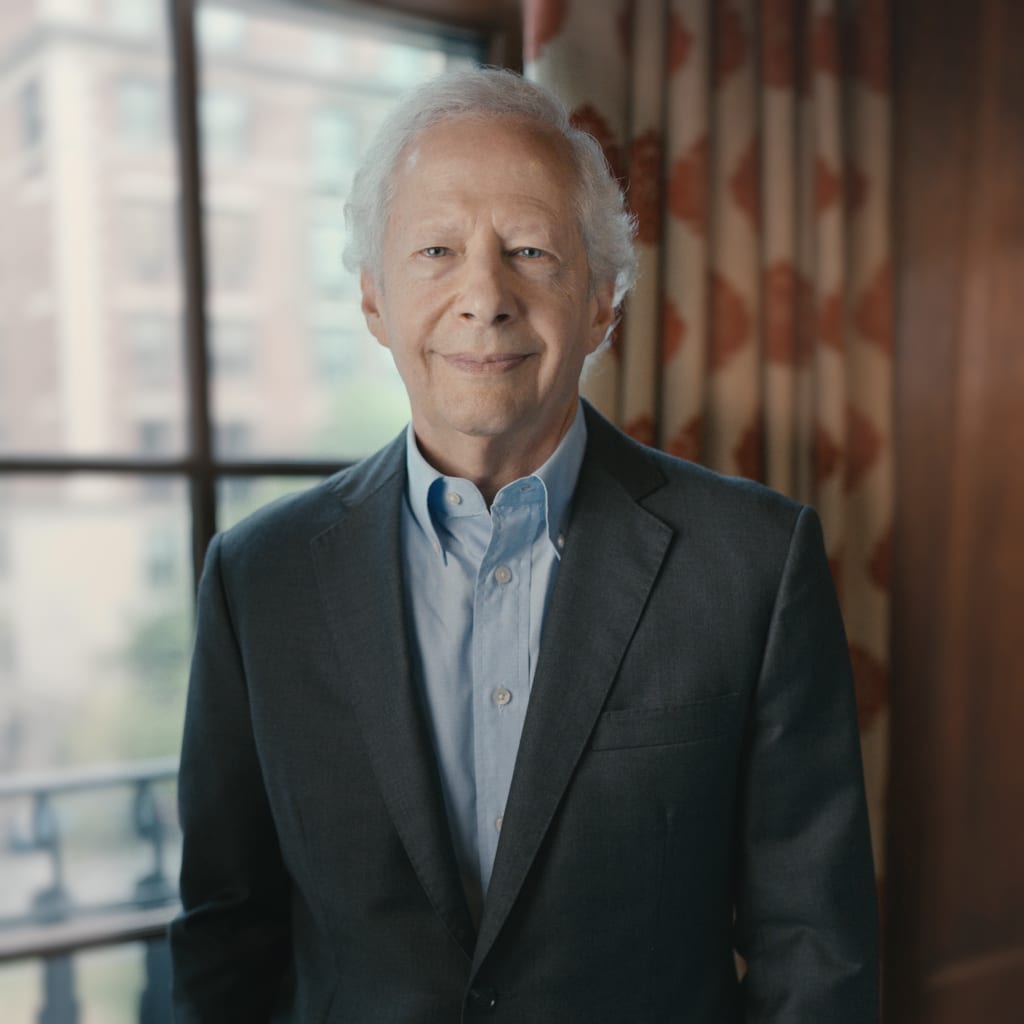
Kenneth I. Juster dreamed of playing basketball for the New York Knicks, but after realizing he wouldn’t be tall enough, he pivoted to a career focused on international affairs. After obtaining degrees from Harvard Law School and Harvard’s Kennedy School of Government, Juster joined the Washington law firm Arnold & Porter before going into government. He later worked at Salesforce, before serving as U.S. ambassador to India from 2017 to 2021. He is currently a distinguished fellow at the Council on Foreign Relations. Read more about his experience negotiating high-stakes talks during the first Gulf War, what working at Salesforce taught him, and the time he interviewed Mick Jagger.
Here’s how Kenneth I. Juster got his career in foreign policy. If you’re interested in this series, check out more editions here.
What did you want to be when you were little?
When I was young, I always loved sports and I wanted to play guard for the New York Knicks. I played basketball as a youngster, but I peaked in tenth or eleventh grade when I didn’t grow anymore. I was hoping to be over six feet, but I stopped at five feet eight inches tall. I did play on the Scarsdale High School varsity team my junior year, but I really didn’t have much of an impact.
I will add that when I was an exchange student in high school in Thailand, I went from being the shortest player on my Scarsdale High School team to being the second tallest player on my Thailand team. So that was very encouraging!
And believe it or not, fifty or so years later, when I was ambassador to India, I welcomed the NBA—the National Basketball Association—to India for its first-ever exhibition games by doing a short basketball video with some trick shots that was then featured on ESPN. That was one of my most enjoyable accomplishments as ambassador and a partial fulfillment of my dream to be a basketball player.
That’s amazing! You started your career in international law. When did you get the inkling that’s what you wanted to do, once you gave up on basketball?
I was always interested in international affairs, really beginning with my time as an exchange student in high school in Thailand, living in a rural village about halfway between Bangkok and Myanmar. That got me very interested in Asia in particular, and international affairs more broadly.
In college, I studied with Professor Edwin Reischauer, who had been a former U.S. ambassador to Japan, and did my senior thesis under him. I received a grant to do research in Japan during the summer between my junior and senior years. Then, when I was in a joint program at Harvard Law School and Harvard’s Kennedy School of Government, I served as an intern on the National Security Council in Washington with Sam Huntington, who was a senior member there on leave from his professorship at Harvard. I had been Sam’s research assistant when I was an undergraduate. So those experiences were influential in my love for international affairs and my decision to want to get involved in government at some point in my career.
When I went to law school, I took most of the international law courses, including courses in international business and international trade, and joined a Washington, DC, law firm, Arnold & Porter, that had a very vibrant international practice.
You spent the first phase of your career in private practice before you then transitioned to a job in government at the State Department. What motivated the shift into government work?
One of the reasons I went to Washington, DC, was that I was interested in getting into government at some point without truly understanding how to do it. A focus on public policy was part of what was of great interest to me. By going to a law firm in Washington that had a strong practice in public international matters, I got more exposure to policy issues. For example, I represented the government of Panama-in-exile against [General Manuel Antonio] Noriega, and worked closely with the U.S. State Department on that matter.
Then, when I was a junior partner, the senior partner with whom I worked, Bill Rogers, had been very close to Henry Kissinger. Bill had worked at the State Department as undersecretary for economic affairs and as assistant secretary for Western Hemisphere affairs under Kissinger. When the president of Kissinger Associates, Larry Eagleburger, was nominated to be deputy secretary of state, there were some controversial issues relating to Kissinger Associates. Larry came to Arnold & Porter for representation, and Bill asked me to work on the matter. I therefore got to know Larry very well and did a couple of things in his preparation for his confirmation hearing that made a positive impression on him and had an impact on the success of his confirmation process.
After Larry got to the State Department, he asked if I would join him there as his deputy and senior advisor. I jumped at the opportunity. It was an incredible four-year period in which we had the end of the Cold War, the unification of Germany, Iraq’s invasion of Kuwait and the formation of the coalition to eject Iraq from Kuwait, the collapse of the Soviet Union, and the Middle East peace process. I was fortunate to be deeply involved in virtually all those matters.
One of the things that struck me was that during your time in government, you negotiated with Israel during the first Gulf War. What did being part of such a big, consequential negotiation teach you about how diplomacy works?
That was an extraordinary experience. When the U.S. government formed the coalition to eject Iraq from Kuwait, it included every Arab country except Jordan. There was concern that if Israel entered the conflict by taking military action against the Scud missiles in western Iraq that were targeted at Israel, it would shatter the coalition. President [George H.W.] Bush and Secretary [James] Baker wanted to make sure Israel was comfortable with what the United States would be doing to deal with the Scuds and therefore would stay out of the war.
The president sent a mission to Israel the week before the war led by Deputy Secretary Eagleburger and Under Secretary of Defense Paul Wolfowitz. Dan Kurtzer and I were also part of the team along with one representative from the Joint Chiefs of Staff. We spent several days explaining confidentially to the Israeli leadership the battle plan for the first few days of the Gulf War that would take out the Scuds. We also set up a hotline between Israel’s minister of defense and U.S. Secretary of Defense Dick Cheney.
Unfortunately, when the war began, Norman Schwarzkopf, who was the head of the coalition forces, was not as committed to eliminating the Scuds in western Iraq as Bush had wanted. And, in fairness, it was a much more difficult task than expected. Accordingly, Scud missiles were landing in Israel, and there were concerns they might have chemical weapons attached to them.
So, the president asked the same team to go back to Israel one week into the war. We were suited up at Andrews Air Force Base with chemical protective suits from top to bottom before we flew out. Once we landed in Israel, I saw Eagleburger as the consummate diplomat. For example, he refused the offer by the U.S. ambassador for us to stay at his residence. Instead, Larry decided we would stay in hotels in Jerusalem and Tel Aviv to make it clear we were taking the same risks as the Israeli population.
The Israelis were extremely upset about the incoming Scud missiles and our failure to eliminate this problem. Eagleburger calmly let the Israelis vent their frustrations, while gently moving the conversation to what we could do to deal with the current threats. We agreed for the first time ever to have Patriot missile batteries installed on Israeli soil and operated by U.S. servicemen. We also negotiated a memorandum of understanding with the Israelis that Dan Kurtzer and I carefully wordsmithed.
At the same time, we had to deal with folks in Washington who had a less-than-warm relationship with the Israelis. Both President Bush and Secretary Baker had their differences with Prime Minister Yitzhak Shamir. In some respects, we were trying to coax Washington along in terms of what we could provide to the Israelis while also managing Israeli expectations—all while missiles were coming in at night. Dan and I were often up through much of the night dealing with communications with Washington because of the time difference.
It was an intense experience, but ultimately successful and enormously instructive in terms of how to conduct complex negotiations under duress.
I bet. To speed us along a little bit—you leave State, go back to your law firm for a stint, and then come back to government, this time in the Commerce Department. I’m curious how returning to the government in a different department shaped your understanding of the work.
I was asked to be under secretary of commerce for what became known as the Bureau of Industry and Security, which manages issues where business and national security intersect. The George W. Bush administration had a lot of people who had served in the previous George H.W. Bush administration. I therefore knew folks throughout the foreign policy team very well. I was thus able to manage issues from the Commerce Department that normally weren’t handled there, including being deeply involved in the transformation of the U.S.-India relationship.
I didn’t fully appreciate it at the time, but the George H.W. Bush administration had a really superb team of people and a gold standard foreign policy making process run by Brent Scowcroft at the National Security Council, with Secretary James A. Baker at State, Secretary Dick Cheney at Defense, General Colin Powell at the Joint Chiefs, and tremendous people at the sub-cabinet level.
In the George W. Bush administration, there was a strong policy making process, but there were some factions that developed within different parts of the government. However, because of my past relationships, I was involved in significant economic and national security issues, including, as I mentioned, being in the middle of the transformation of the U.S.-India relationship. I co-founded and co-chaired the U.S.-India High Technology Group and was one of the principal architects of the Next Steps in Strategic Partnership initiative with India. This work had a major impact on my career going forward.
Over the course of your career, you toggled between law firms, private sector—Salesforce, which you went on to later—and government. How did your experience in the private sector inform your understanding or your work in government?
I had practiced law up to my time as under secretary of commerce, but I really wanted to transition to the business world and, in particular, the technology sector. As under secretary of commerce, I was in charge of the export of sensitive U.S. technology. Through mutual friends, I met Marc Benioff, one of the founders of Salesforce. Salesforce had just gone public, and Marc brought me in to manage corporate development, legal affairs, public policy, internal audit, and a few other functions. I was involved in our expansion of activities in Japan and the opening of our office in India.
I learned a ton from him and from being at a fast-growing technology company in its early days—seeing how young companies operate and how they survive. I learned how to deal with risk, how to think several steps ahead in terms of your business goals, and how to try to change your environment rather than let your environment dictate to you. It was a wonderful experience, very different from anything I had ever done.
Now we come to the big one—you become U.S. ambassador to India in 2017. I know you mentioned you’d traveled for work before, but what was it like being posted abroad and also being the principal rather than staff?
In 2016, I worked on the campaign of Jeb Bush, but that did not last too long. I had not been involved with DonaldTrump or his campaign. But when Trump was elected, he didn’t have a large staff of people who had worked on his campaign, so the new administration recruited people who had worked in previous Republican administrations and had good reputations. My name surfaced with Gary Cohn, who was the head of the National Economic Council (NEC), and with Jared Kushner, through Benioff and others.
I was asked to come in initially as the senior person on the National Security Council and the NEC for international economics—the deputy assistant to the president for international economic affairs. At the time, I had indicated that I would like to be considered for ambassador to India, but I was told that this position was earmarked for someone on the campaign. But when that person did not work out, there was an opening. Both National Security Advisor H.R. McMaster and Gary Cohn backed me to be ambassador, as did Jared Kushner. For me, this was a tremendous opportunity.
I went through ambassadorial training and learned about all the elements of running an embassy. Fortunately, having been at the State Department with Eagleburger, I had already seen what made a good ambassador. Eagleburger would often talk with me about our ambassadors, and I learned both from him and by watching the actions of the most successful ambassadors. I tried to incorporate what I had learned from others.
I knew India well from my work in both the public and private sectors. Because I spent six months at the White House, I knew the folks back in Washington. So, when I finally got out to Delhi, I had a good idea of what I wanted to try to do and how to do it. I’d been at Salesforce in a leadership position, where I ran eight different functions at the company, so I felt increasingly comfortable in a leadership role as opposed to a staff role. But you always learn new things. You always face new challenges, and you know a lot more the day you leave than the day you arrive.
Is there a greatest achievement or something that you really pride yourself on from your time as ambassador?
You’re doing a lot of things as ambassador, including just running the embassy. As I reflect on my term, however, we faced three significant crises. One was the COVID-19 crisis—managing the morale at the embassy, keeping operations going for essential back office services in India for the U.S. financial and medical sectors, and assisting U.S. citizens in India. We had to repatriate six thousand individuals located throughout India, and successfully dealing with that challenge was something I’m very proud of.
In February 2019, there was a cross-border terrorist attack in India. The Indians attributed the attack to Pakistan and retaliated a couple of weeks later. There was an aerial conflict between the two countries, including the shooting down of planes and the capture by the Pakistanis of an Indian pilot. I and our chargé d’affaires in Pakistan were very much involved in working with both sides to defuse the crisis—in particular, to get back the Indian prisoner. Also, the Indians and the Pakistanis each felt that the other side was moving its nuclear weapons and might take a preemptive nuclear strike. We were able to provide each side with certain intelligence and assurances that played an important role in calming the waters in that situation.
Another major crisis occurred in the spring and summer of 2020 when Chinese forces came into the disputed border territory with India—across what’s called the Line of Actual Control—and ended up killing twenty Indian troops, which were the first casualties between India and China since 1975. This was a big crisis for India, and I believe that the United States really stepped up to the plate and demonstrated our support and reliability to the Indians. We played a big role in assisting them in a variety of ways during that crisis, and I was in the middle of that process.
I want to switch gears a bit. This series is geared towards young people who are starting out in their careers. Do you have any advice for those who want to work in international affairs or foreign policy?
First and foremost, pursue your passion. If it’s international affairs, think about the best ways to do it. You could move to Washington and try to get involved in government. Or, you could join the nonprofit world and work at places like the Council on Foreign Relations or other think tanks or organizations. Increasingly, there are opportunities in the corporate world, where companies now have internal functions focused on geopolitical risk. Get involved, and whatever you do, do it well. People are always looking at you and developing an impression of you. You want people to think well of you because you never know how that might come back down the road to be helpful to you.
In addition, it’s important to try to get involved in extracurricular activities with different organizations involved in international affairs, to do some writing if you can about things you have done or ideas you have, so people get to know you and see you. Be willing to take some risks, to expand your comfort zone, to be flexible, to have a sense of what you want to do but also be open to what comes your way. I never could have predicted my career as it unfolded. I went to Washington wanting to get into government at some point but having no idea how it would happen. But there’s an expression in basketball called “hang around the hoop.” You need to do that. Occasionally the ball will come your way, and you can put it back through the hoop.
We always like to end on a fun question. I’m sure over the years you’ve had so many interesting work trips. Is there a most memorable trip that you could share with us?
I think among the most memorable trips was the one to Israel that I mentioned earlier, and that was historic. I was also involved in a trip to India with [Deputy NSC Advisor] Steve Hadley in the George W. Bush administration, in which we began the dialogue with the Indian leadership that launched the Next Steps in Strategic Partnership. That was a transformative event and led to the civil nuclear deal.
I have one other fun anecdote. When I was in junior high school in Scarsdale, New York, one of my good friends was Ed Sullivan’s grandson. You may recall The Ed Sullivan Show. For our school newspaper, we went down to New York City one Saturday and interviewed several of the acts that would be on the show the next night, including—this was 1966—Mick Jagger and Keith Richards of the Rolling Stones. Unfortunately, there were no iPhones at the time, so we only had one Polaroid picture with the Rolling Stones, but I do have all their autographs and the interview itself, and that was quite something.
This interview has been edited for length and clarity. It represents the views and opinions solely of the interviewee. The Council on Foreign Relations is an independent, nonpartisan membership organization, think tank, and publisher, and takes no institutional positions on matters of policy.