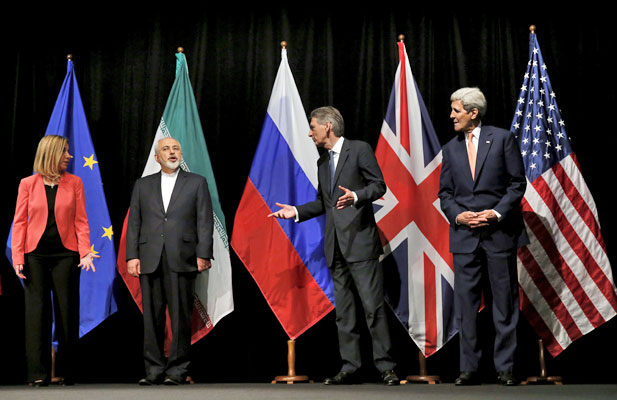
’Imperfect’ Iran Accord Could Exacerbate Mideast Situation
The new agreement between Iran does not resolve the problem and complicates U.S. relations with regional allies, says CFR President Richard N. Haass.
By experts and staff
- Published
 Richard HaassCFR ExpertPresident Emeritus, Council on Foreign Relations
- Bernard GwertzmanVisiting Fellow
The nuclear accord reached with Iran on July 14 puts welcome limits on Iran’s uranium enrichment capabilities but does not go far enough to restrain its capabilities, says CFR President Richard N. Haass. “It is essential that people focus just as much on the challenges of the scenario in which Iran complies with the agreement as the scenario in which Iran fails to comply,” Haass says. “I am more worried about the long-term consequences of Iranian compliance than I am about the short-term consequences of Iranian cheating.”