Will Iran Turn Into a Forever War?
Like Lyndon Johnson in Vietnam, Trump risks entering a war whose end may be impossible to control.
By experts and staff
- Published
 Ray TakeyhCFR ExpertHasib J. Sabbagh Senior Fellow for Middle East Studies
This article first appeared in the Boston Globe.
Ray Takeyh’s areas of specialization are Iran, U.S. foreign policy, and the modern Middle East. He is, most recently, the author of The Last Shah: America, Iran and the Fall of the Pahlavi Dynasty.
For decades, politicians and generals have obsessed with how to coerce middle-sized powers, like Cuba and Iran, into complying with U.S. mandates, such as abandoning weapons programs or reopening the Strait of Hormuz. Given the impracticalities of total war, leaders have inevitably relied on the gradual escalation of military force, signaling to adversaries the mounting cost of continued defiance.
The logic is compelling, but the record is one of repeated failure. From Vietnam to Iran, successive American administrations have not learned the lessons of their own misapprehensions. And the results have too often been forever wars and humanitarian catastrophes.
This idea of incremental escalation was first developed in the 1960s by Defense Secretary Robert McNamara and his so-called whiz kids in the Pentagon—often PhDs with impressive credentials but little common sense. By carefully calibrating military pressure, they believed that North Vietnam would realize that the cost of war outweighed its benefits. Having demonstrated such resolve, America would be open to negotiations, but the terms of the agreement would be defined by Washington and not Hanoi.
The problem with this kind of approach is that it discounts the enemy’s ability to absorb punishment and adapt to changing circumstances. Bombing campaigns fortify the will of the leaders and often galvanize the population behind the cause of resistance. The adversary, in turn, responds by matching escalation with escalation, setting in motion a cycle that steadily widens the conflict.
In Vietnam, this strategy ultimately led America to drop more bombs than it had in all its previous wars combined on a country slightly larger than New Mexico, with a staggering casualty figure of approximately three million dead Vietnamese.
It is still not entirely clear why President Trump launched the war in Iran in February. The administration’s explanations have shifted and the goalpost has constantly moved. It appears that two events in January convinced the president that he could score an easy victory in the Middle East.
First, there was a successful operation in Venezuela that removed President Nicolás Maduro and then the uprising in Iran that shook the foundations of the regime. But this was a misreading of Iran’s politics as the Islamic Republic was vicious enough to restore order and has deeper roots in the society than a Latin American kleptocracy.
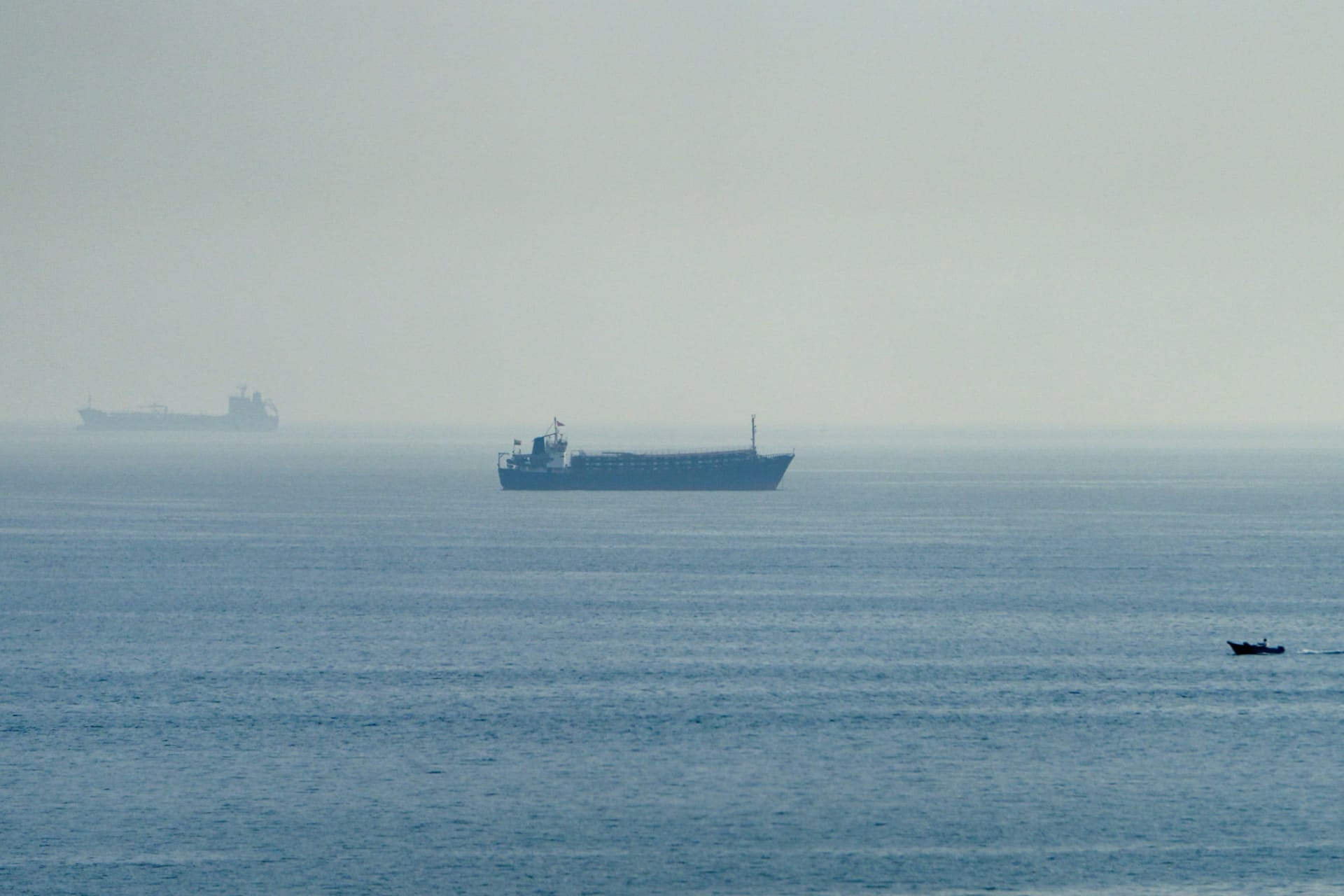
America, joined by Israel, began the war by killing scores of Iranian officials, including the elderly Supreme Leader, Ali Khamenei. But the system held, and the theocracy’s multilayered elite maintained control. The reconstituted regime viewed the conflict as a life-or-death struggle and took the fight into the Persian Gulf, mauling America’s allies and disrupting maritime traffic through critical waterways.
This was Iran’s indispensable source of leverage: It could impose costs on the global economy and American taxpayers alike. The question is not who can inflict more pain, but who is prepared to endure more. In such a contest of wills, those who view the struggle in existential terms have a greater incentive to absorb punishment than a distant empire waging a war of choice.
Unpredictability appears to be the defining feature of Trump’s strategy, with military campaigns repeatedly called off and then quickly resumed. But the irrepressible logic of gradual escalation was evident this month when Trump took to social media, posting: “From this point forward, any time the Islamic Republic of Iran shoots at a ship in the Strait of Hormuz, whether it be by Missile, Rocket, Drone, or any other device or weapon, the United States will bomb and destroy ONE BRIDGE OR POWER PLANT, including those located next to, or in, the Capital City of Tehran.”
The Iranian people are already suffering from power outages, food shortages, and debilitating inflation and unemployment rates. Given the stakes, Iran is likely to respond to further attacks on its territory by striking US military installations across the region, potentially inflicting significant American casualties.
Such attacks would almost certainly provoke further U.S. retaliation, setting in motion a cycle of strikes and counterstrikes with an ever-expanding list of targets. The longer the war goes on, the more likely that the distinction between civilian and military targets will erode. This is how humanitarian crises unfold—one step at a time.
The Persian Gulf is an international waterway that is critical to global commerce and should not be disrupted by Iran. A core principle of the rules-based international order is the freedom of navigation. The United States should appeal to the United Nations to authorize a multinational force dedicated to ensuring the safe passage of all ships through the Gulf.
Given the Trump administration’s skepticism toward alliances and multilateral institutions, this will be a tough task. Whatever international sanction is granted, the burden of ensuring free passage through the Gulf will fall disproportionately on the U.S. Navy for the foreseeable future.
Unwise wars launched without sufficient deliberation or foresight often produce consequences long after those who launched them are out of power. As the diplomat George Ball warned President Lyndon Johnson in 1964, when he was bent on expanding the war in Vietnam, “Once on the tiger’s back, we cannot be sure of picking the place to dismount.” Today, we are blindly climbing onto another tiger’s back.
This work represents the views solely of the author(s). The Council on Foreign Relations is an independent, nonpartisan membership organization, think tank, and publisher, and takes no institutional positions on matters of policy.