Kim Jong-un Survivability Scorecard: What to Look For
By experts and staff
- Published
- Scott A. SnyderSenior Fellow for Korea Studies and Director of the Program on U.S.-Korea Policy
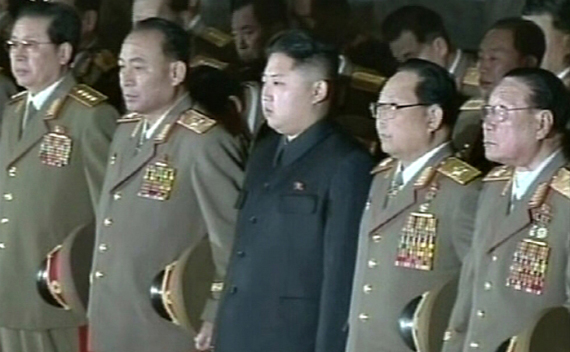
Now that the Korea Central News Agency (KCNA) has officially announced the start of the Kim Jong-un era, the major questions on the minds of North Korean observers revolve around the durability and sustainability of the North Korean leadership under Kim Jong-un. Another way of making judgements regarding this process is to assess whether the succession process is going according to plan. The 1994 succession experience offers the North Koreans a template for how to successfully manage succession and offers a scorecard for assessing the durability of the Kim Jong-un regime. In the first few days, the North Korean leadership has made no obvious mistakes, nor has there been any evidence that the succession process is veering off track. The North Korean media has reinforced Kim Jong-un’s role, with international diplomats implicity acknowledging his position and KCNA bestowing on Kim Jong-un the titles of Great Successor and Supreme Commander. I believe that each of these elements is designed to reinforce perceptions of the inevitability of Kim Jong-un as the next leader, with the funeral being a major event designed to affirm Kim Jong-un’s new role at the same time that he pays respects to his father. This will also be the first opportunity to make judgments regarding his leadership style independent of his father.
Beyond the funeral ceremony, the calendar holds a series of events that North Korea will be able to use to its advantage to reinforce the centrality of Kim Jong-un and that therefore provide opportunities for external judgements regarding how the process is going, including:
Jan. 1: New Year’s address. North Korea normally issues a joint editorial or speech by the leader assessing the challenges and goals for the year. The 2012 address may have already been written, but can be scoured for deviations from the past and for evidence of possible rewriting post Kim Jong-il’s death. How the joint editorial is issued and whether Kim Jong-un might decide to personally deliver it as well as the substance it contains will offer some early clues to the actual role Kim Jong-un is and will be playing.
Jan. 8: Kim Jong-un’s 28th birthday and his first as leader. How will it be celebrated this year, and what messages are conveyed on this date?
Feb. 16: Kim Jong-il’s 70th birthday. Still well within the mourning period, how will this birthday be honored and what roles will Kim Jong-un and other leaders play in any commemorations on that date?
April 15: Kim Il-sung’s 100th birthday. This was to be the big celebration of the year, marking the establishment of North Korea as a “strong and prosperous state.” But what are the benchmarks for assessing Kim Jong-un’s performance toward that goal? Arguably, the benchmarks may shift to “are you better off than you were seventeen years ago?” The famine that occurred in the midst of the Kim Il-sung-Kim Jong-il succession process presents an opportunity to establish a low bar for assessing Kim Jong-un’s performance.
Beyond these dates, what other signs should be watched? Intelligence on how the succession might be going wrong will be much harder to obtain precisely because KCNA will not be reporting it and news of internal developments in North Korea remains hard to come by. In any event, much of the activity that would spark greatest interest inevitably is likely to occur underneath the surface. However, here are a few things to watch for that might suggest things are going very badly.
The most difficult aspect of assessing whether things are going wrong is that, like our intelligence collection capabilities which did not appear to provide effective warning that Kim Jong-il had passed away in advance of the official announcement, the critical developments that constitute a serious challenge to the Kim Jong-un leadership will also likely be lagging indicators of circumstances that have already changed. As a result, it is likely that all the parties are going to be in a reactive rather than a shaping mode, and the question is how well we are in sync regarding our assessments of the motivations and implications of the changes we see on the surface.