The “Libya Model” and What’s Next in North Korea
By experts and staff
- Published
- Scott A. SnyderSenior Fellow for Korea Studies and Director of the Program on U.S.-Korea Policy
While the events of the past weekend have shifted the world’s attention to Libya, there are clearly reverberations for North Korea, especially given that Muammar Qaddhafi pursued, then gave up in 2003, a nuclear weapons capability as part of what seemed then like a step toward normalcy with the rest of the world. Qaddhafi’s strategic decision to give up Libya’s nuclear program in return for rapprochement with the United States was held up to North Koreans as a model for pursuing diplomatic normalization with the United States. The North Koreans rejected the idea that there could be a “Libya model” for North Korea and pursued a nuclear test in 2006, but the door was still open to a diplomatic normalization for denuclearization deal based on the Sept. 19, 2005, Six-Party Talks Joint Statement. Now that the “Libya model” has been shattered (by insurgency, Qaddhafi’s military response to civil dissent, and retaliatory UN authorized airstrikes), one can’t help but wonder whether North Koreans might in 2011 take away aspects of the “Libya model” very different from those the United States would prefer.
Early in the unfolding of the Libyan unrest, at the beginning of March, the New York Times analyzed how much easier dealing with a non-nuclear Libya has been compared to the situation that would have existed had Libya not given up its nuclear weapons program. The article concluded with an observation from an anonymous South Korean that “When North Korea collapses—and one day it will, of course—we will face a problem that we’ve been spared in Libya. You have to bet that the leadership is going to threaten to use its weapons to stay in power. Even if they are bluffing, it’s going to change the entire strategy.” The North Korean policy takeaway from the “Libya model” is to hold on to their nukes at all costs. In the words of the North Korean foreign ministry spokesman, “having one’s own strength [is] the only way to keep the peace.”
As one considers the impact of events in the Middle East for North Korea, the idea of a “Libya model” for North Korea now takes on a mixed meaning:
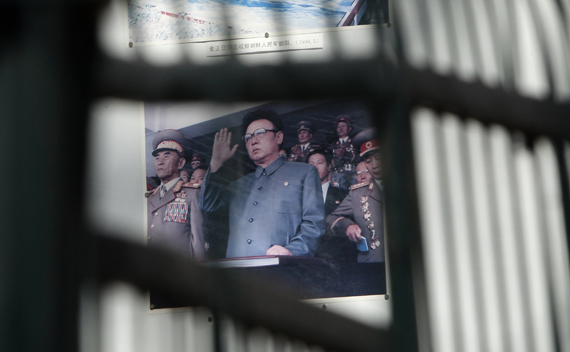
This does not mean that political change cannot come to North Korea; in fact, observers continue to speculate about a power struggle in the context of the unfolding of succession arrangements from Kim Jong Il to his son, Kim Jong Un, with the latest casualty being the recent removal of septuagenarian Ju Sang Sung from his post at the Ministry of Public Security. But the “Libya model” as it manifests itself in March of 2011 does suggest that the path to inevitable and necessary political change in North Korea may be inescapably violent, chaotic, and unsettling not only to North Korea, but to its neighbors and the world.
This article appears in full on CFR.org by permission of its original publisher. It was originally available here.